Searching for the Picton ferry with a campervan in New Zealand usually means one of two things: you have just realised the North and South Islands are separated by Cook Strait, or you are comparing a one-island trip with the full loop. Either way, the crossing is part of the adventure. The ferries run between Wellington and Picton, at the top of the Marlborough Sounds, and the trip is one of the best sea journeys in the Southern Hemisphere on a clear day.
This is a researched guide rather than a diary: we have not done the crossing in a rental campervan ourselves, so we have used CampervanPlanet’s live Wellington data and the stable, well-known facts about the crossing. If you have not yet decided which island to choose, our North Island or South Island campervan guide is a good place to start, and our campervan rental guide covers the basics of renting a camper.
The Picton ferry between Wellington and the South Island takes about three and a half hours and needs a booking, especially over Christmas. With a rental campervan you have two sensible options: take the same van across, or drop it in Wellington and collect another in the South Island. Check your rental terms before you book either.
- How the Picton ferry works with a campervan
- Option one: take the same campervan across
- Option two: ferry-hop with two rentals
- When to cross and what the weather does
- What to do on the Picton side
- What the ferry fare and the van really cost together
- Insurance, rules and a few New Zealand driving tips
- A sample 14-day plan across both islands
How the Picton ferry works with a campervan
Two operators sail between Wellington and Picton, and both carry vehicles. The crossing takes roughly three and a half hours, so you can drive on in the morning and be on the South Island by lunchtime. Vehicles are priced by length and height, so you need your exact measurements when you book, and a high-top campervan may cost more than a small car.
Booking ahead is the golden rule. In summer, particularly in the weeks around Christmas and New Year, sailings fill, and a spontaneous plan can leave you waiting a day or two. Also remember that the Cook Strait can be rough. Sailings are occasionally delayed or cancelled in strong winds, so do not schedule the crossing on the day before your flight home.
Another practical point: the ferry terminal in Wellington is close to the city centre, and the roads around it can be busy. Aim to arrive at the check-in time on your booking, and not much earlier, because queues are managed by the operator.
Option one: take the same campervan across
This is the simplest if your rental terms allow it. You keep the same vehicle, your gear stays in place, and you have a continuous trip. The downside is that you pay the vehicle fare, and some rental companies place restrictions or extra fees on taking vehicles on the ferry, so check the terms before you book.
If you plan to take the van across, ask these questions before you pay:
- Is ferry travel allowed, and is there a fee?
- Do you need to tell the rental company in advance?
- Who is responsible for damage that happens while the vehicle is on the ferry?
- Does the kilometre allowance, if any, change?
Prices for the vehicle itself depend on the season. CampervanPlanet’s Wellington page shows New Zealand campervans from about €18 a day for a budget two-berth in spring (September to November), about €45 in winter and about €59 in autumn, with the data updated 3 November 2026. Those are starting prices, and peak summer is higher; check live dates on the Wellington page.
Option two: ferry-hop with two rentals
The second approach is to leave your van on one island and rent another on the other side. Many travellers choose this because it avoids ferry fees for the vehicle, and because the North Island and South Island fleets are often priced separately. You can still travel as a foot passenger on the ferry, which is cheaper than taking a vehicle.
The practical version looks like this: pick up a van in Auckland or Wellington, explore the North Island, drop the van in Wellington, take the ferry as a foot passenger, and pick up a second van in Picton, Nelson or Christchurch. The downside is that you pack and unpack, and you have two bookings to manage, with a possible one-way fee on each. Our guide to one-way rental fees explains how those fees work.
For the South Island side, Nelson’s CampervanPlanet page is a good option if you are heading to Abel Tasman or the West Coast, and our Nelson campervan guide covers the area in more detail.
When to cross and what the weather does
New Zealand’s summer runs from December to February, with long days and the best weather, but also the most traffic. CampervanPlanet’s Wellington page shows autumn (March to May) as often Wellington’s calmest and clearest season, with temperatures of about 12–18°C, while spring (September to November) brings the classic windy weather, with roughly 10–16°C. Winter is milder than the South Island, with typical daytime highs of 8–12°C, and the cheapest prices of the year.
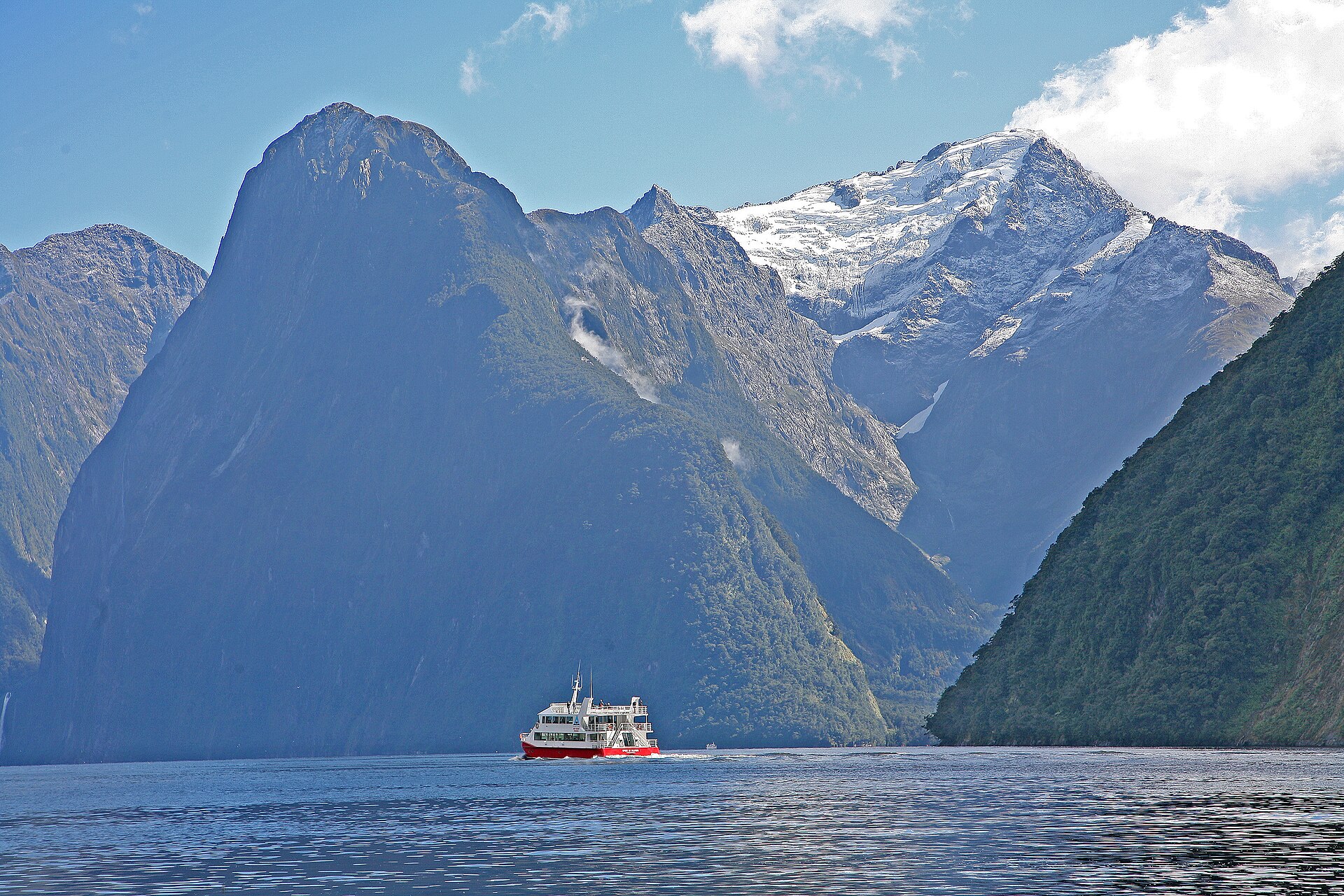
For the crossing itself, a calm day makes the Marlborough Sounds one of the highlights of your holiday, so we would choose a morning sailing and sit on deck for the last hour. If the forecast looks bad, keep your schedule flexible.
If you are comparing costs between seasons, our best time to hire a campervan in New Zealand guide breaks down the months in detail, and we think March and April are the sweet spot for most people.
💡 Our campervan tip: prices for the same van vary a lot between rental brands. We compare New Zealand campervans across 160+ rental companies on CampervanPlanet — and code HUNGRYTRAVELFAMILY20 takes €20 off your booking.
What to do on the Picton side
Picton is a small harbour town at the head of Queen Charlotte Sound, and it is a gateway rather than a destination. Many travellers drive straight out, but it is worth a short stop: the harbourfront has cafés, and the town is well set up for supplies. From here the main choices are:
- West to Nelson and Abel Tasman. Around two hours’ drive, with beaches, golden sand and walking tracks.
- South to Kaikoura. A coastal drive, with wildlife and seafood, on the way to Christchurch.
- The Marlborough Sounds. Winding roads, quiet bays and some of the best scenery in the region, but narrow roads, so take it slowly in a larger vehicle.
If you are doing the full loop, our South Island itinerary shows how to link the main stops, and our Wellington and Cook Strait guide covers the North Island side.
What the ferry fare and the van really cost together
A common mistake is to compare only the daily van price. The real cost includes the ferry (vehicle or foot passenger), a possible one-way fee, and the extra days you may need to allow for weather. For a typical trip, the vehicle fare on the ferry is a few hundred New Zealand dollars at peak times, but fares vary by season and booking date, so check the operator’s current prices rather than relying on a guide.
On CampervanPlanet’s wider New Zealand data, the typical daily price runs from about €71 in the low season to about €194 in peak season, with the cheapest offers well below that. You can compare the current range on the New Zealand price page. Our rule of thumb is that a foot-passenger crossing plus a second rental is usually cheaper only when the vehicle fare and the ferry restrictions would otherwise add a lot; for short trips, keeping the same van is simpler.
Do not forget to check the insurance excess on both rentals, because each one has its own excess and bond.
Insurance, rules and a few New Zealand driving tips
New Zealand drives on the left, roads can be narrow and winding, and distances look short on a map but take longer than you expect. Plan for four to five hours of driving at most on most days, and leave time for stops.
On insurance, ask each company what the standard cover includes, what the excess is, and how much you would pay to reduce it. Our insurance, deposit and excess guide explains the usual structure. Also check what the rental terms say about unsealed roads and ferry travel.
Freedom camping rules in New Zealand have become stricter, and many areas require a certified self-contained vehicle. Our New Zealand freedom camping rules guide explains the details. Use holiday parks and Department of Conservation campsites for the rest, and book them early in summer.

A sample 14-day plan across both islands
To tie it together, here is a plan we would use for a two-week trip in March:
- Day 1–3: Auckland, then the Coromandel or Bay of Islands.
- Day 4–6: Rotorua and Lake Taupō.
- Day 7–8: Wellington, drop the van or board the ferry.
- Day 9: Cross Cook Strait to Picton.
- Day 10–11: Nelson and Abel Tasman.
- Day 12–14: West Coast or Kaikoura, then Christchurch.
That is a lot of driving, so cut a stop if you want a slower pace. When you are ready to book, compare vehicles and prices here, and use our reader code HUNGRYTRAVELFAMILY20 to take €20 off at checkout. It is a small saving, but it pays for a couple of nights at a holiday park.
Honest travel from the Arctic Circle
We send one letter a month — no roundups, no sponsored fluff. Just what we’re doing, where we’re going, and what we actually think.
Book your New Zealand campervan
Compare prices across 160+ campervan and motorhome rental brands, get a free 1GB eSIM with every booking — and €20 off with code HUNGRYTRAVELFAMILY20.
Check prices & availability →Frequently asked questions
Can I take a rental campervan on the Picton ferry?
Often yes, but the rules depend on the rental company. Some charge extra or require advance notice, so check the terms before you book. Many travellers choose to leave the van in Wellington and collect another in the South Island.
How long is the Wellington to Picton ferry?
The crossing takes about three and a half hours. Book ahead in summer, especially around Christmas and New Year, and keep your schedule flexible in case of weather delays.
How much is a campervan in New Zealand?
CampervanPlanet’s Wellington page shows budget two-berth campervans from about €18 a day in spring, with typical prices across New Zealand ranging from about €71 in low season to about €194 in peak season. Enter your dates for live prices.
Is a one-way rental cheaper than taking the ferry?
It depends. A foot-passenger crossing plus a second rental avoids the vehicle fare but may add a one-way fee. Compare both options for your dates.
Is there a discount code for CampervanPlanet?
Yes. Our reader code HUNGRYTRAVELFAMILY20 takes €20 off your booking when you enter it at checkout on CampervanPlanet. It is a fixed €20 discount.
What is the best time to cross Cook Strait?
Autumn, from March to May, is often the calmest and clearest season in Wellington. Summer is busier, and spring can be windy, so choose a flexible day when possible.