
Photo: Michal Klajban, CC BY-SA 4.0, via Wikimedia Commons
If one place in the world was designed for a campervan, New Zealand’s South Island is a strong contender. Short distances, spectacular scenery and a camping culture that treats vans as normal make a New Zealand South Island campervan itinerary one of the easiest big road trips to plan.
We have not driven it in a rental van, so we have approached this as careful researchers: we studied the live listings on CampervanPlanet’s New Zealand page, its Queenstown depot page and the camping rules, and we have kept only what we could check or what is standard local knowledge. Where something depends on the season or the company, we say so.
You can also use our reader code HUNGRYTRAVELFAMILY20 for €20 off at checkout, which is worth entering because South Island trips are often booked months ahead.
A good loop takes 12–16 days from Christchurch to Queenstown or the reverse. Summer (December to February) is peak season and prices reflect it: CampervanPlanet quotes a typical NZ$400 a day in summer against about NZ$161 in winter, from NZ$40. Freedom camping is restricted, so most travellers use holiday parks and Department of Conservation sites.
When to go and how prices move
New Zealand’s seasons are the reverse of Europe’s. December to February is summer: long days, warm weather and the highest prices. March to May is autumn, with golden foliage in Central Otago and noticeably fewer crowds. June to August is winter, which is snow-and-ski country and the cheapest time to hire a van. September to November is spring: lambs, blossom and variable weather.
CampervanPlanet’s New Zealand page quotes typical prices of about NZ$161 a day in winter and NZ$400 in summer, with the cheapest listings from NZ$40. Its fleet spans 107 vehicles from 22 companies. The practical lesson: shoulder months give the best balance. We would choose March or April if our dates were free.
Summer holiday weeks, particularly around Christmas and New Year, can sell out well ahead, so aim to book at least three months before you travel.
A 14-day South Island loop
The classic loop starts and ends in Christchurch, though many people drive one way to Queenstown and fly out. Either way, you are mostly on the State Highway network, with excellent road surfaces and plenty of scenic pull-offs.
Two weeks, ten stops
- Days 1–2 — Christchurch to Kaikōura: collect the van, then drive up the coast for seals and whale-watching tours.
- Days 3–4 — Abel Tasman or Nelson: coastal walks and golden beaches; Nelson is a good depot for a one-way start.
- Days 5–6 — West Coast to the Glaciers: Franz Josef and Fox Glacier through rainforest, wet weather permitting.
- Days 7–8 — Wānaka: lake views, short walks and a quiet pace after the glaciers.
- Days 9–10 — Queenstown and Glenorchy: adventure capital, lake cruises and a very scenic drive.
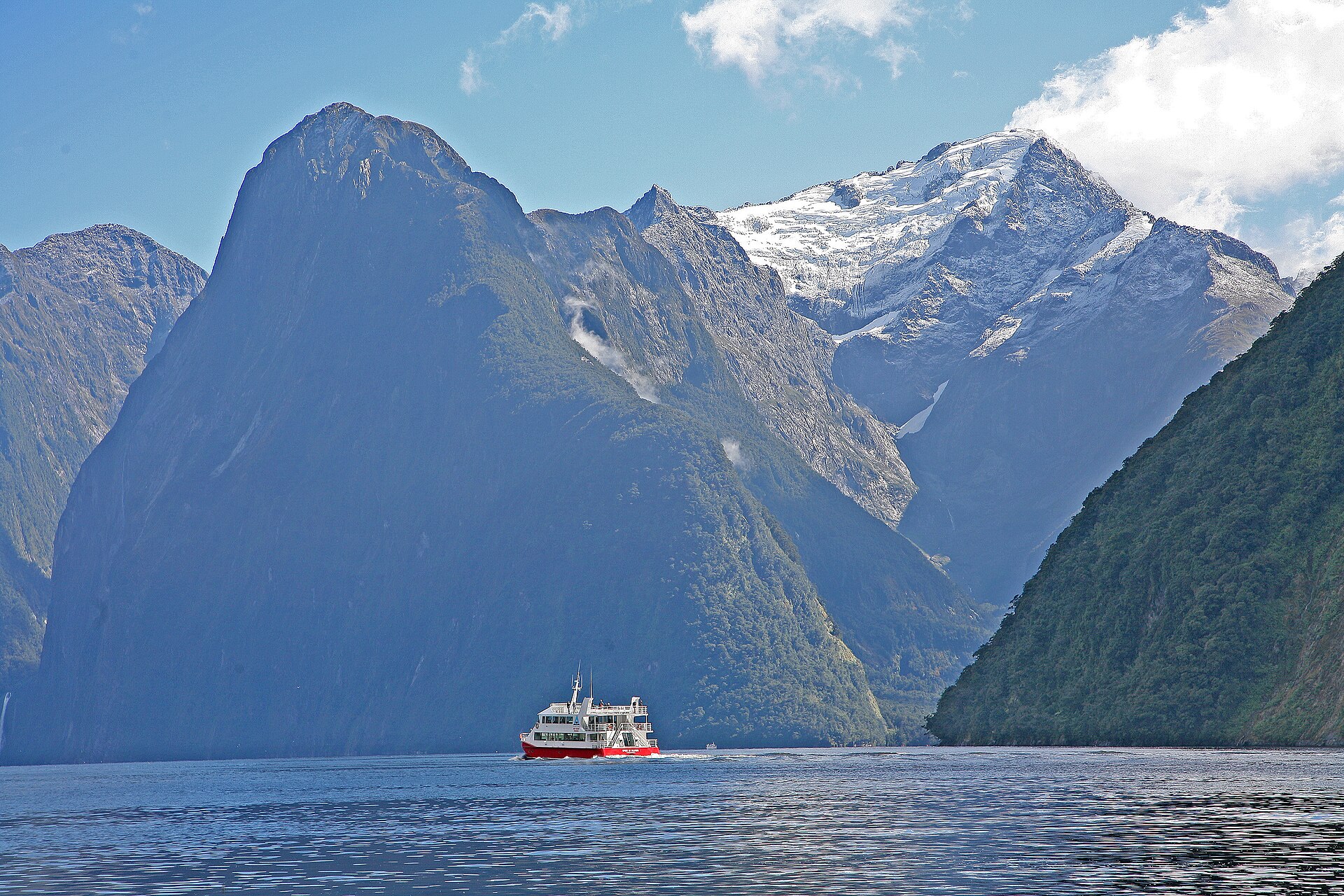
- Days 11–12 — Milford Sound: a long day trip from Te Anau; leave early and check the road status.
- Days 13–14 — Lake Tekapo and Aoraki Mount Cook: a pale blue lake and the country’s highest peak, then back to Christchurch.
Allow more time than the map suggests. The roads are good, but the scenery slows you down, and a day of rain can turn the glacier road into a crawl.
Freedom camping: what you can and cannot do
New Zealand’s freedom-camping rules have tightened in recent years. In many places you may only stay overnight in a vehicle that has a self-containment certificate, which usually means an on-board toilet and a water system, and you must use the designated sites. Fines apply to people who ignore the rules, and local councils publish maps of permitted areas. The country also has a growing number of Department of Conservation campsites, which are inexpensive and often beautifully located, though facilities are basic.
Our advice is simple: pick a van that matches the rule you intend to use. A self-contained vehicle opens up more sites; a basic non-certified van means more holiday parks. Neither is wrong, but you should know which you are booking before you pay.
For comfort, think about the weather. Even in summer, Fiordland and the West Coast can be cold and wet, and nights at Aoraki Mount Cook can drop close to freezing. Our guide to camping in wind, rain and cold applies directly.
💡 Our campervan tip: prices for the same van vary a lot between rental brands. We compare New Zealand campervans across 160+ rental companies on CampervanPlanet — and code HUNGRYTRAVELFAMILY20 takes €20 off your booking.
Choosing a van for the South Island
Most couples are comfortable in a standard 2-berth campervan; families will look at 4-berth vans or small motorhomes. Many travellers also consider a rooftop-tent car, which CampervanPlanet lists on separate pages for Christchurch, Auckland and Queenstown. Our discussion of rooftop tents sets out the trade-offs honestly: cheap, but you pitch in every sort of weather.
Drop-off logistics matter as much as the van. A pick-up in Christchurch and a drop-off in Queenstown usually carries a one-way fee, but saves you a 480 km return drive. If you intend to combine the North and South Islands, remember that vans cross on the Cook Strait ferry between Wellington and Picton, and you need to book a vehicle space.
Finally, check the insurance. The standard cover carries an excess, and plans differ on windscreens, tyres and gravel-road damage. The Queenstown depot page summarises the pick-up points for the South Island loop.
What the trip costs
The Queenstown page shows campervan hire from NZ$124 a day on one sample, so the realistic range for a 14-day loop is wide. In winter you might pay around NZ$160 a day; in peak summer, closer to NZ$400 a day for a typical hire. On top of that, expect holiday-park fees, fuel (which is dearer than in Australia or the USA), a few paid attractions and ferry costs if you add the North Island.
The most reliable way to cut the bill is to move the dates. Avoid Christmas and January if you can, travel in March or April, and book early. We would also compare at least three brands on identical dates; the price differences between a basic and a premium van on the same day can be dramatic.
If you book via CampervanPlanet, code HUNGRYTRAVELFAMILY20 takes €20 off at checkout. It is not much against a four-figure rental, but it is free.
Final word from Rovaniemi
Two weeks, one van and a loose plan is all this trip needs. Lock in your vehicle early, pick the right season, and respect the freedom-camping rules, because they exist to protect the places you came to see.
Before you book, our campervan rental guide covers the questions to ask about deposits and insurance, and our reader code HUNGRYTRAVELFAMILY20 is waiting at checkout. Safe travels, and enjoy the lakes.
Book your New Zealand campervan
Compare prices across 160+ campervan and motorhome rental brands, get a free 1GB eSIM with every booking — and €20 off with code HUNGRYTRAVELFAMILY20.
Check prices & availability →Frequently asked questions
How many days do you need for the South Island in a campervan?
Twelve to sixteen days is ideal for a full loop. Ten days covers the highlights if you skip Abel Tasman or the East Coast, and a week is only enough for a short Christchurch-to-Queenstown route.
Can you freedom camp anywhere in New Zealand?
No. Rules have tightened, and many areas require a self-contained vehicle and a designated site. Check local council maps and signs, and plan to use holiday parks and Department of Conservation campsites.
When is the cheapest time to hire a campervan in New Zealand?
Winter, from June to August. CampervanPlanet quotes a typical NZ$161 a day in winter against about NZ$400 in summer. Shoulder months of March, April and October are a good compromise.
Do I need a 4WD campervan in New Zealand?
Not for the main South Island loop. Major roads, including Milford Road, are sealed, though weather can close them. Gravel roads are usually off limits under rental terms.
Is there a discount code for CampervanPlanet?
Yes. Our reader code HUNGRYTRAVELFAMILY20 takes €20 off your booking when entered at checkout on CampervanPlanet. It is deducted from our commission, so you do not pay extra.
Can I take a campervan on the ferry between the islands?
Yes, the Cook Strait ferry between Wellington and Picton carries vehicles, but you need to book a vehicle space and check that your rental contract allows the crossing.
Keep your crypto offline, not in an exchange app
Any crypto we hold lives on a Trezor hardware wallet — a small offline device in a drawer in Rovaniemi, not on a phone that crosses borders every month. If you’ve been meaning to sort that out, this is the link we’d send a friend.