WESTERN EUROPE · BELGIUM
Belgium,
Waffles and beyond
Honest notes on Brussels, the medieval cities, and the Ardennes — from a family that keeps coming back for the waffles.
SCROLL
WESTERN EUROPE · BELGIUM
Waffles and beyond
Honest notes on Brussels, the medieval cities, and the Ardennes — from a family that keeps coming back for the waffles.
SCROLL
BEST TIME
Apr — Jun
LANGUAGE
Dutch, French, German
CURRENCY
EUR
OUR VISITS
3 visits
We are not first-timers here. Three trips in, we know which friterie beats every guidebook pick and which Christmas market gets too crowded by noon. Belgium rewards the people who keep coming back — and we keep coming back for the waffles.


Spring (April–June) and early autumn (September–October) are our favourites: the Ardennes are green, the Flemish towns feel walkable, and the canal cities of Bruges and Ghent are calmer than high-summer crowds. Expect mild temperatures, showers on and off, and tulip season in late April if you venture toward the Dutch border.
Summer (July–August) is busy but festive: open-air beer festivals, coastal weekends in Ostend, and Tomorrowland if you are into electronic music. Winter has its own case — December’s Christmas markets in Brussels and Bruges are stunning, and chocolate shops do their best window displays of the year.

Brussels. The Grand Place is the postcard, but the city reveals itself in its neighbourhoods. Walk Sablon for antique shops and chocolate, Saint-Gilles for Art Nouveau houses, and the EU quarter if geopolitics is your thing. The frites are better at a neighbourhood friterie than anywhere the guidebooks send you.
Bruges and Ghent. Twenty minutes apart by train and very different in feel. Bruges is a medieval museum-town best enjoyed after the day-trippers leave; Ghent is a working city with great street art and a canal-side old centre that locals actually live in.
The Ardennes. The wooded southeast of Belgium, full of castles, river valleys, and Second World War history. Drive from Dinant through Bouillon and Bastogne on a long weekend and you will see a Belgium few tourists meet.
For a first trip: three nights in Brussels, one night in Bruges or Ghent, and a day in Antwerp. For a second trip: base in Namur or Dinant and loop through the Ardennes. Belgium is small enough to see a lot on trains alone — you rarely need a car unless you are heading into the hills.
Trains are the easy answer. SNCB connects every major city on 30–60-minute runs, and a day-return between Brussels, Antwerp, Ghent, and Bruges is under €25. Brussels has a metro, trams, and an easy airport train link. For the Ardennes, a rental car makes the stops between villages much easier — the trains reach the main towns but the pretty bits are in between.
Skip any joke about Belgian food being only waffles and fries — this is one of the most serious food cultures in Europe. Brussels has a Michelin scene that actually takes risks, Antwerp is an emerging name in modern European cooking, and every small town has a brasserie where a carbonnade flamande, moules-frites, or a plate of stoemp is done properly for under €20. Do not leave without trying a proper Belgian beer paired with a meal — a Trappist abbey ale with stew is the real deal.

Belgium sits in the middle of Western Europe pricewise — and it is, but not wildly so if you plan it right. These are real numbers we’ve seen for two adults travelling mid-range in 2025: comfortable but not fancy, one nice meal a day, public transit, one paid activity.
Expect ~110 – 180 EUR per day for two (roughly €165 – 260). Brussels and Antwerp are the most expensive; smaller towns cut this by 20–30%.
Pack light, layer smart. Belgian weather shifts from sun to drizzle in an hour. Two thin layers beat one thick one every time.
Leave the cash at home. We travel with one backup bill and never use it. Many buses and small cafés don’t take cash at all.
Book the frites and the beer. A proper friterie lunch and an evening in a brown café are worth planning a day around — the good ones fill up.
Winter? Double up. Boots one size up with thick wool socks, hand warmers, and a windproof shell — even locals layer aggressively in January.
Belgium rewards slow travel. Unlike France, where distance dictates the route, Belgium hands you cathedrals, beer halls, and chocolate shops within a 90-minute train ride of each other. Take a day to wander without a plan. The smaller towns — Leuven, Mechelen, Namur — are where the country really lives.
BELGIUM IN PHOTOS
Our trip, one frame at a time

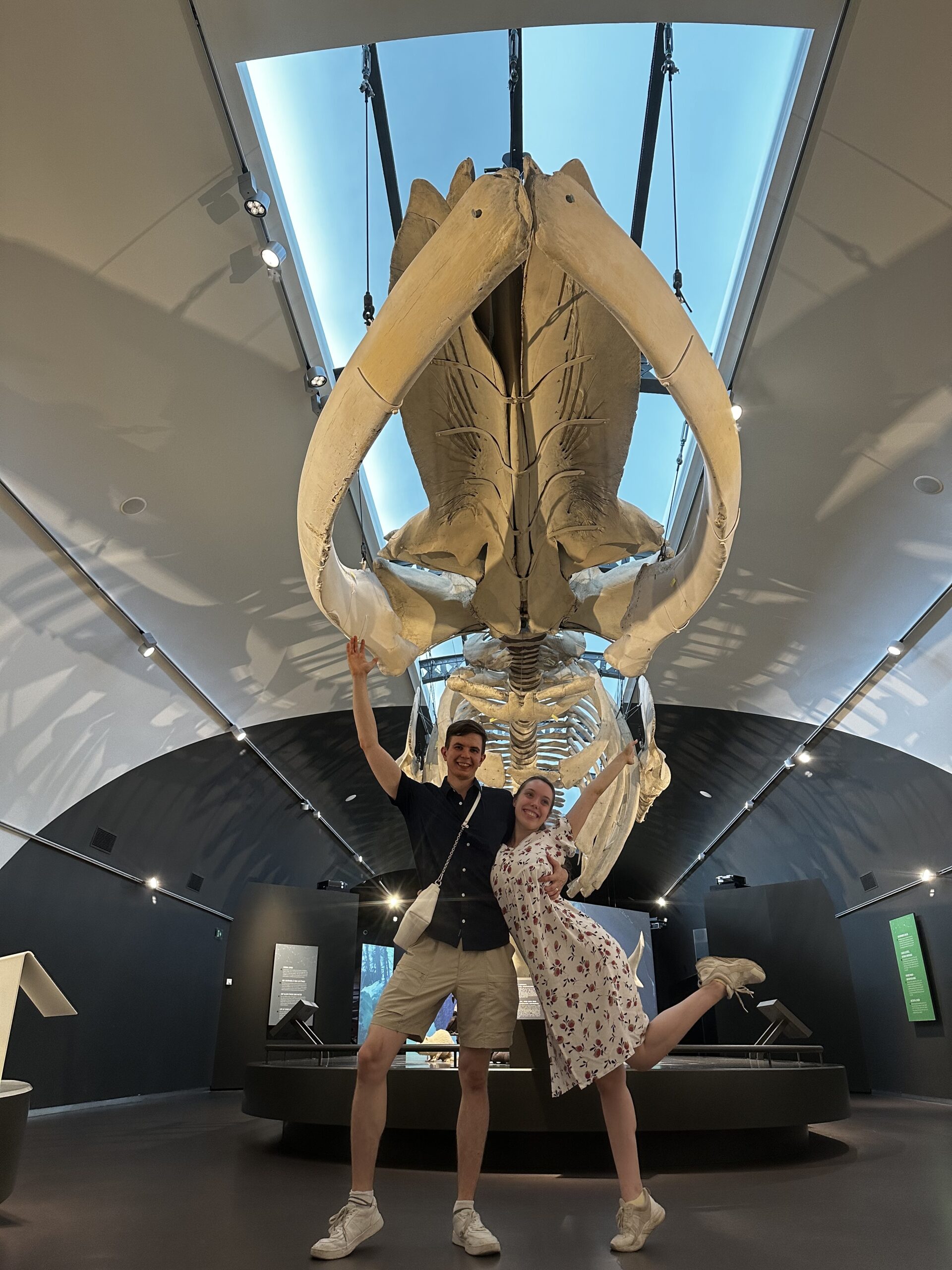

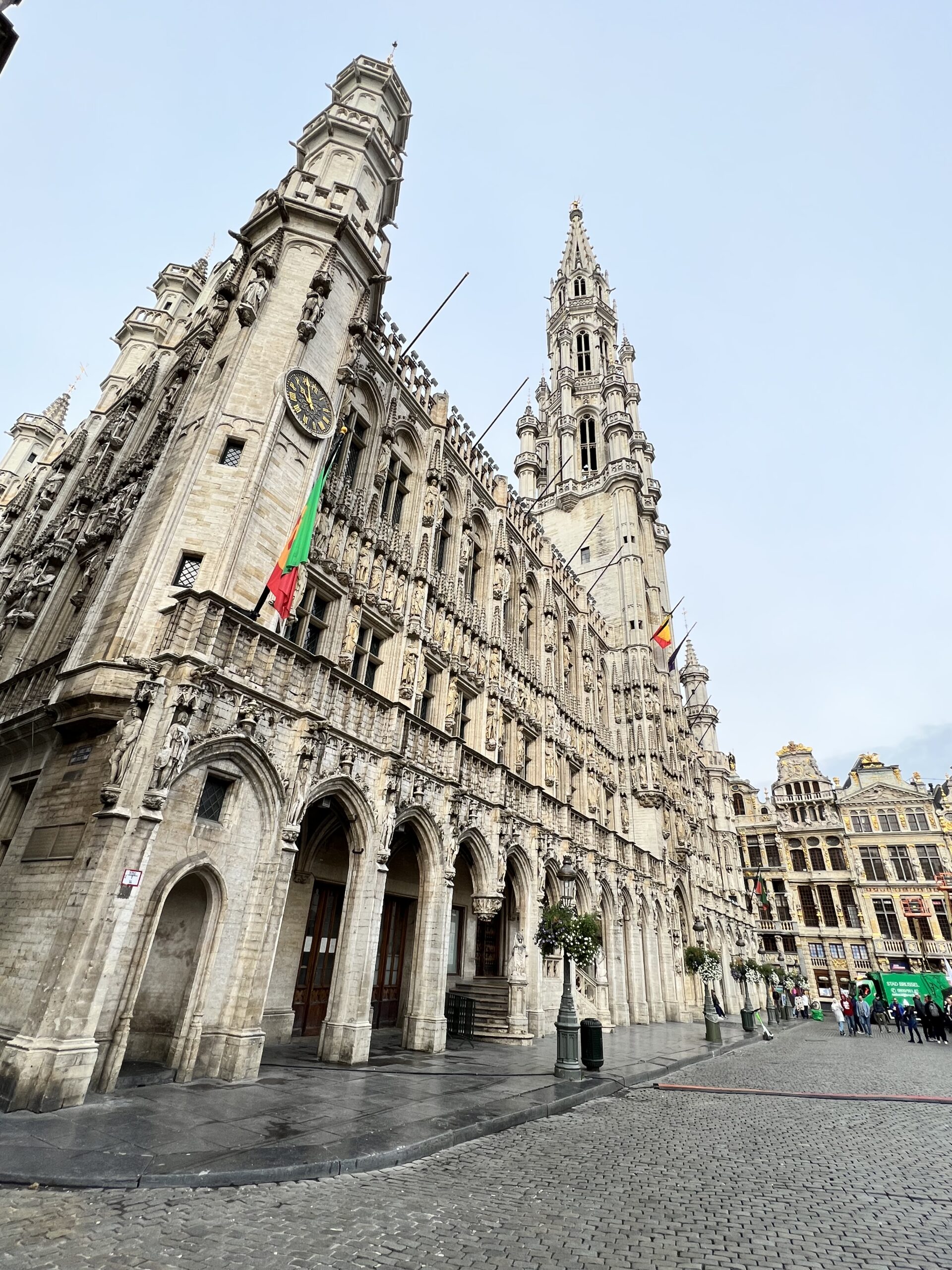

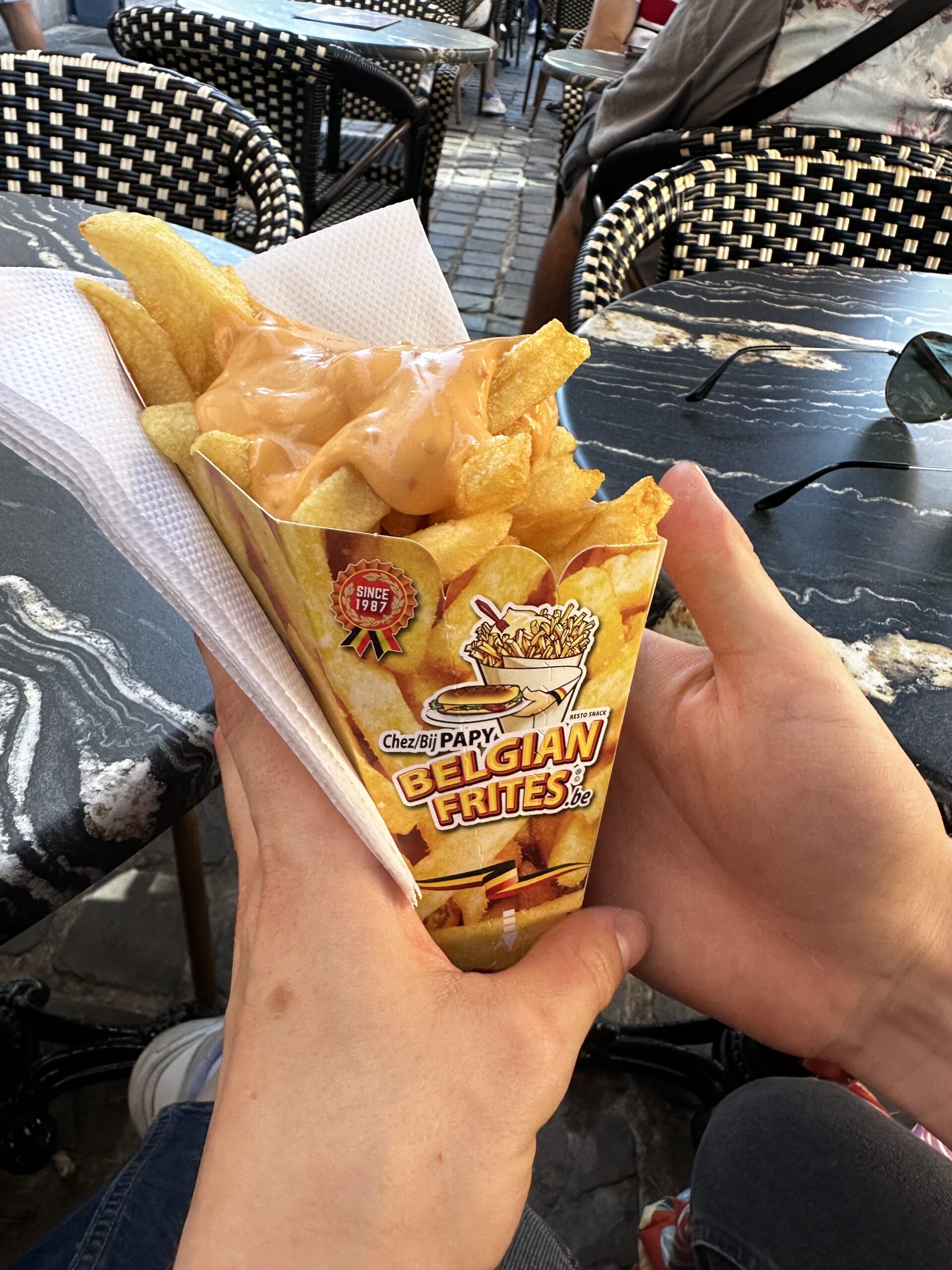
Both, honestly, but if pushed: Brussels if you want a dense, polyglot capital with world-class food and a walkable centre; Amsterdam if you want design, canals, and a livelier evening scene. Brussels rewards repeat visits — it unfolds slowly.
Yes, but go early or stay the night. Day-trippers arrive by coach from 10am and leave by 5pm — if you walk the canals before or after those hours, Bruges becomes the quiet medieval town it actually is. One night there changes the visit entirely.
KEEP EXPLORING
Swipe sideways — these are destinations we've been to and written about.
Monthly stories from Rovaniemi — Arctic tips, packing lists, and the places we keep coming back to.