WESTERN EUROPE · LUXEMBOURG
Luxembourg,
from its quieter neighbour
A tiny Grand Duchy that quietly mixes French flair, German order, and its own deep-rooted Lëtzebuergesch soul.
SCROLL
WESTERN EUROPE · LUXEMBOURG
from its quieter neighbour
A tiny Grand Duchy that quietly mixes French flair, German order, and its own deep-rooted Lëtzebuergesch soul.
SCROLL
BEST TIME
May — Sep
LANGUAGE
Luxembourgish
CURRENCY
EUR
OUR VISITS
2 visits
Luxembourg is the country most people drive past on the way to somewhere else — which is exactly why it surprises you when you stop. It’s a tiny Grand Duchy squeezed between Belgium, France and Germany, three languages layered on top of each other, and a capital city split between a medieval old town on the plateau and the green Grund valley tucked below.
We came here expecting a banker’s bubble and left with notes about wooded ravines, ridiculously good bakeries, free public transport across the entire country, and castles that look pulled out of a fairytale book. It’s small enough to see in a long weekend, and rewarding enough that you’ll plan a second trip before you fly home.


Late spring to early autumn (May–September) is Luxembourg at its best: long evenings along the Grund, green valleys in the Mullerthal, and terrace weather in Luxembourg City’s Place d’Armes. June and July are warm but never crowded by Western-Europe standards.
December is the sneaky alternative — the capital’s Christmas markets are small but genuinely charming, and a weekend of mulled wine plus castle visits in crisp air feels like you stumbled into a storybook.
We’d avoid mid-August when many locals are away and some small-town restaurants close for summer holidays.

Walk the Chemin de la Corniche. Called “Europe’s most beautiful balcony,” this rampart path wraps around the old town with the Grund valley dropping below you. It’s the single walk that explains the whole country.
Descend into the Bock Casemates. A UNESCO-listed tunnel network carved into the cliff. Damp, cold, and fascinating — you come out understanding why the city was once called “the Gibraltar of the North.”
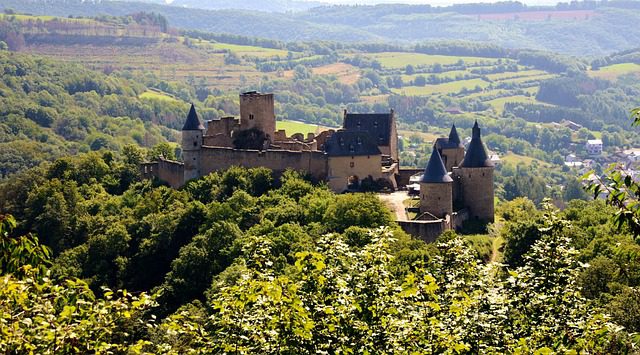
Day trip to Vianden Castle. A proper hilltop fortress, beautifully restored. The chair-lift over the Our valley and the walk back down through the woods is the afternoon we recommend to every visitor.
Hike Mullerthal “Little Switzerland.” Sandstone gorges, moss, hidden waterfalls. Trail W3 around Berdorf is the classic, and it’s reachable by free public transport from the capital.
For a first trip: three nights in Luxembourg City is plenty for the sights and gives you two day trips. The country is small enough that nothing is more than a 90-minute train ride away.
Luxembourg City neighbourhoods: the Ville Haute for walkable old-town charm (most hotels sit here), the Grund for riverside evenings and local bars, and Kirchberg for modern architecture and the EU institutions — cheaper rooms, but less atmospheric.
If you’re travelling slowly and want countryside, two nights in Echternach puts you at the edge of Mullerthal hiking country.
Public transport is free across the entire country — trains, trams, buses. Luxembourg was the first country in the world to make it free nationwide, and it’s genuinely the best travel-hack in Europe.
The central station (Gare) connects directly to Brussels (3h), Paris (2h15), and Frankfurt (~4h). Inside the capital, the new tram runs from the station up through the old town to Kirchberg in about 20 minutes.
A car is only worth it if you’re doing multiple castles in a day — otherwise, trains cover Vianden (change at Ettelbrück), Echternach, and Clervaux without any hassle.
Luxembourg’s food scene is a quiet French-German mashup with a serious sweet tooth. Expect proper wine lists, very good bread, and bakeries that take pastry as seriously as Paris but with half the crowds.
What we always eat: Gromperekichelcher (crispy potato fritters from street stalls), Judd mat Gaardebounen (smoked neck of pork with broad beans — the unofficial national dish), and Käschtchen pastries in autumn. The Moselle valley produces surprisingly good white wines — Rivaner and Pinot Gris — often poured at lunch for the price of a beer elsewhere.
Splurge: a long lunch at a Michelin-starred spot in Clausen or along the Moselle costs roughly what a mid-range dinner would in Paris.

Mid-budget day, per couple
• Double room, central hotel: €150–220
• Two coffees + pastry: €10
• Casual lunch (two plates, one glass of wine): €50–75
• Public transport: free — properly, truly, across the whole country
• Castle / museum tickets: €10–15 each
• Dinner (two courses + wine for two): €80–120
≈ €300 – 440 per day for two
Hotel is the big swing — Kirchberg and airport hotels are €100–130, old-town boutique rooms push €250+.
Use the free public transport even for short hops. Trams and lift-bridges in Luxembourg City connect the upper and lower towns without a step climb — save your legs for the Mullerthal.
Lunch, not dinner, for Michelin. Most fine-dining spots run a lunch menu at half the evening price. Same kitchen, same terrace, more change in your pocket for wine.
Skip the airport taxi. Bus 16 and now the tram extension reach the city in ~20 minutes, free. The taxi queue takes longer and costs €30+.
Book Vianden castle first thing. Most day-trippers arrive after lunch. Morning light on the castle walls is the photo you came for, and you’ll have the courtyards almost to yourself.
Ask for Crémant, not Champagne. Luxembourg’s sparkling wine from the Moselle is excellent and a fraction of the price of its French cousin — every decent restaurant pours it by the glass.
Luxembourg rewards a weekend, not a week. It’s the country we recommend when someone wants a micro-Europe sampler — French food, German order, Belgian cosiness, all inside one compact Grand Duchy you can cross in an hour by train. And the fact that all that train travel is free still makes us smile.
If you like your Europe quieter, better fed than expected, and small enough that you can actually see it all, Luxembourg is the trip your friends will ask about when they see the photos.
LUXEMBOURG IN PHOTOS
Our trip, one frame at a time



Brussels if you want museums, Art Nouveau, and more chaos. Luxembourg if you want a tight, walkable weekend with castles in striking range and better hiking. They’re a 3-hour train apart — pair them if you can.
Tight but doable — you can see the Ville Haute, walk the Corniche, descend into the Grund and take in the Bock Casemates in a long day. For Vianden or Mullerthal on top of that, stay at least two nights.
KEEP EXPLORING
Swipe sideways — these are destinations we've been to and written about.
Monthly stories from Rovaniemi — Arctic tips, packing lists, and the places we keep coming back to.