What Language Do They Speak in the Faroe Islands?
The short answer is Faroese — but what that actually means for your trip, how close it is to languages you might know, and what to expect on the ground is a far more interesting story.
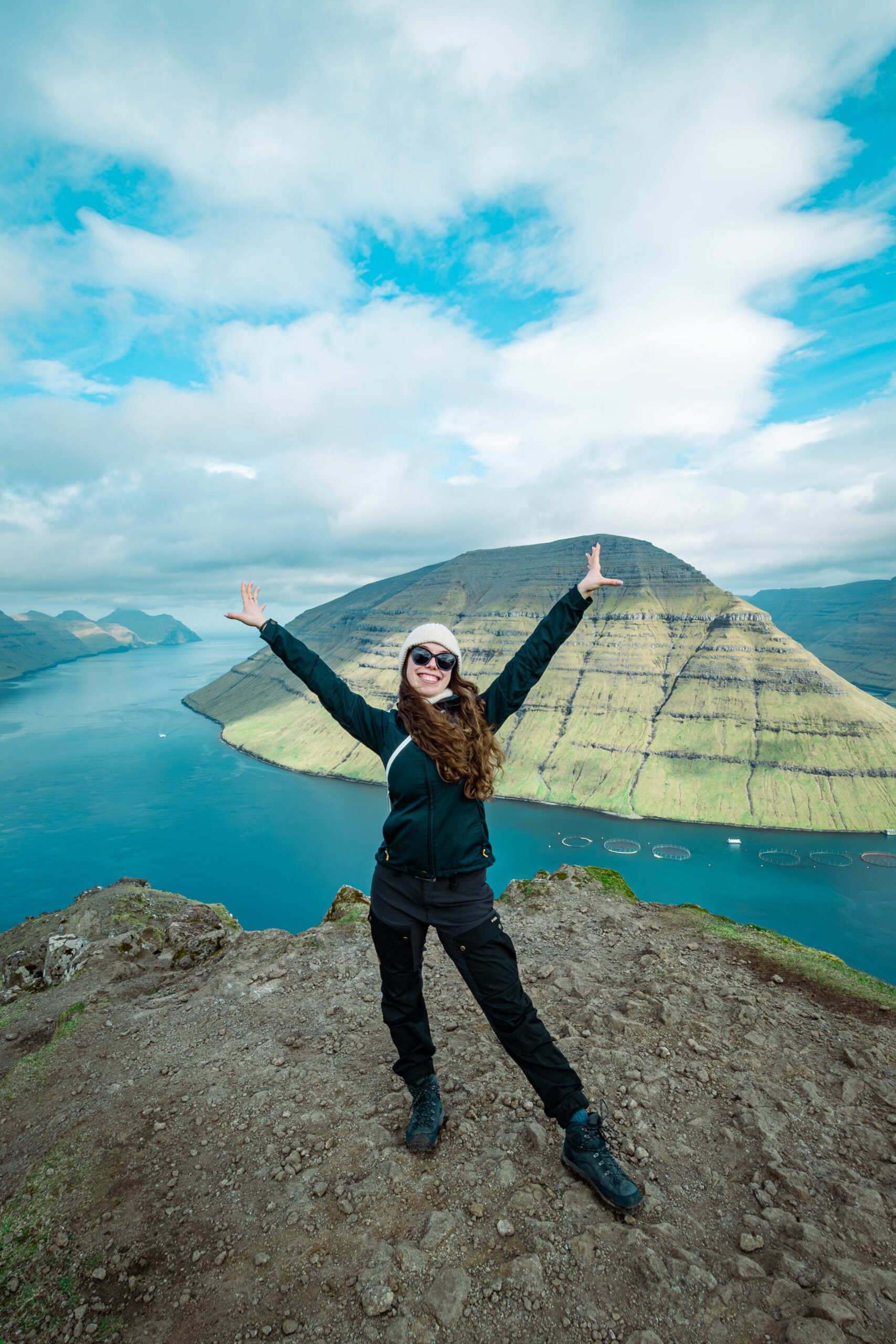
When we arrived in the Faroe Islands for the first time, the road signs made us pause. They were written in a language that looked vaguely Norse, felt almost Icelandic in places, and occasionally contained characters we’d never seen in any of the 25 countries we’d visited before. That language is Faroese, and it’s one of the most linguistically fascinating corners of the North Atlantic.
But here’s the thing that actually matters for your trip: the Faroe Islands are absurdly easy to visit as an English speaker. The language barrier you might worry about barely exists in practice — yet understanding what people actually speak there makes the islands feel richer, stranger, and more worth visiting.
The Faroe Islands speak Faroese, a North Germanic language descended from Old Norse. Danish is the second official language and is taught in all schools. English is spoken fluently by the vast majority of Faroese people, especially anyone under 60 — you will have no language difficulties as a tourist.
What is Faroese — and where did it come from?
Faroese (føroyskt in Faroese itself) is a North Germanic language, part of the same family as Icelandic, Norwegian, Swedish, and Danish. It developed from the Old Norse brought to the islands by Viking settlers in the 9th century, and because the Faroe Islands are so remote — sitting alone in the North Atlantic, roughly equidistant between Iceland, Norway, and Scotland — Faroese evolved in near-isolation for centuries.
Why Faroese sounds like Old Norse frozen in amber
Linguists sometimes describe Faroese as the language closest to what Old Norse actually sounded like. While Norwegian and Danish evolved significantly under continental European influence, Faroese kept many archaic features: preserved case endings, verb conjugations that other Scandinavian languages simplified away, and a phonology full of sounds that exist nowhere else in modern Germanic languages.
- Written: Faroese uses the Latin alphabet with a few added characters — ð (eth), æ (ash), ø (o with stroke), and ý — which gives road signs an immediately distinctive look.
- Spoken: The pronunciation bears almost no resemblance to the spelling, partly because the orthography was standardised in the 19th century to reflect etymology rather than phonetics.
- Native speakers: Roughly 70,000 to 80,000 worldwide — mostly in the Faroe Islands themselves, with smaller communities in Denmark.
- Status: Faroese became the official language of the Faroe Islands in 1948. Before that, Danish had been the administrative and church language for centuries, which is why Danish still plays a significant role today.
Danish, English, and why the Faroe Islands are multilingual
The Faroe Islands are a self-governing archipelago within the Kingdom of Denmark, which means Danish sits alongside Faroese as a second official language. Every child in the Faroe Islands learns Danish in school from a young age — and later, English too. The result is a genuinely multilingual population.
The language hierarchy in daily life
In practice, the language landscape works roughly like this:
- Faroese is what people speak to each other at home, in shops, in the pub, at football matches. It’s the living language of everyday Faroese identity.
- Danish is used in official government contexts, legal documents, some media, and communication with Denmark. Older Faroese people often switch naturally into Danish when speaking to mainland Danes.
- English has become the dominant language for tourism, hospitality, and increasingly for business. Most Faroese people under 50 speak excellent English — not textbook English, but fluent, confident, natural English.
We found that in Tórshavn, Gásadalur, Gjógv, and every other village we passed through, starting any conversation in English was met with an immediate, easy switch. Nobody seemed put out by it. The Faroese are matter-of-fact about their multilingualism — it’s simply a practical reality of living on a small island nation that trades globally.
Useful Faroese words and phrases — a copy-paste reference
You don’t need Faroese to visit — but knowing a handful of words goes a long way. The Faroese notice and appreciate the effort, even if they immediately respond in perfect English.
Gott dagur — pronounced roughly “got da-oor”. The everyday greeting. You can also say hej (borrowed from Danish), which everyone recognises.
Takk — pronounced exactly as it’s written. Same root as the Norwegian and Icelandic equivalents. Universally understood and appreciated.
Ja / nei — pronounced “ya” and “nay”. Instantly recognisable to anyone with any Scandinavian exposure.
Talar tú enskt? — pronounced approximately “talar too enskt”. You almost certainly won’t need this, but it’s a respectful opener in smaller villages.
Hvar er…? — “hvar” sounds like “kvar”. As in: Hvar er íðróttatunnilin? (Where is the sports hall?) — okay, you probably won’t need that one. But “Hvar er…” as a phrase opener is useful.
Skal! — same as Norwegian, Danish, and Swedish. If you’re in a pub in Tórshavn and someone raises a glass, this is your word.
Farvæl — a more formal farewell. Informally, people also say hej hej or simply bless (borrowed from Icelandic usage and common across the North Atlantic islands).
Færøyar er frítt — “The Faroe Islands are beautiful.” Say this to a local and watch their face. They will absolutely not tire of hearing it, because it’s true, and they know it.
Travel writing from the Arctic Circle
Monthly dispatches on the Nordic countries, North Atlantic islands, and honest travel from a couple who actually lives here.
What to expect as a tourist: language on the ground
We’ll be direct about this, because it’s actually useful to know before you go.
English works everywhere in the Faroe Islands
- Tórshavn: Completely English-friendly. Hotels, restaurants, taxi drivers, the tourist information office — all operate seamlessly in English.
- Smaller villages: Younger residents speak English confidently. Older people in very remote spots might have more limited English, but even then, basic communication works through Scandinavian cognates and goodwill.
- Road signs: All in Faroese only — the same place names appear in Faroese on signs that you’ll see in English on maps and apps. This is the biggest practical point to be aware of.
- Restaurant menus: Almost always bilingual (Faroese and English), especially in Tórshavn. In smaller village eateries, English menus are typically available on request.
- GPS and apps: Google Maps and Apple Maps handle Faroese place names reasonably well, though some smaller settlements appear in slightly different transliterated forms.
The one area where language trips people up
Road signs. The Faroese names on signs — Tórshavn, Vágar, Klaksvík, Sólvagur — look dramatically different when you’ve only ever seen the English spellings. Spend ten minutes before your trip mapping the Faroese sign-names to the English versions you’ve used in planning. It saves confusion on narrow single-track roads.
Faroese vs Icelandic vs Norwegian: how similar are they?
This is the linguistically interesting part. The North Germanic languages all share a common Old Norse ancestor, but they’ve diverged in different directions over a thousand years.
- Faroese and Icelandic are the closest pair — both preserved archaic Old Norse features that mainland Scandinavian languages lost. A fluent Icelandic speaker can often read Faroese reasonably well, though speaking and listening comprehension are harder due to different sound changes.
- Faroese and Norwegian share vocabulary roots but sound very different. Written Norwegian (especially Nynorsk) is recognisable to a Faroese reader, but spoken Norwegian feels quite foreign.
- Faroese and Danish share centuries of administrative overlap. Many Danish loanwords entered Faroese during the colonial period. Older Faroese people switch between the two easily.
- Faroese and English share distant Germanic ancestry. If you know German or Dutch, you’ll occasionally spot a Faroese word that looks familiar. For most English speakers, it’s opaque but charming.
One thing that fascinated us: Faroese has a strong language purism movement. Rather than borrowing foreign words directly, Faroese linguists coin new terms from existing Faroese roots. The word for “telephone” is síminn — from an ancient Norse word for thread — rather than a borrowed international form.
Linguistic mistakes we made in the Faroe Islands
- Trying to pronounce Faroese village names phonetically. They’re not phonetic. Hjórsey does not sound how it looks. Look up the audio; your GPS will thank you.
- Assuming Danish would help more than it did. Joona’s Swedish gave him about 30% comprehension of written Faroese. Alla’s approach of just speaking English was faster.
- Not learning the Faroese name for our destination. On one drive we were looking for a sign to “Saksun” and almost missed it because the sign read the same — but other villages have quite different English and Faroese spellings.
- Assuming older locals wouldn’t speak English. We were wrong almost every time. The Faroese education system has been thorough for decades.
- Forgetting to say takk. It’s two letters and a double consonant. There is no excuse. Say takk.
- Not asking about the language. The one thing we got right — eventually — was asking locals about Faroese itself. Everyone had something interesting to say about what it means to speak a language that only 80,000 people in the world know.
Frequently asked questions about language in the Faroe Islands
Do I need to speak Faroese or Danish to visit the Faroe Islands?
Not at all. English is spoken fluently throughout the islands, especially in Tórshavn and in any tourism-facing context. You will not encounter a meaningful language barrier as an English-speaking tourist.
Is Faroese similar to Icelandic?
More than any other language pair in the North Germanic family. Both preserved archaic Old Norse features that mainland Scandinavian languages lost. Written mutual intelligibility is reasonable; spoken comprehension is harder, as the two languages sound quite different.
What is the official language of the Faroe Islands?
Faroese is the primary official language. Danish is the secondary official language, reflecting the islands’ status as a self-governing territory within the Kingdom of Denmark. All official government business can be conducted in either language.
How many people speak Faroese?
Approximately 70,000 to 80,000 people speak Faroese as a native language, primarily in the Faroe Islands and in the Faroese community in Denmark. It is one of the smallest living languages in the Germanic family.
Are road signs in the Faroe Islands in English?
No — road signs are in Faroese only. This is the most practically important language note for visitors, since the Faroese spelling of village names can differ significantly from English transliterations. We recommend mapping the key Faroese place-names to your itinerary before you drive.
Can I get by in the Faroe Islands without speaking any Scandinavian language?
Absolutely. English is the default tourist language. Knowing a few Faroese words — takk (thank you), gott dagur (hello), ja/nei (yes/no) — will earn you warm smiles, but is entirely optional for a comfortable trip.
A final word from Rovaniemi
We came to the Faroe Islands expecting dramatic cliffs and Atlantic weather. We got those. What we didn’t expect was to spend half a dinner conversation with a local fisherman in Klaksvík talking about the mechanics of Faroese grammar — specifically, why Faroese preserved grammatical gender when Danish dropped it, and what that says about how isolation shapes a language.
The Faroese are not precious about their language in an unwelcoming way. They will speak English to you without hesitation, and they genuinely enjoy it when visitors are curious about Faroese itself. Ask someone how to pronounce the village you’re driving to. Ask what “færøyar” actually means (it’s “sheep islands” — named for the animal that outnumbers people). You’ll get a story.
The Faroe Islands speak Faroese with a quiet pride that doesn’t need your validation. But if you meet it with curiosity, you’ll find a language — and a people — worth knowing far better than a few days on the islands allows.
Joona & Alla
A Finnish-Ukrainian couple living in Rovaniemi, Finland. Joona is a marketing professional in Lapland tourism; Alla is an AI Engineer. Together we’ve visited 25 countries and share honest, locally-grounded travel writing from our home in the Arctic.
Read our full story →