Most people see the South Island as a clockwise loop that starts in Christchurch and ends at Queenstown. Dunedin tends to be a lunch stop at best. We think that undersells it. Dunedin sits at the edge of a harbour that holds the world’s only mainland breeding colony of royal albatross, a peninsula with yellow-eyed penguins and sea lions, and a coastline further south, the Catlins, that feels like the end of the map. Inland, the Central Otago goldfields and vineyards are a couple of hours away.
Dunedin campervan hire works well for exactly this kind of trip, because everything is close and the roads are quiet. We write from Rovaniemi, so this is a researched planning guide, not a diary of our own trip: we have gone through the live listings on the CampervanPlanet Dunedin page, mapped the routes and checked what is typical for the season.
CampervanPlanet lists pick-ups at Dunedin Airport, Dunedin city centre, Port Chalmers, Mosgiel, Queenstown and Invercargill. At the time of writing its New Zealand averages are about NZ$163 a day from May to September and NZ$367 a day from December to February, so the Christmas and January school holidays cost more than twice as much as winter. Book early for summer 2026-27, and use code HUNGRYTRAVELFAMILY20 for €20 off at checkout.
Why base a trip in Dunedin
Dunedin is a university city of about 130,000 people, built by Scottish settlers around a long, sheltered harbour. It has a Victorian railway station that photographs better than most cathedrals, the steepest residential street in the world according to the record books (Baldwin Street), and a gold-rush past that left behind grand stone buildings. Visitors tend to arrive by flight from Auckland, Wellington or Christchurch, or by road from Queenstown.
For campervan travellers the appeal is practical. It is far less crowded than the big tourist towns, campsites and holiday parks are easy to find on the outskirts, and the one-way possibilities are good: collect in Dunedin, drop in Queenstown or Christchurch, or the other way round. If you only want a taste of the south, a five-to-seven day loop from Dunedin gives you coast, wildlife, mountains and wine without a single long driving day.
Our broader advice on choosing a vehicle type is in our campervan rental guide, and if you are still deciding between islands, our Queenstown and South Island loop guide covers the more famous half of the island.
Four routes from Dunedin
The Dunedin page on CampervanPlanet maps four itineraries. These are the ones we would pick from.
Otago Peninsula wildlife loop (1 day, or 2 for a slow pace)
The peninsula road follows the harbour out towards Taiaroa Head, where the albatross colony lives. You can see seabirds at Pilots Beach, fur seals on rocky ledges and, if you are patient and quiet, yellow-eyed penguins coming ashore in the evening. It is a short drive, which is why it makes an easy first day with a new vehicle. Allow time for the narrow, winding road, which a 6-metre motorhome will not enjoy in a hurry.
The Catlins coast and Nugget Point (2-3 days)
South of Dunedin the road leaves the main highway and becomes one of the most atmospheric drives in the country. Expect waterfalls hidden in forest, a petrified-forest beach at Curio Bay, the lighthouse at Nugget Point and long empty bays. Services are thin, so fill the fuel tank and the fresh-water tank before you leave Balclutha or Owaka, and book holiday-park pitches ahead in January.
Central Otago wine and gold trail (3-4 days)
Head inland through the Maniototo and the old gold towns, and you reach vineyards that produce some of the best pinot noir in the world. The rail trail cycling routes start from this area, which makes it popular with active travellers. Summers are dry and hot, winters cold and frosty, so check the forecast before you commit to sleeping on a high pass.
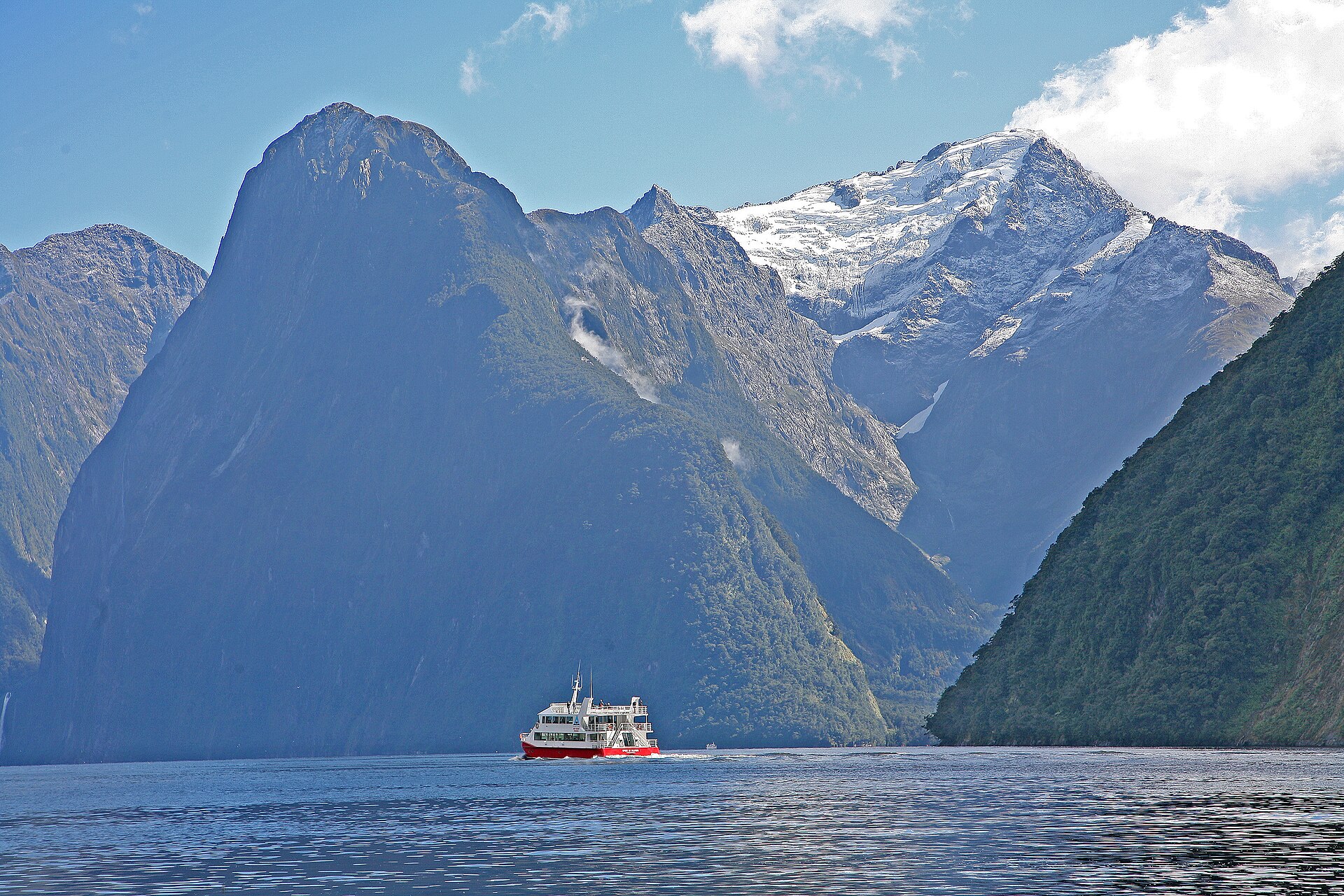
Dunedin to Milford Sound via Fiordland (5-7 days)
The longest of the four routes leads to the scenery that appears in every New Zealand brochure. It pairs well with a one-way hire: collect in Dunedin, drive through Te Anau to Milford Sound, and return the van in Queenstown. We would not squeeze this into fewer than five days, since the road to Milford is long and weather can close it.
Prices and seasons: what to expect
New Zealand has one of the sharpest seasonal price swings we have seen. The CampervanPlanet page shows typical New Zealand rates of roughly NZ$163 per day from May to September and NZ$367 per day from December to February, with the cheapest vehicles starting from about NZ$37 a day. That page also indicates 111 vehicles from 23 rental companies, so there is real choice if you book early enough.
The vehicle table lists budget two-berth vans from as little as €18 per day on quiet dates, rising to heater-and-kitchen campers from about €69 per day and up to family motorhomes at higher rates. Those are starting prices and will move with your dates, so treat them as a floor rather than a quote. The practical lesson is simple: if you can travel in March, April or October, the same van costs a fraction of the Christmas price, and Dunedin’s weather in autumn is often settled.
For a clear idea of what you will pay for your exact dates, enter them into the Dunedin search. Our reader code HUNGRYTRAVELFAMILY20 takes €20 off the booking at checkout, which is a modest saving but helps on a shorter hire.
💡 Our campervan tip: prices for the same van vary a lot between rental brands. We compare Dunedin campervans across 160+ rental companies on CampervanPlanet — and code HUNGRYTRAVELFAMILY20 takes €20 off your booking.
Pick-up points and one-way hire
CampervanPlanet lists six places to collect a vehicle near Dunedin: Dunedin Airport (DUD), the city centre, Port Chalmers, Mosgiel, Queenstown and Invercargill. Port Chalmers is the deep-water harbour about 15 minutes from the city, a useful alternative if you want to avoid city traffic on your first morning.
One-way trips are common here. Hire in Queenstown and return in Dunedin, or combine the two with a loop through the Catlins. Rental companies often charge a one-way fee, which varies, so we always compare it with the daily-rate saving. Our own rule: if the one-way fee is lower than a day of extra hire plus the fuel to loop back, one-way wins. You can also see more South Island options on the Queenstown listings.
Driving, camping and rules
New Zealand drives on the left, and most roads are two-lane with generous curves and occasional single-lane bridges. Distances look short on a map and take longer than expected, because speeds are modest and hills are real. Give yourself 20 to 30 percent extra on every estimate.
Camping rules matter more than anywhere else in the country because they are enforced. In many places freedom camping is allowed only in a vehicle that is certified self-contained, and fines for ignoring that are meaningful. We explain the details in our New Zealand freedom camping rules guide. Holiday parks, council camps and Department of Conservation sites are the easy alternatives, and the Catlins and Peninsula both have plenty.
Check the current local rules before you go, because councils change their signs and bylaws from season to season.
When to go
Summer, from December to February, is long daylight, warm weather and the highest prices. The Christmas and New Year fortnight is the single hardest period to find a vehicle, so book months ahead. Autumn (March to May) is our favourite: golden light in Central Otago, settled weather and much lower prices. Winter has fewer visitors and cold, frosty mornings, and some roads may need chains. Spring is lambing season and wildlife-friendly, with variable weather.
If you are travelling from the Northern Hemisphere, the bonus is that this is a perfect escape from a Finnish winter. We think the best compromise is late February or early March.
Book your Dunedin campervan
Compare prices across 160+ campervan and motorhome rental brands, get a free 1GB eSIM with every booking — and €20 off with code HUNGRYTRAVELFAMILY20.
Check prices & availability →Frequently asked questions
How much does campervan hire in Dunedin cost?
CampervanPlanet shows typical New Zealand rates of about NZ$163 a day from May to September and NZ$367 a day from December to February. Cheaper dates and vehicles exist, so enter your own dates to see the live price.
Where can I pick up a campervan near Dunedin?
The page lists Dunedin Airport (DUD), Dunedin city centre, Port Chalmers, Mosgiel, Queenstown and Invercargill.
Is there a discount code for CampervanPlanet?
Yes. Our reader code HUNGRYTRAVELFAMILY20 takes €20 off your booking at checkout on CampervanPlanet. It is a fixed amount rather than a percentage, and we earn a small commission if you book through our links, at no extra cost to you.
Can I do a one-way campervan trip from Dunedin?
Usually yes, for example between Dunedin and Queenstown or Christchurch. One-way fees vary by company, so compare the total price rather than the daily rate alone.
Do I need a self-contained campervan in New Zealand?
If you want to freedom camp in many places, yes. Rules differ by council, so check the current regulations. Holiday parks and Department of Conservation campsites are easy alternatives.
What is the best month to hire a campervan in Dunedin?
March and April give the best balance of weather and price in our view. December to February is warmest but most expensive.