Lapland winter safety: what first-time visitors get wrong
Reindeer on the road, thin ice, windy hilltops and the wrong clothes: the six most common safety mistakes first-time winter visitors make in Lapland, with official sources and local advice.
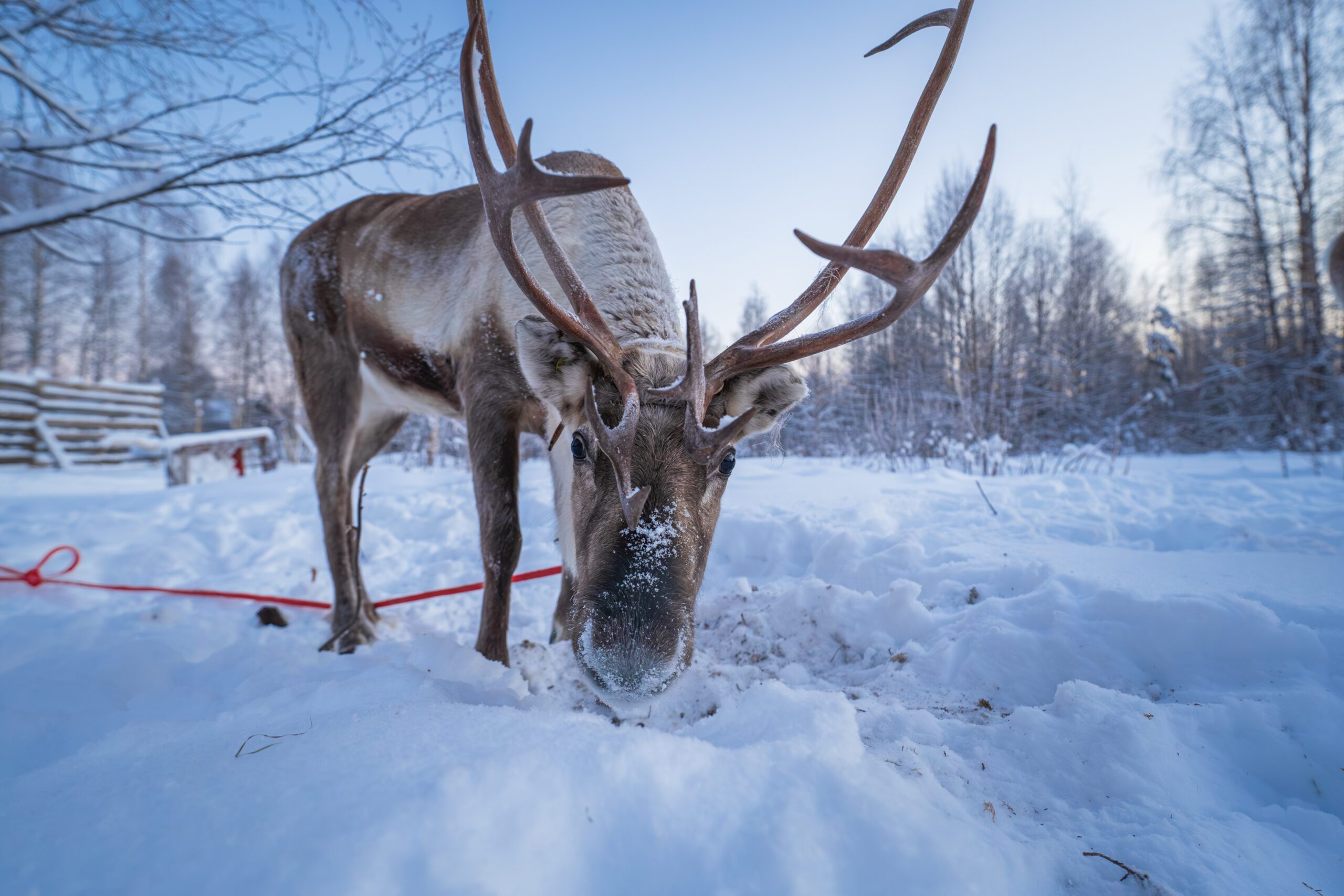
Lapland welcomes visitors in winter every year and most trips pass without incident. But winter in the Arctic has its own rules, and the mistakes we see first-time visitors make are remarkably consistent. They are rarely dramatic. They are small things: stopping a hire car in the road to photograph reindeer, walking onto a frozen lake because it looks solid, or standing still in the wind at an aurora spot in cotton clothes.
We are Joona & Alla, we live in Rovaniemi and work in tourism marketing here. This guide collects the mistakes in order of how often they matter, and gives the official advice behind each one, from the Reindeer Herders' Association, the Finnish Transport and Communications Agency (Traficom), Metsähallitus, the Finnish Meteorological Institute (FMI) and the NHS. Sources are listed at the end.
The most common winter safety mistakes in Lapland are: stopping on the road for reindeer (4,000–5,000 reindeer are injured in traffic each year in northern Finland, mostly October to December), trusting ice that is too thin (at least 10 cm of clear black ice for an adult, 5–10 cm minimum on foot), ignoring wind chill, and choosing the wrong clothing. Guided activities remove most of these risks because the guide provides clothing and chooses the route, for example on a northern lights sleigh ride5% off · HUNGRYTRAVELFAMILY5.
Book direct · 5% off with code HUNGRYTRAVELFAMILY5
Northern Lights Tour Sleigh Ride
Live dates and prices open right here on this page — you book directly with the local operator. From €109 per adult.
- Mistake 1: stopping on the road for reindeer
- Mistake 2: driving as you would at home
- Mistake 3: walking on ice that looks solid
- Mistake 4: ignoring wind chill
- Mistake 5: wrong clothes, wet and cotton
- Mistake 6: standing still at the aurora spot
- Know the signs: frostbite and hypothermia
- A simple safety checklist
- FAQ
Mistake 1: stopping on the road for reindeer
Reindeer in Lapland are semi-domesticated and herded, and they roam freely, including on roads. The Reindeer Herders' Association (Paliskuntain yhdistys) states that, in northern Finland, 4,000–5,000 reindeer injuries are caused by train and car traffic every year, mainly during October, November and December. Early winter is when reindeer migrate between seasonal grazing areas that are crossed by roads, and the association adds that road salting can attract reindeer to the road.
Its advice to drivers is clear. Stop only at a safe place to photograph reindeer, never in the middle of the road. Book enough time for the journey, drive at a speed that lets you control the car in unexpected situations, and keep a safe distance to the car in front. If you see one reindeer, there are probably more nearby, because reindeer are herd animals. In winter, tracks beside the road indicate they may be close. Use high beams even at dusk, because a reindeer's eyes reflect from far away, and note that some reindeer carry reflectors.
| What the Reindeer Herders' Association advises | Why |
|---|---|
| Stop only at a safe place | Stopping in the road adds to already dangerous winter conditions |
| Allow extra time and drive to the conditions | Reindeer can appear suddenly |
| Use high beams, even at dusk | Reindeer eyes reflect from afar |
| Expect more than one animal | They are herd animals |
Local tip: if you want to meet reindeer, do it on a farm or a guided tour, not on the road. A guided reindeer experience gives you time, photographs and a warm break without any traffic risk.
Mistake 2: driving as you would at home
Driving in Lapland in winter is perfectly possible, but it is a different skill. Traficom notes that, in a passenger car, winter tyres must be used during winter conditions between November and March, and that their principal tread grooves must be at least 3.0 mm deep. Non-studded winter tyres must carry the three-peak mountain snowflake symbol. Rental cars in Finland are normally fitted with winter tyres in the season, but you should check when you collect the car.
The reindeer association also points out that during the polar night driving takes place in low light, and that quiet roads in Lapland need extra attention to possible animal crossings. In practice we advise first-time visitors to avoid long drives after dark, to keep a full tank, and to treat Google's driving times as the best case. If you do not want to drive at all, Rovaniemi has airport transfers, taxis and a local bus network, and many activities include a hotel pick-up.
Mistake 3: walking on ice that looks solid
Frozen lakes and rivers are beautiful, and everyman's rights in Finland allow people to move around on frozen waterways. But the ice is not safe everywhere or at all times. Metsähallitus (Parks & Wildlife Finland) says that the strength of ice is measured on the basis of crackless black ice: it must be at least 10 cm thick to carry an adult, and at least 15 cm for a snowmobile or ATV. On foot, it says the ice should be at least 5–10 cm. The Finnish Environment Institute notes that clear black ice already carries a person at 5 cm, but cloudy white slush ice has only half the bearing strength to be expected from clear ice.
Metsähallitus lists dangerous spots: flowing water, places where grass and reed grow, places near jetties, sewers and bridges, and rocks and snow-covered cracks. It also advises carrying ice picks, a throw rope and a mobile phone in a waterproof bag, never going alone, and telling someone your route and your estimated return time. Spring ice is fragile and can become treacherous within a few hours.
Our advice to visitors is simple: do not walk onto lakes by yourself. Join a guided ice-fishing or snowshoe tour in which the guide has measured the ice and knows the lake.
Mistake 4: ignoring wind chill
Many visitors check the temperature and ignore the wind. FMI's cold warnings are based on the wind-chill index, which combines temperature and wind. FMI states that the severity of cold depends most on temperature and wind strength and that it feels colder when the sun is not shining. In northern Finland a yellow cold warning applies below −30 °C, orange below −40 °C and red below −45 °C. Read the thresholds and the monthly temperatures in our guide How cold is Lapland really?
Open places such as frozen lakes, fells and sleds are where wind bites hardest. A forest trail can feel gentler than an open hilltop even if the thermometer says the opposite.
Mistake 5: wrong clothes, wet and cotton
Cotton holds moisture, and wet clothes lose heat quickly. We recommend wool or synthetic next to the skin, a fleece or wool middle layer and a windproof outer layer, with warm socks, mittens and a hat. Most Lapland activity operators lend thermal overalls and boots for the tour, so you do not need to buy expensive outerwear. Check what is included before you book. If you travel with children, read our guide How to dress children for −30 °C.
Two additional local rules: do not wear tight boots, and do not take your gloves off for photographs for longer than a few seconds. Many phones also lose battery quickly in the cold, so keep them in an inside pocket.
Mistake 6: standing still at the aurora spot
Northern lights hunting is the activity where people are outside the longest and move the least, often late in the evening. That is why we recommend guided tours with a campfire or a heated shelter. The guide keeps an eye on the group, provides warm clothing and a hot drink, and knows which places are safe in the dark. If you go alone, tell somebody where you are going, keep to roads and known paths, carry a head torch and keep your phone warm.
For a comfortable first aurora experience, we recommend a sleigh or campfire format over standing in a car park: Northern lights tour by sleigh ride5% off · HUNGRYTRAVELFAMILY5, from €109 per adult (checked November 2026; prices change, so check before booking). Type HUNGRYTRAVELFAMILY5 at checkout for 5% off. Northern lights cannot be guaranteed, so choose a tour that is enjoyable even if the sky stays cloudy.
Know the signs: frostbite and hypothermia
The NHS describes frostbite as skin that freezes. Early signs are skin that is cold and firm, numb or stinging, and red or pale. Fingers, toes, nose and ears are the most commonly affected. For first aid, the NHS advises getting indoors or to shelter, removing wet or tight items such as gloves, rings and boots from the affected area, and wrapping the person in something warm. It advises seeking emergency help if the skin is hard and frozen, swollen, numb or blistered, or if a person is constantly shivering, has slurred speech, slow breathing and is tired and confused. In Finland, the emergency number is 112.
We use a personal rule: if anyone in the group stops talking or complaining and seems unusually quiet or sleepy, assume they may be too cold and go inside.
A simple safety checklist
- Check the FMI forecast and warnings the evening before each outdoor plan.
- Dress in layers: wool or synthetic base, fleece, windproof shell, mittens, hat and neck warmer. No cotton.
- Book guided activities for the coldest and darkest hours.
- Never stop on the road for reindeer: use a farm or guided tour.
- Never walk onto ice alone. Ice must be at least 10 cm of black ice for an adult.
- Check hands, feet and cheeks every 20 to 30 minutes.
- Know the emergency number: 112.
FAQ
Is Lapland safe in winter?
Yes, with sensible preparation. The main risks for visitors are cold exposure, slippery surfaces, driving in winter conditions and reindeer on the roads. Guided activities remove most of them.
Why are there so many reindeer on the roads?
Reindeer migrate between seasonal grazing areas that are crossed by roads, especially in early winter, and road salting can attract them. About 4,000–5,000 reindeer are injured in traffic each year in northern Finland.
How thick must ice be to walk on?
Metsähallitus says at least 10 cm of crackless black ice carries an adult, and recommends 5–10 cm as the minimum on foot. A snowmobile needs at least 15 cm. Never go alone.
Do I need winter tyres in Lapland?
Yes. Traficom says winter tyres must be used in winter conditions between November and March, with at least 3.0 mm tread depth. Rental cars normally have them.
What is the emergency number in Finland?
112.
Quotable · free to use with credit
“If you want to meet reindeer, do it on a farm or a guided tour, never in the middle of the road.”
— Joona & Alla, Hungrytravelfamily, Rovaniemi
“Do not walk onto a frozen lake alone just because it looks solid.”
— Joona & Alla, Hungrytravelfamily, Rovaniemi
“In Lapland, most winter risks are small and avoidable, which is why a good guide is the best safety equipment.”
— Joona & Alla, Hungrytravelfamily, Rovaniemi
Please credit “Joona & Alla, Hungrytravelfamily (hungrytravelfamily.com)”. Need a fresh quote or an interview? Contact us.
Live dates and prices for Northern Lights Tour Sleigh Ride
Pick a date below to see real-time availability. Enter HUNGRYTRAVELFAMILY5 at checkout for 5% off.
For journalists, TV & podcast producers
Working on a story about winter safety for visitors to Lapland?
We’re Joona & Alla — we live in Rovaniemi on the Arctic Circle and both work in tourism marketing in Lapland. We can help with:
- On-camera interviews and expert comments in English (Joona also speaks Finnish)
- Story research, real prices and location ideas in Rovaniemi and Finnish Lapland
- Filming days and contacts with local husky, reindeer, snowmobile and northern lights operators
Send your outlet, topic, dates and deadline — we try to reply within 24 hours.
Email a media requestPress & media pageSources & further reading
- Reindeer Herders' Association: Encountering reindeer on the roads
- Reindeer Herders' Association: Be prepared for reindeer on the road
- Traficom: Winter tyres, news of 17 October 2024
- Metsähallitus (Luontoon.fi): Safely on the ice
- Finnish Environment Institute (Vesi.fi): Is the ice strong enough?
- Finnish Meteorological Institute: Warnings on hot and cold weather
- NHS: Frostbite
Get our best travel tips in your inbox
Monthly stories from Rovaniemi — Arctic tips, packing lists, and the places we keep coming back to.