How cold is Lapland really: temperatures and safety for families
Rovaniemi's real winter temperatures by month, the cold-warning thresholds Finland uses, and what actually keeps children and adults safe, explained by two people who live on the Arctic Circle.
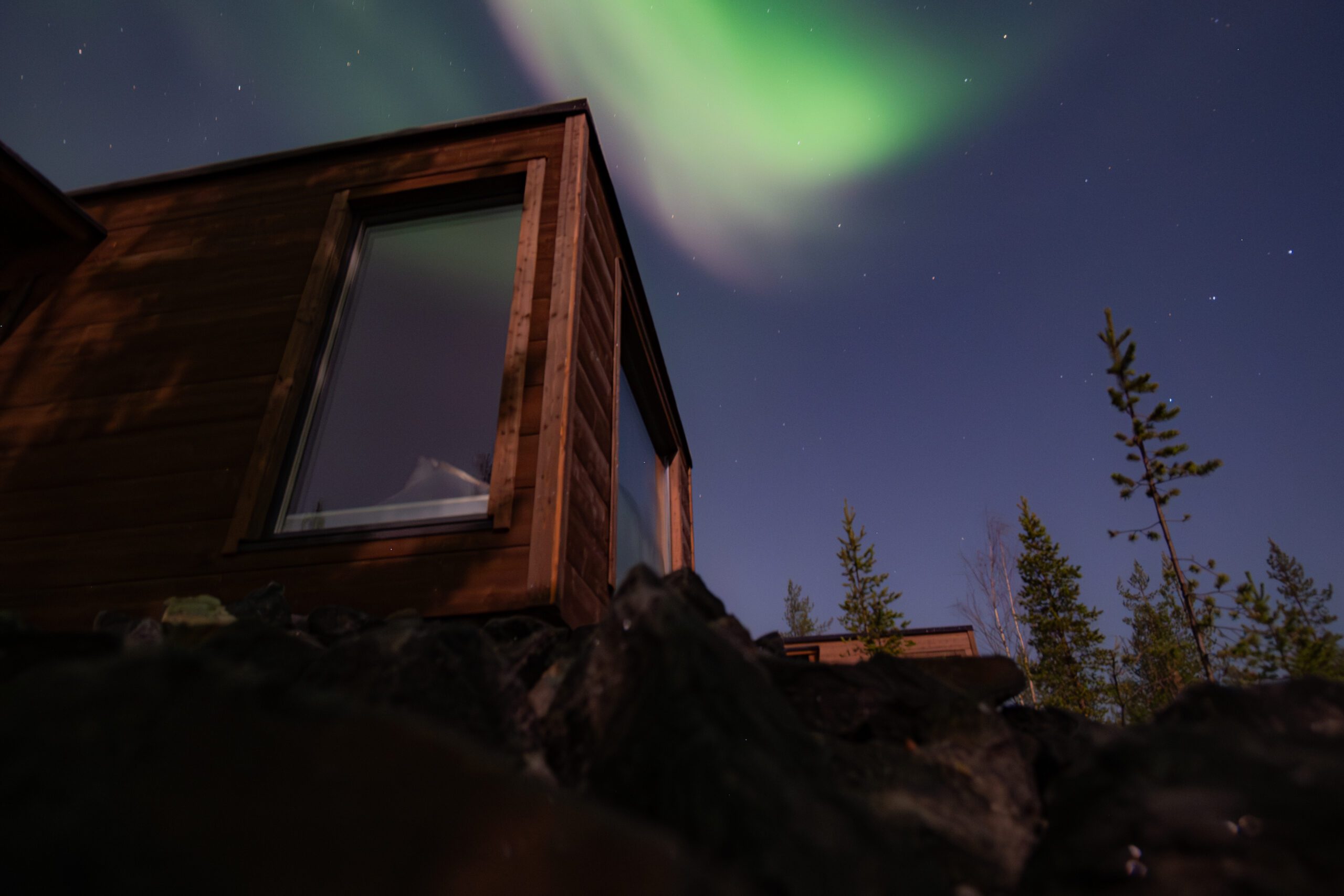
“How cold is Lapland?” is the first question almost every family, and almost every journalist, asks us. The honest answer is that a Rovaniemi winter is cold but very manageable: in an average January the daytime high is about −7 °C and the night-time low about −13 °C. Colder spells of −25 °C or below do happen, and they matter, but they are the exception rather than the rule.
We are Joona & Alla, we live in Rovaniemi on the Arctic Circle, and we work in tourism marketing here. Below we give the official climate numbers (Finnish Meteorological Institute normals for 1991–2020), explain how Finland itself warns about severe cold, and share what we have learned about keeping families comfortable. Everything is sourced at the bottom so you can check it.
In Rovaniemi the average daily low is −13.5 °C in January and −13.3 °C in February (1991–2020 normals); the all-time record low at the airport weather station is −38.1 °C. Finland only issues a cold warning in the north when the temperature or wind chill falls below −30 °C. With proper layers and the thermal overalls that tour operators normally provide, families do well outdoors in these conditions. Our favourite first step is a short evening outing such as a campfire northern lights tour5% off · HUNGRYTRAVELFAMILY5.
Book direct · 5% off with code HUNGRYTRAVELFAMILY5
Northern Lights Tour At The Campfire
Live dates and prices open right here on this page — you book directly with the local operator. From €99 per adult.
The numbers: Rovaniemi by month
The table uses the Finnish Meteorological Institute (FMI) climate normals for 1991–2020 measured at Rovaniemi airport, plus the record lows since 1959. These are long-term averages, not forecasts. A given week can be several degrees warmer or colder.
| Month | Average daily high | Average daily low | Record low |
|---|---|---|---|
| November | −2.1 °C | −6.7 °C | −27.9 °C |
| December | −4.9 °C | −10.6 °C | −32.9 °C |
| January | −7.3 °C | −13.5 °C | −38.1 °C |
| February | −7.3 °C | −13.3 °C | −35.0 °C |
| March | −1.9 °C | −9.1 °C | −27.5 °C |
| April | 4.1 °C | −3.4 °C | −18.7 °C |
Two things stand out. First, the average winter day in Rovaniemi is closer to −10 °C than to the −30 °C that headlines like to quote. Second, the coldest nights of an average year are well below the averages: FMI's “mean minimum” (the lowest temperature in a typical year) is −25.9 °C for January and −24.5 °C for February. Plan for a cold snap, even though you may not get one.
Daylight matters for how winter feels, too. The airport records an average of only 3 hours of sunshine in December and 15 in January, but 132 in March and 203 in April. Late winter is therefore brighter and noticeably milder, which is why many families who dislike deep cold choose late February or March. We compare the shoulder months in our guide Rovaniemi in April: when does winter end in Lapland?
What −13 °C actually feels like
People who have never lived in a dry, cold climate often imagine −13 °C as unbearable. In practice, Lapland's air is dry and, on a calm day, the cold feels sharper on the face than on the body. Snow squeaks underfoot, breath freezes on scarves and eyelashes, and anything made of cotton becomes useless within minutes. Locals simply dress for it: wool next to the skin, an insulating middle layer, and a windproof outer layer.
In our experience living here, what makes people uncomfortable is rarely the headline temperature. It is wet socks, tight boots that restrict circulation, bare hands for photographs, and standing still for 30 minutes at an aurora spot. Moving, eating and keeping the extremities dry solve most problems.
Wind chill and why it matters more than the thermometer
Wind makes the same temperature feel much colder. Yle's archive quotes a sports physician explaining that a wind of 10 metres per second turns a −15 °C day into something closer to −30 °C in how it feels on exposed skin. Finland's cold warnings therefore use a wind-chill index, not just the air temperature. FMI notes that the severity of cold depends mostly on temperature and wind strength, and that it also feels colder when the sun is not shining.
The practical lesson for visitors: check the wind as well as the temperature, and put on a face cover and a hood for open places such as frozen lakes, hilltops and the top of a snowmobile sled. A forest trail on a calm −15 °C evening can feel gentler than a windy −8 °C hilltop.
Finland's official cold warnings
FMI issues cold-weather warnings on three levels, and the thresholds depend on where you are. They apply to the temperature or the wind-chill index, whichever is lower.
| Region | Yellow | Orange | Red |
|---|---|---|---|
| Southern Finland | below −20 °C | below −30 °C | below −35 °C |
| Central Finland | below −25 °C | below −35 °C | below −40 °C |
| Northern Finland | below −30 °C | below −40 °C | below −45 °C |
FMI states that the warnings are mainly intended for risk groups and people who work outdoors, and its list of weather-sensitive groups includes babies and small children, the elderly, pregnant and breastfeeding women, and people with cardiovascular or respiratory diseases. FMI also explains that Finns are adapted to the cold: the criteria are stricter in the north only because the northern climate is colder, not because northerners are more fragile.
What this means for travellers: when a yellow cold warning is in force in Lapland, it means the wind-chill has fallen below −30 °C. Tour operators then adapt, shorten or reschedule outdoor activities, and a family can choose a warm indoor day. Warnings are published for the next five days on the FMI website, which gives you time to adjust plans.
Frostbite: signs and first aid
Frostbite is skin that freezes. The UK's NHS lists the early signs as skin that is cold and firm, numb or stinging, and red or pale (redness can be harder to see on black or brown skin). Fingers, toes, nose and ears are most often affected. It gets worse the colder it is and the longer the exposure.
The NHS advice while waiting for help is to get indoors or somewhere sheltered as quickly as possible, remove wet or tight items such as gloves, rings and boots from the affected area, and wrap the person in something warm. It stresses getting medical help if you suspect frostbite, and calling emergency services if the skin is hard and frozen, swollen, numb or blistered. In Finland the emergency number is 112.
A rule we use ourselves: if a child says their fingers or toes hurt, take it seriously and go inside to warm up. Pain is the warning. Numbness means you should already have acted.
Children and cold
Children lose heat faster than adults and often do not report that they are cold until they are very cold, which is why FMI lists small children among weather-sensitive groups. Finnish day-care centres, which take children outside every day, rely on practical rules that Yle has described: waterproof outer layers, woollen socks in boots, and mittens (several layers when it is very cold) plus a neck warmer. They also note that children should not be dressed too warmly, because sweat then makes them cold.
We cover the layering in detail in our companion guide on dressing children for very cold days. The short version: three thin layers beat one thick one, mittens beat gloves, and a 5-minute check of fingers, toes and cheeks every half hour works better than guessing.
If you are travelling with a baby or a toddler who cannot tell you how they feel, choose short outings, keep a warm vehicle or building nearby, and avoid windy, exposed places. For a gentle first experience, we often point families to an evening around a fire with a guide, such as the slow winter trip we describe here.
What operators provide and what you pack
Most Lapland activity operators lend thermal overalls, boots, mittens and hats for the duration of a tour, and that is why you do not need to buy expensive outerwear for a short trip. Check each booking page for what is included, because this varies by operator and by children's sizes.
- Base layer: merino wool or synthetic long underwear, top and bottom, for everyone. Not cotton.
- Middle layer: fleece or wool jumper.
- Socks: two thin pairs or one wool pair, not tight, with room for air.
- Hands and head: liner gloves plus mittens, a warm hat, a neck gaiter or buff.
- Extras: spare socks, a small hand warmer, lip balm and sunscreen for bright spring days.
Our advice to families is to budget for clothing before souvenirs. A good wool base layer and spare socks make more difference than any piece of expensive outerwear.
Cold-weather plan for a first visit
- Check the FMI forecast and warnings for Rovaniemi the evening before each outdoor activity.
- Book the coldest-hour activities (aurora tours) with a guide who provides warm clothing and a fire or shelter.
- Alternate cold and warm: a morning outdoors, a lunch indoors, a sauna in the evening.
- Agree a word for “I'm cold” with children and check hands and feet regularly.
- Keep a warm spare layer in the car or hotel for quick changes.
If you want one low-risk evening outdoors, our Santa Claus Village guide shows how indoor and outdoor time can be balanced in a single day. A guided campfire evening with northern lights hunting works the same way: Northern lights tour at the campfire5% off · HUNGRYTRAVELFAMILY5, from €99 per adult (checked November 2026; prices change, so check before booking). Type HUNGRYTRAVELFAMILY5 at checkout for 5% off.
FAQ
How cold is Rovaniemi in January?
On average, the daytime high is −7.3 °C and the night-time low −13.5 °C (FMI normals 1991–2020). The record low at the airport since 1959 is −38.1 °C.
What is the coldest it gets in Lapland?
In Rovaniemi, the record low is −38.1 °C (January), measured at the airport weather station. Colder temperatures are recorded further north, but a typical winter night in Rovaniemi is far milder.
At what temperature does Finland issue a cold warning?
In northern Finland a yellow cold warning applies when the temperature or wind chill falls below −30 °C, orange below −40 °C and red below −45 °C (FMI).
Is Lapland too cold for babies and young children?
Babies and small children are listed by FMI as weather-sensitive. Many families visit with young children, but they choose shorter outings, use proper layers and avoid windy, exposed places. Ask your doctor if you are unsure.
What is the best month to avoid extreme cold?
March and April are milder (average daily high −1.9 °C and 4.1 °C) and much sunnier than December and January.
Quotable · free to use with credit
“Families should budget for clothing before they budget for souvenirs.”
— Joona & Alla, Hungrytravelfamily, Rovaniemi
“Lapland's cold is not something to fear, it is something to dress for, and the dressing is simple.”
— Joona & Alla, Hungrytravelfamily, Rovaniemi
“Check the wind as well as the temperature: a calm −15 °C feels better than a windy −8 °C.”
— Joona & Alla, Hungrytravelfamily, Rovaniemi
Please credit “Joona & Alla, Hungrytravelfamily (hungrytravelfamily.com)”. Need a fresh quote or an interview? Contact us.
Live dates and prices for Northern Lights Tour At The Campfire
Pick a date below to see real-time availability. Enter HUNGRYTRAVELFAMILY5 at checkout for 5% off.
For journalists, TV & podcast producers
Working on a story about how cold Lapland really is for families?
We’re Joona & Alla — we live in Rovaniemi on the Arctic Circle and both work in tourism marketing in Lapland. We can help with:
- On-camera interviews and expert comments in English (Joona also speaks Finnish)
- Story research, real prices and location ideas in Rovaniemi and Finnish Lapland
- Filming days and contacts with local husky, reindeer, snowmobile and northern lights operators
Send your outlet, topic, dates and deadline — we try to reply within 24 hours.
Email a media requestPress & media pageSources & further reading
- Finnish Meteorological Institute: climate normals 1991–2020 for Rovaniemi airport (summary table)
- Finnish Meteorological Institute: Warnings on hot and cold weather
- Finnish Meteorological Institute: Heatwaves and severe cold weather
- NHS: Frostbite
- Yle Elävä arkisto: Pakkasessa pärjää järjellä ja kerrospukeutumalla (wind-chill example)
- Yle News via Eye on the Arctic: Daycare parents fight endless war with Finnish winter (children's clothing)
Get our best travel tips in your inbox
Monthly stories from Rovaniemi — Arctic tips, packing lists, and the places we keep coming back to.