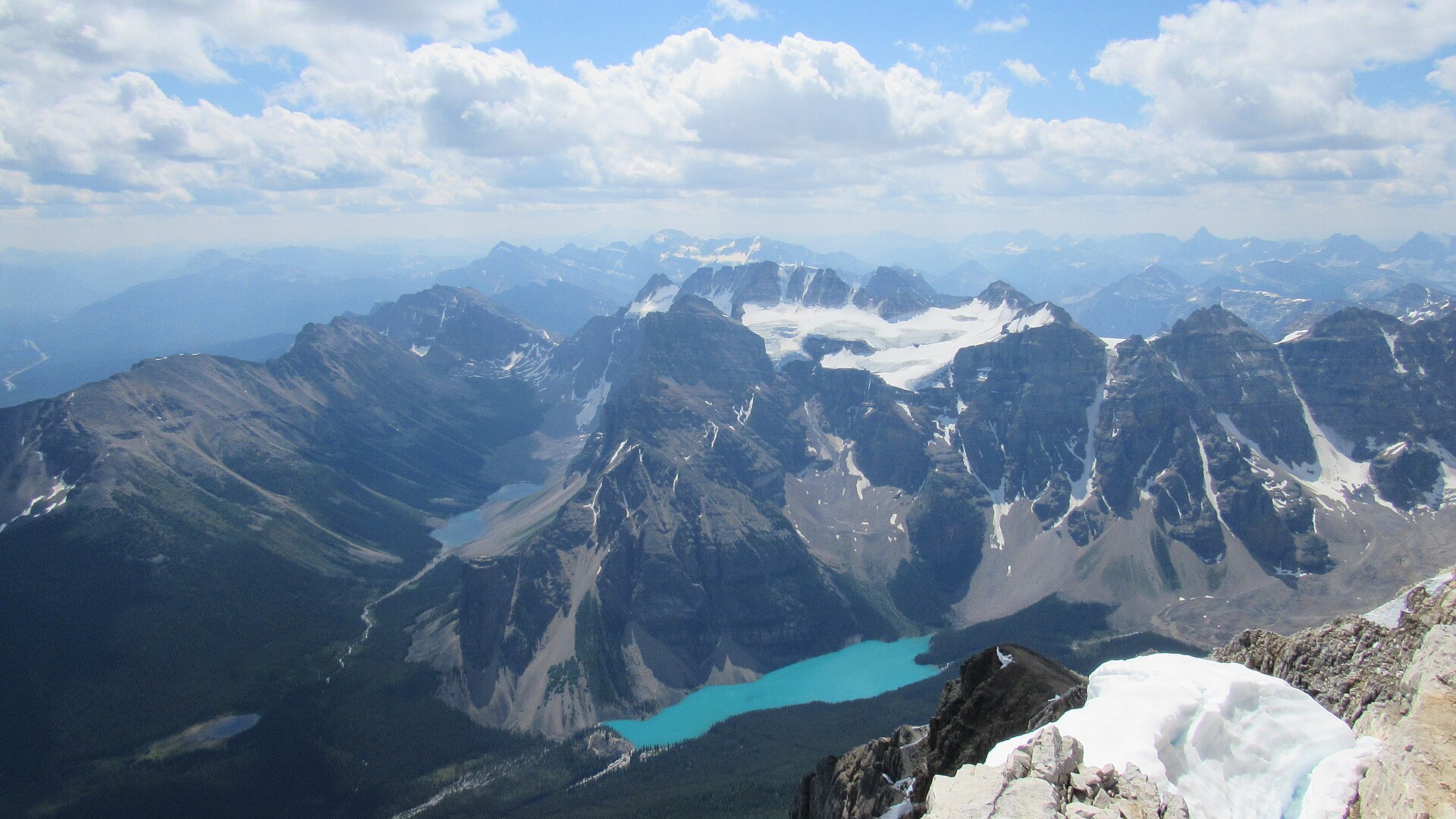
If you are planning your first Canada RV rental, the first question is usually whether you are brave enough to drive something that big. The second, a few days later, is how to avoid bears. Both are manageable. Canada is one of the easiest countries in the world for a first RV trip: roads are wide, campgrounds are designed for large vehicles, distances are enormous but the driving is straightforward.
We have not rented an RV in Canada ourselves, so this guide is built on the live data on CampervanPlanet’s Canada page and on well-known, stable local knowledge, such as the habits of bears and the way park campgrounds fill. If you want the broader overview of costs and routes, start with our Canada RV rental cost and routes guide, and for the basics of vehicle types see our campervan rental guide.
A first Canadian RV trip is easier than most people fear, but three things need planning early: campground reservations, national-park passes and bear-safe food storage. CampervanPlanet shows Canadian vehicles from about C$157 a day, with a standard RV from about C$235 a day for a 7-night trip.
- What a Canada RV rental costs for first-timers
- Which RV size and type should you choose?
- Campground reservations: the thing that catches first-timers
- National-park passes and fees
- Bear safety, in plain English
- Where to pick up and where to go
- Insurance, driving rules and practical tips
- Travelling with children in a Canadian RV
- How to book and save
What a Canada RV rental costs for first-timers
CampervanPlanet’s Canada page quotes vehicles from about C$157 a day for the cheapest option on sample dates in November 2026 and March 2027, with the price rising to about C$197 a day for a pick-up in early June 2027. These are base prices for the cheapest vehicle on a 7-night rental, based on October 2026 booking-engine data.
For a more realistic family-sized vehicle, the page shows a standard RV from about C$235 a day and a family RV from about C$251 a day, with other prices live by date. Remember that these are starting prices: July and August are peak, with temperatures of roughly 15–30°C and long daylight, and the typical price for those weeks will be higher.
Check live prices for your own dates on CampervanPlanet’s Canada page. The prices exclude the cover that reduces your excess, extras and costs such as campground fees, fuel and park passes. For a first trip we would budget extra for all of these.
Which RV size and type should you choose?
First-timers tend to rent too big. A smaller campervan or compact motorhome is easier to drive, easier to park at viewpoints and cheaper to fuel. Larger RVs make sense for families of four or more, or if you want a proper bathroom on board, but they bring a longer learning curve and higher costs.
Think about how you will use the vehicle. If you will spend most days hiking and most evenings at a campground, you do not need a huge motorhome. If you are travelling with children, a family RV with a dinette that converts to a bed can be a sensible choice. Our guide to RV sizes, written for the USA, applies in most respects to Canada as well.
Whichever you choose, ask the rental company for a walkthrough at pick-up, including how to empty the tanks, how to connect to hook-ups, how the generator works and how to operate the awning and slide-outs, if fitted.
Campground reservations: the thing that catches first-timers
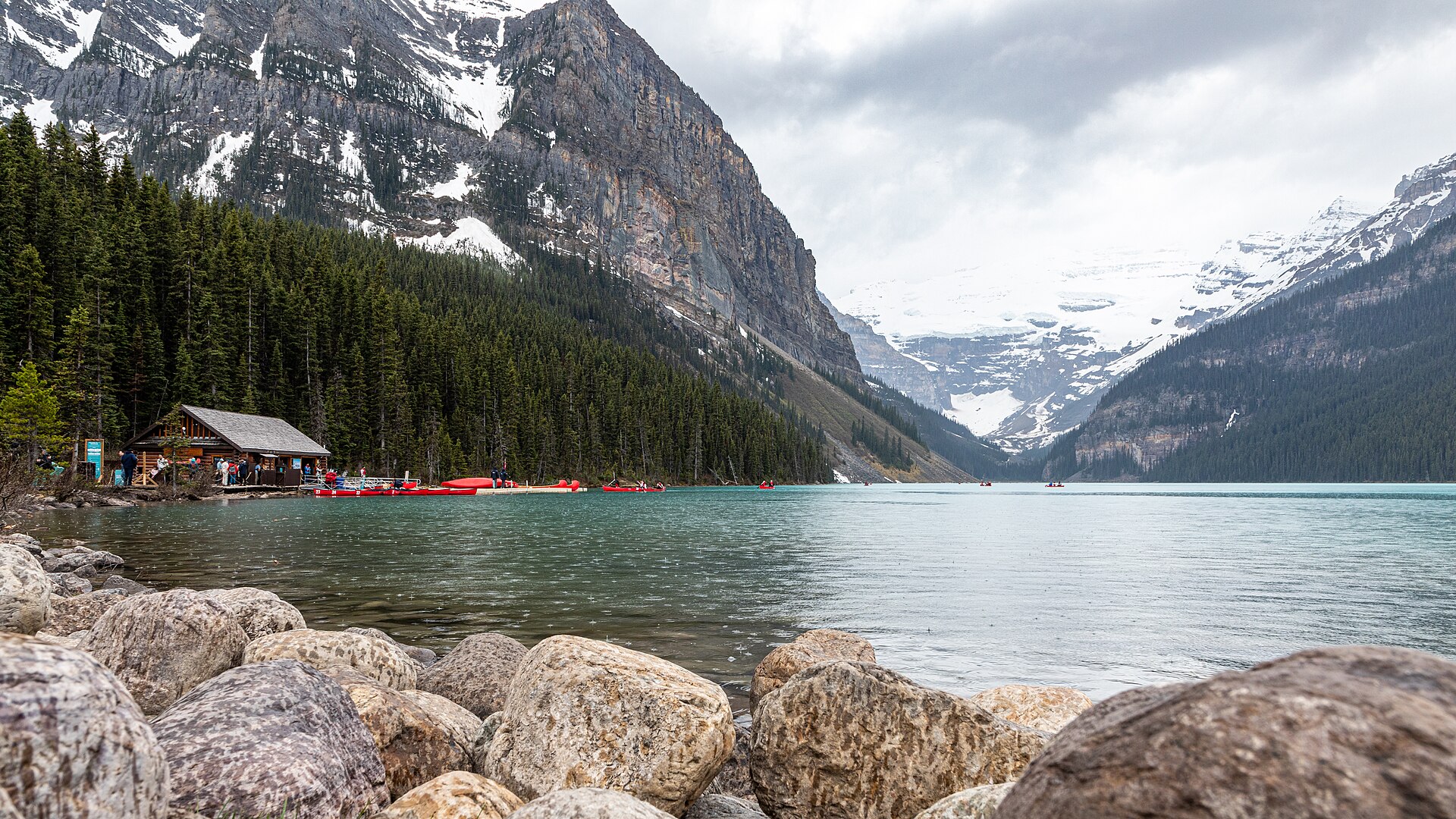
In summer, the best campgrounds in Banff, Jasper and other national parks fill months in advance. Reservations normally open well before the season, and popular dates disappear within hours. If your trip includes the Rockies in July or August, plan your campgrounds as soon as your dates are fixed, and book the van at the same time.
A few approaches help:
- Book your most important nights first, such as those near Lake Louise or Jasper, and fill in the gaps later.
- Mix national-park campgrounds with provincial parks and private RV parks, which are often easier to book.
- Look at the full hook-up options if you need electricity, and the basic sites if you do not.
- Keep a couple of backup options saved offline, because mobile coverage can be patchy in the mountains.
Our guide to RV camping in US national parks explains the reservation logic in the US, and the principle is similar in Canada: book early and be flexible.
National-park passes and fees
Most national parks in Canada charge an entry fee, either daily or as an annual pass that covers many parks. For a trip of a week or more through the Rockies, a pass is often better value than daily tickets, but the rules and prices change, so check the official Parks Canada site before you travel. Remember that camping fees are separate from entry fees.
Provincial parks have their own fees and rules, and some require day-use permits in peak season. When you plan your route, check each park’s website for the current fees, closures and any restrictions on vehicle length. Vehicle-length limits do exist on some mountain roads and in some campgrounds, so ask the rental company for the exact length and height of your vehicle.
💡 Our campervan tip: prices for the same van vary a lot between rental brands. We compare Canada campervans across 160+ rental companies on CampervanPlanet — and code HUNGRYTRAVELFAMILY20 takes €20 off your booking.
Bear safety, in plain English
Bears are part of the Canadian experience, but safe behaviour is simple. The most important rule is food storage: never leave food, cooler boxes, rubbish or scented items outside your vehicle or tent, and keep the cooking area clean. Campgrounds have bear-proof bins and lockers, and park staff will explain the rules at check-in.
On the trail, make noise on blind corners, hike in groups and carry bear spray, which you can buy at outdoor shops in the Rockies; check the airline rules if you plan to bring it from home, because it is not allowed in hand luggage. Never approach wildlife for a photo, and keep a good distance from elk, which can be more dangerous than people think.
On the road, animals cross at dusk and dawn. Reduce your speed in wildlife areas, and never stop in the middle of the road to watch a bear, because that is how traffic jams and accidents happen. If you see a bear from the vehicle, pull into a safe pull-out and watch from inside.
Where to pick up and where to go
CampervanPlanet’s Canada page lists pick-up locations in Vancouver, Calgary, Toronto, Montreal, Edmonton and Halifax. For first-timers heading for the Rockies, Calgary is the usual starting point, with Banff about 90 minutes away; our Calgary guide to Banff and Jasper covers the route in detail, and you can check vehicles directly on the Calgary page.
Vancouver works well for British Columbia, Vancouver Island and the Sea to Sky highway, and the Vancouver page shows what is available. A one-way trip from Vancouver to Calgary through the Rockies is a classic, and our one-way RV rental guide for Canada explains the logistics and fees.
If you are travelling in winter, the picture changes: roads are icy, many campgrounds close, and RV rental is less attractive. Our guide to RV rental in Canada in winter explains why we would wait for summer.
Insurance, driving rules and practical tips
Canada drives on the right, speed limits are in kilometres per hour, and fuel is sold by the litre. The rental company will explain the details of insurance, but make sure you understand the excess, the bond held on your card and what is covered if you hit a deer or damage the roof on a low clearance.
Other practical tips:
- Do not move firewood between regions; many places restrict it to prevent the spread of pests.
- Fuel stations can be far apart in the north, so fill up when you have the chance.
- Check the propane supply and how to refill it before you leave the depot.
- Allow generous driving times: mountain roads are slow, and traffic builds up near the popular parks in summer.
Our insurance and excess guide explains the terms, and our pick-up day checklist lists what to check on the day.
Travelling with children in a Canadian RV
An RV is one of the easiest ways to travel with children, because the beds, snacks and toilet are always with you. Check the seat-belt count and child-seat rules before you book, because not every berth has a belt, and local rules on child restraints apply. Ask the rental company whether child seats can be hired, and whether the dinette bed is long enough for taller children.
Plan shorter driving days than you would without children, with a playground or lake stop every couple of hours, and keep a small bag of snacks, wet wipes and a charged tablet within reach. Evenings at a campground, with a fire pit and other families around, tend to be the highlight for children, and many parks run ranger programmes in summer that are well worth joining.
How to book and save
To save money on a Canadian RV, travel in the shoulder season, book early for summer and compare brands for your dates. A late-May or September trip can be much cheaper than July, with fewer crowds, though some campgrounds and viewpoints are not fully open.
When you are ready, compare Canadian RVs on CampervanPlanet and use code HUNGRYTRAVELFAMILY20 at checkout to take €20 off. Visitors who book within 30 days of clicking our links are credited to us at no extra cost to you, which keeps this blog on the road. Whichever company you choose, read the terms on mileage, generators and cleaning fees before you pay.
Honest travel from the Arctic Circle
We send one letter a month — no roundups, no sponsored fluff. Just what we’re doing, where we’re going, and what we actually think.
Book your Canada campervan
Compare prices across 160+ campervan and motorhome rental brands, get a free 1GB eSIM with every booking — and €20 off with code HUNGRYTRAVELFAMILY20.
Check prices & availability →Frequently asked questions
How much does an RV cost in Canada?
CampervanPlanet’s Canada page shows vehicles from about C$157 a day for the cheapest option, with a standard RV from about C$235 a day and a family RV from about C$251 a day for a 7-night trip. Prices are higher in July and August.
Do I need to book campgrounds in advance in Canada?
Yes, for summer in popular areas such as Banff and Jasper. Campgrounds can fill months in advance, so reserve as soon as your dates are fixed.
Is bear spray necessary?
Many hikers carry it in bear country. You can buy it at outdoor shops in the Rockies, but check airline rules before you bring it from home.
Do I need a national-park pass in Canada?
Most national parks charge an entry fee, and an annual pass can be better value for longer trips. Check the official Parks Canada site for current prices and rules.
Is there a discount code for CampervanPlanet?
Yes. Our reader code HUNGRYTRAVELFAMILY20 takes €20 off your booking when you enter it at checkout on CampervanPlanet. It is a fixed €20 discount.
What is the best time to rent an RV in Canada?
July and August are warmest and busiest, with temperatures of about 15–30°C. Late May, June and September are often cheaper and quieter, but check which campgrounds and roads are open.