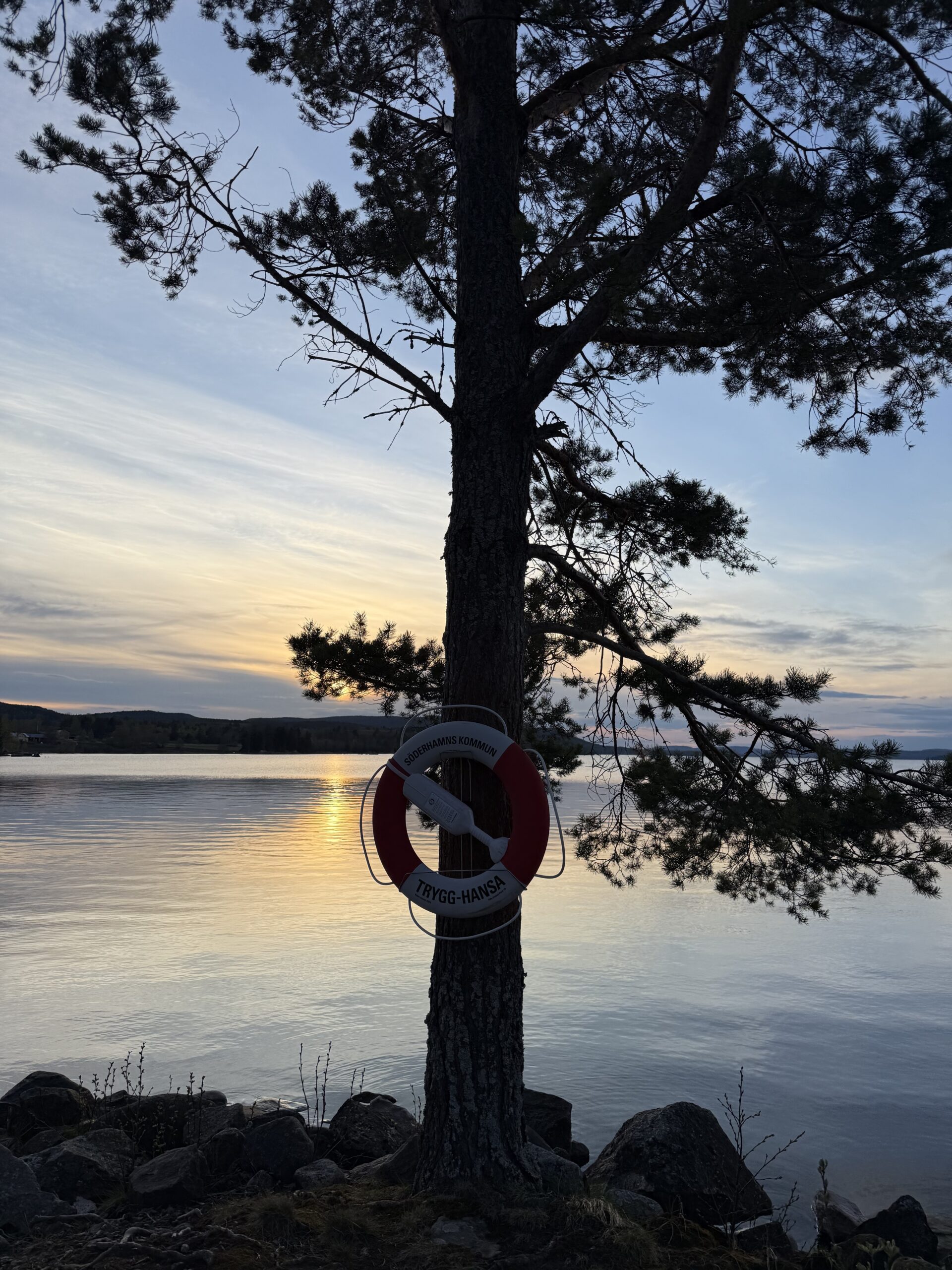
Searching for campervan rules in Sweden usually starts with one famous phrase: allemansrätten, or everyman’s right. It is true that Sweden lets you walk, swim and camp in the countryside in ways few other countries do. But the right was written for walkers and tent campers, not for vehicles, and the difference matters the moment you pull up in a campervan.
We live in Rovaniemi, in Finnish Lapland, and Sweden is our nearest neighbour to the west, so we have driven and camped there more than once. The rules below are the stable, well-known ones, but always check the current guidance from the Swedish authorities before you go, because details change. If you are still deciding how to travel, our Sweden campervan insurance guide explains the cover side, and our campervan rental guide covers the basics of renting.
In Sweden, everyman’s right (allemansrätten) is generous to people on foot with a tent, but it does not give a campervan the right to park anywhere. Plan to use campsites and signed parking areas, carry winter tyres between December and March if conditions require them, and expect tolls and congestion charges to reach you through the rental company.
- What everyman’s right actually allows
- Where you can park a campervan overnight
- Driving rules visitors often miss
- Winter tyres, snow and the cold months
- Tolls, congestion charges and ferries
- What a campervan costs in Sweden
- Practical tips for a smooth first trip
- A neighbour’s view: how we plan a Swedish stop
- How to book and use the coupon
What everyman’s right actually allows
Everyman’s right gives everyone access to nature, including private land, as long as you show consideration and do not disturb or destroy. In practice, this means you can walk across open land, pick wild berries and mushrooms, swim in lakes and put up a tent for a night or two away from houses and cultivated fields.
The key point for campervans is that the right covers being in nature, not driving in it. Driving on forest tracks and private roads is generally not allowed without the landowner’s permission, and parking on private land overnight normally needs agreement. The Swedish Environmental Protection Agency publishes guidance in English, and we recommend reading it before you leave.
The right also comes with responsibilities: no litter, no open fires where there is a fire ban, keep dogs on a lead during the nesting season, and respect people’s privacy by keeping a reasonable distance from houses. The principle is simple: leave no trace.
Where you can park a campervan overnight
So where can you actually sleep in a campervan in Sweden? The safest answer is campsites, which are plentiful, well run and often inexpensive compared with Norway. Many have kitchens, showers and electricity hook-ups, and some stay open in winter. Booking ahead is wise in July.
Other options exist, with caveats:
- Public parking places where overnight parking is not prohibited by signs. Check the sign: a no-camping symbol or time limit overrides everything else.
- Rest areas along main roads where staying one night is generally tolerated, but long stays are not.
- Designated motorhome areas (ställplats), which are marked on many map apps and often offer water and waste disposal.
- Private land with the owner’s permission. Farms sometimes offer pitches, and asking politely often works.
What you should not do is drive off the road into a forest or onto a meadow. That is where visitors get into trouble. For a related comparison, our Norway wild camping guide explains how Norway’s rules differ.
Driving rules visitors often miss
Sweden drives on the right. A few rules are worth knowing before you collect your vehicle:
- Dipped headlights are required at all times, day and night. Most modern vehicles do this automatically.
- Speed limits are typically 50 km/h in towns, around 70–90 km/h on rural roads and up to 110–120 km/h on some motorways. Speed cameras are common, and fines are high.
- The drink-drive limit is very low, much lower than in the UK, so do not drive after a drink.
- Seat belts are mandatory for everyone, including in the rear of the campervan, and child restraint rules apply.
- Animals: moose are a serious hazard, particularly at dawn and dusk in autumn. In the north, reindeer cross the road, so slow down when you see warning signs.
Roads in Sweden are generally excellent, and traffic outside the cities is light. If you are coming from the Nordic north, you will probably find them a pleasure to drive.
Winter tyres, snow and the cold months
Between 1 December and 31 March, vehicles in Sweden must be equipped with winter tyres if there are winter road conditions, such as snow or ice. Rental campervans usually come equipped for the season, but ask at pick-up, and check what the rental terms say about snow chains and studded tyres.
CampervanPlanet’s Sweden page shows winter as the low-cost season, with typical prices of about €141 a day, but also temperatures of roughly −5 to 2°C and just 6–10 hours of daylight in the south, and less further north. Heating and gas matter a lot, so choose a vehicle with a reliable heater and check how the gas system works in freezing conditions. Many campsites close in winter, so plan your overnight stops in advance.
If you want to see winter in Swedish Lapland, our Swedish Lapland campervan guide explains the options, and our Sweden winter campervan guide covers the practical side.
💡 Our campervan tip: prices for the same van vary a lot between rental brands. We compare Sweden campervans across 160+ rental companies on CampervanPlanet — and code HUNGRYTRAVELFAMILY20 takes €20 off your booking.
Tolls, congestion charges and ferries
Sweden has fewer tolls than many countries, but a few matter. The Öresund Bridge between Sweden and Denmark charges a toll, and Stockholm and Gothenburg have congestion charges for vehicles entering the city centres. For a foreign-registered or rental vehicle, these charges are normally billed to the registered owner, which means the rental company, who will pass the cost on to you, sometimes with a handling fee. Ask the company how they handle it before you go.
Ferries link the mainland with the islands, and some, such as the long-distance routes between Sweden and Finland, take vehicles. Prices are by vehicle length, so know your exact measurements. If you carry gas cylinders, check the ferry company’s rules, because some limit the size or number of cylinders.
If you plan to cross into Norway or Finland, ask the rental company whether it allows the vehicle to leave Sweden, and whether there are extra fees.
What a campervan costs in Sweden
CampervanPlanet’s Sweden page shows campervans from about €70 a day for a budget camper, with categories rising through comfort campers and 4×4 adventure campers to family motorhomes from about €219 a day. The page’s typical prices are about €141 a day in the low season (November to March) and about €242 a day in summer (June to August), with May and September at about €148, which is the best balance of weather and price according to the page.
The temperatures give a good idea of what you are paying for: roughly 7–16°C and 12–17 hours of daylight in May and September, against 2–11°C in April and October. You can check live prices for your dates on CampervanPlanet’s Sweden page.
If you plan to start in the capital, Stockholm is the obvious pick-up, and Malmö is a good choice if you are arriving from Denmark across the Öresund Bridge. Our Sweden west coast campervan guide covers a popular route between the two.
Practical tips for a smooth first trip
A few habits make a Swedish campervan trip easier:
- Download offline maps. Coverage is good in most places, but it can drop in the north and in forests.
- Carry cash or a card. Sweden is almost completely cashless, and cards are accepted nearly everywhere.
- Plan fuel stops in the far north, where stations can be far apart and close early.
- Respect quiet hours at campsites and keep noise down at night.
- Check insect repellent. Mosquitoes in northern summers are fierce, and a net over the vehicle door is useful.
If you travel with children, our family guide to campervans in Sweden covers the specifics. And before you pick up the vehicle, our pick-up day checklist lists everything to check.
A neighbour’s view: how we plan a Swedish stop
From Finnish Lapland, Sweden is the neighbour we cross into most naturally, and we plan a stop there the same way every time. We pick the campsite first, because a booked pitch means we can enjoy the afternoon instead of hunting for a legal place to park. We buy groceries in a larger supermarket on the way, because village shops close early on Sundays. And we keep one night in reserve, so that a bad weather day or a long drive does not turn into a rush.
Swedish campsites, in our experience, are tidy and easy to use, with good kitchens and a relaxed attitude. Quiet hours are taken seriously, and the neighbours will thank you for respecting them. If you are travelling in the north in summer, remember that the light never really goes away, so pack an eye mask, because the van will not be dark at midnight.
How to book and use the coupon
When you are ready to compare vehicles, start on the CampervanPlanet Sweden page, enter your dates and decide on the insurance level before you compare prices. Code HUNGRYTRAVELFAMILY20 takes €20 off at checkout. It is a small fixed saving, but it covers a night at most Swedish campsites. Visitors who book within 30 days of clicking our links are credited to us at no extra cost to you, which is how we keep this blog on the road.
Read the rental terms on kilometres, cross-border travel, winter equipment and cleaning fees, and ask the company about tolls. Then go and enjoy one of the best countries in Europe for a campervan holiday.
Honest travel from the Arctic Circle
We send one letter a month — no roundups, no sponsored fluff. Just what we’re doing, where we’re going, and what we actually think.
Book your Sweden campervan
Compare prices across 160+ campervan and motorhome rental brands, get a free 1GB eSIM with every booking — and €20 off with code HUNGRYTRAVELFAMILY20.
Check prices & availability →Frequently asked questions
Can you wild camp in a campervan in Sweden?
Everyman’s right covers tent camping in nature, but it does not give a vehicle the right to park anywhere. Use campsites, signed parking areas or private land with permission, and avoid driving off public roads.
Do I need winter tyres for a campervan in Sweden?
Between 1 December and 31 March, vehicles must have winter tyres if winter road conditions apply. Rental vehicles are usually equipped, but confirm at pick-up.
How much does a campervan cost in Sweden?
CampervanPlanet’s Sweden page shows campervans from about €70 a day, with typical prices of about €141 a day in winter and about €242 a day in summer.
Are there tolls in Sweden?
Few, but the Öresund Bridge and the congestion charges in Stockholm and Gothenburg matter. They are normally billed to the rental company, who pass the cost on to you, so ask how it works.
Is there a discount code for CampervanPlanet?
Yes. Our reader code HUNGRYTRAVELFAMILY20 takes €20 off your booking when you enter it at checkout on CampervanPlanet. It is a fixed €20 discount.
Is it safe to drive a campervan in Sweden?
Yes. Roads are excellent and traffic is light outside the cities. Watch for moose at dawn and dusk, keep to the speed limits and always drive with dipped headlights.