Daylight hours in Rovaniemi month by month: a planning table for photo and film shoots
Calculated sunrise, sunset, twilight and darkness for Rovaniemi from November 2026 to October 2027, with what the numbers mean for crews.
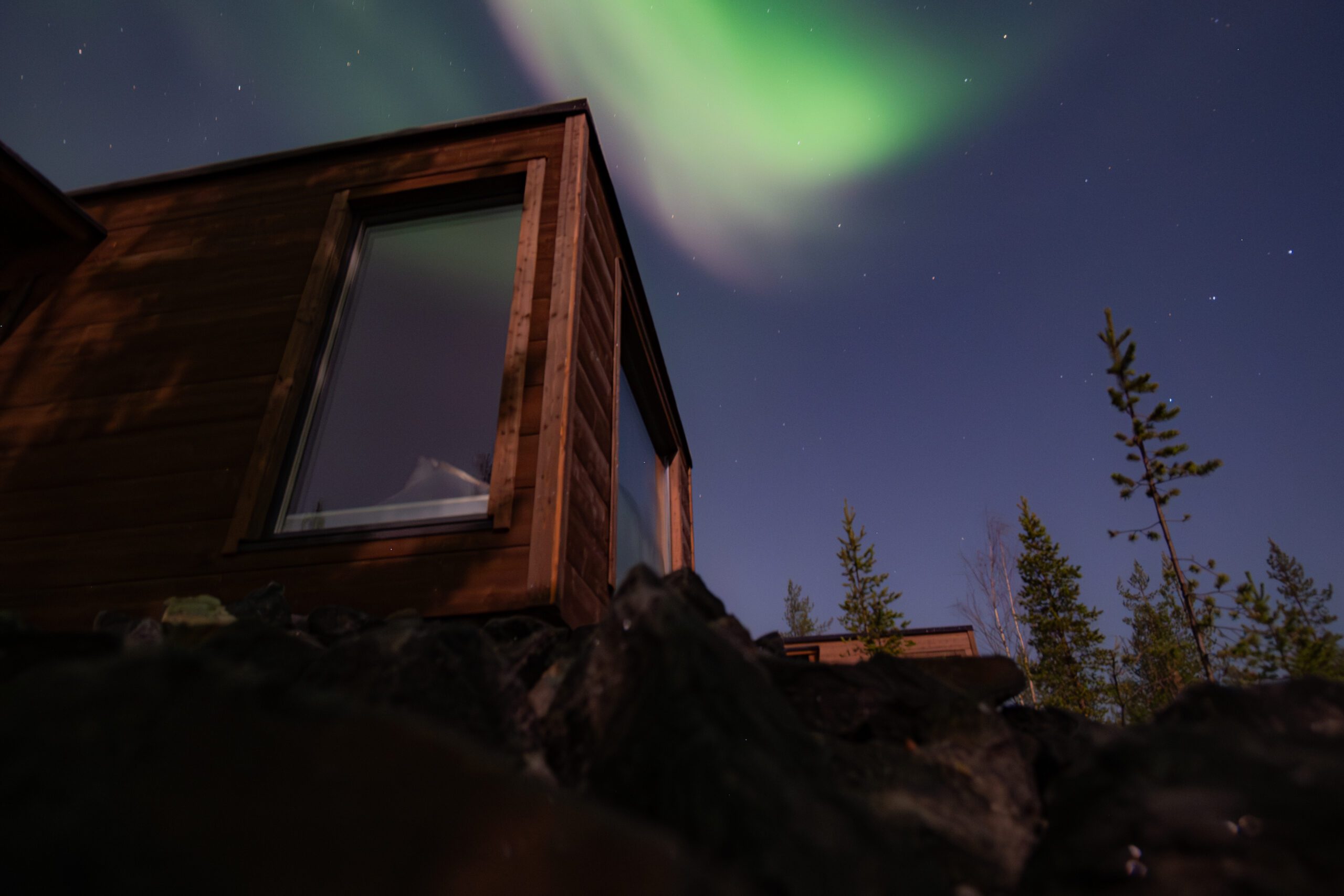
The first question a cinematographer asks about Lapland is not “how cold?” but “how much light?”. In Rovaniemi the answer swings from about two hours of sun in December to a sun that never sets in June.
This guide gives a sourced table for the 15th of each month, plus the length of full darkness for northern lights shooting, and explains what the figures mean in practice. We are Joona and Alla, a couple living in Rovaniemi, and we use these numbers every winter when we plan our own days.
On 15 December 2026 Rovaniemi has 2 h 27 min of sun, on 15 January 4 h 15 min, on 15 March 11 h 37 min, and the sun does not set from about the first week of June to the first week of July (sunrise-sunset.org calculations, 2026–27). Civil twilight stretches the usable winter light to about six hours in December, and full darkness for auroras exists from about 9 September to about 3 April.
The planning table
This table gives calculated sun and twilight times for Rovaniemi (66.50° N, 25.73° E) on the 15th of each month from November 2026 to October 2027. All times are Finnish local time: EET (UTC+2) in winter and EEST (UTC+3) from 28 March to 31 October 2027. The source is the sunrise-sunset.org calculation service, 2026–27 figures. The “highest sun” column is our own calculation from the sun’s declination. Figures are accurate to a few minutes and ignore local terrain, trees and weather.
| Date | Sunrise | Sunset | Day length | First light – last light (civil twilight) | Highest sun (approx.) |
|---|---|---|---|---|---|
| 15 Nov 2026 | 09:09 | 14:53 | 5 h 43 min | 08:00 – 16:03 | 5° |
| 15 Dec 2026 | 10:58 | 13:25 | 2 h 27 min | 09:11 – 15:13 | under 1° |
| 15 Jan 2027 | 10:18 | 14:34 | 4 h 15 min | 08:56 – 15:56 | 2° |
| 15 Feb 2027 | 08:25 | 16:36 | 8 h 10 min | 07:28 – 17:33 | 10° |
| 15 Mar 2027 | 06:37 | 18:14 | 11 h 37 min | 05:45 – 19:06 | 21° |
| 15 Apr 2027 | 05:34 | 20:59 | 15 h 25 min | 04:31 – 22:02 | 33° |
| 15 May 2027 | 03:31 | 22:55 | 19 h 24 min | no full night | 42° |
| 15 Jun 2027 | sun does not set | 24 h | no night | 47° | |
| 15 Jul 2027 | 02:38 | 00:07 (next day) | 21 h 29 min | no full night | 45° |
| 15 Aug 2027 | 04:50 | 21:53 | 17 h 02 min | 03:30 – 23:12 | 38° |
| 15 Sep 2027 | 06:35 | 19:48 | 13 h 13 min | 05:42 – 20:42 | 27° |
| 15 Oct 2027 | 08:14 | 17:51 | 9 h 37 min | 07:21 – 18:44 | 15° |
The winter solstice, 21 December 2026, has sunrise at 11:07, sunset at 13:23, a day length of 2 h 15 min and civil twilight from 09:16 to 15:13. That is the shortest day, and it shows why Rovaniemi does not have a true polar night: the sun does rise, but only just.
How to read the table as a cinematographer
- Midwinter light is low all day. In December the sun never gets higher than about one degree above the horizon, so you get long shadows and warm, sideways light from late morning to early afternoon. In effect the whole day is “golden hour”.
- First light to last light matters more than sunrise to sunset. On 15 December the sun is up for 2 h 27 min, but civil twilight lasts about six hours, which is your real workable window outdoors without lights.
- Daylight grows fast in February and March. From 4 h 15 min on 15 January to 11 h 37 min on 15 March, the day gains more than seven hours. A shoot in late February has a very different schedule from one in early January.
- Summer has no real night. In May, June and July there is no full night; the sun does not set from about the first week of June to the first week of July. You can shoot golden light at any hour, but crews and animals still need to sleep.
Solar noon, when the sun is at its highest and shadows are shortest, falls at about 12:12 on 15 December (EET) and about 13:17 on 15 June (EEST), according to the same calculation. Because Rovaniemi lies west of the meridian that sets Finnish time and clocks move forward in summer, clock noon and solar noon drift apart by more than an hour in summer, which is one reason summer evenings feel so long. Plan golden light by the sun, not by the clock.
Visit Rovaniemi gives average day lengths of about 2.5 hours in December, 4 hours in January, 8 hours in February and 12 hours in March, which matches our calculated figures within the expected rounding.
When is it dark enough for northern lights?
For night shooting and auroras, the useful number is how long full darkness (astronomical darkness, when the sun is more than 18° below the horizon) lasts. In this calculation, full darkness exists in Rovaniemi between about 9 September and about 3 April, and it is absent in the months in between (for winter 2026–27 the last dark night in spring falls around 3 April 2027). Here is the length of the dark window on the 15th of selected months:
| Date | Full darkness from | Until | Length |
|---|---|---|---|
| 15 Nov 2026 | 18:12 | 05:51 | 11 h 39 min |
| 15 Dec 2026 | 17:38 | 06:45 | 13 h 07 min |
| 15 Jan 2027 | 18:13 | 06:39 | 12 h 26 min |
| 15 Feb 2027 | 19:35 | 05:26 | 9 h 51 min |
| 15 Mar 2027 | 21:20 | 03:31 | 6 h 11 min |
| 15 Sep 2027 | 23:27 | 02:56 | 3 h 29 min |
| 15 Oct 2027 | 20:47 | 05:18 | 8 h 31 min |
Visit Rovaniemi gives the northern lights season as late August to early April. Our stricter test of full darkness gives a somewhat narrower window, and strong displays can still show in deep twilight, so the tourism season is wider than the table above. Either way, you need a clear sky and some solar activity as well. For the aurora side of planning, see our aurora season 2026–27 guide.
Planning a shoot around the numbers
| If you need… | Shoot in | Because |
|---|---|---|
| Dark skies and long aurora windows | November to February | Full darkness lasts about 10 to 13 hours on the 15th of these months |
| Low, golden light all day | December and January | The sun stays within about 2° of the horizon |
| A balance of snow, light and darkness | February and early March | 8 to 12 hours of daylight and still several hours of darkness |
| Bright snow and long days | Late March and April | 11 to 15 hours of daylight, but no full darkness after about 3 April |
| Round-the-clock light | Early June to early July | The sun does not set |
For location ideas by season, see our filming locations guide; for permissions and cold, our practical guide for TV crews.
Three sample shooting days
To make the numbers concrete, here is how three different days would shape a call sheet, using the table above.
- 15 December 2026: first light 09:11, sunrise 10:58, sunset 13:25, last light 15:13. Plan the exteriors for roughly 10:00 to 14:30, keep interiors and interviews for the afternoon and evening, and treat the aurora as a possible bonus after about 17:38, when full darkness begins.
- 15 February 2027: first light 07:28, sunrise 08:25, sunset 16:36, last light 17:33. You have a conventional working day outdoors, and full darkness starts at 19:35, so an aurora shoot after dinner is realistic.
- 15 June 2027: the sun does not set. Light is usable at any hour, but there is no aurora, and the call sheet is limited by sleep, not sunlight.
A practical tip from living here: write the exact times for your shoot dates into the call sheet and add a buffer, because on a snowy or cloudy day the “sunrise” on the sheet is a grey brightening rather than a visible sun. In our experience, light is the first thing everyone plans around in a Lapland winter.
Caveats and how to cite this table
Figures are calculated, not observed. Cloud, snow cover, tree lines and the surrounding fells will change how early or late the light actually arrives. Finnish local time changes with daylight saving, so check whether a source quotes EET or EEST. When quoting, please say “calculated sunrise and sunset for Rovaniemi, sunrise-sunset.org, 2026–27 figures” and give the date. We are happy to help journalists with local context; see our press page.
FAQ
How many hours of daylight does Rovaniemi get in December?
About 2 h 27 min on 15 December 2026 and 2 h 15 min on 21 December, according to our calculation.
Is there a polar night in Rovaniemi?
Not strictly: the sun rises for a couple of hours at midwinter, but it stays very low.
When does the midnight sun start in Rovaniemi?
By our calculation the sun does not set from about the first week of June to the first week of July.
When is it dark enough to see the northern lights?
Full darkness exists from about 9 September to about 3 April, although tourism bodies quote a season from late August to early April.
What are the best months for light and snow together?
February and March: 8 to 12 hours of daylight on the 15th, snow on the ground and still several hours of darkness.
Quotable · free to use with credit
“In Rovaniemi, plan the day from first light to last light, not from sunrise to sunset.”
— Joona & Alla, Hungrytravelfamily, Rovaniemi
“December light is not short, it is low, and low light is the reason the snow looks the way it does on camera.”
— Joona & Alla, Hungrytravelfamily, Rovaniemi
“If you want both snow and a proper night sky, February and early March are the sweet spot.”
— Joona & Alla, Hungrytravelfamily, Rovaniemi
Please credit “Joona & Alla, Hungrytravelfamily (hungrytravelfamily.com)”. Need a fresh quote or an interview? Contact us.
For journalists, TV & podcast producers
Working on a story about daylight, polar night and midnight sun in Rovaniemi?
We’re Joona & Alla — we live in Rovaniemi on the Arctic Circle and both work in tourism marketing in Lapland. We can help with:
- On-camera interviews and expert comments in English (Joona also speaks Finnish)
- Story research, real prices and location ideas in Rovaniemi and Finnish Lapland
- Filming days and contacts with local husky, reindeer, snowmobile and northern lights operators
Send your outlet, topic, dates and deadline — we try to reply within 24 hours.
Email a media requestPress & media pageSources & further reading
Get our best travel tips in your inbox
Monthly stories from Rovaniemi — Arctic tips, packing lists, and the places we keep coming back to.