Combining Iceland and the Faroe Islands in One Trip — The Itinerary That Actually Works
A Rovaniemi-based couple who have visited both breaks down the only logical routing for an Iceland Faroe combined trip — the ferry, the timings, and what most itineraries get completely wrong.
We’ve done Iceland. We’ve done the Faroe Islands. And at some point — as we were staring at our map from our home in Rovaniemi — we realised that doing them separately was one of the more expensive travel decisions we’d ever made. The Iceland Faroe combined trip is genuinely one of the best itineraries in the North Atlantic. It’s also one of the most misunderstood, mostly because people book flights when they should be booking a ferry.
This guide is our honest breakdown of what combining Iceland and the Faroe Islands actually looks like: the routing, the timing, the costs, and the common mistakes that turn what should be an epic two-destination adventure into a chaotic, expensive scramble.
Yes, you can combine Iceland and the Faroe Islands in one trip — and the Smyril Line ferry between Seyðisfjörður (Iceland) and Tórshavn (Faroe Islands) is the key that makes it work without doubling your flights. A realistic combined trip takes 12–16 days, costs €2,500–€4,500 per couple depending on ferry cabin class, and works best if you start in Iceland, cross by ferry, then fly home from Tórshavn or Copenhagen.
- Why the Smyril Line ferry is the whole strategy
- The only routing that makes sense
- Day-by-day itinerary breakdown (14 days)
- Newsletter — Letters from Rovaniemi
- Budget: what this trip actually costs
- Timing: which months work best
- Mistakes we made (and you don’t have to)
- Frequently asked questions
- A final word from Rovaniemi
Why the Smyril Line ferry is the whole strategy
Most people approach an Iceland-Faroe trip by booking flights to Reykjavik and separate flights to Tórshavn, then wondering why the budget blew up. The answer is that the Smyril Line Norröna ferry — which runs between Denmark, the Faroe Islands, and Iceland — eliminates that second flight entirely and turns the crossing itself into part of the experience.
What the Smyril Line actually is
The Smyril Line operates the Norröna, a large car-and-passenger ferry that sails weekly (in summer) between Hirtshals in Denmark → Tórshavn in the Faroe Islands → Seyðisfjörður in eastern Iceland. The full crossing from Hirtshals to Iceland takes about four days with a stopover in the Faroes. If you board in the Faroes, it’s roughly two days to Iceland (or vice versa).
Key Smyril Line facts for planning
- Frequency: Once per week in summer (roughly May–October), less often or paused in winter.
- Crossing time (Faroe Islands → Iceland): approximately 36–40 hours on the water.
- Cabin classes: aircraft-style seats (cheapest), four-berth cabins, two-berth cabins, and small suites. We’d recommend at minimum a two-berth cabin — the crossing is long enough that a seat becomes exhausting.
- Car transport: you can bring your own vehicle, which is worth it if you’re renting in Iceland and want to drive through the Faroes.
- Book early: summer cabin berths sell out months in advance. Check Smyrilline.com directly.
The only routing that makes sense
There are theoretically several ways to combine these two destinations, but in practice, one routing consistently makes more sense than the others — for reasons of cost, time, and logistics.
The recommended direction: Iceland first, Faroes second
Fly into Reykjavik (KEF) → drive the Ring Road or your chosen Iceland itinerary → finish in Seyðisfjörður on the east coast → board the Smyril Line ferry to Tórshavn → explore the Faroe Islands → fly home from Tórshavn (FAE) or catch the Smyril Line onward to Hirtshals/Copenhagen.
Why Iceland first works better
- Cheap flights to Iceland: Reykjavik has excellent flight connections from Europe and North America. Starting there is usually cheaper than starting in the Faroes.
- Natural progression west to east: Iceland’s Ring Road runs clockwise or anti-clockwise. Finishing in Seyðisfjörður on the east coast is a natural endpoint — it’s a stunning village on its own terms and a perfect send-off before the ferry.
- The Faroes as a final act: after Iceland’s big dramatic landscapes, the Faroe Islands’ intimate scale and village atmosphere feel like a satisfying decompression. The contrast is striking.
- Easier ferry departure: Seyðisfjörður is a small, manageable port. Arriving vs departing is logistically simpler — no need to time a rental car return in an unfamiliar fjord town on a tight schedule.
Alternative: Faroes first, Iceland second
This works if you’re flying from Denmark or connecting through Copenhagen, where you can pick up the Smyril Line in Hirtshals. It’s slightly more complex to organise but valid — especially if you want to end the trip in Iceland and have a direct flight home from Reykjavik.
Day-by-day itinerary breakdown (14 days)
This is the 14-day version we’d plan for ourselves — starting in Reykjavik, driving Iceland, and crossing to the Faroes by ferry. It’s tight but very doable. Add days anywhere if you have them.
Days 1–2: Reykjavik and the Golden Circle
- Arrive KEF, collect rental car (a 4WD if you plan F-roads).
- Day 1: Reykjavik city — Hallgrímskirkja, Laugavegur, geothermal pool at Laugardalslaug (skip the Sky Lagoon if budget is a concern).
- Day 2: Golden Circle — Þingvellir, Geysir, Gullfoss. Head east to a guesthouse near Selfoss.
Days 3–5: South Coast and the glaciers
- Skógafoss and Seljalandsfoss waterfalls, black sand beach at Reynisfjara.
- Jökulsárlón glacier lagoon — take the boat trip if it’s in the budget.
- Diamond Beach for the ice sculptures at sunrise. Sleep in Höfn or Djúpivogur.
Days 6–8: East Iceland and Seyðisfjörður
- East Fjords driving — slow, fjord-road driving past tiny fishing villages. Often overlooked but genuinely beautiful.
- Arrive Seyðisfjörður at least one full day before your ferry departure. Walk the rainbow street, visit the Blue Church, have a slow meal.
- Ferry departs roughly Thursday evenings (check exact schedule for your sailing date). Board in the late afternoon.
Days 9–10: The Smyril Line crossing
- Full day and night on the ferry. The boat is comfortable — there’s a restaurant, bar, deck space, and if conditions are right, dramatic North Atlantic scenery.
- Arrive Tórshavn (Faroe Islands) the following morning.
Days 11–13: The Faroe Islands
- Day 11: Tórshavn itself — the old town Tinganes, colourful turf-roofed houses, the harbour. Small and walkable.
- Day 12: Drive to Gásadalur and the Múlafossur waterfall, then Sørvágsvatn (the optical-illusion lake).
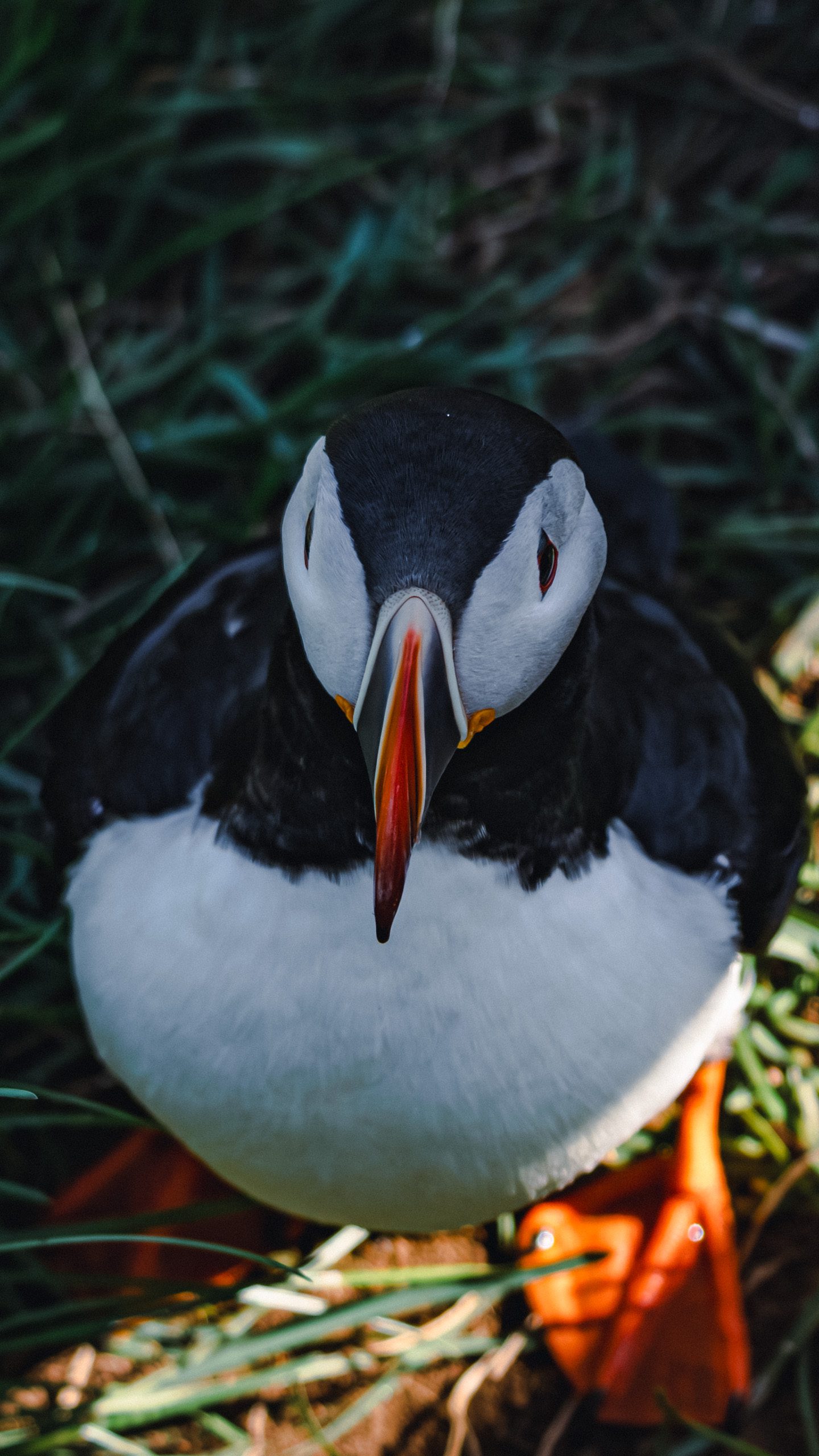
- Day 13: Take the boat from Sørvágur to Mykines for puffin watching (book the boat in advance — it fills up fast in summer).
Day 14: Fly home from Tórshavn (FAE)
- Atlantic Airways flies from Tórshavn to Copenhagen, Edinburgh, Reykjavik, and a handful of other destinations. Book early — the airport is small and options sell out.
- Alternative: board the Smyril Line from Tórshavn back to Hirtshals if you want a land return to continental Europe.
Our monthly travel letter
We write once a month from Finnish Lapland — itineraries, honest reviews, and things we’ve actually tested. No noise.
Budget: what this trip actually costs
The Iceland Faroe combined trip is not a cheap holiday — Iceland and the Faroe Islands are two of the most expensive destinations in the world per day. That said, understanding where the money goes helps you make the right trade-offs.
Indicative budget per couple (14 days)
- Flights to Reykjavik + from Tórshavn: €500–€900 depending on origin and how far in advance you book. From Helsinki we’ve found fares around €400–€600 return with a connection.
- Smyril Line ferry (Seyðisfjörður → Tórshavn), two-berth cabin: approximately €400–€600 per couple for the crossing. Premium cabins more.
- Car rental in Iceland (10 days, standard 4WD): €800–€1,400 depending on season. July and August are the most expensive months.
- Car rental in the Faroe Islands (3–4 days): €300–€500. Roads are excellent and the islands are small.
- Accommodation (14 nights, budget guesthouses/mid-range): €800–€1,400. Camping in Iceland cuts this significantly.
- Food and activities: €600–€1,200. Eating out in Iceland is expensive (€20–€35 per main), so we cook from supermarkets for most meals.
- Total range per couple: €3,400–€5,500. Budget travellers hitting the lower end of each range can get down to €2,500.
Timing: which months work best for an Iceland Faroe combined trip
The Smyril Line runs year-round but the summer schedule (roughly May to October) has the most frequent sailings and the best conditions. Here is how the months break down.
The best months for an Iceland Faroe combined trip
- June: puffins are on Mykines, Iceland wildflowers are starting, midnight sun is at its peak. Expensive and busy but the most spectacular conditions.
- July: peak season — warmest, most reliable, but most expensive and most crowded on Iceland’s south coast.
- August: shoulder of summer. Puffins start to leave by mid-August but conditions are still excellent. Slightly cheaper than July.
- May: quieter and cheaper. Iceland has unpredictable weather; Faroes even more so. Good for avoiding crowds but pack layers and expect changeable skies.
- September–October: Smyril Line sailings become less frequent. Iceland is dramatically beautiful in autumn colours but highland roads (F-roads) start to close. Northern lights are possible from late September.
Mistakes we made — and what we’d do differently
We did Iceland first, Faroes second — which we’d still recommend. But we made a few expensive errors that you can avoid entirely.
- Not booking the ferry cabin early enough. We booked about 6 weeks out and the two-berth cabins were mostly sold out. We ended up in a four-berth with strangers — fine, but not ideal. Book the moment your dates are fixed, ideally 3–5 months in advance for summer crossings.
- Trying to cover too much of Iceland in 8 days. The Ring Road sounds manageable on a map. Iceland is large and the roads are slower than you expect. We tried to squeeze in the Snæfellsnes Peninsula on top of the south coast and east fjords and ended up rushing. Pick one focus and do it properly.
- Underestimating the Faroe Islands. We gave ourselves only 3 full days in the Faroes. That’s the minimum. Four or five days would have allowed us to do Kalsoy island and some of the northern islands more justice. The Faroes reward slow travel.
- Not booking the Mykines ferry far enough ahead. The boat from Sørvágur to Mykines (for puffin watching) books out weeks in advance in peak season. We nearly missed it. Book online the moment your Iceland departure date is confirmed.
- Forgetting the Smyril Line ferry food is included (partially). Check your ticket — some cabin bookings include breakfast. We paid for breakfast we’d already paid for, twice.
- Renting a regular car in Iceland instead of a 4WD. We planned to avoid F-roads, then decided we wanted to do one. Only 4WDs with adequate ground clearance are legally permitted on gravel highland routes. Check your rental terms carefully before signing.
Frequently asked questions
How long do you need to combine Iceland and the Faroe Islands properly?
We’d say a minimum of 12 days — but 14 to 16 is more comfortable. Iceland alone is worth 7–10 days. The Faroe Islands deserve at least 4 full days. The Smyril Line crossing takes roughly 2 days each way, so the two days of ferry travel need to be built into the schedule.
Do you need a rental car for both Iceland and the Faroe Islands?
In Iceland, a car is essentially mandatory unless you’re staying in Reykjavik only. In the Faroe Islands, it depends. Tórshavn is walkable and some attractions are reachable by bus or organised tour, but to really explore the outer islands you need a car — or to join day-trip tours. We rented a car for both and would do it again.
Is it cheaper to fly between Iceland and the Faroes instead of taking the ferry?
Atlantic Airways flies between Reykjavik (RKV or KEF) and Tórshavn (FAE). Fares vary wildly — sometimes you find them for €100–€150 each way, sometimes €300+. The ferry is often similarly priced once you factor in a cabin, but it eliminates the stress of another airport and adds the experience of the crossing itself. If time is very short, fly. If you have 14+ days, ferry is the better choice.
Can you do this trip without a car in the Faroe Islands?
You can see the main highlights of the Faroe Islands without a car — Tórshavn itself, and day tours to Gásadalur, Sørvágsvatn, and Mykines all exist. But you’ll miss the freedom to explore at your own pace, and some of the less-visited islands are hard to reach by public transport. Budget €300–€500 for a 4-day car rental — it’s worth it.
What is Seyðisfjörður like, and is it worth arriving early?
Seyðisfjörður is one of the most charming small towns in Iceland — a colourful fishing village at the end of a dramatic fjord, with a painted rainbow street, the Blue Church, and excellent cafés. It’s absolutely worth arriving a full day before your ferry. It would be a shame to rush through just to board.
Is the Smyril Line crossing rough? Can I get seasick?
The North Atlantic can be rough, and the Norröna does roll. Many passengers report feeling the motion, especially in the open ocean between the Faroes and Iceland. If you’re prone to seasickness, bring medication (Stugeron or similar) and take it before you board. Most people adapt within a day, and the ferry has stabilisers that make a real difference. The crossing between the Faroes and Iceland is shorter (around 36 hours) than the full Denmark-to-Iceland route, which helps.
A final word from Rovaniemi
We’ve planned trips to a lot of places from our home in Finnish Lapland — but the Iceland Faroe combined trip stays near the top of our list as one of the most genuinely rewarding itineraries we’ve done. There’s something about the scale of both destinations that hits differently. Iceland is cinematic. The Faroe Islands are intimate. Together, with the ferry crossing connecting them across open Atlantic water, the whole trip feels like a proper expedition rather than a holiday checklist.
The logistics take a bit more planning than a standard city break, but they’re not complicated once you understand the Smyril Line schedule. Book your cabin early, point your car east across Iceland, and let Seyðisfjörður be the pause before the next chapter starts.
We hope this guide helps you piece it together. If you have questions about the routing or the ferry booking, leave a comment or drop us a message — we check them all.
Joona & Alla
A Finnish-Ukrainian couple living in Rovaniemi, Finland. Joona is a marketing professional in Lapland tourism; Alla is an AI engineer. Together we’ve visited 25 countries and share honest, locally-grounded travel writing from our home in the Arctic.
Read our full story →