Is the Faroe Islands Worth Visiting Without a Car?
We drove the Faroe Islands on our first visit — and we’ve watched plenty of other travellers try to get around without one. Here’s the honest answer on what’s actually possible, what you’ll miss, and what nobody warns you about.
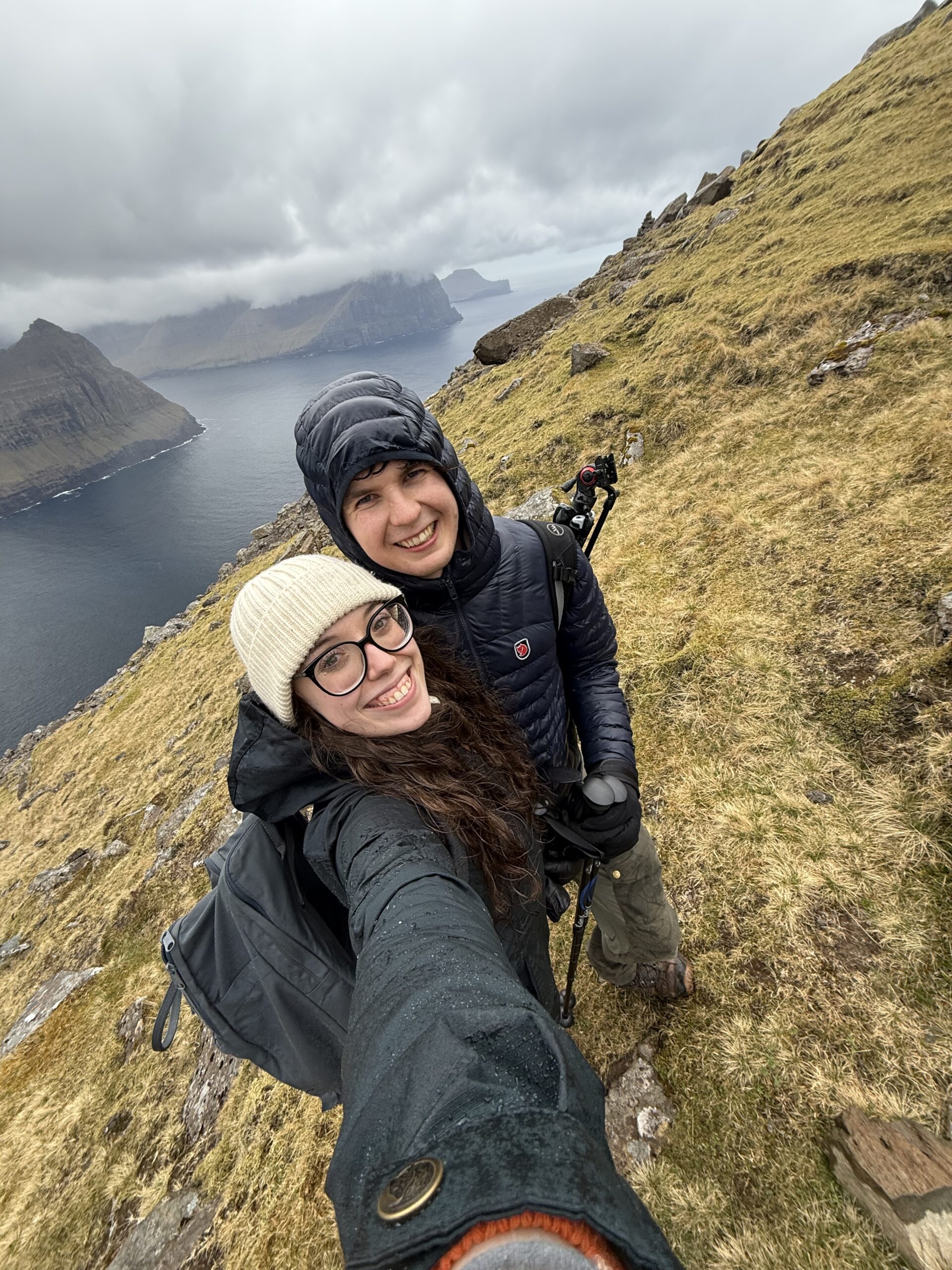
We’ve been to the Faroe Islands once. We drove. We had a rental car from the moment the Smyril Line ferry docked in Tórshavn until the moment we rolled back on board for the crossing home. Without it, we’d have missed half of what made the islands what they are for us — the single-track roads over sea cliffs, the submarine tunnel to Sandoy that felt surreal, the pull-off at Trælanípan that required a car and a 4 km walk from a gravel lay-by.
That said, not everyone can or wants to rent a car. The question “can you visit the Faroe Islands without a car?” is one of the most common we see from people planning the trip. The honest answer is yes — but with a very specific kind of visit in mind.
Yes, you can visit the Faroe Islands without a car — but your experience will be largely limited to Tórshavn and a small number of bus-connected highlights. The islands are purpose-built for car travel. Without one, you won’t reach most of the scenery that makes the Faroes famous. If a car is genuinely not possible, focus on Tórshavn, book guided day tours, and adjust your expectations accordingly.
Why the Faroe Islands are built for car travel
The 18 Faroese islands are connected by a remarkable infrastructure for such a small archipelago — subsea tunnels, causeways, bridges, and ferry crossings. But that infrastructure is overwhelmingly designed for cars. The reason is simple: this is where 54,000 people live and work. They drive. The road network is excellent. The public transport network is an afterthought by comparison.
The geography problem
Almost every landmark you’ve seen in photos of the Faroe Islands — Trælanípan (the lake above the sea), Gjógv gorge, Saksun village, Gásadalur with its waterfall, the Klæminutur sea stacks — requires a car to reach, either directly or to get close enough to walk the rest. The islands are not compact in the way that a small Italian hill town is. Distances between villages are short on a map but completely impractical without wheels.
The tunnel situation
Several of the most dramatic islands — Sandoy, Suðuroy, Skúvoy — are accessible only by paid subsea tunnels or ferries, both of which are car-oriented. The Eysturoyartunnilin, the world’s first underwater roundabout, is a toll tunnel where pedestrians are not permitted. Cyclists and pedestrians wishing to reach Eysturoy from Streymoy must use a separate older road — but this adds significant time and limits access to the less-visited parts of the island.
What’s actually possible without a car
Let’s be concrete. Here is what a car-free traveller can genuinely access, assuming a base in Tórshavn and standard summer conditions.
Tórshavn itself
The capital is small, walkable, and genuinely lovely. You could spend a full day here without feeling like you’ve exhausted it. The old town (Tinganes), the harbour front, the Nordic House cultural centre, the cathedral, the grass-roofed parliament building — all are within comfortable walking distance. Tórshavn also has the most restaurant and café options on the islands, which makes it the most sensible base regardless of whether you have a car. The city has a real local feel that the tourist sites sometimes lack.
What buses reach
The Faroese public bus network (ssl.fo) covers the main populated areas on Streymoy, Eysturoy, Norðoy, and Borðoy. Key bus-accessible highlights include:
- Kirkjubøur — a 30-minute bus from Tórshavn, the old Viking and medieval capital with the restored farmhouse and ruins of an unfinished Gothic cathedral. Genuinely impressive and doable without a car.
- Klaksvík — the second-largest town, reachable by bus via the Eysturoy route, though it’s a 2+ hour trip requiring a connection change.
- Parts of northern Streymoy — the bus network extends here but services are infrequent, sometimes just 2–3 per day.
What’s off-limits without your own transport
- Trælanípan (the most-photographed spot on the islands) — the nearest bus stop is kilometres from the trailhead.
- Saksun — no public bus service to this village at all.
- Gásadalur — no bus service; the waterfall viewpoint requires a car to reach the starting trailhead.
- Mykines — reachable by ferry or helicopter from Sørvágur, but getting to Sørvágur itself requires a car or a very limited bus service.
- Most of Suðuroy — requires taking the car ferry from Tórshavn, or using the island’s limited local services once there.
The Faroe Islands public bus system — a quick-reference guide
The official bus network is Strandfaraskip Landsins. Routes and timetables are available at ssl.fo and via the Faroe Islands travel app. Here is what you need to know before assuming you can get somewhere by bus.
- Coverage: the network covers Tórshavn, the main towns on Streymoy and Eysturoy, and major settlements on Norðoy and Borðoy. It does not cover rural villages, most trailheads, or the outer islands (Vágoy, Sandoy, Suðuroy).
- Frequency: most routes run 4–8 times per day on weekdays, significantly less on weekends and public holidays. For a summer trip you will often be waiting 2–3 hours between connections.
- Cost: buses are inexpensive by Nordic standards — a flat-rate fare of around 35–55 DKK per journey covers most routes. A 24-hour bus pass is available and worth buying if you plan a full day of bus travel.
- Reliability: the buses run on time. Weather-related cancellations are rare for road routes, though ferry-dependent connections can be affected by conditions.
- Language: timetables are in Faroese but the app includes English translations. Drivers generally speak some English.
- The helicopter network: the Faroese helicopter service (Atlantic Airways) connects the outer islands and is how locals on Mykines, Svínoy, and Skúvoy commute. Tourists can book seats. It’s expensive but an experience in itself — if you want to reach Mykines and the ferry cancels due to weather, this is the alternative.
- Key route for car-free travellers: Route 100 (Tórshavn — Klaksvík) is the most useful long-distance bus for seeing more of the islands without a car. It runs several times daily.
- Smyril Line arrival: if arriving by ferry, the docking port in Tórshavn is walkable from the city centre. No car needed for arrival itself.
Honest travel writing from two people who actually go.
Monthly notes from our life in Finnish Lapland — places we’ve been, things we’ve learned, and the kind of travel advice that takes time to write.
Guided day tours as a car alternative
This is the most honest solution for car-free travellers who want to see more than Tórshavn. Several local operators run full-day and half-day guided tours that cover the highlights — Saksun, Trælanípan, Gjógv, and the western coast — in a single day with pick-up and drop-off in Tórshavn.
What guided tours can give you
A good full-day tour from Tórshavn can cover Saksun, the Lake Sørvágsvatn / Trælanípan viewpoint area, and the west coast villages — that’s a lot of the photogenic Faroe Islands in one long day. Tours typically run in small minibuses of 8–12 people, include a guide who can explain the landscapes and culture, and cost around 700–1,200 DKK per person depending on the operator and route.
Limitations of tours
- You move at someone else’s pace. The light changes fast in the Faroes. With your own car you can stop for 45 minutes at a viewpoint because the cloud shadow on the cliffs is doing something extraordinary. On a tour you have 15 minutes and a schedule.
- Weather pivots are harder. The Faroese weather changes multiple times per day. A private car lets you drive east when the west is socked in fog. Tours stick to their route.
- Mykines is harder to coordinate. Most tours include a Mykines option or can help you coordinate the ferry, but check before booking — the puffin island requires getting to Sørvágur first.
Operators worth looking at
We drove ourselves so we haven’t personally tested every tour, but the main established operators are Guide to Faroe Islands (guidetofaeroeislands.com) and 62°N (62n.fo). Both have English-language booking systems, fixed summer departure schedules, and a range of day-tour options. Book ahead — summer slots fill up quickly, especially on popular routes.
What you’ll miss without a car — and whether that matters
This is the part that requires some honesty. The things that made the Faroe Islands stick in our memory — and in the memory of most people who rave about them — are almost entirely inaccessible without a car.
The experiences that require a car or guided tour
- Trælanípan (Lake Above the Sea). The most photographed spot in the Faroes. Requires driving to a gravel parking area above Sørvágur and a 4 km return walk. No bus service.
- Saksun. A remote village at the end of a valley road — one of the most beautiful in the archipelago. No bus service.
- Gásadalur. The village with the waterfall falling into the Atlantic. Requires driving to a trailhead on the far end of Vágoy. No bus service.
- Gjógv. The gorge-harbour village on Eysturoy. Technically reachable by bus with a connection change and a long walk — but very time-consuming.
- The Klæminutur (Giant Chimney). Sea stacks on the west coast of Vágoy. Car access only.
- Most of Borðoy’s landscape. The bus reaches Klaksvík, but the surrounding dramatic countryside requires a car.
What you can genuinely enjoy car-free
- Tórshavn — a full, absorbing day at minimum.
- Kirkjubøur — accessible by bus, historically rich, genuinely beautiful.
- Klaksvík by bus — a different angle on Faroese life.
- The experience of arriving by Smyril Line ferry — dramatic, and a highlight in itself.
- Guided day tours covering the main scenic routes.
Tips if you’re determined to go car-free
If renting a car is genuinely not possible — you don’t drive, or budget is the constraint — here is how to make the most of a car-free visit.
- Stay in Tórshavn and embrace it. Don’t treat the capital as just a transit point. The old town is beautiful, the food scene is small but excellent, and the harbour is worth an evening walk. Tórshavn is a real place, not just a gateway.
- Book at least one full-day guided tour. This is non-negotiable if you want to see beyond the capital. A good tour covers Saksun, the west coast, and one or two other stops in 8–9 hours.
- Consider renting an e-bike for shorter explorations. Some operators in Tórshavn offer e-bike rentals. These can reach Kirkjubøur (south), some coastal paths, and the area around the ferry terminal. Not a substitute for a car on mountain roads, but they open up the immediate surroundings.
- Use the bus for Kirkjubøur. This is the best value day trip on public transport — relatively short journey, historically significant, genuinely beautiful.
- Check the helicopter booking window early. If you want to reach Mykines and weather cancels the ferry, a helicopter seat is a dramatic alternative. But seats are limited and book out weeks in advance in summer.
- Don’t over-schedule. The Faroes are best experienced slowly. A car-free visitor trying to jam in a daily list of sights will end up frustrated. Plan for depth over breadth — one place properly is better than five places glimpsed from a bus window.
- Check the Faroe Islands Card. A tourist pass covering bus travel and some ferry connections is available — check visitfaroeislands.com for current pricing. Useful if you plan several bus journeys.
Mistakes people make visiting the Faroe Islands without a car
- Assuming public transport works like mainland Europe. It doesn’t. The Faroe Islands have excellent roads and village-level bus frequency. The gap between expectation and reality is large.
- Not checking bus timetables before arriving. Some routes have just 3–4 departures per day. If you miss the last bus back from Klaksvík, your options are limited and expensive.
- Underestimating Tórshavn. Many visitors plan one day there and fill the rest with failed attempts to reach distant sites. Two days in Tórshavn, one guided tour, and Kirkjubøur by bus makes a better trip.
- Not accounting for weather cancellations on Mykines ferry. The Mykines ferry cancels frequently — sometimes for several consecutive days in summer. Without a car and a backup plan, a cancelled ferry means a cancelled experience.
- Expecting rideshare or taxi coverage. Taxis exist in Tórshavn but are expensive and few. Uber does not operate. Don’t plan a trip around taxis to distant sites.
- Travelling in spring without confirming tour schedules. Many guided tour operators run a compressed schedule outside June–August. Check before booking flights.
Frequently asked questions
Can you see the Faroe Islands properly without a car?
You can have a real experience — particularly if you combine time in Tórshavn with guided day tours and a bus trip to Kirkjubøur. But the iconic landscapes (Trælanípan, Saksun, Gásadalur) require either a rental car or a guided tour. If you want to go beyond Tórshavn independently and at your own pace, a car is essential.
Is there public transport between the islands?
The main islands connected to Streymoy by tunnel or causeway (Eysturoy, Norðoy, Borðoy) are reachable by bus. The outer islands (Vágoy, Sandoy, Suðuroy) require ferry crossings — some car-ferries, some passenger ferries. Mykines requires a passenger ferry from Sørvágur or a helicopter booking.
How much does it cost to rent a car in the Faroe Islands?
Car rental starts at around 400–600 DKK per day (approximately €55–80) for a small car in summer. 4WD is not legally required on the main roads but is useful for gravel tracks. International driving licences are accepted. Book well in advance for summer travel — the rental fleet is small relative to peak demand.
Can you get to Mykines without a car?
Yes, but it’s complicated. The Mykines ferry departs from Sørvágur on Vágoy. Getting there without a car requires either an infrequent bus from Tórshavn or a guided tour that includes Sørvágur. The ferry itself is weather-dependent and cancels frequently. A helicopter from Tórshavn heliport is the most reliable alternative but must be booked far in advance.
Are taxis a practical alternative to a car?
For short trips within Tórshavn, yes. For reaching distant sites, no — the cost would be prohibitive (a return taxi to Saksun would likely cost several thousand DKK), availability is limited, and waiting times at remote trailheads are unpredictable. Taxis are a supplement, not a replacement, for a car.
What is the best single day trip from Tórshavn without a car?
Kirkjubøur on public bus — about 30 minutes each way, inexpensive, and genuinely impressive. You’ll see the medieval St. Magnus Cathedral ruins, the restored Kirkjubøargarðurin farmhouse (reputedly the world’s oldest continuously inhabited wooden house), and a quiet Faroese coastal village. A full-day guided tour is the best option for seeing the wider islands; Kirkjubøur is the best independent day trip.
Joona & Alla
A Finnish-Ukrainian couple living in Rovaniemi, Finland. Joona is a marketing professional in Lapland tourism; Alla is an AI Engineer. Together we’ve visited 25 countries — including the Faroe Islands — and share honest, locally-grounded travel writing from our home in the Arctic.
Read our full story →