Driving a Campervan in New Zealand: One-Lane Bridges, Hills and the Cook Strait Ferry
The roads are beautiful and the distances look small on a map, but New Zealand driving has its own rhythm. Here is what first-time campervan drivers should know before pick-up day in Auckland, Christchurch or Queenstown.
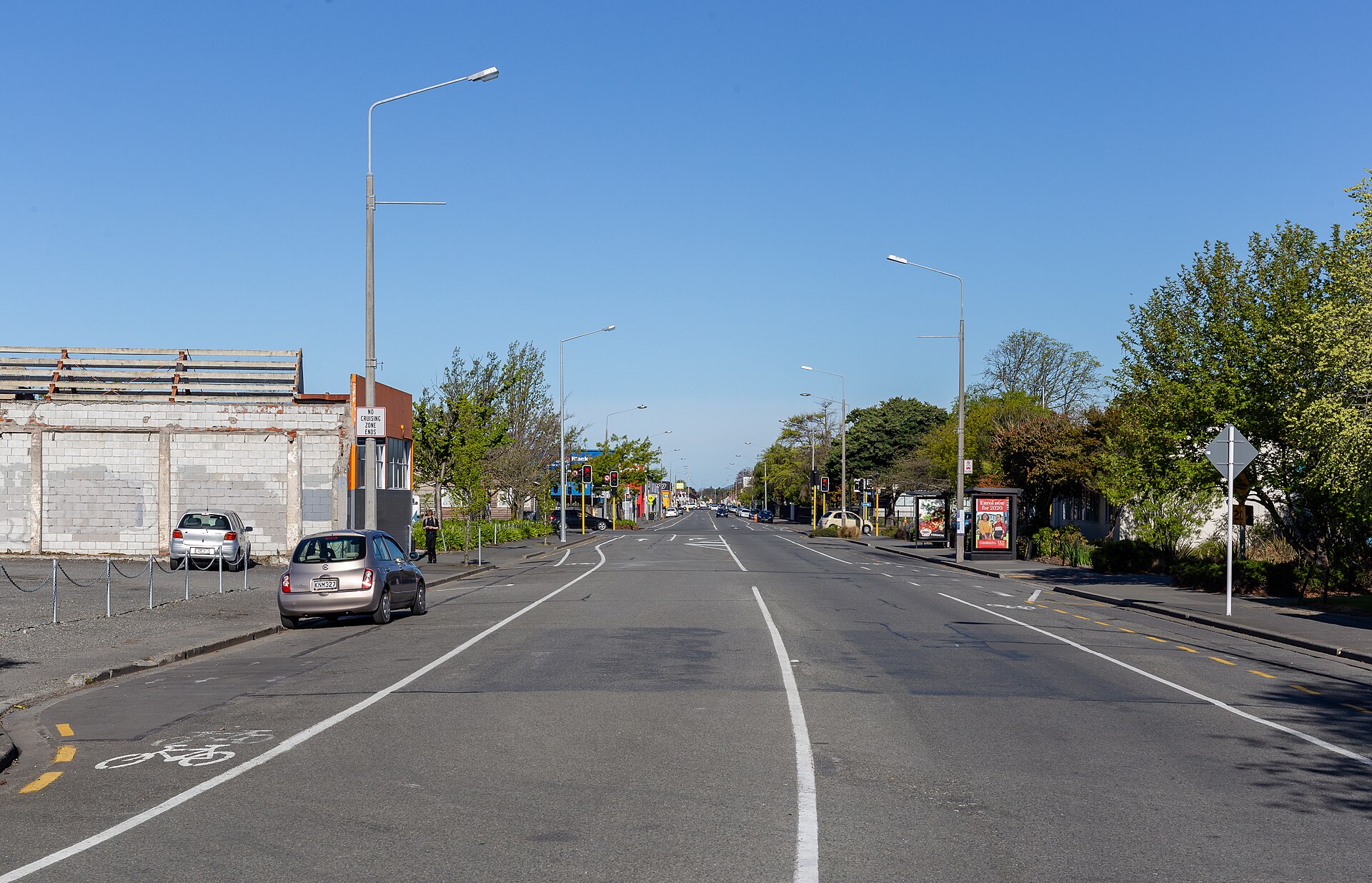
Photo: Michal Klajban, CC BY-SA 4.0, via Wikimedia Commons
Driving a campervan in New Zealand is not hard, but it is different from what most visitors expect. The country looks compact on a map, and then a 250 km day turns into five hours because the road climbs through a pass, narrows to a single lane over a river and follows a coastline that never goes straight for long. People who plan with a lazy highway-speed average end up exhausted, behind schedule and driving the last hour in the dark.
This guide is for first-timers who have booked, or are about to book, a campervan for New Zealand. We use the facts CampervanPlanet publishes for its New Zealand rentals (23 rental companies, 9 pick-up locations) together with the common local driving rules. It is a researched guide, not a first-hand report, so check your rental company’s own conditions and the official New Zealand Transport Agency rules before you set off.
Drive on the left, plan on about 60–70 km/h average including stops, give way correctly on one-lane bridges, and stay on sealed roads unless your contract says otherwise. The Cook Strait ferry between Wellington and Picton joins the islands, and summer (December–February) is peak season with typical prices of NZ$367 a day, against NZ$163 from May to September.
Driving on the left, and your licence
New Zealand drives on the left, with the driver on the right of the vehicle, the same as in Australia, the UK and Ireland. If you come from a right-hand-traffic country, the first hour after pick-up is the risky one. Ask the person at the depot to let you sit in the van for a few minutes, find the indicators (which may be on the opposite side of the wheel to what you expect) and practise a few turns in the car park.
Two simple habits help. First, at every junction and roundabout, say to yourself “keep left, look right”. Second, after a stop at a viewpoint or a petrol station, take a second to check which side of the road you will pull out on, because that is when many visitors drift to the wrong side. If you are the second driver, you are the navigator, and your job is to remind the driver.
Licence rules vary, so check the rental company’s requirements and the current rules for visitors before you travel. As a general rule you need a valid licence in English or an accompanying translation or international permit, and most companies set a minimum age. Our guide to driving licence and age requirements explains what to check.
Distances, speed and the 60–70 km/h rule of thumb
CampervanPlanet’s own route notes give a good sense of scale. A North Island trip from Auckland to Wellington takes 10 to 14 days and about 1,100 km, via Rotorua, Tongariro and Napier. A South Island trip from Christchurch to Queenstown via Milford Sound covers about 1,900 km in 10 to 14 days and is described as ideal for a first trip. If you are travelling from outside New Zealand or Australia, their advice is at least three weeks to really enjoy the country.
The open-road limit is generally 100 km/h on good roads, but a campervan on a winding road rarely gets near it. Our rule of thumb is to plan for an average of 60–70 km/h including photo stops, and to cap yourself at about 250 km or four hours of driving on most days. That leaves time for a walk, a long lunch and a campsite in daylight. Our guide to how many days you need turns this into 7, 10, 14 and 21-day plans.
The same maths applies to your first day. If you land in Auckland or Christchurch after a long flight, drive a short, easy leg the first day, preferably to a campsite within an hour or two of the pick-up depot.
One-lane bridges and who gives way
This is the one rule that surprises almost everyone. On many rural roads, especially on the South Island’s west coast and in the high country, bridges carry a single lane for both directions. Signs tell you who has priority: a large red arrow means you must give way to oncoming traffic, a smaller white arrow means you have the right of way, and a sign with a bridge symbol warns you in advance.
The practical advice is simple. Slow down well before the bridge, look for the signs, and if you see a vehicle already on the bridge, wait. If you have right of way, still check that the oncoming driver is slowing. In a campervan you cannot stop quickly, so treat priority as a courtesy, not an entitlement. Some bridges also share the deck with a railway line, so look for trains as well.
Narrow roads are also a reason to pull over for people behind you. If you collect a queue of cars, use the next slow-vehicle bay or lay-by, and let them pass. It is polite, and it is safer for everyone.
💡 Our campervan tip: prices for the same van vary a lot between rental brands. We compare New Zealand campervans across 160+ rental companies on CampervanPlanet — and code HUNGRYTRAVELFAMILY20 takes €20 off your booking.
Hills, wind and weather
New Zealand’s weather changes quickly, and the roads follow the terrain. Expect long climbs and descents on passes such as those linking Christchurch with the west coast and Queenstown with Milford Sound. On downhills, use a low gear instead of riding the brakes, because a heavy van can overheat brakes on a long descent. On climbs, expect to drop to 40–50 km/h behind trucks and campervans.
Wind is the quieter hazard. A tall, boxy van catches crosswinds on exposed coastal roads, bridges and open plains, so loosen your grip, slow down and give cyclists and trucks extra room. CampervanPlanet’s weather notes give a feel for the seasons: summer (December–February) is 18°C–25°C with long sunny days; autumn (March–May) and spring (September–November) are about 10°C–20°C; and winter (June–August) is 8°C–15°C with snow in the central plateau and the occasional pass closure, while the main roads remain accessible.
In winter, ask your rental company about snow chains, which are commonly required equipment on some mountain roads, and about heating in the van. Check the live road conditions on the day, because closures can change your plan overnight.
Gravel roads, 4WD and what the contract allows
Most visitors rent a standard two-wheel-drive campervan, and those are usually restricted to sealed roads and a short list of approved gravel roads. CampervanPlanet warns that rental companies usually restrict standard campervans on remote gravel roads, which need a 4WD camper. Breaking those terms can void your insurance, and you would be liable for the damage and recovery costs, so read the contract and ask which gravel roads are allowed.
If you want to go beyond the main roads, look at our guide to where a rental 4WD can and cannot go. And whatever vehicle you rent, check the excess and bond at pick-up. Our guide to insurance, deposits and excess explains why zero-excess cover is often worth it.
When you collect the van, do a proper walk-around with the staff, photograph every existing scratch, and check the heights and widths so you know where you can fit. Our pick-up day checklist covers the full routine.
The Cook Strait ferry, tolls and where to sleep
To see both islands you cross the Cook Strait between Wellington and Picton. Most visitors take the van on a ferry and the crossing takes about three and a half hours, which means a morning departure and a short drive on the other side. Book well ahead for summer and check your rental contract: some companies let you take the van across, while others expect you to drop it at one terminal and pick up a different one on the other island. Our guide to the Picton ferry and campervan explains both options.
Tolls are rare in New Zealand, but a few exist, for example on the Northern Gateway toll road north of Auckland. Ask your rental company how tolls are billed, because some add an admin fee.
Where you park overnight matters as much as how you drive. Freedom camping rules differ by council and many places require a certified self-contained vehicle, so read our guide to freedom camping rules for 2026–27 before you plan a night at a lake or beach.
Fuel, daily rhythm and booking the right van
Fuel stations are plentiful on main roads but can be 100 km or more apart on stretches of the west coast, the Milford Road and some high-country routes. Fill up when you are at half a tank, not at a quarter. Cards work almost everywhere, but small stations may close early, so avoid relying on a late arrival.
A simple daily rhythm makes everything easier: start after breakfast, stop for a walk every two hours, arrive at your campsite by late afternoon, cook and plan the next day’s route over dinner. The pick-up city also matters. Auckland suits the North Island, Christchurch the South Island and Queenstown is the closest to Milford Sound.
Prices vary by season. CampervanPlanet’s typical daily rate is NZ$163 from May to September, about NZ$264 in April, NZ$286 in October and November, and NZ$367 from December to February, with March still close to summer. The cheapest offer starts at NZ$37 a day for a two-berth van in May. Our code HUNGRYTRAVELFAMILY20 takes €20 off the booking, and you can compare all companies on the New Zealand price page. For the wider picture on renting anywhere, read our campervan rental guide, and if you also plan Australia, our guide to driving a campervan in Australia covers similar ground.
Book your New Zealand campervan
Compare prices across 160+ campervan and motorhome rental brands, get a free 1GB eSIM with every booking — and €20 off with code HUNGRYTRAVELFAMILY20.
Check prices & availability →Frequently asked questions
Is it hard to drive a campervan in New Zealand?
Not if you take it slowly. Drive on the left, plan for about 60–70 km/h on average, expect winding roads and one-lane bridges, and keep daily driving to four hours or so. Most first-time visitors find it manageable after the first day.
Which side of the road do you drive on in New Zealand?
On the left, with the driver on the right of the vehicle. Take time at pick-up to practise, and remind yourself at every junction and roundabout.
What are one-lane bridges and who has priority?
On many rural roads, a single lane carries traffic in both directions. A large red arrow means you give way, a small white arrow means you have priority. Slow down early and check for oncoming vehicles.
Can I take my campervan on the Cook Strait ferry?
Usually yes, but check your contract. Some companies allow vehicles on the Wellington–Picton ferry, while others suggest dropping the van at one terminal and collecting another on the other island. Book the crossing early for summer.
Is there a discount code for CampervanPlanet?
Yes. Enter code HUNGRYTRAVELFAMILY20 at checkout on CampervanPlanet to take €20 off the booking. It is a fixed amount, so check the terms at checkout.
When is the cheapest time to rent a campervan in New Zealand?
May to September is the cheapest period, with a typical NZ$163 a day in CampervanPlanet’s price study. December to February is the summer peak at about NZ$367 a day, and booking three to six months ahead is advised.
Keep your crypto offline, not in an exchange app
Any crypto we hold lives on a Trezor hardware wallet — a small offline device in a drawer in Rovaniemi, not on a phone that crosses borders every month. If you’ve been meaning to sort that out, this is the link we’d send a friend.