Sámi culture in Finnish Lapland: what visitors and journalists should know before they go
About 10,000 Sámi live in Finland, three languages are endangered, and Rovaniemi is not in the homeland: facts from the Sámi Parliament and Siida, and how to visit respectfully.
Visitors to Lapland often expect to meet the Sámi in every town and every souvenir shop. The reality is more specific, and more interesting. The Sámi are the Indigenous people of the northern parts of Finland, Sweden, Norway and the Kola Peninsula, they have their own parliament, languages and museum, and they decide for themselves how their culture is presented.
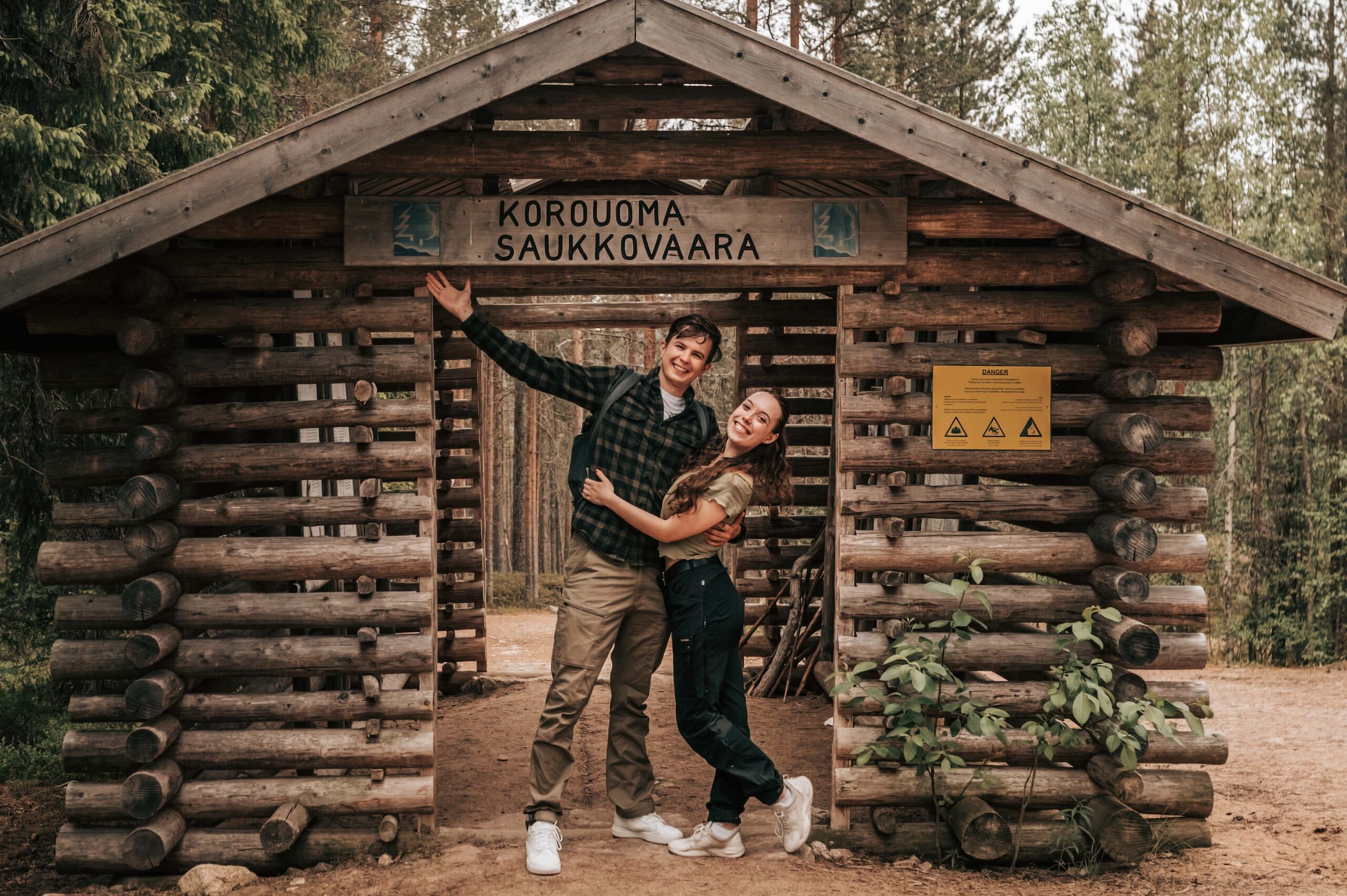
We live in Rovaniemi and work in Lapland tourism, and we are not Sámi. This guide therefore does not speak for the Sámi. It collects what the Sámi Parliament in Finland and the Sámi Museum Siida publish about themselves, so that journalists and visitors can describe the Sámi accurately and travel respectfully.
About 10,000 Sámi live in Finland, according to the Sámi Parliament, and more than 60% of them live outside the Sámi homeland. The homeland consists of the municipalities of Inari, Enontekiö and Utsjoki plus the northern part of Sodankylä. Rovaniemi is not part of it. Three Sámi languages are spoken in Finland, Northern, Inari and Skolt Sámi, and all three are endangered. The Sámi Parliament’s ethical guidelines for tourism, adopted on 24 September 2018, ask visitors and companies to present Sámi culture accurately and not to exploit it.
Who the Sámi are, in numbers
The Sámi Parliament’s own frequently asked questions give the figures most often quoted by media. We list them here with the parliament’s wording, because estimates of the Sámi population vary by method.
| Fact | Figure | Source |
|---|---|---|
| Sámi living in Finland | About 10,000 | Sámi Parliament, FAQ |
| Share living outside the Sámi homeland | Over 60% | Sámi Parliament, FAQ |
| Sámi in total across all countries | Approximately 75,000 to 100,000, depending on the method of calculation | Sámi Parliament, FAQ |
| Countries of the Sámi homeland, Sápmi | Finland, Sweden, Norway and Russia | Sámi Parliament; Sámi Parliament tourism pages |
| Status in the European Union | The only Indigenous people in the EU | Sámi Parliament, About us |
| Members of the Sámi Parliament in Finland | 21 members and 4 deputies, elected from among the Sámi every four years | Sámi Parliament, About us |
The status of the Sámi as an Indigenous people is enshrined in the Constitution of Finland, which guarantees them the right to maintain and develop their language and culture and, within the Sámi homeland, self-government in matters that concern their language and culture. These rights are further specified in the Sámi Parliament Act (974/1995) and the Sámi Language Act (1086/2003), according to the parliament.
Sápmi is the Northern Sámi name for the Sámi homeland as a whole. It is Säämi in Inari Sámi and Sääʹmm in Skolt Sámi. The parliament notes that Sámi have lived in the northern parts of Norway, Sweden and Finland and in the interior of the Kola Peninsula since well before today’s national borders were drawn.
Where the Sámi homeland is, and why it is not Rovaniemi
Under the Sámi Language Act, the Sámi homeland in Finland consists of the municipalities of Inari, Enontekiö and Utsjoki and the northern part of Sodankylä, the area of the Lapland reindeer herding district. Rovaniemi, where we live, is the capital of the Lapland region and the home of Santa Claus Village, but it lies outside the homeland. Lapland is the name of a Finnish region, while Sápmi is the Sámi homeland, and the two do not coincide.
This matters for journalists because it is a common mistake. A Santa Claus attraction in Rovaniemi is a Finnish Christmas tradition and not a Sámi one. If a story is about Sámi culture, the places to go and the people to ask are in Inari, Utsjoki or Enontekiö, or at the Sámi institutions listed below. The parliament also stresses that the majority of Sámi in Finland live outside the homeland, so Sámi people live in Rovaniemi and in southern Finnish cities too, as ordinary residents rather than as part of a tourist programme.
Three Sámi languages, all endangered
Nine Sámi languages are spoken today across the Nordic countries and Russia, according to the Sámi Parliament. Three of them are spoken in Finland, and the parliament states plainly that all three are endangered.
| Language | Estimated speakers in Finland | Notes from the Sámi Parliament |
|---|---|---|
| Northern Sámi | About 2,000 | The most widely spoken Sámi language, with an estimated 20,000 to 25,000 speakers across Finland, Norway and Sweden |
| Inari Sámi | About 400 | Traditionally spoken around Lake Inari; the only Sámi language spoken exclusively in Finland; the number of speakers is rising thanks to revitalisation work |
| Skolt Sámi | About 300 | Traditionally spoken on the Kola Peninsula and in adjacent areas; most speakers now live in the municipality of Inari |
Sámi languages belong to the Finno-Ugric branch of the Uralic language family, and their closest relatives are Finnic languages such as Finnish and Estonian. Under the Sámi Language Act, Sámi people have the right to use Finnish or Sámi when dealing with authorities in the homeland, including health centres, municipal offices, the police and the tax administration. The parliament lists a language nest among its services and says the Act’s purpose is to keep the languages living in practice, not only in translation.
Livelihoods, duodji and the traditional dress
The parliament lists the traditional Sámi livelihoods as fishing, reindeer herding, hunting, gathering and Sámi handicrafts, together with modern adaptations of them. Small-scale tourism may be practised alongside as supplementary income. It also points out that in traditional livelihoods the language is a natural part of work, so the livelihoods are where the language and the skills pass from generation to generation.
Reindeer herding is a good example of why simple pictures mislead. In law, herding in Finland is not restricted by ethnicity, as we explain in our guide to reindeer herding facts and figures, but within the Sámi homeland it is an important part of Sámi culture and livelihood, and herding cooperatives there are covered by the Sámi Language Act.
The Sámi traditional dress is, in the parliament’s words, the most prominent of all Sámi national symbols and an important symbol of identity. The full dress consists of many parts, such as shoes, belt, hat, shawl and jewellery, and, in the parliament’s words, it often conveys messages about its wearer in many different ways. The parliament says five main types are used in Finland, the Enontekiö, Inari, Utsjoki, Vuotso and Skolt Sámi dresses. It originated as folk dress, has never fallen out of use, and over time has moved from an everyday garment to one worn more often on special occasions. Because it carries this meaning, the dress is not a costume. The guidelines discussed below are the place to read what the parliament asks of companies on this point.
Duodji is the Sámi word for traditional handicraft. The parliament runs a project called Duodji Akademiija 2027 that aims to preserve, strengthen and promote the tradition, focused on Enontekiö in Finland, Kautokeino in Norway and Karesuando in Sweden.
The Sámi Parliament and national symbols
The Sámi Parliament is the representative self-government body of the Sámi in Finland and the official representative of the Sámi people. Its office and parliament hall are in the Sámi Cultural Centre Sajos in Inari. The Plenum is the supreme authority, meets four to five times a year, and its meetings are open to the public and can be followed by live stream. The Plenum elects a full-time president and two vice-presidents, and appoints an Executive Board and expert committees.
The Sámi flag was designed by the Sámi artist Astrid Båhl and approved at the 13th Sámi Conference in Åre, Sweden, on 15 August 1986. The red circle stands for the sun and the blue circle for the moon, from a poem by Anders Fjellner that describes the Sámi as the daughters and sons of the sun. The parliament lists twelve Sámi flag days. The most important is the Sámi National Day on 6 February, which commemorates the first cross-border Sámi congress, held in Trondheim, Norway.
What the Sámi Parliament asks of visitors and tourism companies
On 24 September 2018 the Sámi Parliament in Finland adopted Principles for Responsible and Ethically Sustainable Sámi Tourism. According to the parliament, their primary purpose is to end tourism that exploits Sámi culture and to eliminate incorrect information about the Sámi spread through tourism. The second priority is to safeguard Sámi cultural practices and traditions outside the travel industry. The guidelines are aimed mainly at tourism operators outside the Sámi community that productise, represent, market or communicate Sámi culture, and also at visitors arriving in the homeland.
The seven principles, as titled by the parliament, are as follows.
- Recognising and respecting the value and richness of Sámi cultural heritage.
- Protecting and maintaining the vitality of Sámi cultural heritage for future generations.
- Mutually beneficial understanding and co-operation.
- Issues featured in Sámi tourism, their recognition and correction.
- Positive impact of Sámi tourism on Sámi people, their culture and environment.
- Responsible and ethically sustainable marketing and communications of Sámi tourism.
- High-quality visitor experiences and quality assurance.
The parliament’s visitor guidance, illustrated by the comic artist Sunna Kitti, reminds visitors that they are guests in an area rich in culture-bound customs, and that area-specific and seasonal practices must be taken into account. It also warns that many visitors’ understanding of nature and survival in Arctic conditions differs greatly from that of the Sámi. The parliament is also developing a certification for responsible Sámi tourism, called the Path of the Calf, funded by the European Union’s NextGenerationEU programme.
In practice, that gives visitors a simple set of habits.
- Ask who runs a product. The parliament distinguishes tourism based on Sáminess, where the providers come from the Sámi community, from tourism that merely utilises Sámi symbols. If a company markets a Sámi experience, find out who is behind it.
- Do not treat people as attractions. Do not photograph people, homes or reindeer corrals without asking, and do not wear or buy imitations of the traditional dress as a costume.
- Use correct names, such as Sámi, Sápmi and Inari Sámi, and not generalisations or outdated words.
- Respect land and livelihoods. Herding, fishing and gathering happen on the same land that visitors want to walk on, and the guidelines ask for attention to area-specific and seasonal customs.
- Spend where it helps. Museums, Sámi-run businesses and genuine Sámi handicraft support the community directly.
Where to learn more in person
The best single place to start is the Sámi Museum Siida in Inari. Siida is a national museum for Sámi culture and a regional museum responsible for cultural environments in the Sámi area. Its main exhibition, produced with Metsähallitus, links Sámi culture and northern nature, and the Open-Air Museum shows the architecture and traditional livelihoods of the Sámi in Finland. From 16 October 2026 to 3 April 2027 Siida also shows We Who Remain, a joint exhibition with the Kiasma museum of contemporary art, presenting contemporary art by Sámi artists from Finland, Sweden and Norway.
At the time we checked, Siida’s opening hours from 5 October 2026 to 31 May 2027 were Monday to Saturday 10 to 17, closed on Sundays. Adult tickets cost 18 euros, children aged 0 to 6 are free, school children aged 7 to 17 pay 7 euros, and a family ticket costs 36 euros. Please check the museum’s website for current hours and prices before you travel.
The Sámi Cultural Centre Sajos in Inari is the seat of the Sámi Parliament, and its Plenum meetings are open to the public and broadcast online.
Notes for journalists
- Say “Sámi”, not “Lapps” or “Laplanders”. If you mean the region, say Lapland. If you mean the people, say the Sámi.
- Do not describe Santa Claus Village or Rovaniemi as Sámi. The Sámi homeland in Finland is Inari, Enontekiö, Utsjoki and northern Sodankylä.
- Use the parliament’s own estimates, and name them as estimates: about 10,000 Sámi in Finland, over 60% outside the homeland, about 2,000, 400 and 300 speakers of the three languages.
- Ask the Sámi Parliament, Siida or Sámi-run organisations for interviews on Sámi culture. We can describe Rovaniemi and Lapland tourism, but we are not a Sámi voice.
- Note that the Sámi are also a modern society: they have a parliament, media, artists, entrepreneurs, and a 2026 art exhibition, not just a historical heritage.
FAQ
The questions below are the ones we hear most often from visitors. The short answers are above, and the sources are linked at the end.
Quotable · free to use with credit
“Santa Claus is a Finnish Christmas tradition. Sámi culture is something else, and it lives in Inari, Utsjoki and Enontekiö, not in a souvenir shop.”
— Joona & Alla, Hungrytravelfamily, Rovaniemi
“We are not Sámi, so we will not speak for the Sámi. We can point you to the people who do.”
— Joona & Alla, Hungrytravelfamily, Rovaniemi
Please credit “Joona & Alla, Hungrytravelfamily (hungrytravelfamily.com)”. Need a fresh quote or an interview? Contact us.
For journalists, TV & podcast producers
Working on a story about Sámi culture in Finnish Lapland?
We’re Joona & Alla — we live in Rovaniemi on the Arctic Circle and both work in tourism marketing in Lapland. We can help with:
- On-camera interviews and expert comments in English (Joona also speaks Finnish)
- Story research, real prices and location ideas in Rovaniemi and Finnish Lapland
- Filming days and contacts with local husky, reindeer, snowmobile and northern lights operators
Send your outlet, topic, dates and deadline — we try to reply within 24 hours.
Email a media requestPress & media pageSources & further reading
- Sámi Parliament of Finland: About us and frequently asked questions
- Sámi Parliament of Finland: The Sámi Language Act
- Sámi Parliament of Finland: Ethical Guidelines for Sámi Tourism
- Sámi Parliament of Finland: Responsible Sámi Tourism
- Sámi Parliament of Finland: front page
- Sámi Museum Siida, Inari
- Reindeer Herders' Association: Reindeer herding
Get our best travel tips in your inbox
Monthly stories from Rovaniemi — Arctic tips, packing lists, and the places we keep coming back to.