The Ultimate Winter Travel Packing List (From Finland to Iceland)
We live in Rovaniemi and have packed for cold-weather trips across 25 countries. This is the complete winter travel packing list we wish we’d had from day one — tested from Finnish Lapland to Iceland, Norway, and beyond.
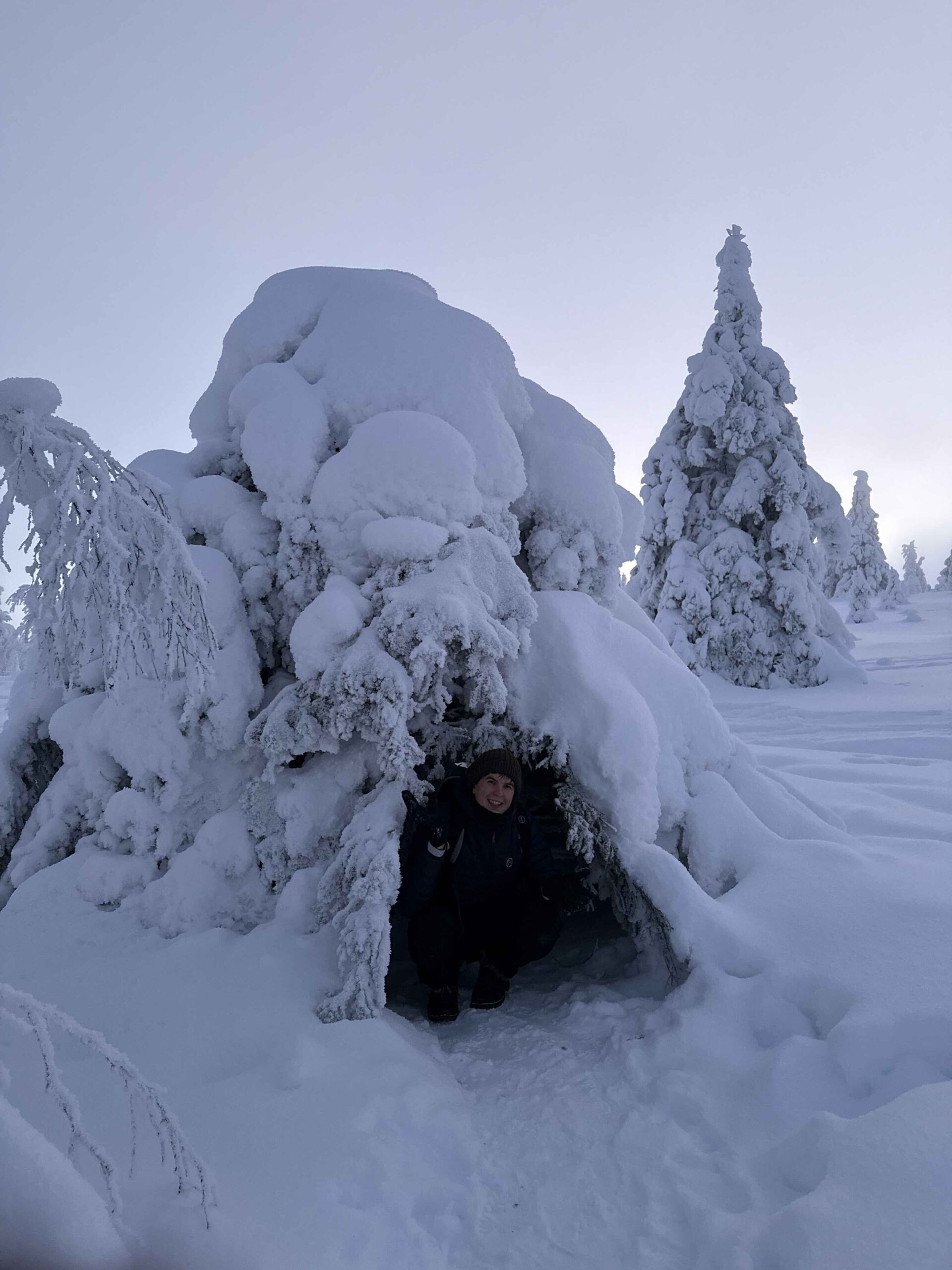
Between us, we’ve packed for winter trips to Finland, Iceland, Norway, the Faroe Islands, Sweden, and a string of colder-than-expected European cities. We’ve also helped dozens of friends and clients prepare for Lapland visits — and watched most of them make the same handful of packing mistakes. This list is the accumulated result of all of that.
It covers everything from base layers to boots, the gear worth the luggage weight versus the stuff you can leave home, and the specific differences between packing for, say, a city winter trip to Reykjavik versus a week in the Finnish wilderness.
A solid winter travel packing list centers on three core layers (merino base, insulating mid-layer, windproof shell), properly rated boots (−20 °C minimum for Nordic destinations), and extremities protection (balaclava, liner gloves, wool socks). Everything else is either convenience or destination-specific. Rent bulky outerwear locally when possible — it saves luggage space and is often better quality.
- The clothing foundation: layers that actually work
- Footwear for winter destinations (the decision most people get wrong)
- The complete winter travel packing list
- What you can safely leave at home
- Packing for city winter vs wilderness winter
- Mistakes we’ve made packing for cold-weather trips
- FAQ
- A final word from Rovaniemi
The clothing foundation: layers that actually work
Why the layering system beats a single big coat
The most common mistake we see visitors make is trusting a single, very thick jacket to handle everything. It won’t — not when you’re moving between a heated cabin, a snowy forest trail, and a windswept glacier viewpoint in the same afternoon. The Nordic approach to cold weather is almost always three distinct layers, each doing a specific job.
Layer 1 — The base layer
- Merino wool is the only material worth buying for this. It regulates temperature better than synthetics, doesn’t hold odour after a full day of activity, and stays warm even when damp. A quality merino top and leggings is a one-time purchase that travels with you for years.
- Avoid cotton completely. Cotton soaks up moisture and loses all insulating ability. Below 0 °C, wet cotton next to skin is genuinely dangerous — not just uncomfortable.
- Pack two sets. One on, one drying. You will sweat more than you expect moving between warm interiors and cold outdoors.
Layer 2 — The mid layer
- A 150–200g down puffer or a thick fleece goes over the base and provides the actual warmth. For temperatures down to −15 °C, this plus a shell is often enough.
- A down gilet (sleeveless puffer) is one of our favourite travel additions — it adds core warmth with very little bulk and fits in a side pocket when not needed.
- For very cold destinations (−25 °C and below), layer a fleece and a down puffer, or rent a full expedition snowsuit on arrival.
Layer 3 — The outer shell
- Windproof and waterproof. The shell is your defence against Arctic wind and precipitation. It doesn’t need to be heavily insulated on its own — that’s the mid layer’s job.
- Membrane jackets (Gore-Tex or equivalent) are the best choice. A loose hood that fits over a hat or balaclava is non-negotiable.
- For Lapland or Iceland, many tour operators and activity centres will lend or rent snowsuits — ask before you pack a heavy outer layer.
Footwear for winter destinations (the decision most people get wrong)
We have watched more holidays go sideways over wrong footwear than any other single packing error. Standing outside in −22 °C in trainers because “they looked chunky enough” is not a recoverable situation. Boots matter enormously, and the gap between adequate and inadequate is wider than most people expect.
Your boots must be rated to at least −20 °C for standard Nordic winter destinations (Finland, Norway, Iceland, Sweden). For serious wilderness use or Svalbard, go to −30 °C. “Water resistant” trail shoes are not winter boots.
Felt liners or Thinsulate insulation rated for static use (standing still) are what you want — not just activity-rated boots. You’ll stand at reindeer farms, viewpoints, and bus stops for longer than you think.
Ice is everywhere in Nordic towns and cities from November to March. A lugged Vibram-style sole is the minimum. Many locals in Rovaniemi attach removable ice cleats (jäänaulat) — you can buy these for €5–12 locally and they’re life-changing on icy pavements.
Ankle boots fill with snow the moment you step off a cleared path. Mid-calf height minimum, knee-high if you’re going anywhere in the Finnish or Norwegian wilderness.
Our specific deep-dive on Lapland packing — the snowsuit question, gear rental options, and exactly what we bring on arctic activities.
The complete winter travel packing list
Screenshot this, save it to your notes app, or share it with whoever is packing alongside you. This is what actually goes in our bags for a cold-weather trip.
Clothing — the non-negotiables
- Merino base layer top ×2 (long sleeve, close-fitting)
- Merino base layer leggings ×2
- Mid-layer: fleece or down puffer ×1
- Outer shell jacket (windproof, waterproof) ×1
- Insulated or waterproof trousers ×1 (or rent a snowsuit on arrival)
- Wool or merino socks ×4 pairs — never cotton
- Balaclava or neck gaiter ×1 — mandatory below −10 °C
- Warm hat (wool or fleece) ×1
- Insulated waterproof mittens or gloves ×1 pair
- Thin liner gloves ×1 pair — for phone use and layering
Footwear
- Winter boots rated to −20 °C or below ×1 pair
- Wool house slippers (optional but worth it for cabin/accommodation use)
Accessories & practical extras
- High-SPF lip balm and thick face moisturiser — Arctic air is brutal on skin
- UV-protective sunglasses or ski goggles — snow glare in January and February is intense
- Hand warmers (disposable ×6–8) — invaluable for long outdoor evenings and aurora hunts
- Insulated water bottle — keeps drinks warm and stops hydration from freezing
- Headlamp ×1 — polar night in Finland or Iceland means early darkness
- Power bank (large, 20,000 mAh) — cold halves your phone battery life
- Small dry bag or waterproof pouch — for your phone and documents in wet-snow conditions
We write from the Arctic
Honest travel guides, packing lists, and the places we keep returning to — delivered from our home in Finnish Lapland.
What you can safely leave at home
Overpacking is the other edge of the same sword. These are the items people routinely haul north only to leave untouched in their luggage.
- A heavy dedicated parka. If your shell + mid-layer system works, you don’t need a single bulky coat. The layering approach is warmer and far more versatile.
- Multiple pairs of jeans. Denim is heavy, dries slowly, and provides essentially zero insulation when wet. One pair maximum, for city evenings. Pack softshell trousers instead.
- Cotton anything. Socks, base layers, or t-shirts worn next to skin. Once wet in cold weather, cotton is worse than nothing.
- An umbrella. Nordic wind laughs at umbrellas. A waterproof hood is far more practical.
- More than two pairs of shoes. Winter boots plus one pair of lighter indoor/city footwear covers everything you’ll need.
- Your entire skincare routine. Bring SPF moisturiser, lip balm, and hand cream. Leave the rest — you’ll barely notice the difference for one to two weeks.
Packing for city winter vs wilderness winter
A long weekend in Reykjavik or Helsinki requires a meaningfully different kit from a week of snowshoeing in Lapland or glacier hiking in Iceland. Here is how we adjust the same base packing list for each context.
- City winter (Reykjavik, Helsinki, Stockholm, Tallinn): your standard layering system works fine. Prioritise smart-casual outer layers — you’ll be in restaurants and galleries as much as outside. Add a scarf and tuck the balaclava in a pocket rather than wearing it. City pavements are more reliably cleared of ice than wilderness paths.
- Active wilderness winter (Lapland, Iceland glacier hikes, Faroe Islands): rent a snowsuit on arrival (almost every operator offers them). Bring your own base layers, merino socks, and extremities protection. The operator’s suit replaces your outer layers and mid-layer for activities. This also frees up luggage space considerably.
- Mixed trip (city + wilderness): our standard approach — bring the full layering system, rent a snowsuit or salopettes for specific activities, and use the layers for city days. Do not try to hack the wilderness in city-grade gear; the gap is too large below −15 °C.
- Multi-country winter trip (e.g. Helsinki to Reykjavik to Bergen): temperatures and conditions can vary significantly even within the same winter. The Nordic week in February 2023 where Reykjavik was +6 °C and Rovaniemi was −28 °C the same day is not unusual. Always pack for the coldest destination on your itinerary.
Planning a trip that spans seasons? Our month-by-month Lapland weather breakdown helps you pack for exactly what to expect.
Mistakes we’ve made packing for cold-weather trips
- Trusting a rain jacket as a winter shell. Joona did this on an early Iceland trip. A rain jacket stops water but not wind, and wind at −10 °C is the real danger. We both now exclusively use membrane jackets with windproof ratings.
- Packing too many clothes instead of the right ones. On our third winter trip we packed eleven days of clothes for a seven-day trip “just in case”. We wore the same merino base layers every day and never touched the backups. Merino washes out in a bathroom sink overnight.
- Borrowing rather than buying proper boots. Alla borrowed fashion boots for a December Rovaniemi trip before we lived here. By day two she had frostbitten toes and spent the rest of the trip in rented snowshoe boots. Buy or rent the right footwear. It is not optional.
- Forgetting a headlamp. Polar night in Finnish Lapland means darkness from 2 pm. We packed torches on our first trip — phones are not reliable below −15 °C when the battery drains in minutes. A lightweight headlamp is the fix.
- Underestimating the power bank need. Cold temperatures halve lithium battery performance. Our phones regularly dropped from 40% to dead in under twenty minutes in −25 °C. A 20,000 mAh power bank kept warm inside a jacket pocket is the only real solution.
- Leaving hand warmers until the last minute. They’re cheap and weigh almost nothing. We now pack eight disposable hand warmers as a baseline. They make aurora hunts, glacier walks, and frozen ferry crossings dramatically more enjoyable.
Frequently asked questions
What is the most important item on a winter travel packing list?
Proper winter boots are, without question, the single most critical item. You can borrow a jacket, rent a snowsuit, and improvise on almost everything else — but wrong footwear in sub-zero temperatures is both dangerous and irreversible once you’re there. Cold feet ruin every activity. Invest in boots rated to at least −20 °C before you leave home.
Can I just buy winter gear when I arrive in Finland or Iceland?
Yes, and for some things (ice cleats, hand warmers, extra socks) we actively recommend it. Major cities like Helsinki and Reykjavik have excellent outdoor and winter clothing stores. However, specific items like properly rated boots often need breaking in before a trip — buying them the day before a glacier hike is risky. Buy boots at home, buy consumables on arrival.
How do I pack light for a winter trip when the gear is so bulky?
Wear your heaviest items on travel days (boots on your feet, outer jacket as carry-on hand luggage). Pack your mid layer in a compression bag. Rent snowsuits and salopettes for active days rather than packing them. Use merino wool base layers that can be worn multiple days without washing. This typically reduces a full winter kit to one checked bag or even a large carry-on.
Is there a difference between packing for Iceland and packing for Lapland?
Iceland’s coastal climate is milder and wetter than Lapland’s continental cold. Iceland in winter often hovers around −3 °C to +5 °C, with heavy wind and rain. Lapland can drop to −30 °C in January and February. For Iceland, waterproofing is the priority. For Lapland, insulation rating is the priority. Both need the same layering system — the mid-layer thickness and boot rating are what change.
Do I need a balaclava or is a hat and scarf enough?
For temperatures above −10 °C, a warm hat plus a neck gaiter usually suffices. Below −15 °C — standard Lapland winter conditions — a balaclava becomes genuinely necessary for any time spent outdoors beyond a few minutes. When the wind chill brings the real-feel temperature to −30 °C or lower, exposed skin will hurt within seconds.
What should I pack for a winter city break to Helsinki or Stockholm?
The layering system still applies, but you can lighten it slightly: merino base layers, one mid-layer, a windproof shell, smart-casual outer layer for evenings, winter boots, hat, gloves, and a scarf. City winters in Helsinki and Stockholm typically run between −5 °C and −15 °C. You won’t need a balaclava every day, but pack one anyway — it takes up zero space.
A final word from Rovaniemi
We have lived through Finnish winters for years, and the cold never gets less cold. What changes is your relationship with it — once you have the right gear, winter stops being something to survive and starts being the whole point of the trip. The silence of a frozen lake, the creak of snow underfoot at −20 °C, the aurora shimmering over a dark forest: all of it requires being outside long enough to actually experience it.
The packing list above is not about comfort for its own sake. It’s about having the physical freedom to stay outside long enough to see things properly. One wrong pair of boots or a missing balaclava is enough to cut that short.
Start with the basics — merino base layers, a solid mid-layer, a windproof shell, and boots rated for your coldest destination. Everything else is a refinement. The Arctic will be here when you arrive.
Safe travels from Lapland. — Joona & Alla
Joona & Alla
A Finnish-Ukrainian couple living in Rovaniemi, Finland. Joona is a marketing professional in Lapland tourism; Alla is an AI Engineer. Together we’ve visited 25 countries and spent years helping others experience the Arctic — and everywhere else. Hungry for travel (not a food blog).
Read our full story →