Renting a Car in Finland for the First Time: What We Wish We’d Known
We live in Rovaniemi and rent cars constantly — for aurora chases, summer road trips, and everything in between. Here’s the honest guide we’d give a friend flying in for the first time.
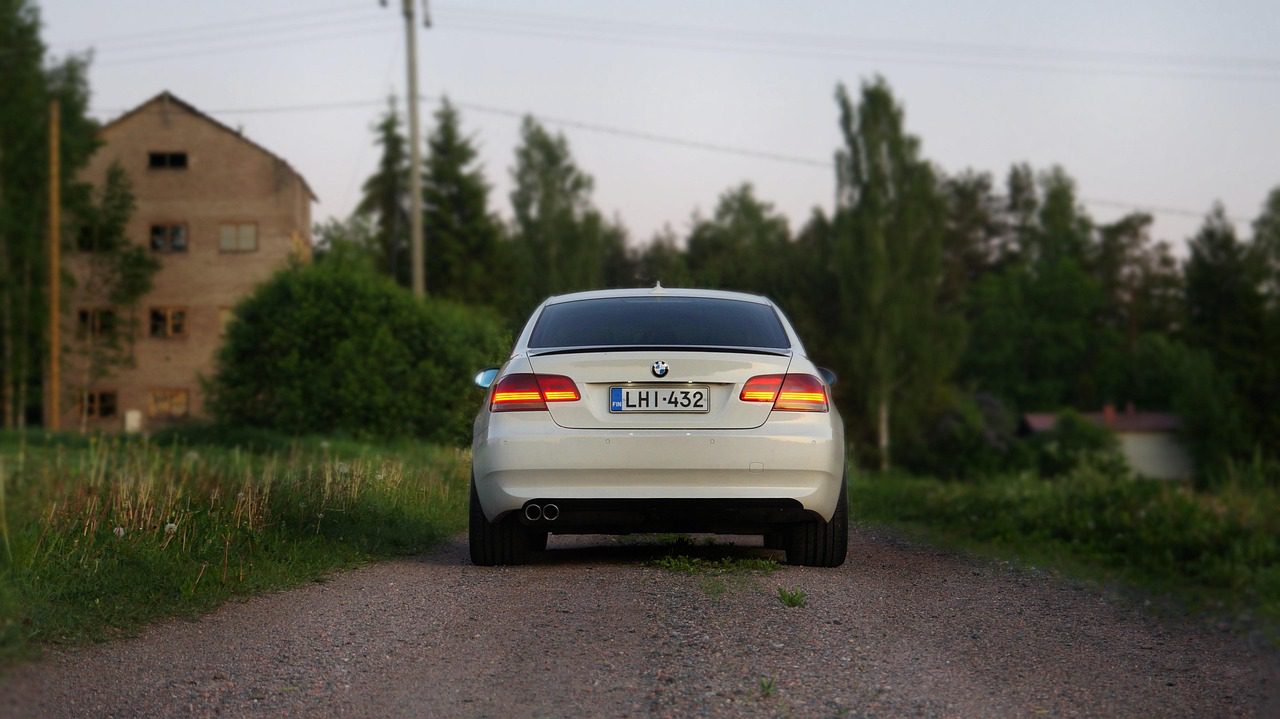
We’ve been renting cars in Finland for years — Joona grew up navigating Lapland’s back roads and Alla quickly learned that Finland is a country designed for driving. We’ve also watched plenty of first-time visitors get tripped up by things nobody warned them about: winter tyres, gravel-road clauses, fuel logistics in the north, and the surprisingly relaxed speed limit culture that still somehow works.
This post is everything we know about renting a car in Finland, condensed into one guide. No fluff, no affiliate padding — just what actually matters before you pick up the keys.
Renting a car in Finland is straightforward and highly recommended. Book in advance through a comparison site, make sure your rental includes winter tyres if travelling October–April, understand that gravel-road coverage varies by insurer, and carry your driving licence plus a credit card. In summer, a compact or standard car handles everything. In winter, ask about 4WD for Lapland.
Before you book: what to check
The rental market in Finland is competitive and mostly reliable, but a few details can cost you money if you don’t read the fine print.
The things that actually matter before you click “book”
- Winter tyres (October–April): Finnish law mandates winter tyres in winter conditions. Most reputable companies include them automatically in winter. Confirm this — some budget operators charge extra or use the wrong tyre type for Lapland ice.
- Gravel road coverage: Finland has thousands of kilometres of gravel roads, especially in Lapland. Many standard CDW policies exclude damage from unpaved surfaces. If you plan to explore anything beyond main highways, either get a premium policy or confirm gravel roads are covered.
- Driver age: Most companies accept drivers from 21–23 (varies by operator). Under 25 typically incurs a “young driver surcharge” of €5–15/day.
- Cross-border travel: Planning to drive into Norway, Sweden, or Estonia? You usually need to inform the rental company in advance and potentially pay an extra fee. Driving into Russia is almost universally prohibited.
- Credit card vs debit card: Nearly all rental companies require a credit card for the deposit hold. A debit card is refused at most counters, even if accepted for payment online. Joona learned this the hard way on a friend’s behalf — they had to sprint to find an ATM that accepted a credit application on the spot.
- One-way fees: Picking up in Helsinki and dropping in Rovaniemi? One-way rentals are available but often carry a significant surcharge (€50–200+). Compare the round-trip cost; sometimes flying back is cheaper.

Picking up the car and what to inspect
The pickup process at Helsinki-Vantaa, Rovaniemi, or Oulu airports is generally smooth. Finnish rental staff are professional and often speak excellent English. Still, there are things you should do before you drive away.
At pickup, always do this
- Walk the entire car and photograph every scratch and dent before signing. Do this even if the agent says “don’t worry.” Do it especially if the agent says “don’t worry.” Upload to your email so the timestamp is documented.
- Check the tyres visually: in winter, look for the snowflake symbol (M+S alone is not a winter tyre in Finland’s legal sense).
- Confirm fuel policy: most Finnish rentals are “full-to-full” (pick up full, return full). The prepay-fuel option is almost always a bad deal.
- Ask about the satnav: most modern Finnish rentals include Apple CarPlay/Android Auto. Bring a cable. Offline maps (we use Maps.me for Lapland gaps) are essential north of Kemijärvi.
- Note the emergency number: Finnish roads outside cities can be remote. The rental company’s roadside assistance number is in the contract; photograph it before you’re standing in a snowstorm squinting at small print.
Finnish road rules in plain language
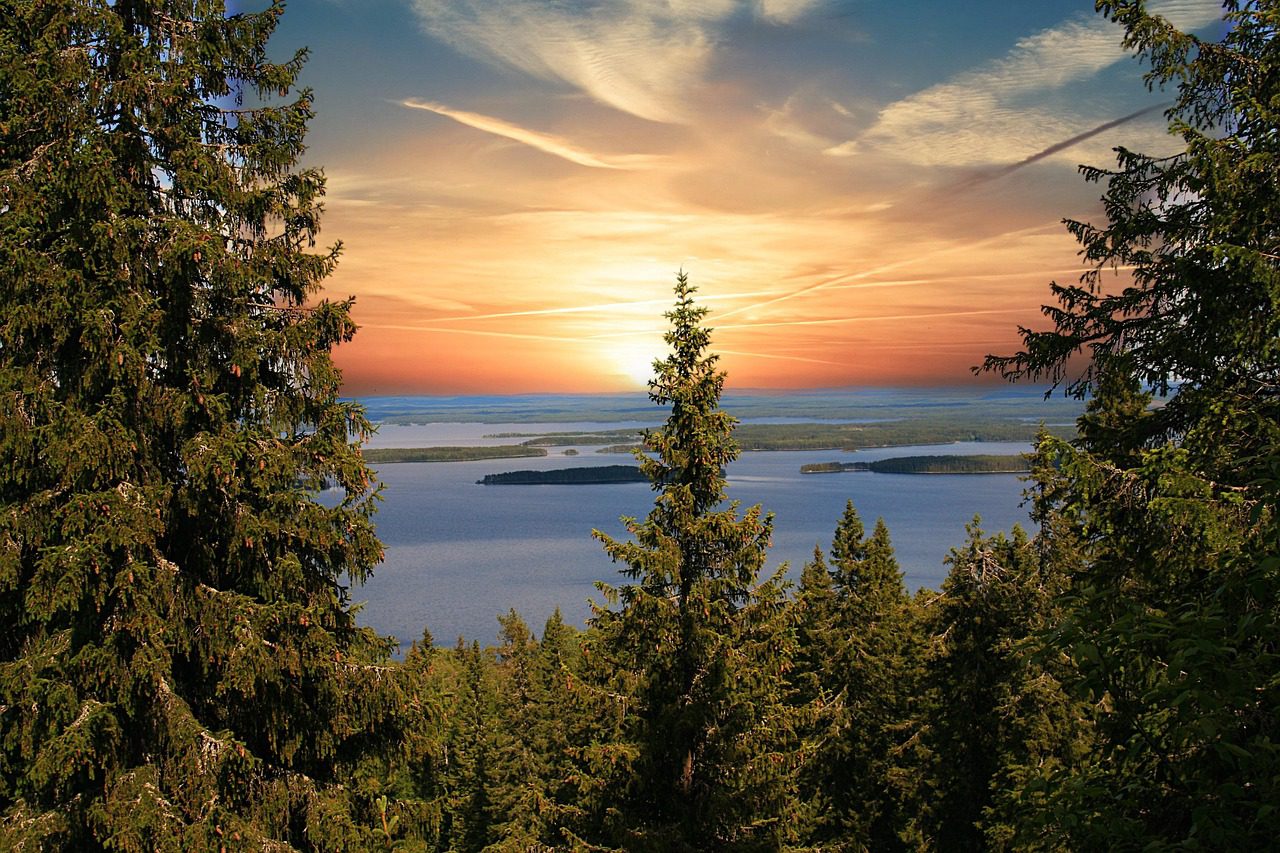
Finland’s roads are some of the safest in Europe. The rules are enforced politely but seriously, and the culture of compliance is genuine — nobody drives through red lights at 2 am just because the road is empty.
Eight rules first-time drivers in Finland should know
You must drive with headlights on at all times, even on a bright summer day. Modern rental cars handle this automatically. Just check yours does — some older models don’t default to daytime running lights.
Finland uses average-speed cameras on many main roads. The limit is what it says, not “plus 10%.” Fines are income-proportional — the Finnish system calculates fines based on your daily net income. Nokia’s ex-CEO once paid €116,000 for doing 75 in a 50 zone. We are not joking.
Finland has approximately 120,000 moose. A collision with one at highway speed is fatal. Dusk and dawn are highest risk. The yellow warning signs are not decorative. Slow down at the edges of forest sections, especially in May–June when calves wander roads.
At unmarked intersections, the vehicle coming from the right has priority. This is a European rule but easily forgotten. Finnish drivers take it very seriously and will not yield even if it seems obvious to you that they should.
The legal BAC limit is 0.05% (0.02% for professional drivers). Finnish police use breathalyser stops regularly, especially on weekend nights. Zero means zero in practice.
All passengers must wear seatbelts. The driver is responsible for ensuring children are in appropriate child seats. No exceptions.
Driving in Lapland: special considerations
Lapland is not just northern Finland — it is a different driving environment entirely. We have driven every major road in Finnish Lapland across multiple seasons, and there are things we would not have guessed from reading a normal travel guide.
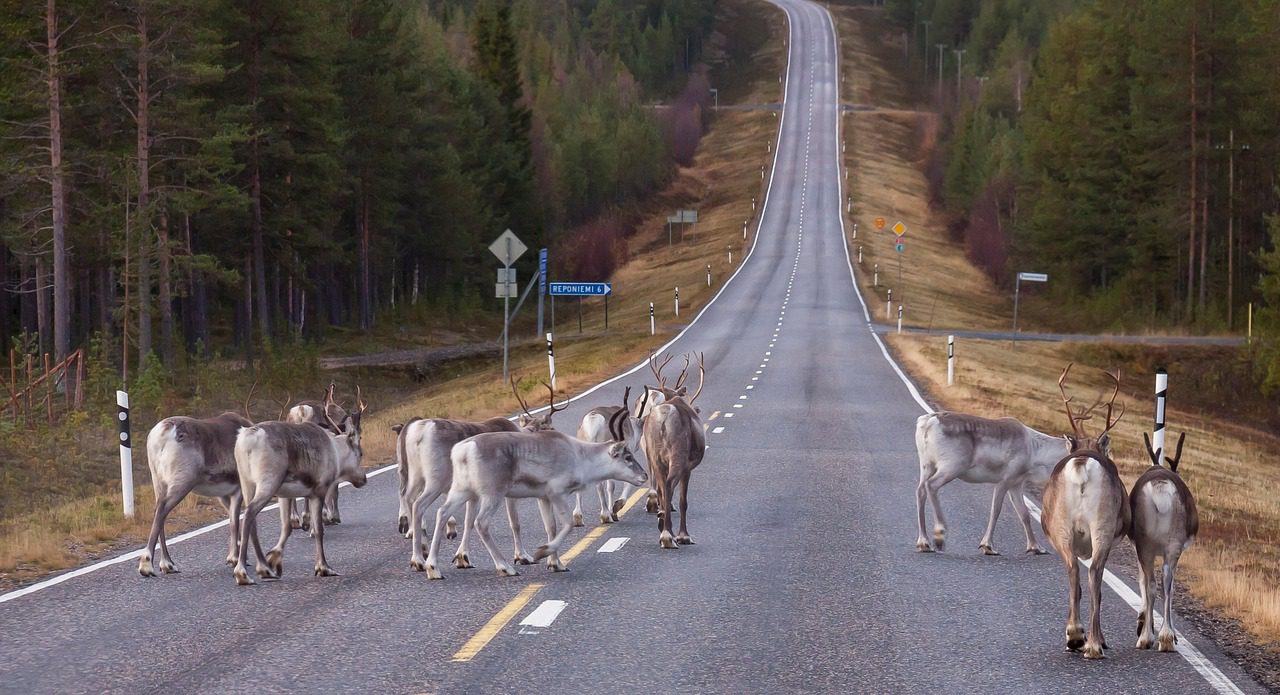
Summer vs winter in Lapland: what changes
- Summer (June–August): Roads are in excellent condition. Gravel roads in national parks (Oulanka, Pallas-Yllästunturi) are manageable with a standard car but dusty. Midnight sun means you can drive at any hour — make sure you can still judge your own tiredness without darkness as a cue.
- Autumn (September–October): Ruska (the Finnish autumn colour season) is breathtaking. Roads are clear but sudden early frosts — called “black ice” season locally — appear especially on bridge surfaces from mid-September. Check if your rental has switched to winter tyres yet.
- Winter (November–April): This is when local driving knowledge really matters. Compacted snow roads are the norm north of Rovaniemi. Studded tyres are standard and required. 4WD is not legally required but gives significant confidence on icy gravel. Budget at least 20% extra journey time. Do not stop on a snowdrift-covered hard shoulder — you may not get out.
- Spring (April–May): Snowmelt weakens gravel roads significantly (“kelirikko” — the thaw period). Some forest roads are weight-restricted. If a sign says “3,5 t” on a road, that’s a weight limit, not a suggestion.
Fuel in the north
- The last petrol station before the Norwegian border (on the E75 toward Utsjoki) is in Kaamasmukka. After that, it is Norway prices. Fill up in Ivalo or Inari.
- In Lapland, many stations are unmanned self-service outside business hours. Always carry a card. Some accept only Finnish bank cards at the pump — the kiosk inside usually accepts Visa/Mastercard.
- Electric cars are increasingly available for rental even in Rovaniemi, but charging infrastructure north of Rovaniemi is sparse. We would only recommend an EV for loops that return to Rovaniemi within a single day.
Fuel, tolls, and practical logistics
Finland has no motorway tolls — one of the genuinely pleasant surprises for drivers used to France, Italy, or the Nordic neighbours. Here is the full practical breakdown.
Quick reference: logistics for car rental in Finland
95 E10 petrol is standard. Diesel is cheaper per litre but increasingly unavailable in newer rental cars as Finland moves toward lower-emission fleets. Most rental compacts now run on 95 E10 or hybrid. Confirm at pickup.
Finland has zero road tolls. Bridges, tunnels, and motorways are all free. Some car parks in cities charge by the hour — use the EasyPark app, which covers most Finnish cities.
Helsinki, Tampere, and Turku have paid zones. Blue zones are time-limited free parking (use a parking disc — available at the rental desk). Yellow zones are paid. Do not park in bus lanes; fines are around €60–80.
Several Finnish archipelago ferry routes are included in the public road network and are free for cars. This includes routes to Houtskar, Iniö, and many Archipelago Trail crossings. Budget at least 15–30 min wait time in summer peak.
Google Maps and Waze both work well. For Lapland wilderness roads, download offline maps before you leave mobile coverage. We use Maps.me and Google offline as a backup. The Finnish road condition app “Fintraffic” is useful for winter warnings.
Finnish general emergency number is 112. Roadside assistance is typically in your rental contract. Tow trucks reach most main roads within 45–90 minutes. On remote Lapland forest roads, it can be longer — make sure someone knows your route.
Letters from Rovaniemi
We write about living and travelling in the Arctic North — road trips, midnight sun, honest destination advice. No fluff, just what actually works.
Mistakes first-timers make when renting a car in Finland
- Not verifying winter tyre type. “Winter tyres included” sometimes means M+S-rated all-seasons, not proper Nordic studded tyres. For Lapland ice, you want studs (nastoitetut renkaat). Ask specifically.
- Ignoring gravel-road exclusions. The most beautiful roads in Lapland are gravel. If your CDW doesn’t cover them, the windscreen chip you get at 80 km/h on a forest track is entirely your cost.
- Booking through an aggregator and not reading the operator’s own T&Cs. Comparison sites show the comparison-site terms. The rental company’s printed contract may differ. Read it at pickup before signing.
- Underestimating distances. Rovaniemi to Nordkapp is 640 km one way. Rovaniemi to Kilpisjärvi is 500 km. Lapland is vast. Plan fuel and rest stops accordingly; driving drunk on scenery is a real risk.
- Bringing only a debit card. Almost every rental counter in Finland requires a credit card for the deposit block, even if you paid by debit online. Bring a credit card with at least €500–1,000 available.
- Assuming rental offices open early. Airport desks generally open with first flights, but city-centre offices may not open until 8 or 9 am. If your flight lands at 6 am and you have a 7 am city pickup booked, that car is not waiting for you.
Our honest company recommendations
- Europcar / Sixt / Hertz at Helsinki-Vantaa: the three most reliable at the airport. Sixt tends to have newer fleets; Europcar is often slightly cheaper for longer rentals. All include proper winter tyres in season.
- Lappland Safaris / Arctic Drive (Rovaniemi): local operators who genuinely understand winter driving conditions. More expensive than nationals, but staff will tell you which roads are passable and which are not — something a national chain won’t volunteer.
- Comparison sites: RentalCars.com and DiscoverCars are our go-to. Filter by “full CDW included” before comparing prices. A €5/day cheaper car with €1,500 excess is not cheaper.
- What to avoid: Unnamed local operators at very small airports with no visible reviews. If a price looks too good for a 4WD in peak winter, it is because the winter-tyre coverage or insurance is incomplete.
- Pre-booking vs last minute: in Lapland, especially during Christmas week, Aurora season (January–March), and Midsummer, car rental stock sells out weeks in advance. Book as early as possible. Last-minute availability exists mostly in Helsinki, rarely in Rovaniemi.
A final word from Rovaniemi
We genuinely love driving in Finland. The roads are quiet, the scenery is extraordinary, and the infrastructure is honest — what the sign says is what happens. The rules are not complicated, they are just different from what you might be used to, and a bit of prep goes a long way.
The one piece of advice we give every first-time visitor: don’t under-plan the Lapland section. Once you pass the Arctic Circle and the trees thin out and the road stretches to the horizon, distance stops feeling like distance. It’s one of the best feelings we know, and we want you to be ready for it — with the right car, the right tyres, and a full tank.
If you have questions specific to your route, drop them in the comments or reach out. We live here. We know these roads.
Do I need an international driving permit to rent a car in Finland?
If your driving licence is in the Latin alphabet (EU, UK, US, Canadian, Australian, etc.), you do not need an IDP. Licences in non-Latin scripts (Chinese, Arabic, Japanese, Korean) typically require an IDP. Check your licence issuing country’s rules and confirm with the rental company before travel.
Is it safe to drive in Finland in winter?
Yes, with the right preparation. Finnish roads are gritted and ploughed regularly, even in Lapland. The key requirements are winter/studded tyres (mandatory on rental cars), reduced speed, and extra stopping distance. Drive smoothly and unhurriedly and you will be fine. The roads are far more manageable than their reputation suggests.
What is the minimum age to rent a car in Finland?
Most companies accept drivers from 21 (some from 19 for small cars). Drivers under 25 usually pay a young driver surcharge of roughly €5–15/day. Bring your full licence and be prepared to show it has been valid for at least one year.
Can I take a Finnish rental car to Norway or Sweden?
Usually yes, but you must declare this when booking or at pickup. Cross-border travel is often permitted for Scandinavian countries for an additional fee (€20–60 typically). Estonia is sometimes allowed, but Russia is almost universally prohibited. Always confirm in writing with the operator before driving across a border.
Are Finnish roads good quality?
Main roads (valtatie) and national highways are excellent. Regional roads (seututie) are generally good. Minor forest and logging roads (“metsätiet”) vary from fine to genuinely rough. In national parks, gravel roads are passable in a standard car in summer but slower than you expect. In winter, only marked roads in Lapland’s parks are reliably maintained.
What happens if I hit a moose?
Call 112 immediately. You are legally required to report collisions with large animals in Finland. The rental company’s emergency number is next. Even if the car appears driveable, do not drive away from the scene before reporting — Finnish law requires it, and your insurance depends on it. Moose collisions are common enough that rental companies have a clear procedure; follow it and do not panic.
Joona & Alla
A Finnish-Ukrainian couple living in Rovaniemi, Finland. Joona is a marketing professional in Lapland tourism; Alla is an AI Engineer. Together we’ve visited 25 countries and share honest, locally-grounded travel writing from our home in the Arctic.
Read our full story →