Fishing Culture in Scandinavia: What Actually Drives the Obsession
We’ve caught cod in Lofoten, crayfish in Swedish lakes, and pike perch in Finnish rivers. Here’s what Scandinavian fishing culture really means — and why it matters far beyond the catch.
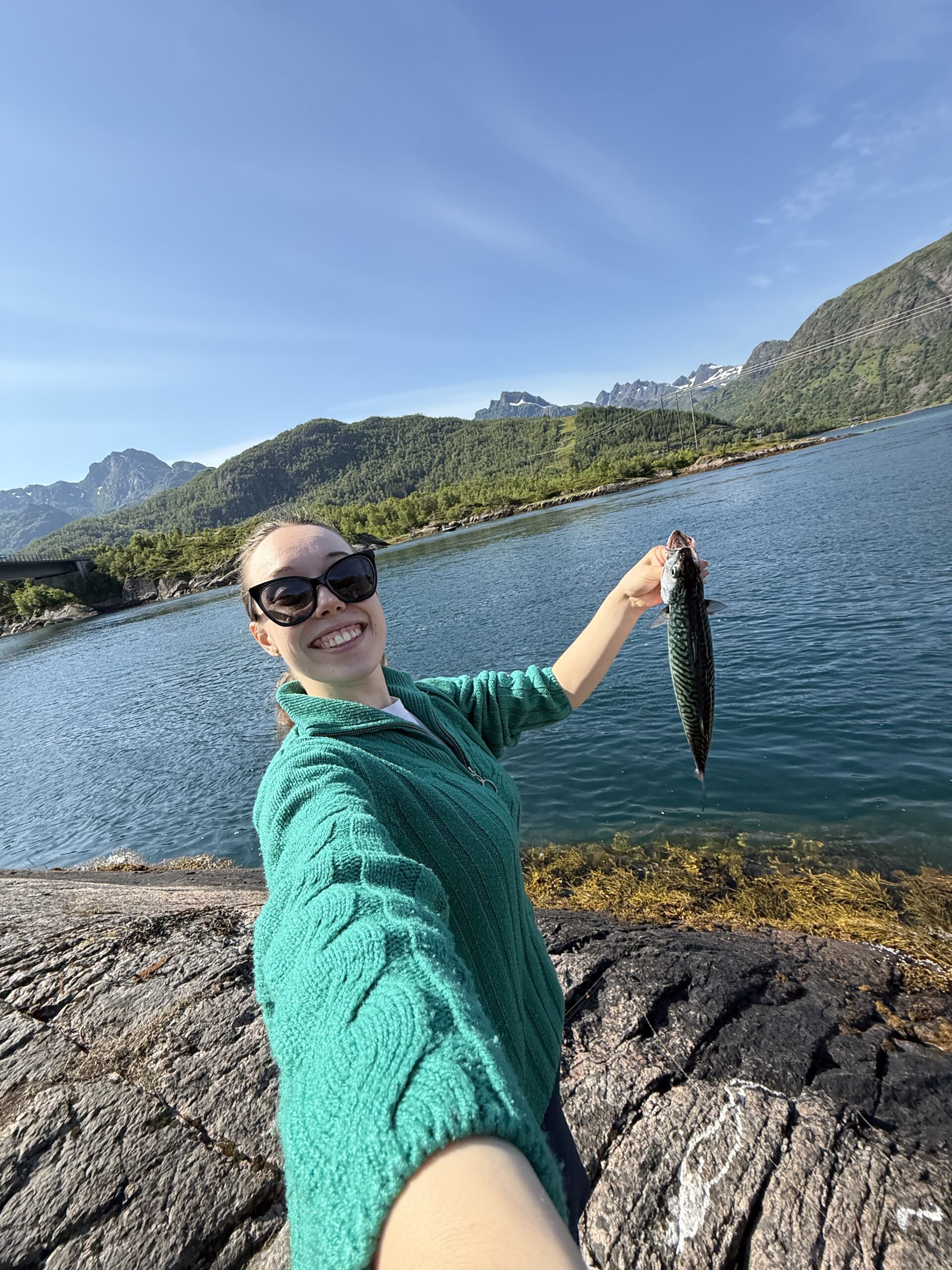
Scandinavian fishing culture isn’t a hobby. It’s more like a shared language — a way that Norwegians, Swedes, Finns, and Danes make sense of their relationship with the land, the water, and the seasons. We’ve seen it up close: Joona grew up fishing rivers in Finnish Lapland, and together we’ve cast lines in Lofoten, rented rowboats on Swedish lakes, and watched old fishermen in tiny Norwegian harbours work nets that smell like three generations of salt.
This guide is our honest attempt to explain what Scandinavian fishing culture actually is — not the Instagram version, but the version that involves rubber boots, 4 am alarm clocks, and conversations with strangers on riverbanks who turn out to know everything.
Scandinavian fishing culture is deeply embedded in Nordic life — part practical food tradition, part meditative ritual, part outdoor identity. Fishing is largely free on public waters across Norway, Sweden, and Finland (with some licence requirements), and it shapes everything from architecture to cuisine to the Nordic philosophy of slowness and presence in nature.
- Why fishing is central to Nordic identity
- How fishing differs across Norway, Sweden, Finland and Denmark
- The rules, rights, and surprising freedoms
- What Scandinavians actually fish for
- The cultural rituals around fishing
- What we got wrong before we understood it
- Frequently asked questions
- A final word from Rovaniemi
Why fishing is central to Nordic identity
Scandinavia’s relationship with fishing predates the Viking Age. Coastal Norway was built on cod — the salt fish that fed medieval Europe and made Bergen a Hanseatic powerhouse. Sweden’s inland lakes and river systems shaped the calendar of rural life. Finland’s 188,000 lakes aren’t a scenic backdrop; they were the pantry. Fishing wasn’t leisure first; it was survival. The leisure part came later, but it carried the same weight.
Fishing as a philosophy, not just a practice
What’s striking to outsiders — and what we felt immediately when we moved to Rovaniemi — is how fishing operates as a kind of slow-living philosophy. You’re not meant to optimise it. You go out early, you sit with the landscape, and if you catch something, you cook it the same day. The catch is almost secondary to the practice. Finns call this hiljaisuus — the quality of quietness. Swedes embed it in lagom — enough, not too much. Norwegians don’t always have a word for it, but they’re on the water by 5 am anyway.
The architectural evidence
Drive along any Norwegian fjord or Finnish lakeshore and you’ll notice the naust — traditional boathouses that sit at the water’s edge on every property, no matter how modest the house behind them. In Sweden, the sjöbod (lake shed) serves the same function. These aren’t storage units; they’re cultural statements. Owning a boathouse, keeping a small boat, knowing the best spots — this is the Nordic equivalent of knowing your neighbourhood.
How Scandinavian fishing culture differs across Norway, Sweden, Finland and Denmark
Scandinavia is not monolithic. Each country has a distinct fishing culture shaped by geography, history, and what the water offers.
Norway: cod, salmon, and the sea as a birthright
Norway is defined by ocean fishing more than any other Nordic country. The Lofoten islands still host the world’s largest cod migration every winter — the skrei, Arctic cod returning from the Barents Sea — and locals fish it from small wooden rorbuer (fishermen’s cabins) much as they did centuries ago. Atlantic salmon rivers are intensely managed, with licence fees for sport fishing. But shore fishing in the sea is free for everyone, resident or visitor — that’s codified in Norwegian law. We fished from a dock in Svolvær for two hours and came home with enough cod for dinner. No licence, no form, no fuss.
Sweden: lake culture and the crayfish party
Sweden’s fishing identity is lake-based as much as coastal. Perch, pike, and pike perch fill the inland waters. But the cultural high point is the kräftskiva — the crayfish party held every August, where freshwater crayfish are boiled in dill-heavy brine, eaten outdoors under paper lanterns, and washed down with snaps. It’s less about fishing skill than about seasonal ceremony. The ritual is unchanged for generations.
Finland: 188,000 lakes and one national obsession
In Finland, fishing is almost universally practiced. The jokamiehenoikeus — everyman’s right — means you can fish with a rod and line in almost any water in Finland without a special licence (a small national fishing management fee applies; lures require a regional supplement). Ice fishing is the winter version: drill a hole, drop a line, sit on a stool over a frozen lake at −20 °C, and wait. This sounds miserable. It’s one of the most peaceful things we’ve done. Joona’s family has an ice-fishing spot on a lake near Rovaniemi they’ve used for three generations.
Denmark: coastal fishing and the New Nordic movement
Denmark’s fishing culture is strongly coastal and increasingly culinary. The New Nordic cuisine movement — Noma and its descendants — reframed Danish fish as fine dining: fermented herring, cured salmon, smoked eel. But the everyday version is still a fisherman selling mackerel from a harbour dock in Bornholm at 7 am. Denmark’s inland fishing is modest compared to its neighbours, but the coastline more than compensates.
The rules, rights, and surprising freedoms of Scandinavian fishing
One of the biggest surprises for visitors is how much access Scandinavian law gives ordinary people to fish. Here’s a plain-language summary.
- Norway — sea fishing: Free for everyone, resident or tourist, no licence required. Subject to bag limits and minimum size rules.
- Norway — river and lake fishing: Licence required in most cases. Salmon rivers are the most regulated. A good day on a prime salmon river can cost hundreds of euros.
- Sweden — rod-and-line in major lakes and coast: Free without a licence in the five major lakes (Vänern, Vättern, Mälaren, Hjälmaren, Storsjön) and along the coast. Inland private waters require a local fishing card, usually €5–15 per day.
- Finland — rod-and-line: Requires the national fishing management fee (about €9/year, available at eräluvat.fi). Lure and spinning fishing requires an additional regional licence. Ice fishing with a hook and line: always free.
- Denmark — sea and coastal: Free from the shore without a licence. Inland rivers and lakes require a Danish fishing licence (about €10 per day, available online).
- Faroe Islands: Sea fishing is free and extremely productive. River salmon fishing is tightly managed and requires a licence from the specific river landowner.
- Visitor tip: In Norway and Finland, buy your fishing licence (where required) through the national online portals before you arrive. The systems are in English and take five minutes.
- Size and season rules: Every country has minimum size limits and seasonal closures for salmon, trout, and pike. Always verify locally — rules are enforced and locals will tell you if you’re out of line.
Letters from Rovaniemi
Monthly notes on Nordic travel, honest local tips, and the slow life above the Arctic Circle.
What Scandinavians actually fish for — species by country
Understanding what people fish for tells you a lot about what they value. Here’s the honest species map across the region.
- Atlantic cod (torsk): The backbone of Norwegian fishing culture, especially Lofoten. The skrei cod that migrates south in winter is a celebrated seasonal subspecies — leaner, firmer, and treated almost ceremonially.
- Atlantic salmon (laks / lohi): The prestige fish across Norway and Finland. Wild runs are declining, which makes them simultaneously more prized and more protected. Catching one in a Norwegian river is genuinely rare.
- Brown trout (örring / taimen): Found across all four countries. Finnish wild brown trout from deep, cold lakes is considered among the finest freshwater fish in Europe.
- Perch (abborre / ahven): Ubiquitous in Finnish and Swedish lakes, easy to catch, genuinely delicious pan-fried. The fish most Nordic children catch first.
- Pike (gädda / hauki): The ambush predator of Nordic lakes. Respected by anglers, excellent smoked or as fish cakes, and large enough to feel like an event when landed.
- Pike perch (gös / kuha): Sweden and Finland’s premium freshwater table fish — mild white flesh, often the most expensive fish on Finnish restaurant menus despite being common in the lakes.
- Mackerel and pollock: The everyday sea fish of Norwegian and Danish coasts. Easy to catch in summer, delicious grilled whole, and the fish most likely to be in the boat of a Norwegian grandfather.
- Arctic char (röding / nieriä): Found in Lapland’s mountain lakes and Scandinavian highland waters. Caught through ice in winter, it has an almost salmon-like character — orange flesh, subtle flavour.
The cultural rituals that make Scandinavian fishing different
Fishing in Scandinavia isn’t just the act of fishing. It comes wrapped in rituals that give it meaning far beyond the catch.
- The 4 am start. Whether a Norwegian fjord, Finnish lake, or Swedish river, the best fishing is at dawn. The alarm goes off at 4 am, coffee is made in silence, and you’re on the water before the mist lifts. There is no Instagram version of this — it’s dark and quiet and cold and alive.
- The shared boat. The boat — however small — is a space of equality. Status doesn’t matter on the water. We’ve had some of our best conversations with people we’d never otherwise meet, floating on a Finnish lake at 6 am with a shared thermos between us.
- Cooking what you catch. Catch-and-release exists, but the deeper tradition is eating what you catch. A perch caught at 7 am, cleaned on the dock, pan-fried with butter and dill at 8 am — one of the best breakfasts in the world. This isn’t sustainability theatre; it’s the original relationship between catching and eating.
- The crayfish party (kräftskiva). Sweden’s August festival is about community as much as crayfish. You eat outdoors, wear silly hats, drink too much snaps, and acknowledge that summer is ending. It’s the Nordic equivalent of a harvest festival — except the harvest is crustaceans.
- Ice fishing as meditation. In Finland and northern Scandinavia, ice fishing in winter is practiced with almost religious patience. Drill the hole, drop the line, sit. For hours. Locals bring a thermos, sometimes a small hut, and they genuinely enjoy the silence. It’s a practice in presence that no productivity app can replicate.
- The summer cabin and the rod. In Finland, 1 in 5 people owns or has access to a kesämökki (summer cottage). The fishing rod is as essential as the sauna. Fish in the morning, sauna in the evening. That’s the full Finnish summer in two activities.
What we got wrong before we understood Scandinavian fishing culture
When we first started fishing seriously after moving to Rovaniemi, we made the classic outsider mistakes. Here’s what we learned the hard way.
- We optimised for the catch, not the experience. In early ice-fishing sessions, we kept moving when nothing bit. Locals stay in one place for hours. The point isn’t efficiency — it’s presence. Once we understood that, everything made sense.
- We underestimated how social it is. Fishing in the Nordics looks solitary but isn’t. The shared boat, the dock conversations, the harbour morning — it’s one of the most reliably social environments we’ve found in a culture that can otherwise feel private.
- We assumed expensive gear mattered. It doesn’t, not for everyday fishing. Locals fish with basic tackle. The skill is in knowing the water, the season, and the species — not in having expensive rods.
- We didn’t understand the licence system. We once fished with lures in Finland without the required lure supplement to the national fee. A local politely explained. The system is simple once you know it — but you need to know it.
- We cooked it wrong at first. Nordic fish is best cooked simply: butter, salt, dill, maybe lemon. We wasted our first perch on a complicated recipe. Pan-fry it whole in butter for eight minutes. That’s the recipe.
- We missed the peak ice fishing window. Our first Rovaniemi winter, we didn’t try ice fishing until late February and the ice was already showing signs of weakening. The full ice fishing season in Finnish Lapland runs December through March — don’t leave it too late.
Frequently asked questions
Is fishing free in Scandinavia for tourists?
Sea fishing from the Norwegian coast is free for tourists — no licence required. Finland allows rod-and-line fishing with a national fishing management fee (about €9/year, available at eräluvat.fi in English). Sweden’s major lakes are free with a rod. Inland rivers, salmon fishing, and lure fishing typically require a local or national licence — check each country’s rules before you go.
What is the best country in Scandinavia for fishing as a visitor?
Norway is the easiest entry point — sea fishing is completely free, the scenery is spectacular, and Lofoten is extraordinary. Finland offers the most complete fishing-culture experience, especially ice fishing in winter or lake fishing from a summer cottage. Sweden is ideal for freshwater fishing and the kräftskiva crayfish season in August.
What is Scandinavian fishing culture most known for internationally?
Norway’s cod and salmon fisheries are the most internationally recognised, partly for their historical scale and partly because of the New Nordic cuisine movement which brought Norwegian fish to global attention. Finland’s ice fishing tradition is increasingly known through winter travel, and Sweden’s kräftskiva is celebrated by Swedes worldwide every August.
Can you ice fish as a tourist in Finland?
Yes — ice fishing with a hook and line is free for everyone in Finland, no licence required. You’ll need a drill (rentable at outdoor shops or most cottage operators in Lapland) and warm clothing. The season runs roughly December through March in Finnish Lapland.
What fish can you catch in Norwegian fjords?
The most common catches are cod, pollock, coalfish (sei), mackerel in summer, and flounder. In some fjords you can also hook halibut — large, excellent eating. The fjords are genuinely abundant; a few hours from a rented boat almost always produces something.
Is fishing part of everyday Nordic life, or mainly a tourist activity?
Very much everyday life. Around 1.5 million Finns fish regularly — in a country of 5.5 million, that’s significant. Norway’s relationship with the sea goes back thousands of years and remains active: small-scale coastal fishing is common, and the skrei season in Lofoten draws local fishermen every winter. Visitors are welcome to join, but they’re joining something that exists whether or not they show up.
A final word from Rovaniemi
We’ve written guides about destinations — what to see, where to eat, how to get there. This one is different, because Scandinavian fishing culture isn’t really a destination. It’s a disposition. A way of relating to time, to nature, and to other people that the Nordic countries have refined over centuries of necessity and turned into something that looks, to outsiders, like a very enviable quality of life.
The short version: go to Norway and fish for cod from a harbour wall. Rent a cabin in Finland and take out the rowboat at 5 am. Buy a fishing card for a Swedish lake and sit in the silence for two hours without checking your phone. Cook whatever you catch with butter and dill. Talk to whoever is fishing next to you.
That’s Scandinavian fishing culture. It’s available to everyone who shows up willing to slow down enough to receive it.
Joona & Alla
A Finnish-Ukrainian couple living in Rovaniemi, Finland. Joona is a marketing professional in Lapland tourism; Alla is an AI Engineer. Together we’ve visited 25 countries and share honest, locally-rooted travel writing from above the Arctic Circle.
Read our full story →