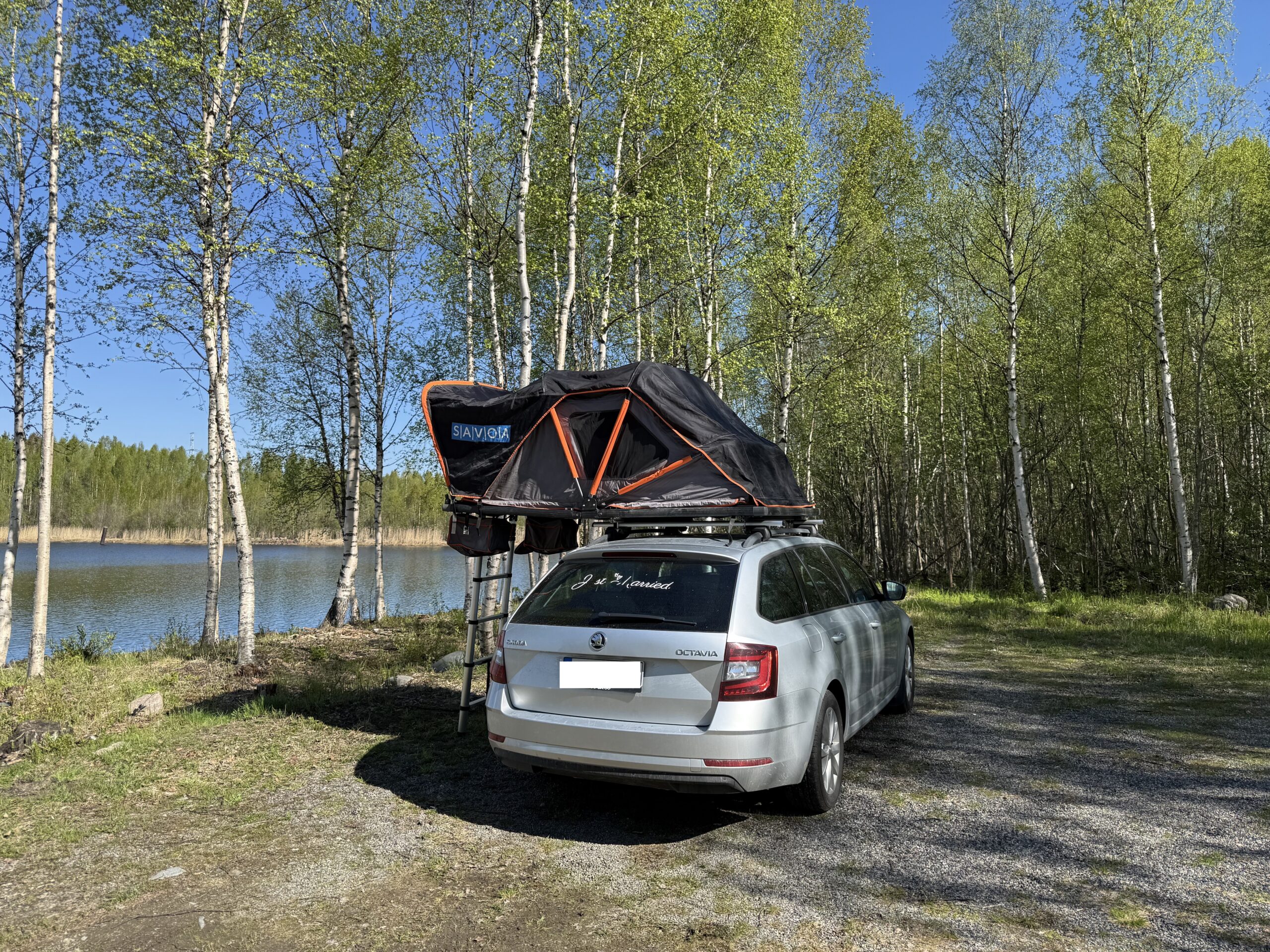
We live in Rovaniemi, and over the years we have packed and re-packed for far too many Nordic road trips. A good campervan packing list is short, built on layers, and honest about what the rental already provides. Pack too much and the van feels like a cupboard; pack too little and you are buying a frying pan at a petrol station.
This is the list we use, organised by what actually matters. If you are still choosing a van, our reader code HUNGRYTRAVELFAMILY20 takes €20 off a CampervanPlanet booking at checkout.
Pack layers (merino base, fleece, waterproof shell), waterproof shoes, a head torch, a sleep mask for summer, a good knife and a small first-aid kit. Check what the rental includes before buying anything, and buy bulky items locally. Vans in Norway start from €111 a day on CampervanPlanet, and our €20 reader coupon applies at checkout.
What a rental campervan already includes (and what it does not)
The first mistake we see is packing as though you were bringing a camper from home. Most rental campervans in the Nordics arrive reasonably equipped, but the details differ between vehicles and companies, so read the inclusions list in the offer. On the Norway page the range starts with a basic two-berth Budget Camper from €111 a day and goes up to a Family Motorhome from €335, and the gap in equipment is just as wide as the gap in price.
Typically, a rental will have a bed or beds, a small gas or diesel hob, a sink, a fridge and some cooking gear, and a heater in cooler-weather vehicles. What is often not included, or only included in an extra pack, is bedding and towels, camping chairs, a table, and a full kitchen kit. Ask before you travel, and decide what you will bring and what you will buy on arrival. A rule we follow: bring the things that are personal or hard to replace, and buy bulky things at a supermarket in the first town.
Clothing: layers beat bulk
The Nordic climate changes fast, even in summer. In Lapland you can see 25°C at midday and a frost at night in the same week, and on the Norwegian coast a rain shower turns up in ten minutes. We pack by layers, not by weight. For summer that is a merino or synthetic base layer, a warm mid layer such as fleece, a waterproof shell with a proper hood, and a light down jacket for evenings.
Shoes matter more than coats. Bring waterproof walking boots or sturdy trail shoes, plus a pair of light shoes for driving and campsites. Wool socks, a buff or thin hat, and thin gloves cost almost nothing and make a cold morning in a van pleasant. For shoulder and winter trips, add insulated boots, proper thermal underwear and a warm hat; winter driving is covered in our other guides.
The one thing we always leave behind is cotton. It stays damp in the humid, cool conditions of a van and takes ages to dry.
Sleeping and staying warm in the van
Even in a well-equipped van, nights can be colder than you expect, because metal and glass lose heat quickly. A good sleeping bag rated to around 0°C, or a duvet, is worth bringing if the rental does not supply bedding. A thin foam mat under the sheet adds surprisingly good insulation.
In the summer, the opposite problem arrives: in the north the sun does not set, and a van is bright at 2 a.m. Pack a sleep mask and, if the van has no blackout blinds, a few pieces of reflective foil or a dark cloth to fit the windows. Earplugs help at busy campsites and on ferry-terminal car parks.
If you want to compare what is included in different rental brands, the Finland listings show vehicle types and berths clearly, and the same logic applies across the region. Our reader code HUNGRYTRAVELFAMILY20 takes €20 off your booking at checkout, which can pay for the bedding you decide to add.
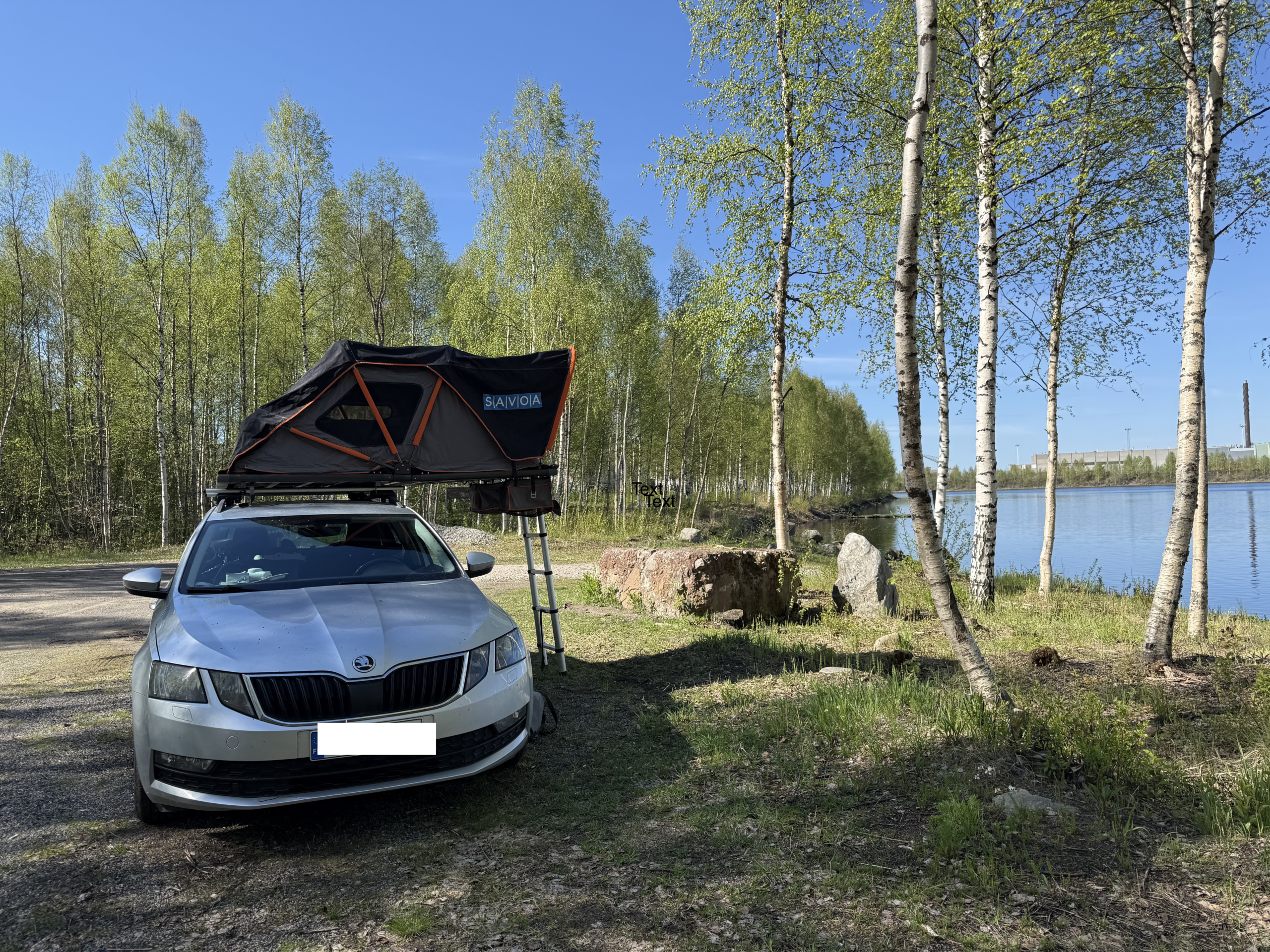
💡 Our campervan tip: prices for the same van vary a lot between rental brands. We compare Norway and the Nordics campervans across 160+ rental companies on CampervanPlanet — and code HUNGRYTRAVELFAMILY20 takes €20 off your booking.
The kitchen kit we would not travel without
Eating well is one of the great pleasures of a Nordic campervan trip, and it is also the cheapest way to travel. Norwegian restaurant prices are high, so cooking most evenings changes the budget. We bring a few things from home and buy the rest.
From home: a sharp knife you trust, a small cutting board, a coffee method that works with your habit, a lighter, and a few spices. Cheap to buy on arrival: a frying pan, a pot, plates, mugs, a washing-up brush and a tea towel. A small cool bag helps on hot days, and a stove-top coffee pot is lovely in the cold. Add a sturdy water bottle and a container for rubbish, because campsite bins are not always close.
On food, buy staples in a big supermarket on day one, then top up as you go. In Norway, Rema 1000 and Kiwi are the budget chains, and Finland has K-Market and Lidl. Fish from a harbour kiosk makes a better dinner than almost anything.
Safety, tools and the boring-but-essential bits
Check that the rental includes a first-aid kit, warning triangle and high-visibility vests; they are required in many countries and rental companies usually provide them, but confirm. We add our own small kit with plasters, blister patches, painkillers, insect repellent and any personal medicines.
A head torch is the single most useful small item, especially outside the summer season when it gets dark early. Bring a power bank, a phone cable for the van’s 12V socket, and an adapter if you plan to use campsite electricity: sockets in the Nordic countries are the standard continental European two-pin type. A small roll of duct tape and some cable ties fix most minor problems.
For navigation, download offline maps before you go, since coverage on remote roads can be patchy. Paper maps are a nice backup. And bring your driving licence, booking confirmation and the card used for the security deposit, which the company holds at pick-up.
Seasonal extras: summer, shoulder and winter
Summer needs mosquito protection: a head net, repellent and a fine-mesh door screen if the van does not have one, particularly in the north and near lakes in June and July. Sunscreen and sunglasses are important too, because the light is strong and long-lasting.
In autumn, add a warm hat and a good rain jacket. September and October bring the first frost and colourful forests, plus a real chance of northern lights. In winter, the van is usually fitted with winter tyres, and you should add serious thermal clothing, boots rated for snow, hand warmers and a thermos. Check the heating works before you leave the depot and ask how to keep the water system from freezing.
The cost difference between seasons is large. On the Norway page the typical seven-night price in our November 2026 look was about €178 a day in November, €211 in May and €394 in July, so choosing the shoulder months also affects what you can spend on gear and extras.
What to leave at home
Anything heavy that you can buy for a few euros on arrival should stay in the wardrobe. Skip the huge camping chairs unless the rental includes none and you like sitting outside, skip more than two pairs of trousers, and skip hair dryers and kitchen gadgets. Vans have limited storage, and you will want space for groceries.
Do not bring food that cannot cross borders, such as certain meats and dairy from outside the EU, and check rules for alcohol allowances if you travel between Norway and neighbouring countries. If you want to plan a longer trip, our favourite Scandinavian road trips and the Norway ferry cost guide help you decide what the trip will look like, and our campervan rental guide covers booking.
Book your Norway and the Nordics campervan
Compare prices across 160+ campervan and motorhome rental brands, get a free 1GB eSIM with every booking — and €20 off with code HUNGRYTRAVELFAMILY20.
Check prices & availability →Frequently asked questions
What should I pack for a campervan trip in Scandinavia?
Pack layers (merino or synthetic base, fleece, waterproof shell), waterproof walking shoes, a head torch, a sleep mask for the midnight-sun season and a small first-aid kit. Buy bulky kitchen items and bedding locally if the rental does not include them.
Do rental campervans in Norway include bedding?
It depends on the company and vehicle. Many offer bedding and kitchen kits as an optional extra, so check the inclusions in the offer on CampervanPlanet. If it is not included, bring a sleeping bag or buy a duvet at a supermarket.
Do I need winter gear for a campervan in the Nordics?
In summer, no, but you still need warm layers because nights can be cold. In winter you need proper thermal clothing, insulated boots and a plan for keeping the van warm. Rental vans are usually fitted with winter tyres in the cold season.
Is there a discount code for CampervanPlanet?
Yes. Our reader code HUNGRYTRAVELFAMILY20 takes €20 off your booking when you enter it at checkout on CampervanPlanet. It is a fixed amount deducted from our commission, so you pay nothing extra to use it.
What kitchen equipment should I bring?
A good knife, a coffee method, spices and a lighter from home. Pots, pans, plates and a washing-up brush are cheap to buy at a supermarket if the van has none. Check the rental inclusions first so you do not buy duplicates.
How much does a campervan cost in Norway?
In the CampervanPlanet price index for November 2026, vehicles started from €111 a day for a Budget Camper, with a typical seven-night price of about €178 a day in November, €211 in May and €394 in July.