Arctic Winter Destinations in Numbers: Rovaniemi, Tromsø, Abisko/Kiruna and Reykjavík Compared
Latitude, winter temperatures, midwinter daylight, aurora statistics and access for five Arctic and sub-Arctic winter destinations, each figure with its source and period.
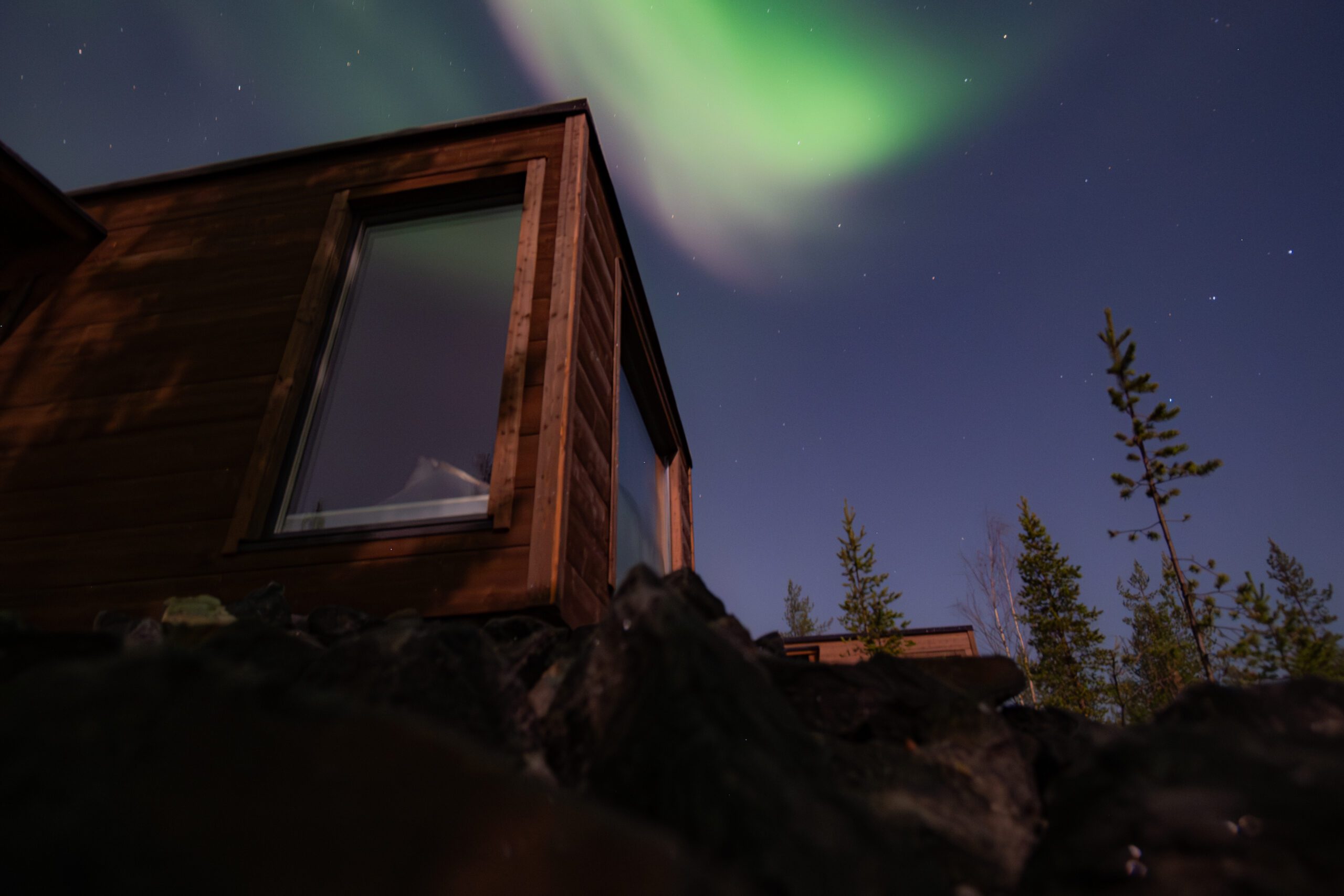
When reporters and travellers compare Arctic winter destinations, the comparison usually collapses into adjectives. Here we put numbers side by side for Rovaniemi in Finland, Tromsø in Norway, Abisko and Kiruna in Sweden, and Reykjavík in Iceland, and we mark clearly where we do not have a comparable official figure.
We are Joona and Alla, a couple living in Rovaniemi, and we both work in tourism marketing in Lapland. We are therefore not neutral, and we say which parts of the comparison are numbers and which are our opinion.
On the official numbers, Tromsø is the mildest and most aurora-reliable of the Lapland-latitude cities (the Finnish Meteorological Institute says aurora is visible almost every clear night there), Kiruna is the coldest in January (−12.4 °C), and Reykjavík has the most daylight at the winter solstice, about four hours. Rovaniemi sits in the middle on climate and has the most direct flights.
The destinations at a glance
| Destination | Country | Latitude (approx.) | Main airport |
|---|---|---|---|
| Rovaniemi | Finland | 66°30′ N | Rovaniemi (RVN), 1.1 million passengers in 2025 |
| Tromsø | Norway | 69°40′ N | Tromsø (TOS) |
| Kiruna | Sweden | 67°51′ N | Kiruna (KRN) |
| Abisko | Sweden | 68°21′ N | Nearest is Kiruna; Abisko is reached by road or rail |
| Reykjavík | Iceland | 64°08′ N | Keflavík (KEF), outside the city |
Latitudes are the coordinates given in public geographic references, rounded to the minute. Abisko and Kiruna are grouped here because both serve visitors to Swedish Lapland. Only Rovaniemi’s passenger figure comes from an airport operator (Finavia); we do not have comparable passenger figures for the other airports, so we do not print any.
Winter temperatures
The table gives monthly mean temperatures from national meteorological services’ climate normals, as compiled in public climate tables. The stations and reference periods are not identical: Rovaniemi, Tromsø and Reykjavík use 1991–2020; Kiruna Airport uses 2002–2021 (SMHI) and Abisko 2002–2020 (SMHI). So differences of a degree or so should not be over-read.
| Destination | December mean (°C) | January mean (°C) | Source and period |
|---|---|---|---|
| Rovaniemi (airport) | −7.7 | −10.3 | FMI, 1991–2020 |
| Tromsø (Vervarslinga) | −1.7 | −3.0 | Met Norway, 1991–2020 |
| Kiruna (airport) | −9.3 | −12.4 | SMHI, 2002–2021 |
| Abisko | −6.7 | −10.5 | SMHI, 2002–2020 |
| Reykjavík | 0.8 | 0.7 | Icelandic Met Office, 1991–2020 |
The pattern is the one climatologists describe: the Norwegian and Icelandic coasts are milder than inland Finland and Sweden at the same latitude, because of the Atlantic. Tromsø is the farthest north on the table and has a January mean around seven degrees milder than Rovaniemi’s. Kiruna is the coldest in January.
Daylight and polar night
We calculated sunrise and sunset with the NOAA solar position equations for each city’s coordinates for 2026–27, assuming a flat horizon and standard refraction. Real days are shorter where hills or trees block the low sun.
| Destination | 21 December 2026 | 21 January 2027 | Polar night (calculated) |
|---|---|---|---|
| Rovaniemi | sun above horizon about 2 h 15 min | about 5 h | None by calculation (Visit Rovaniemi says the sun does not rise above the horizon in late December) |
| Tromsø | sun below horizon | about 2 h 45 min | about 28 Nov to 14 Jan |
| Kiruna | sun below horizon | about 4 h 10 min | about 12 Dec to 1 Jan |
| Abisko | sun below horizon | about 3 h 50 min | about 7 Dec to 6 Jan |
| Reykjavík | about 4 h 10 min | about 5 h 55 min | None |
Where sources disagree: Rovaniemi is exactly at the edge. A flat-horizon calculation gives about two hours with the sun’s upper edge above the horizon at the solstice, while Visit Rovaniemi describes the sun as not rising above the horizon in late December, and in practice trees and low hills hide it. Both are defensible; we recommend saying that the sun barely clears the horizon.
Even in polar night it is not pitch dark: Visit Rovaniemi notes that sunlight still reaches the upper atmosphere and the middle of the day is often filled with a blue glow.
Northern lights frequency
The Finnish Meteorological Institute (FMI) is the only source we found that compares places directly. It says that, provided the sky is clear enough, three nights out of four are aurora nights in Northern Lapland (the Kilpisjärvi–Utsjoki area), that on the Arctic Ocean coast of northern Norway, for instance in Tromsø, one can see northern lights almost every night, that in Sodankylä every second night is an aurora night, and that in Helsinki it is about one night per month.
| Destination | FMI statement (clear sky) |
|---|---|
| Tromsø | Aurora almost every night |
| Northern Lapland (Kilpisjärvi–Utsjoki) | Three nights out of four |
| Sodankylä (south of the above) | Every second night |
| Rovaniemi | No figure published; further south than Sodankylä, so fewer nights |
| Kiruna, Abisko, Reykjavík | No comparable FMI figure; we have not found an official one and will not invent one |
NOAA says the best place to observe the aurora is under an oval around latitudes 60 to 75 degrees, where it can be seen on more than half of nights in a year. That oval is centred on the geomagnetic pole, so comparing geographic latitudes alone is approximate. All five of these destinations lie inside the band, which is why all are credible aurora destinations; the difference between them is in frequency and in cloud, not in whether it is possible.
Getting there and visitor numbers
Finavia reports that Rovaniemi Airport served 1.1 million passengers in 2025, up 18.4%, and that in winter 2025–26 it has direct flights from 38 airports in addition to Helsinki. Visit Finland’s February 2026 report counts 2.2 million foreign overnight stays in the wider Nordic Lapland region in winter 2026 (December to February), and says Finnish Lapland has 71% of them while Norwegian Lapland has been gaining share in recent winters. That puts Norwegian and Swedish Lapland together at about 29% of foreign overnights in the area.
Across the four Nordic countries in the same winter, Visit Finland counts 8.8 million foreign overnight stays: Finland and Sweden 28% each, Denmark 24% and Norway 20%. Iceland is not included in that comparison, and we have not found a like-for-like figure for it.
What the numbers cannot tell you
- Prices. We do not give a price comparison, because we have no like-for-like sourced data. For Finnish Lapland, Statistics Finland reports an average hotel room price of €356 in December 2025, but we have no matching figure for the others.
- Cloud. The key limit for aurora is cloud, and we could not find a comparable official monthly cloud statistic for all five places.
- Crowds and quality of experience. These are not captured by any of the tables.
- Which month you visit. The averages above are for December and January. Daylight in particular changes fast: by 21 February every one of these places has more than eight hours of daylight by our calculation, and the differences between them shrink to almost nothing by the March equinox, when each has about 12 hours.
- Weather station choice. The same city can have several official stations with slightly different values, for example the airport against the town centre. We name the station where we know it and recommend checking the national weather service before quoting a figure to the decimal.
Our reading, as Rovaniemi locals
This section is opinion, informed by the numbers above. We live in Rovaniemi and have an obvious bias, so weigh it accordingly.
- Choose Tromsø or Abisko-Kiruna for aurora frequency if the lights are the whole point and you can accept a less Christmas-focused trip. The FMI figures support that.
- Choose Rovaniemi for access and the Santa Claus Village experience. Finavia counts direct flights from 38 airports in winter 2025–26 (we have no like-for-like figure for the other airports), and a January mean about two degrees milder than Kiruna’s is a small practical advantage for families.
- Choose Reykjavík if daylight and a milder climate matter and you want a city base, accepting that we have no official aurora frequency figure to put against the others.
If you want our fuller take on Tromsø, Abisko and Alta, see our comparison of Tromsø, Abisko and Alta as aurora bases, or our ranking of the best northern lights spots in Europe. We are also happy to help journalists with local context; see our press page.
FAQ
Which is colder, Rovaniemi or Tromsø?
Rovaniemi. The January mean is −10.3 °C in Rovaniemi (FMI, 1991–2020) and −3.0 °C in Tromsø (Met Norway, 1991–2020).
Where are the northern lights most frequent?
According to FMI, almost every clear night in Tromsø and on the Norwegian Arctic coast, three nights in four in the far north of Finnish Lapland, and every second night in Sodankylä.
Does Rovaniemi have polar night?
By a flat-horizon calculation no: the sun is above the horizon for about two hours at the solstice. Visit Rovaniemi says the sun does not rise above the horizon in late December. Tromsø, Kiruna and Abisko have a calculated polar night.
Which destination has the most daylight in midwinter?
Reykjavík, with about four hours between sunrise and sunset at the winter solstice.
Quotable · free to use with credit
“Tromsø wins on aurora frequency and mild winters, Rovaniemi wins on access and Santa, and Reykjavík wins on daylight; the honest comparison depends on what you came for.”
— Joona & Alla, Hungrytravelfamily, Rovaniemi
“Comparing Arctic destinations is only fair if you note the station and the reference period, because a degree or two of difference can be an artefact.”
— Joona & Alla, Hungrytravelfamily, Rovaniemi
“The northern lights are possible at all five of these places; what differs is how often, and how much cloud gets in the way.”
— Joona & Alla, Hungrytravelfamily, Rovaniemi
Please credit “Joona & Alla, Hungrytravelfamily (hungrytravelfamily.com)”. Need a fresh quote or an interview? Contact us.
For journalists, TV & podcast producers
Working on a story about comparing Arctic winter destinations?
We’re Joona & Alla — we live in Rovaniemi on the Arctic Circle and both work in tourism marketing in Lapland. We can help with:
- On-camera interviews and expert comments in English (Joona also speaks Finnish)
- Story research, real prices and location ideas in Rovaniemi and Finnish Lapland
- Filming days and contacts with local husky, reindeer, snowmobile and northern lights operators
Send your outlet, topic, dates and deadline — we try to reply within 24 hours.
Email a media requestPress & media pageSources & further reading
- Northern lights (Finnish Meteorological Institute)
- Aurora (NOAA Space Weather Prediction Center)
- Rovaniemi climate table, 1991–2020 normals (compiled from FMI data, Wikipedia)
- Tromsø climate table (Met Norway normals 1991–2020, as compiled in Wikipedia)
- Kiruna climate table (SMHI averages 2002–2021, as compiled in Wikipedia)
- Abisko climate table (SMHI averages 2002–2020, as compiled in Wikipedia)
- Reykjavík climate table (Icelandic Met Office normals 1991–2020, as compiled in Wikipedia)
- NOAA Global Monitoring Laboratory: solar calculator equations
- Polar Night (Visit Rovaniemi)
- Statistics 2025: airports in Northern Finland lead growth (Finavia, 2026)
- VF monthly follow-up, February and winter season 2026 (Visit Finland)
- Accommodation statistics 2025, December (Statistics Finland, 2026)
Get our best travel tips in your inbox
Monthly stories from Rovaniemi — Arctic tips, packing lists, and the places we keep coming back to.