After You Marry in Finland: Marriage Certificate, Apostille and What to Do Back Home
The ceremony in the snow is one day; the paperwork afterwards is a few weeks. We run Rovaniemi Weddings, our own company, and couples often ask what happens after the wedding. Here is the process as it stands in our own planning notes: registration, the certificate, translations, apostille and where to check for your home country.

After a legal wedding in Finland, the officiant registers the marriage with the Digital and Population Data Services Agency, typically within a few days, and you can then request an official marriage certificate. Finnish marriage certificates are internationally recognised, but some home countries require an apostille or legalisation, so check with your embassy or civil registry before you leave Lapland. Start the pre-wedding paperwork three to four months ahead. We explain the whole route on Getting Married in Finland, and we plan the wedding day through Weddings and Elopement in Lapland.
Planned by Rovaniemi Weddings
Getting Married in Finland
Legal steps, documents and timing for foreign couples · all services in English
- The Short Version of the Paperwork
- Before the Wedding: What Has to Be Done First
- On the Day: Who Performs the Ceremony
- After the Wedding: Registration and the Certificate
- Apostille, Legalisation and Your Home Country
- A Timeline From Three Months Out to Home Again
- Symbolic Ceremony Instead of a Legal One
- Where Rovaniemi Weddings Fits In
- How to Plan It With Us, Step by Step
- FAQ
The Short Version of the Paperwork
Many couples picture the Lapland wedding and forget that a legal marriage is also an administrative event. The good news is that Finland makes it simple for foreigners: both partners can be foreign nationals, there is no residency requirement and no waiting period. The pieces fall in a clear order: before the wedding, you apply for an examination of impediments; on the day, an authorised official performs the ceremony; after it, the marriage is registered and you can request the certificate.
Rovaniemi Weddings is our own company, and we plan the ceremony and the styling, not the legal system; the rules belong to the authorities and to your own country. What we can do is explain the process as it is described in our planning notes and point you to the right places to check. For the full route, read our guide to getting married in Finland as a foreigner.
One point worth stating plainly: this post is a guide for planning, not legal advice. Rules differ by country and change over time, so treat what follows as the questions to ask and the order to ask them in. The authorities and your own embassy or civil registry have the final word, and a short email to them early will save you more time than anything we can write.
Before the Wedding: What Has to Be Done First
The step that must be finished before the day is the examination of impediments to marriage. You apply through the Digital and Population Data Services Agency (Digi- ja väestötietovirasto). It typically takes about seven working days and can extend to several weeks for international applicants; the fee is around €60.
- A valid passport for each partner.
- A certificate of no impediment to marriage (certificate of freedom to marry) issued by your home country.
- In some cases a birth certificate.
- A divorce decree or death certificate of a former spouse, if you were married before.
- All documents officially translated into Finnish, Swedish or English by a certified translator; some countries require an apostille.
Start gathering documents at least three to four months before the wedding date.
The most common delays we hear about are small ones: a certificate of no impediment that is not yet issued by the home country, a translation not done by a certified translator, or an old divorce decree that cannot be found. None is difficult, but each takes weeks. A good habit is to make one folder, digital and paper, with passports, certificates and certified translations side by side, and to bring the paper copies to Finland. If something is missing in the last month, tell your planner and the authority at once; do not wait for the day.
On the Day: Who Performs the Ceremony
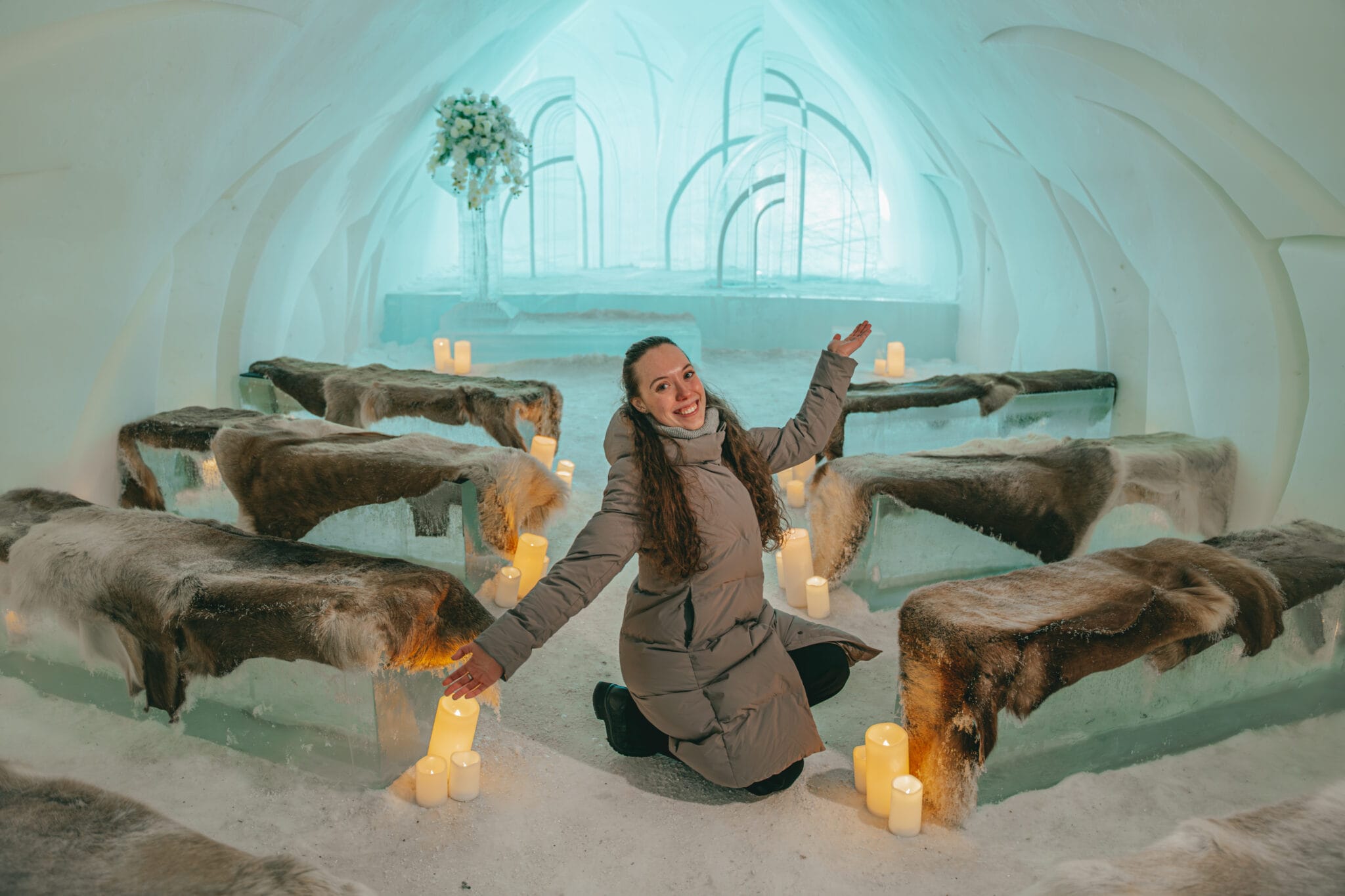
A civil ceremony is performed by a district court judge or another authorised official, at virtually any location: a lakeside terrace, a snowy forest clearing, an igloo, a husky farm. It can be conducted in English. Religious ceremonies are performed by ministers of registered religious communities in Finland (the Evangelical Lutheran Church and the Orthodox Church); couples of other faiths can arrange ceremonies through their own clergy, possibly with an additional civil registration. For the setting, see Ice Hotel Wedding in Lapland and Winter Wedding in Lapland.
After the Wedding: Registration and the Certificate
After the ceremony, the officiant registers the marriage with the Digital and Population Data Services Agency, typically within a few days. Once registered, an official marriage certificate can be requested. Finnish marriage certificates are internationally recognised. Because timing can vary, ask the officiant on the day how and when you will receive yours, and plan your travel home accordingly; if you are flying out the next morning, tell the officiant before the ceremony so the registration and certificate request are discussed in advance.
It also helps to decide who will receive the certificate. Some couples ask for it to be sent to a home address; others collect the details in Lapland and request it later. Either is fine, as long as someone writes down the reference and the date of the wedding, because every authority at home will ask for them. A photograph of the signed documents taken on the day is a useful backup, though it never replaces the official certificate.
Rovaniemi Weddings · our own team
Getting Married in Finland
Rovaniemi Weddings. Everything you share stays between us — we never contact your partner.
Apostille, Legalisation and Your Home Country
This is the step that varies most. Some home countries require an apostille or legalisation of a foreign marriage certificate before they will accept it for things like name changes, visas or insurance. Others do not. We do not give legal advice for individual countries; the safe route is to check with your embassy or civil registry before the wedding, not afterwards. The table below shows the questions to ask.
| Question | Who to ask |
|---|---|
| Does my country require an apostille or legalisation of a Finnish marriage certificate? | Embassy or civil registry |
| Does the certificate need a translation, and by whom? | Embassy or the receiving authority |
| Which copy do I need: a long form, a short form? | The authority that will accept it |
| How do I register the marriage at home? | Civil registry in your home country |
A Timeline From Three Months Out to Home Again
- 3–4 months before: gather passports, certificate of no impediment, any divorce or death certificates; get certified translations.
- About 2–3 months before: apply for the examination of impediments; allow about seven working days, longer for international applicants.
- On the day: ceremony with the authorised official, in English if needed.
- A few days after: registration with the Digital and Population Data Services Agency; request the certificate.
- After you are home: apostille or legalisation if required, and registration or name changes by your own authorities.
Most couples plan over 6–12 months overall, and book the venue and key vendors at least six months ahead, especially for the aurora season from September to March.
Symbolic Ceremony Instead of a Legal One
Many couples complete the legal formalities at home and hold a symbolic ceremony in Lapland, which removes the paperwork from the trip entirely. It is a sensible option when your documents are complicated or the timing is tight. We compare the two in our post on symbolic versus legal weddings. The wedding day itself can be identical; the difference is which authority records it. For a couple travelling on a short trip, the symbolic route can also mean one fewer thing to worry about while the snow is falling, and that peace of mind is a real advantage. Some couples choose it simply to keep the paperwork at home, among institutions they know.
Where Rovaniemi Weddings Fits In
We plan, style and coordinate the day: venue, flowers, timeline, suppliers, photographer, transport. We do not file legal applications on your behalf. A good planner can tell you when to start, what to ask the authorities and how to place the ceremony so that registration is not rushed. See Lapland Wedding Planner for what full planning includes, and Lapland Wedding Cost for broad ranges; the examination of impediments is around €60. If you are still deciding between a wedding for two and a larger celebration, Weddings explains what full planning, on-the-day coordination and styling cover, and you can book only the part you need.
How to Plan It With Us, Step by Step
If you would like us to plan the wedding itself, this is how we work.
- Weeks before: tell us the story. How you met, what matters to them, how you want the moment to feel. We suggest the option that fits, or shape a custom one — start at Proposals in Lapland or write to us through Contact Rovaniemi Weddings.
- Within a few days: option and quote. One clear quote with nothing hidden, your date held, and the exact place and timing fine-tuned together.
- The days before: quiet preparation. Flowers, candles, photographer, transport, sparkling wine and the weather plan are all confirmed.
- The hour: the moment. We set up while you are on your way and step out of sight; you walk them in, the yes happens, we capture it and quietly pack down.
Start early: for winter, 8–12 months ahead is common. We reply within one business day, and all our services are conducted in English.
FAQ
Can foreigners marry in Finland?
Yes. Both partners can be foreign nationals; there is no residency requirement or waiting period.
How long does the examination of impediments take?
Typically about seven working days; it can extend to several weeks for international applicants. The fee is around €60.
When do we get the marriage certificate?
The officiant registers the marriage with the Digital and Population Data Services Agency, typically within a few days; you can then request an official certificate.
Do we need an apostille?
Some home countries require an apostille or legalisation of the certificate. Check with your embassy or civil registry.
Can the ceremony be in English?
Yes. A civil ceremony can be conducted in English, and legal documents are accepted in Finnish, Swedish or English.
Can we marry without the legal paperwork?
Yes, as a symbolic ceremony, with the legal wedding at home.
Our Honest Final Word
The part of a Lapland wedding that nobody posts photographs of is the paperwork, and it is also the part that goes wrong when it is left late. Start early, ask your embassy before the wedding, and choose a symbolic ceremony if the process feels like too much. This is our own company and we are the ones planning the day, so we are glad to help with the rest; the legal steps are yours and the authorities’. See Getting Married in Finland, Elopement in Lapland and Weddings, and write to us through Contact Rovaniemi Weddings.
Planning a legal wedding in Lapland
Every option is planned, set up and quietly packed down by our own team, and nearly every proposal includes a photographer. Tell us your story and we reply within one business day.
WeddingsGetting Married in FinlandRovaniemi WeddingsSee more → WeddingsElopement in LaplandRovaniemi WeddingsSee more →
 WeddingsLapland Wedding PlannerRovaniemi WeddingsSee more →VenueArctic SnowHotel & Glass IgloosSinettä, Rovaniemi — on the shore of Lake Lehtojärvi, around 30 minutes from RovaniemiSee more →
Rovaniemi Weddings is our own wedding planning and proposal design company — Joona & Alla, based in Rovaniemi. We plan, style and coordinate proposals and weddings across Lapland, Finland, Sweden and Norway.
Get our best travel tips in your inbox
Monthly stories from Rovaniemi — Arctic tips, packing lists, and the places we keep coming back to.