Southern Europe Too Hot? 10 Cooler Alternatives We’ve Actually Visited
When Portugal hits 43°C and Rome turns into a furnace, where do you go instead? We’ve been to all 10 of these cooler alternatives — and this is our honest verdict.

We live in Rovaniemi, on the Arctic Circle, where summer temperatures rarely exceed 25°C. So when our inbox fills with messages like “should we skip Spain this summer?” and “where can we go instead of Greece?” — we are the right people to ask. We have personally visited 25 countries, and nearly every one of the cooler alternatives to southern Europe on this list is somewhere we have actually been.
Southern Europe is genuinely lovely. We have been to Portugal, Greece, and Italy and we love all three. But in a summer where Mediterranean heat is regularly touching 40–43°C by July — and with El Niño keeping things hotter and longer — the question “where in Europe is it actually cool in summer?” is completely reasonable. Here are the 10 places we recommend.
The best cooler alternatives to southern Europe in summer 2026 are found in the Nordic countries, the British Isles, and the Baltic states. Norway, Iceland, Finland, Ireland, Sweden, and the Faroe Islands all sit between 12–22°C in July. We have visited all of them. This guide ranks each by accessibility, cost, and summer vibe.
Why southern Europe is too hot in 2026
This is not just a 2026 problem — but 2026 is when it tipped from “uncomfortably warm” to genuinely difficult. Portugal hit 43°C in July 2025. Greece saw wildfire-related travel disruptions for the third consecutive summer. Southern Spain regularly touches 38–41°C in peak season, and cities like Rome and Naples are stifling in July and August even for people who grew up in warm climates.
The numbers behind the heat
- Portugal (Algarve): average July high of 31°C, regularly spiking to 40–43°C in heatwaves.
- Greece (Athens): average July high of 33°C, recent peaks of 45°C in inland areas.
- Italy (Rome): average July high of 32°C, high humidity making it feel considerably hotter.
- Spain (Seville): routinely the hottest city in Europe, with July averages of 36°C and peaks beyond 42°C.
If you are traveling with children, have health sensitivities to heat, or simply want to actually walk around and enjoy a city without sweating through your clothes — these temperatures are a real barrier. Searches for cooler alternatives to southern Europe have roughly tripled since 2023.
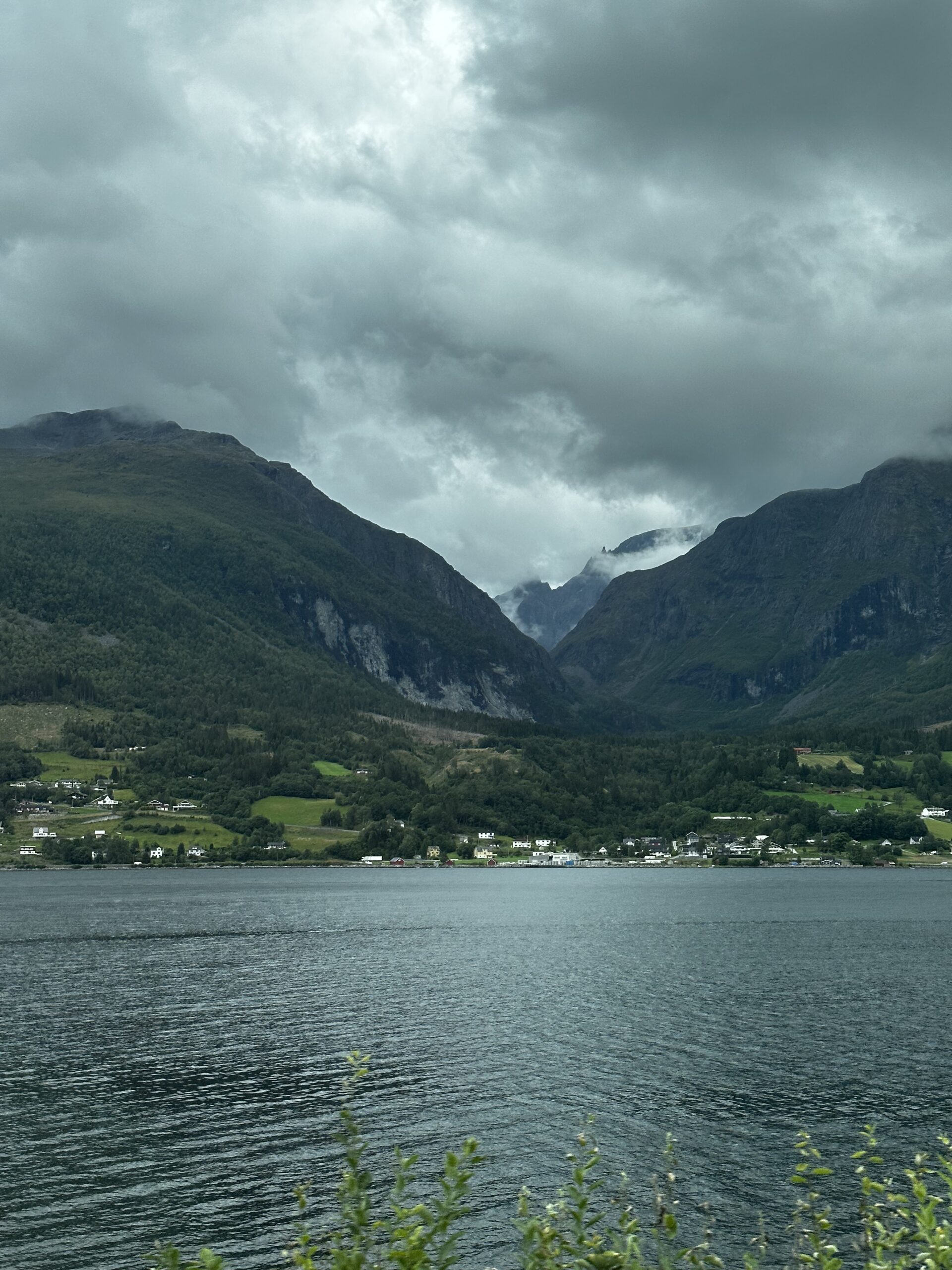
Our top 10 cooler alternatives — ranked
All 10 of these are places we have personally visited. We are ranking them on a combination of average July temperature, ease of reaching them from most European cities, and overall summer vibe.
The 10 destinations, in order
- 1. Norway (the fjords) — avg 18°C: Nothing cools you down like standing at the edge of a glacier-carved fjord with cold mountain air rushing down the valley. We drove the Geiranger and Hardanger fjords and spent three nights in Bergen. Stunning, accessible, and a genuinely different experience from any Mediterranean destination.
- 2. Iceland — avg 13°C: The Ring Road in summer is one of the great drives in the world. You will be cold, possibly wet, and completely transported. We went in June for the midnight sun and puffin season. Expensive but worth every cent.
- 3. Faroe Islands — avg 12°C: The most dramatic landscapes in the North Atlantic, with only about 55,000 residents and no mass tourism infrastructure. We hiked Mykines, saw more puffins than we could count, and felt genuinely off the beaten path.
- 4. Finnish Lapland — avg 21°C (our home): The midnight sun, the empty forests, the lake swims at midnight. Lapland in summer is criminally underrated. We write about it constantly because we live here and still find new things every year.
- 5. Ireland (Wild Atlantic Way) — avg 18°C: We drove the Wild Atlantic Way over 5 days and it was one of our favourite road trips. Green cliffs, dramatic coast, excellent seafood, and genuinely friendly locals.
- 6. Sweden (Stockholm + archipelago) — avg 23°C: Stockholm in summer is exceptional — long light, outdoor swimming, the archipelago just a ferry ride away. Midsommar in Sweden is one of the most joyful experiences in Europe.
- 7. Denmark (Copenhagen) — avg 22°C: One of the most liveable cities in Europe with excellent cycling infrastructure, a brilliant food scene, and a harbour you can actually swim in.
- 8. Estonia (Tallinn) — avg 22°C: The most affordable city on this list, with a medieval old town that is genuinely stunning and feels remarkably uncrowded even in peak summer.
- 9. Latvia (Riga) — avg 22°C: Europe’s finest collection of Art Nouveau architecture, an underrated food scene, and prices that feel like going back 10 years.
- 10. Poland (Kraków + Tatras) — avg 24°C city, cooler in mountains: Excellent medieval charm plus real hiking in the Polish Tatras, at a fraction of Swiss prices. Kraków is one of the most underrated cities in Europe.
Our complete Nordic summer guide covers what to do, when to go, and how to plan across Finland, Norway, Sweden, and Iceland.
Quick-reference: temperatures & costs compared
Here are the key numbers for each destination versus southern European benchmarks. Costs are relative, based on our experience as a couple staying in mid-range accommodation.
July avg: 18°C | Budget vs. Spain: 30–50% more | Best for: dramatic scenery, hiking, road trips | Accessibility: easy, direct flights from most European cities
July avg: 13°C | Budget vs. Spain: 60–80% more | Best for: unique landscapes, photography, adventure | Note: book car hire months ahead
July avg: 12°C | Budget vs. Spain: 40–60% more | Best for: serious hikers, off-grid travel, puffins | Note: Atlantic Airway flights, not always cheap
July avg: 21°C | Budget vs. Spain: 20–40% more | Best for: midnight sun, nature, families, total quiet | Note: direct flights to Rovaniemi or Kittilä
July avg: 18°C | Budget vs. Spain: comparable | Best for: road trips, coast, culture, English-speaking ease | Note: budget flights from across Europe
July avg: 22°C | Budget vs. Spain: 20–30% cheaper | Best for: budget travelers, city breaks, medieval architecture | Note: best-value picks on the list
Get our best travel finds — free
One email per week. Real trip notes, hidden destinations, and honestly-tested tips. No filler.
Join the letter →Tips for booking a last-minute coolcation
One pattern we see every summer: people wait until the heatwave hits southern Europe and then scramble to find an alternative at the last minute. Here is how to not get stung on prices when that happens.
- Book flights first, accommodation later. Nordic and Irish accommodation is generally more available at short notice than Mediterranean options. Lock in the flight while it is cheap, then sort the hotel.
- Avoid peak Midsommar week in Scandinavia (June 19–22). Accommodation in Sweden, Denmark, and Finland spikes around this period. Book early or go the week before or after.
- Estonia and Latvia are the budget safety valve. Even with two days’ notice, Tallinn and Riga have excellent-value hotels available and flights from most European hubs for well under €100.
- Iceland and the Faroes need lead time. Car hire in Iceland in summer sells out months in advance. If you want the Ring Road, plan at least 8–10 weeks ahead.
- Check ferry routes. The Helsinki–Tallinn ferry is bookable same-day. Bergen’s coastal routes pair well with budget flights for surprisingly affordable trips.
- Use shoulder-week pricing. Arriving Tuesday or Wednesday, leaving Sunday, often cuts flight costs by 30–40% versus Saturday–Saturday packages.
Which alternative is right for your travel style?
Not everyone wants a fjord hike. Here is how we would match each destination to a type of traveler, based on having been to all of them.
- First-time coolcation traveler: Ireland or Sweden. Both are accessible, English-friendly (Ireland entirely, Sweden largely), and offer a clear step-change from southern Europe without feeling too remote.
- Photographers and landscape obsessives: Iceland or the Faroe Islands. Nothing else on this list comes close for raw dramatic scenery. The Faroes for exclusivity; Iceland for sheer variety.
- City break travelers: Copenhagen, Tallinn, or Riga. All three are walkable, charming, and have excellent food scenes. Tallinn is the most affordable. Copenhagen is the most cosmopolitan.
- Families with children: Finnish Lapland or Sweden. Both have excellent outdoor infrastructure, lots for kids to do, and a very safe, relaxed travel environment. Lapland in summer is magical for children who have only ever heard of it as a winter destination.
- Adventure seekers: Norway or Iceland. Norway for hiking, cycling, and kayaking in the fjords. Iceland for lava fields, glaciers, and waterfalls.
- Budget-conscious couples: Poland, Estonia, or Latvia. Excellent value for money, easy to reach, and genuinely underrated as summer destinations.
We spent 5 days there and wrote the itinerary we would repeat tomorrow — including the Mykines hike, Saksun, and where to eat in Tórshavn.
Mistakes we made when planning our first Nordic summer
We have made most of these mistakes, which is why we feel confident listing them. Do not repeat them.
- Assuming “Nordic summer” means the same as Mediterranean summer. It does not. Pack a mid-layer even in July. We have shivered in Iceland in July and been perfectly warm in Lapland at midnight.
- Not accounting for the midnight sun’s effect on sleep. In northern Finland and Norway in June–July, the sun does not set. This is incredible — and also means you need blackout curtains or a sleep mask, or you will be awake at 3 am in broad daylight.
- Underestimating how far apart things are in Norway. The Geiranger and Hardanger fjords are hours apart by road. Plan more time than you think you need.
- Not pre-booking car hire in Iceland. Iceland’s car rental market in summer is genuinely competitive. We had friends stranded in Reykjavik because every car was gone.
- Overpacking for the Faroe Islands. The Faroes have excellent gear hire for hiking. A good waterproof jacket and sturdy boots are the only non-negotiables.
- Dismissing Estonia and Latvia as “less interesting.” We nearly skipped Riga on our Baltic road trip. That would have been a serious mistake. It is one of the most architecturally stunning cities we have ever visited.
Frequently asked questions
What are the coolest European destinations in July?
The coolest by temperature are the Faroe Islands (avg 12°C), Iceland (avg 13°C), and northern Norway and Finnish Lapland (avg 16–21°C). Ireland sits around 18°C, and the Scandinavian capitals are in the low 20s — dramatically cooler than southern Europe in the same month.
Is Norway or Iceland better for a summer coolcation?
Both are exceptional but suit different traveler types. Norway is better for structured road trips with clear highlights (fjords, Bergen, Lofoten) and has a wider range of accommodation. Iceland has more extreme, otherworldly scenery but requires more planning and is more expensive. Norway is the easier first trip; Iceland is the more unique one.
Is Ireland a true coolcation or is it just as warm as Spain?
Ireland is a true coolcation. Dublin averages 18–20°C in July, the Wild Atlantic Way coastline is often in the high teens with sea breeze, and even warm spells rarely push above 25°C. It is dramatically different from southern Europe in peak summer.
Are Estonia and Latvia good for summer travel?
Yes — and they are consistently underrated. Both average 22–24°C in July, which is warm and pleasant without being oppressive. Tallinn’s medieval old town is one of the best-preserved in Europe, and Riga’s Art Nouveau architecture is unique on the continent. Both are significantly more affordable than western Europe.
Can I combine multiple cooler alternatives into one trip?
Absolutely. A classic Nordic loop: fly into Oslo, drive the fjords, fly to Reykjavik, fly home. Or the Baltic route: Tallinn–Riga–back in a week by car or bus. Just avoid trying to combine Norway and Iceland in under a week — neither gets the time it deserves.
When is the best time to book cooler European alternatives?
For Iceland and the Faroe Islands, book 2–3 months in advance, especially for car hire. For Norway, Sweden, and Denmark, 4–8 weeks is usually fine. For Ireland, Estonia, and Latvia, 2–3 weeks’ notice is often sufficient. The wild card is a sudden southern European heatwave triggering a mass rebooking surge — then everything spikes simultaneously.
A final word from Rovaniemi
We have been to southern Europe. We love Portugal, and Greece, and Italy. But we also live on the Arctic Circle, which gives us a slightly different frame of reference for what makes a perfect summer trip. For us, “too hot” starts somewhere around 28°C. Anything above that and we are looking for shade and cold water, not wandering around a city.
The good news is that the cooler alternatives to southern Europe are not compromises. Norway is not “better than Greece if you don’t mind the cold.” It is a category of its own. Iceland is not a consolation prize for missing out on the Amalfi Coast. The Faroe Islands are not southern Europe minus the sunshine. They are different, and in summer 2026, that difference is increasingly the point.
If you are sitting somewhere in Europe staring at a 40°C forecast and wondering whether your Portugal trip will be enjoyable — we say: book the fjord. Book the Wild Atlantic Way. Book Tallinn. You will not regret it, and you will almost certainly be cooler.
And if you want more help — we are always in the Letters from Rovaniemi newsletter, and our destination guides cover nearly everywhere on this list in detail.
Joona & Alla
A Finnish-Ukrainian couple living in Rovaniemi, Finland. Joona is a marketing professional in Lapland tourism; Alla is an AI engineer. Together they have visited 25 countries and write about travel from a Nordic perspective — honest, first-hand, and hungry for the next adventure.
Read our full story →