How to See Puffins in Iceland — Timing, Locations, and Honest Odds
A Rovaniemi-based couple shares where we actually saw puffins in Iceland, when the timing window really opens, and why most visitors get it wrong.
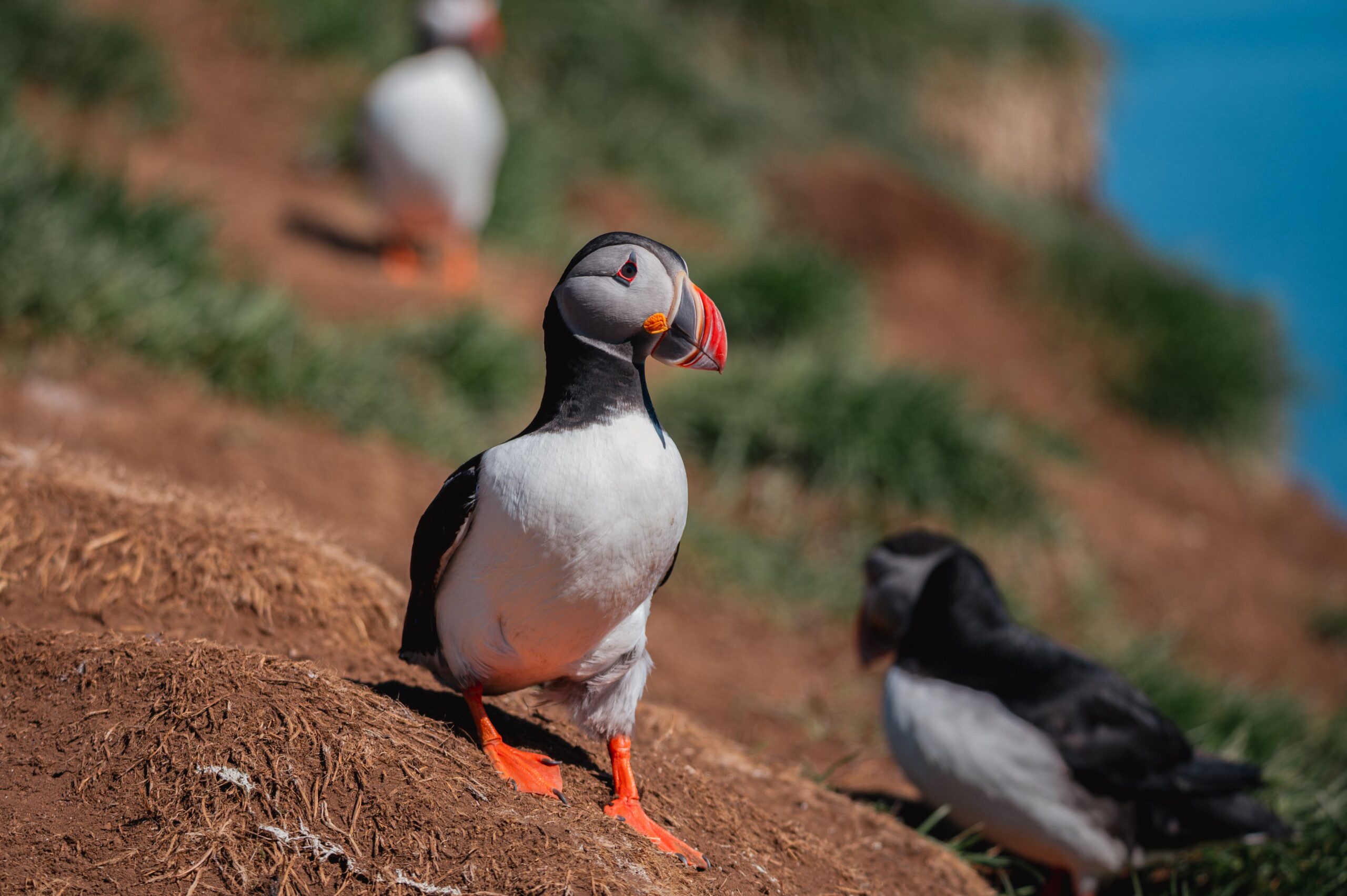
Iceland is home to roughly 60 percent of the world’s Atlantic puffins. That number gets thrown around in every brochure, every tour listing, every airport poster. And it’s true — but it doesn’t mean you’ll actually see one. We learned that the hard way on our first trip, arriving a week too early, staring at empty cliffs, and feeling like idiots.
On the second trip we got it right. This guide is what we wish we’d had before the first one.
Puffins arrive in Iceland in mid-April to early May and leave by mid- to late August. The best viewing window is late May through late July. The most reliable spot is Látrabjarg in the Westfjords, but Vestmannaeyjar (Westman Islands) has the largest colony. You don’t need a tour — just the right timing and a cliff with a railing.
When puffins are actually in Iceland
Atlantic puffins spend most of their lives at sea. They only come to land to breed, and Iceland’s cliffs are their preferred address. The season is short and non-negotiable — miss it by two weeks and you’ll see nothing but empty burrows and disappointed tourists.
The breeding timeline
- Mid-April to early May: the first puffins arrive. They’re busy claiming burrows and not always visible from the usual viewpoints. Numbers are thin.
- Late May to mid-June: egg-laying begins. Puffins are settled in, more predictable, and the colonies fill up. This is when reliable viewing starts.
- Mid-June to late July: the peak. Chicks are hatching, parents are flying back and forth with beakfuls of sand eels, and the cliffs are at maximum activity. The best photos happen now.
- August: fledging begins. Chicks leave the burrows and the adults start heading back to sea. By late August most colonies are empty.
The weather factor
Even in peak season, fog and wind can make cliff-edge viewing impossible. Iceland’s coasts are exposed. We had one afternoon at Látrabjarg where the wind was so strong that the puffins were flying but couldn’t land — they kept overshooting their burrows, banking hard, circling back. Entertaining, but not great for photography. Build in a weather buffer of at least two days.
Best months for puffins in Iceland — month by month
Not all months are equal. Here’s what we’d tell a friend planning a trip specifically around puffins.
Month-by-month breakdown
- April: scouts arrive late in the month. You might see a few offshore. Not worth planning a trip around. Odds: 20–30% of a meaningful sighting.
- May: numbers build through the month. Late May is the real start of the season. Odds: 50–70% at good locations.
- June: the sweet spot begins. Colonies are active, the light is endless (literally — midnight sun), and weather is at its most cooperative. Odds: 85–95% at top sites.
- July: still peak. Chick-rearing means maximum flight activity. Odds: 85–95%.
- August: a gamble. Early August is fine; by the third week many have left. Odds: 40–60%, dropping fast after mid-month.
Where to see puffins in Iceland — 6 locations ranked
There are puffin colonies all around Iceland’s coast, but accessibility, colony size, and how close you can get vary wildly. These are the spots we’ve been to or have strong recommendations on from people we trust.
The locations
- Látrabjarg, Westfjords: Europe’s largest bird cliff and the place where you can get absurdly close to puffins — sometimes within two meters. The drive is remote (5–6 hours from Reykjavík via ferry or the long way around), but it’s the single best puffin experience in Iceland for photographers and casual viewers alike. We stood there for two hours and forgot we were cold.
- Vestmannaeyjar (Westman Islands): the largest puffin colony on earth — roughly 8–10 million birds. Take the 35-minute ferry from Landeyjahöfn. The town itself is fascinating (rebuilt after the 1973 eruption), and puffins nest on the cliffs around Stórhöfði headland. Slightly harder to get as close as Látrabjarg, but the sheer scale is staggering.
- Borgarfjörður Eystri, East Iceland: a small, easy-access colony with a purpose-built viewing platform right at the nesting site. Less dramatic scenery than Látrabjarg, but if you’re doing the Ring Road and want a guaranteed close encounter, this is the stop.
- Lundey Island, near Reykjavík: accessible by boat tour from the old harbour. Convenient if you’re only in the capital, but you view from the boat — no cliff-edge proximity. Fine for checking the box; not the real experience.
- Dyrhólaey, South Coast: dramatic black-sand beach backdrop and a few puffins nest on the arch and surrounding cliffs. Beautiful drive, but the puffin numbers here are small and inconsistent. Don’t plan a trip around this alone.
- Grímsey Island, North Iceland: sits right on the Arctic Circle. Small colony, remote ferry, but the island is charming and you’ll likely have the puffins to yourself. Best combined with a northern Iceland loop.
Trip notes from the Arctic Circle
Honest dispatches from our travels — no spam, no fluff, just the stuff we’d tell a friend.
How to actually watch puffins — practical tips
Seeing puffins on an Icelandic cliff isn’t difficult once you’re in the right place at the right time. But a few practical things make the difference between a magical hour and a frustrating one.
Puffins are surprisingly tolerant of humans, but only if you move slowly. Sit down near the cliff edge (safely back from it), stay quiet, and they’ll waddle past you like you’re furniture. Stand up fast and they scatter.
Puffins are most active in the late afternoon and evening, when they return from fishing. In June and July this means anytime from 5 pm onward — and since the sun barely sets, you can watch until midnight.
At Látrabjarg you barely need a zoom — the puffins are that close. At most other sites, a moderate telephoto lens helps. Modern phone cameras in good light work surprisingly well at 3–5 meters.
Puffins land into the wind. If the wind is blowing from behind you toward the cliff edge, puffins will fly straight toward your face before landing. Position yourself accordingly for photos.
The soil at nesting sites is often riddled with burrows just below the surface. Walking on it can collapse a nest and kill a chick. Stay on marked paths and rock edges.
Cliff-edge viewing means full coastal exposure. Even in July, wind chill at Látrabjarg can drop well below 10°C. A windproof layer and warm hat are non-negotiable.
Puffin tours vs going on your own — what’s worth the money
Most puffin viewing in Iceland doesn’t require a guide. The birds are on public cliffs with marked paths. But there are a few situations where a tour adds value.
When to go on your own
- Látrabjarg: totally self-guided. Park, walk to the cliff edge, sit down. No entrance fee, no guide needed. The drive is the hard part, not the viewing.
- Borgarfjörður Eystri: same — free access, viewing platform, signposted. Show up in the evening and you’re set.
- Vestmannaeyjar: take the public ferry, walk from town to the headland. No tour required for cliff-edge viewing.
When a tour makes sense
- Boat-based viewing from Reykjavík: if you only have a day in the capital and can’t drive to a colony, a Lundey boat tour is the realistic option. Expect to pay around 6,000–8,000 ISK per person.
- Vestmannaeyjar RIB boat tours: some operators run zodiac trips around the island’s sea stacks, where you see puffins from below — a completely different perspective. Worth it if you’ve already done cliff-edge viewing and want more.
- Photography-specific tours: a few operators in the Westfjords run guided photography sessions at Látrabjarg with specific timing and positioning. Overkill for most, but useful for serious wildlife photographers.
What we learned the hard way — our puffin mistakes
- Arriving in early May thinking it was “puffin season.” It technically was, but the colony we visited was maybe 15% full. The brochure photos? Those were from July. We felt cheated by our own expectations.
- Skipping the Westfjords because “it’s too far.” We regretted this on our first trip. On the second, we did the drive to Látrabjarg and it was the highlight of the entire trip. The remoteness is the point.
- Only giving ourselves one evening at the cliffs. The first evening was foggy. If we’d had only that night, we’d have left Iceland thinking puffin viewing was overrated. The second evening was crystal clear and unforgettable.
- Standing too close to the edge. Icelandic cliffs are not fenced. The grass overhang can extend past solid rock. One of us (Joona) learned this when a chunk of turf crumbled under his boot. Stay well back from any edge that looks grassy — the actual cliff face might be a meter behind you.
- Ignoring the other birds. Puffins share cliffs with razorbills, guillemots, fulmars, and arctic terns. The terns are aggressively territorial and will dive-bomb your head. Wearing a hat isn’t just for warmth — it’s armor.
- Not bringing food and water. Látrabjarg is genuinely remote. The nearest gas station is over an hour away. We sat on those cliffs for three hours because we didn’t want to leave, but we were starving. Pack snacks.
Frequently asked questions
What is the best time to see puffins in Iceland?
Late May through late July is the peak window. June is the single best month — colonies are fully active, daylight is constant, and weather is most cooperative. Arrive before mid-May or after mid-August and your odds drop sharply.
Can you see puffins from Reykjavík?
Not from shore, but boat tours to Lundey and Akurey islands run daily from the old harbour in summer. You’ll see them from the boat at a moderate distance. For a close encounter, drive to Látrabjarg (5–6 hours) or take the ferry to the Westman Islands (3 hours total).
Do you need binoculars to see puffins in Iceland?
At Látrabjarg and Borgarfjörður Eystri, no — puffins are within a few meters. At other sites or on boat tours, binoculars or a zoom lens help. A modern phone camera works fine at the close-access sites.
Are puffins endangered in Iceland?
Atlantic puffins are classified as “Vulnerable” by the IUCN, and Iceland’s population has declined due to changes in sand eel availability linked to warming seas. They’re still present in enormous numbers, but the trend is downward. Responsible viewing — staying on paths, avoiding burrow areas — matters more than it used to.
Is Látrabjarg worth the long drive?
Yes. It’s one of the most memorable wildlife experiences in Europe. The drive through the Westfjords is itself spectacular — empty roads, dramatic fjords, zero crowds. Plan at least two nights in the area so you’re not rushing.
Can you eat puffin in Iceland?
Puffin has historically been part of Icelandic cuisine, and a few restaurants in Reykjavík still serve it. Given the species’ declining numbers, many Icelanders and conservation groups consider it increasingly controversial. We tried it once, felt conflicted, and didn’t order it again. Make your own call.
A final word from Rovaniemi
We live in Rovaniemi, which is about as far from an Icelandic puffin cliff as you can get while still being in the same general part of the world. But the thing that connects these places — the reason we keep going back to Iceland from our home in Finnish Lapland — is the feeling of standing on the edge of something vast and wild and not fully under human control.
Puffins don’t perform on schedule. They show up when the ocean tells them to, they leave when their chicks are ready, and they don’t care whether you drove six hours to see them. That’s kind of the point. The best wildlife experiences aren’t guaranteed — they’re earned by being in the right place, at the right time, with enough patience to wait.
If you time it right and give yourself more than one evening, you’ll see them. And when you do — when a puffin with a beak full of silver fish lands two meters from your boot and stares at you like you’re the strange one — you’ll understand why people cross oceans for this.
Joona & Alla
A Finnish-Ukrainian couple living in Rovaniemi, Finland. Joona works in Lapland tourism marketing; Alla is an AI Engineer. Together we’ve visited 25 countries and share honest, locally-grounded travel writing from our home in the Arctic.
Read our full story →