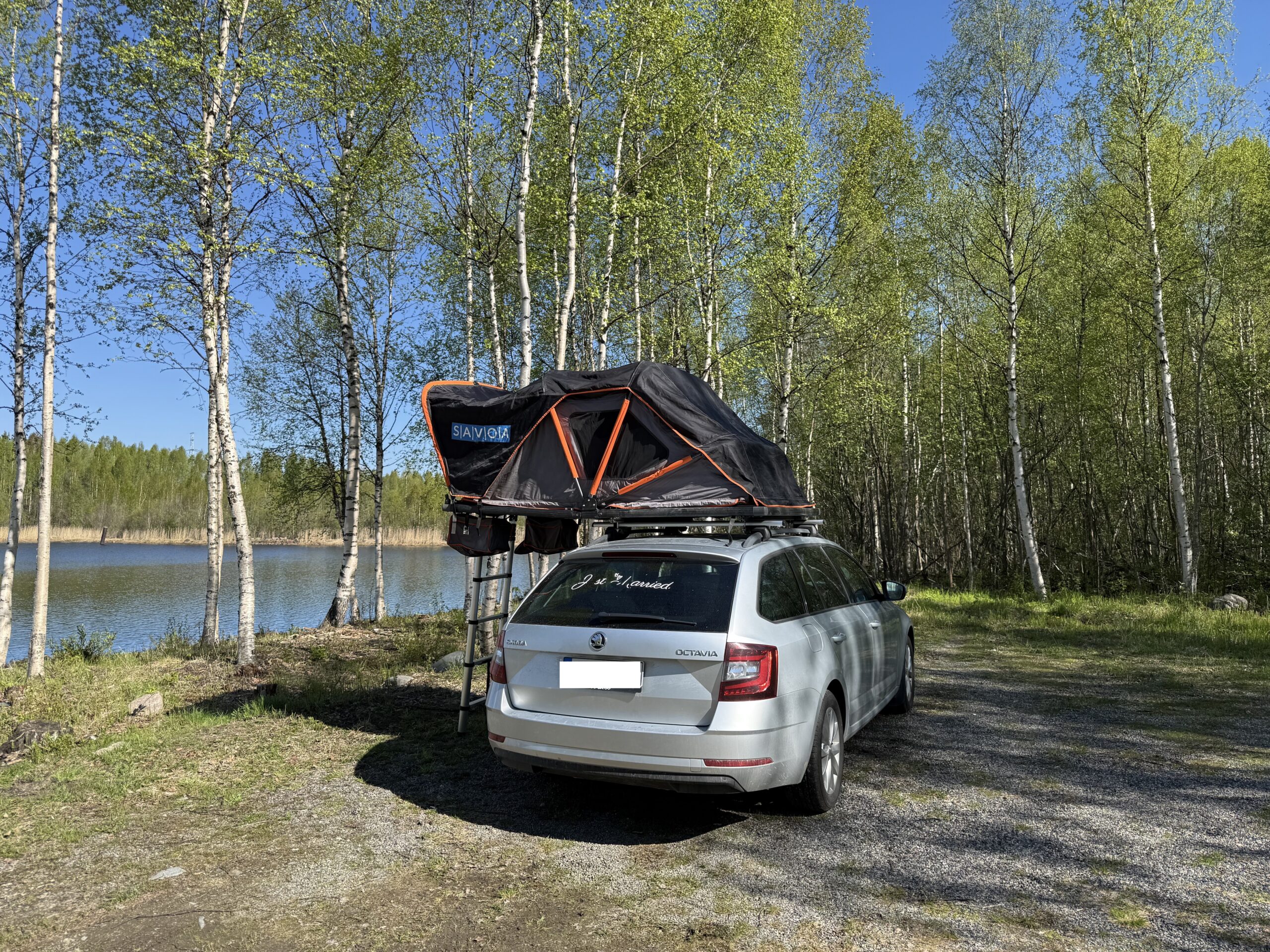
We get asked this every winter, usually from someone who’s just found a great summer campervan deal for Norway and wants to know if the same idea works in December or February. Short version: yes, people do rent and drive campervans through Norway in winter — but it’s a different trip to the one most rental listings are photographed for, and it’s worth knowing that before you put down a deposit.
We live in Rovaniemi and have driven our own car through Norway in winter more than once, including up into the Lofoten islands on properly icy roads. We haven’t personally rented every winter campervan fleet in Norway — we won’t pretend otherwise — but we know the roads, the tyre laws, and the shape of this trip well enough to help you ask the right questions before you book. If you want the wider picture on renting in Norway generally, we’ve also written a separate motorhome vs campervan comparison for Norway and our campervan rental guide that’s worth reading alongside this one.
This isn’t a “book it, it’ll be fine” post, and it isn’t a “don’t even think about it” post either. It’s the honest middle version.
Yes — you can rent a campervan in Norway in winter, but the fleet built for it is smaller than the summer one, proper insulation and heating aren’t automatic, and winter tyres are in practice a legal requirement in wintry conditions, not an option. It suits the southern and coastal lowland routes far better than high mountain passes or the far north in the darkest weeks. Compare current winter-ready listings on CampervanPlanet, and code HUNGRYTRAVELFAMILY20 takes €20 off whichever van you book.
Yes, but not the same trip as summer
The honest starting point: renting a campervan in Norway in winter is entirely possible, and a fair number of people do it every year, particularly along the southern and western coast. What changes is the margin for error. Daylight is short, roads can be icy or snow-covered for weeks at a time, and the relaxed “figure it out as you go” style that works fine on a Norwegian summer road trip needs to be dialled back considerably.
None of that is a reason not to go. It’s a reason to plan the route, the van, and your daily distances more deliberately than you would in July.
What “winter-ready” actually means
Not every van in a rental company’s fleet is built the same way, and this matters far more in winter than summer. A genuinely winter-ready campervan should have proper insulation in the walls and floor, a working diesel or gas heater that can run overnight, and a fresh-water system that’s either heated or drainable so it doesn’t freeze and crack a pipe while you sleep. Some rental companies run a smaller, specifically winterised sub-fleet for the cold months; others simply rent the same vans year-round and leave it to you to work out whether that’s a problem.
The leisure battery is the other thing people underestimate. Heaters, lights, and phone charging all draw more in the cold, and a battery that comfortably lasts two nights in August can struggle to get through one night at −10°C. Ask specifically about heating type, insulation, and battery capacity before you book — a generic “yes it’s winter ready” answer from a rental company isn’t enough on its own.
Winter tyres and Norwegian road law
Norway requires tyres suited to winter conditions, which in practice means winter tyres, and this isn’t a suggestion — it’s enforced. Any campervan from a legitimate Norwegian rental company should already be fitted with proper winter tyres for the season, but we’d still confirm this explicitly when you book rather than assuming it, especially if you’re picking up right at the edge of the winter tyre period. If snow chains are recommended for your planned route, ask whether they’re provided or need to be rented separately.
Beyond the legal minimum, how you drive matters more than the tyres alone. Braking distances on packed snow or black ice are dramatically longer than most visitors expect, and a campervan is taller and heavier than the rental car most people are used to driving in these conditions.
💡 Our campervan tip: prices for the same van vary a lot between rental brands. We compare Norway campervans across 160+ rental companies on CampervanPlanet — and code HUNGRYTRAVELFAMILY20 takes €20 off.
Where it’s realistic — and where we wouldn’t
The southern and western coastal lowlands — around Stavanger, Bergen, and the roads connecting them — tend to be the most realistic winter campervan territory. Roads are better maintained, distances between towns and services are shorter, and the coastal climate, while wet, is milder than the interior.
We’d be more cautious about high mountain routes and interior plateau roads. Some mountain passes close for the season entirely once the snow sets in, and others stay open but only with chains or in convoy during bad weather, which isn’t the kind of driving most rental campervans — or most visiting drivers — are set up for. The far north in the darkest weeks around December and January is its own category: spectacular for aurora chances, but with only a few hours of usable daylight for driving, which changes the whole rhythm of a trip.
Campsites and services in winter
Plenty of Norwegian campsites close for the season once the summer crowds leave, so the free-and-easy “we’ll find a site when we get there” approach that works in July is riskier in January. Fewer sites also means fewer water fill-up and waste dump points along your route, so we’d plan those stops rather than assume one will turn up when you need it.
Supermarkets and fuel stations along the main coastal routes stay open year-round, so day-to-day supplies aren’t the issue — it’s specifically campervan servicing (water, waste, electric hook-up) that thins out once winter sets in.
When a cabin beats the van
We’d lean toward a cabin or hotel over a campervan for a first winter trip to Norway, for families with young children, or for anyone travelling in the darkest weeks around the solstice when daylight is measured in a few hours rather than a full day. The same goes if your route needs to cross higher interior terrain rather than sticking to the coast — a warm, fixed base you drive out from is often just a more relaxed way to see the same scenery. If you’re weighing this up for Iceland instead of Norway, the trade-offs are similar — we’ve covered that specifically in our piece on renting a campervan in Iceland in winter.
Where we’d genuinely choose the van: a coastal route with realistic daily distances, a van you’ve confirmed is properly winterised, and a driver comfortable with snow and ice. That combination works well, and a few of our own winter drives through Norway in a well-prepared vehicle rank among our favourite trips in the region.
Booking tips if you go ahead
Book earlier than you would for summer — the winter-ready portion of any rental fleet is smaller, and it sells out for the good weeks. When you enquire, ask directly about insulation, heater type, battery capacity, and whether winter tyres (and chains, if relevant to your route) are already fitted rather than assuming a “yes” covers all of that.
Check the insurance excess and what it covers specifically for winter conditions — a slide on an icy corner is a very different claim to a summer scrape, and some policies treat winter driving differently. We’d compare a few options rather than booking the first listing you see; that’s exactly what a comparison tool is for. We use CampervanPlanet to compare campervan prices for Norway across a large number of rental brands rather than checking each company’s site individually, and code HUNGRYTRAVELFAMILY20 takes €20 off whatever you book.
Book your Norway campervan
Compare prices across 160+ campervan and motorhome rental brands, get a free 1GB eSIM with every booking — and €20 off with code HUNGRYTRAVELFAMILY20.
Check prices & availability →Frequently asked questions
Is it legal to drive a campervan in Norway in winter?
Yes. There’s no restriction on campervans specifically, but all vehicles must have tyres suited to winter conditions (in practice, winter tyres), and drivers are expected to adapt their driving to the conditions.
Do I need snow chains?
Not always, but on some mountain or interior routes they’re recommended or required in poor conditions. Ask your rental company whether chains are provided or need to be arranged separately for your planned route.
Will the water system freeze?
It can, in an unheated or poorly insulated van. A genuinely winter-ready campervan is built to prevent this with insulation and heating; always confirm this specifically rather than assuming every van in a fleet is equally prepared for the cold.
Is Norway more expensive to campervan through in winter?
Rental rates and availability vary through the year, and the smaller winter-ready fleet can mean less competitive pricing than the summer peak in some cases — compare current listings directly rather than assuming either season is cheaper.
Can beginners drive a campervan in Norway in winter?
We wouldn’t recommend it as a first-ever campervan trip. Winter driving conditions add real complexity on top of learning to handle a larger vehicle, and a cabin-based trip is a gentler way to see the same scenery.
Does the HUNGRYTRAVELFAMILY20 code work on winter bookings?
Yes — HUNGRYTRAVELFAMILY20 gives €20 off at checkout on CampervanPlanet regardless of season.