Can You Rent a Campervan in Iceland in Winter?
Short answer: yes — but the fleet, the roads, and what you actually need all change once the days get short. Here is what a winter campervan trip in Iceland genuinely looks like, and when a cabin is the smarter call instead.
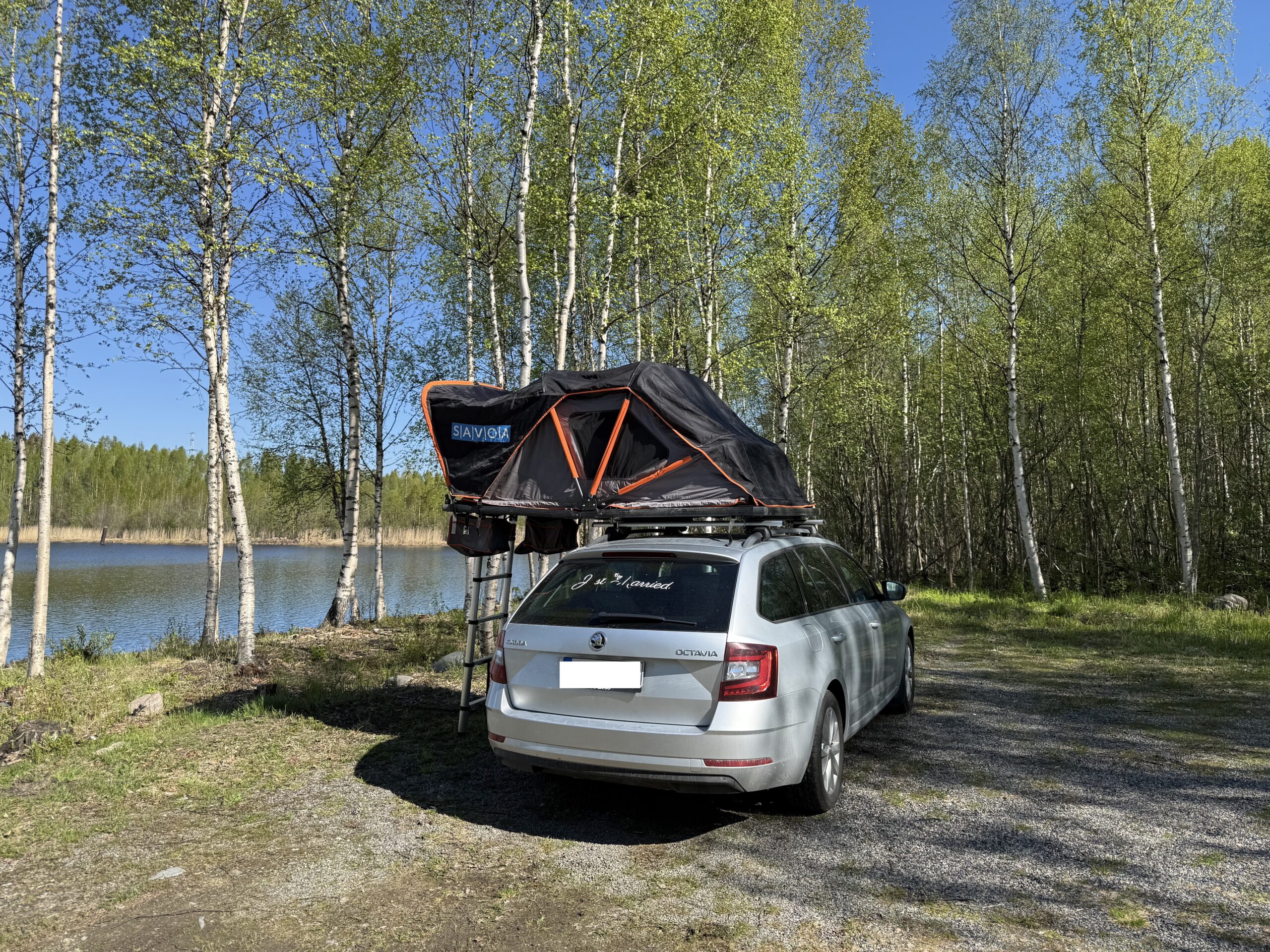
We get asked this one a lot, usually from people who have already read the glossy summer campervan posts and are now wondering if the same trip works in December or February. The short version: it does, but it is a meaningfully different trip from the one you see in the July photos, and going in without knowing that changes things is how people end up cold, stuck, or both.
We have driven across the Nordics enough winters now to have a clear-eyed view of what changes when you swap a summer Iceland campervan trip for a winter one. This is that breakdown — the fleet, the roads, the gear, and honestly, when we would tell a friend to book a cabin instead.
Yes, you can rent a campervan in Iceland in winter, and plenty of companies keep a smaller winter-ready fleet running through the darker months. The differences that matter: most rental firms restrict or exclude the Highland F-roads entirely once they close for the season, insulated 4×4 vans with diesel heating are worth paying more for, and your realistic route is the Ring Road and the accessible south and west, not the interior. Use code HUNGRYTRAVELFAMILY20 for €20 off when you compare campervan prices for Iceland.
Yes, you can rent a campervan in Iceland in winter — but the trip changes
The core fact people want confirmed is simple: winter campervan rental in Iceland is a normal, established thing, not a fringe option. Rental companies keep vehicles running through the off-season because demand for northern lights trips and quiet-season travel has grown steadily. What changes is not whether you can do it, but which van you should book and which roads you should actually plan around.
Joona has done enough winter driving around the Arctic to say this plainly: a summer-spec campervan with a thin mattress and no real heating is a miserable place to sleep at −10°C. A winter-appropriate one is genuinely comfortable. The gap between those two experiences is almost entirely about the vehicle spec, which is why section three matters more than almost anything else in this guide.
What “winter” actually means for an Iceland campervan trip
In practical terms, winter in Iceland for road trip purposes runs roughly from October through April, with the shortest, darkest stretch in December and January. Daylight hours shrink dramatically — some winter days give you only a handful of usable driving hours — so your daily driving distance needs to be shorter than a summer itinerary, not the same distance squeezed into less daylight.
The single biggest structural change is that Iceland’s F-roads — the unpaved interior Highland routes — close for the season and typically do not reopen until early summer once snowmelt and river crossings make them passable again. That single fact reshapes the whole route: winter Iceland road trips are a Ring Road and coastal trip, not a Highlands trip.
Winter fleets: 2WD vs 4×4, insulation, and diesel heating
This is where we would actually spend more of your budget if you are choosing between options: an insulated van with a proper diesel-powered heater (rather than one that only runs off the engine or a small gas heater) makes an enormous difference to how well you sleep and how comfortable mornings feel. If you are comparing rental brands, this is one of the first specs worth checking rather than assuming every “campervan” listing is equal — we compare Iceland campervan options for exactly this reason, since fleets and specs vary a lot company to company.
On drivetrain: a 4×4 is not strictly required for the paved Ring Road in normal conditions, but it buys real margin on the exposed south coast and any gravel or minor road you take off the main route in winter weather. Plenty of people do a winter Ring Road loop in a well-equipped 2WD van and are fine; we would still lean 4×4 if your budget allows it, purely for the peace of mind on the days the wind and ice are working against you.
💡 Our campervan tip: prices for the same van vary a lot between rental brands. We compare Iceland campervans across 160+ rental companies on CampervanPlanet — and code HUNGRYTRAVELFAMILY20 takes €20 off.
Tyres, ice, and what actually changes about driving
Reputable Iceland rental companies fit winter tyres as standard on their winter fleet — this is not optional and not something you need to arrange yourself, but it is worth confirming explicitly when you book rather than assuming. Icelandic road conditions in winter genuinely shift day to day: a clear road in the morning can be icy by afternoon once the sun drops, and wind is arguably the more underrated hazard — Iceland’s coastal gusts can be strong enough to make a high-sided van genuinely hard to control on exposed stretches.
The road.is website (Iceland’s official road conditions service) is something we check every single morning of a winter trip, and we would tell anyone doing this for the first time to build that habit from day one. Closures happen with real notice but also sometimes with very little, and planning a flexible day-by-day route beats a fixed booking-heavy itinerary in winter.
Where a winter campervan route is realistic — and where it isn’t
Realistic: the south coast from Reykjavík out toward Vík and the glacier lagoon area, the Golden Circle, Reykjanes peninsula, and — conditions allowing — pushing further round toward the east and north on the Ring Road if you have the time and are watching the forecast closely. These are the routes most winter campervan trips are actually built around, and for good reason: they combine some of Iceland’s best-known sights with roads that stay open and maintained through winter.
Not realistic in a rental campervan: the Highland F-roads (closed by law and by conditions), the Westfjords in the depths of winter unless you have real experience and flexible time, and any full Ring Road circuit on a tight fixed schedule — winter weather causes enough unpredictability that we would build in spare days rather than book a route with zero slack.
When a cabin or guesthouse beats a van
We are not going to pretend a campervan is always the right call, even for us. If your trip is short — under a week — the setup and adjustment time of a winter campervan can eat into a trip that would be more relaxing in a guesthouse or cabin base with day drives out from it. If anyone in your group struggles with cold, or you are travelling with very young children, a heated cabin removes a real source of stress that a van, however well insulated, does not fully solve.
Where the van wins: flexibility to chase clear skies for the northern lights on short notice, and the freedom to change your route day by day around road conditions rather than being locked into fixed accommodation bookings across the country. If chasing aurora forecasts is the actual point of your trip, that flexibility is worth quite a lot.
What actually changes about the cost in winter
Off-season demand is generally lower than the summer peak, which tends to work in your favour on rental rates — winter is typically the cheaper end of the year to book a campervan in Iceland, even accounting for the fact that a properly insulated, heated winter-spec van usually costs more per day than a bare-bones summer model. The two effects partly offset each other, so do not assume winter is automatically the budget option once you have picked a well-equipped vehicle.
Fuel and daily running costs do not really change with season, but you will likely spend more nights actually using campsite facilities or paid parking with power hookups than you would in summer, simply because running the heater off shore power is easier on the van’s systems than running it all night on its own tank. If you want to see how these numbers stack up against other Nordic countries, our campervan rental guide has the wider picture, and it is worth comparing a couple of live quotes before you commit — we use CampervanPlanet’s comparison across 160+ rental brands for this ourselves, and code HUNGRYTRAVELFAMILY20 takes €20 off whichever one you book.
Honest travel from the Arctic Circle
We send one letter a month — no roundups, no sponsored fluff. Just what we’re doing, where we’re going, and what we actually think.
Food costs: the gap between cooking and eating out
Food is where the cost gap between Nordic road trippers opens up the most. We cook most of our meals on the road — it’s both cheaper and honestly one of the best parts of the trip. There is nothing quite like eating fresh eggs and rye bread by a Finnish lake at 7 am.
Realistic food costs by approach
- Self-catering (supermarket + camp stove): €15–25 per person per day. Lidl and K-Market in Finland, ICA in Sweden, Rema 1000 and Kiwi in Norway. Pasta, tinned fish, eggs, bread, local cheese. Not suffering — genuinely eating well.
- Mix of cooking + one café stop per day: €30–45 per person per day. Our usual approach. Breakfast and dinner cooked, lunch at a local café or a Norwegian roadside veikro.
- Mostly eating out: €60–90 per person per day in Norway and Iceland. A burger and a beer in Bergen will run you €30 easily. Reykjavik is comparable.
The border shopping rule
If you’re driving from Finland into Norway, stock up before the border. Norwegian supermarkets are 30–50% more expensive than Finnish ones for basics. We always buy a week’s worth of pasta, tinned goods, coffee, and snacks on the Finnish side. On a fortnight-long Norway trip, that alone saves €100–150 for two people.
Quick-reference weekly food budget (two people, self-catering heavy)
- Finland: €150–200/week for two
- Sweden: €160–210/week for two
- Norway: €200–280/week for two (supermarket only — eating out doubles this)
- Iceland: €220–300/week for two
- Faroe Islands: €190–260/week for two (limited supermarket options; plan ahead)
💡 Our campervan tip: prices for the same van vary a lot between rental brands. We compare the Nordics campervans across 160+ rental companies on CampervanPlanet — and code HUNGRYTRAVELFAMILY20 takes €20 off.
Ferries, tolls, and the Nordic road trip costs people forget to budget
This is the section that catches most people out. On a Norway road trip especially, ferries and toll roads are not optional extras — they are part of the route. Budget for them as a separate line item.
Norway toll roads (AutoPASS system)
- As a foreign driver in a rental car, tolls are typically charged to your rental company, who bill your credit card after the trip — often with a service fee of €5–20 on top of the toll itself.
- On a 10-day Norway road circuit, we’ve paid €60–120 in tolls alone for one car.
- Some routes (the E18 into Oslo, the E39 coastal route) are heavily tolled. Use vegvesen.no to estimate costs for your specific route before you leave.
Norway car ferries
- Many fjord crossings require car ferries costing €15–40 per car + driver, plus €5–10 per additional passenger.
- On our Lofoten route we took four ferry crossings. Total for car + two people: €90.
- Ferries on major routes run every 20–40 minutes; booking ahead is wise in peak summer to avoid queues.
Faroe Islands tunnel tolls
- The Faroe Islands have paid undersea tunnels — the Vágatunnilin and Eysturoyartunnilin are both tolled. Budget around €80–120 for a week of driving in the Faroes, depending on your route.
Iceland: the fuel-gap problem on remote routes
- In remote parts of Iceland — especially the east coast and the Westfjords — petrol stations can be 150–200 km apart. Running low on F-roads is not an option. Always fill the tank when you can, and carry a small backup can on highland routes.
Our biggest budget surprises on a Nordic road trip
These are the costs that caught us off-guard — either because we hadn’t budgeted for them or because they came in significantly higher than we expected.
- Norwegian toll bills arriving weeks later. Our rental company charged the card three weeks after the trip for tolls we’d genuinely forgotten. Always keep a buffer in your travel account for post-trip charges from Scandinavian rental agencies.
- Campsite booking fees in Iceland. Many Icelandic campsites now use Tjalda for online booking and charge a booking fee. In peak July, some sites require advance reservation — those fees add up across a two-week trip.
- Fishing licences in Norway. Saltwater fishing is free in Norway — great. River and lake fishing requires a licence (€5–15/day). Easy to forget if you plan to do both.
- Laundry on long trips. On a 14-day road trip, laundry is real. Norwegian laundromats charge €8–15 per load. Budget €30–50 for laundry on a two-week trip, or pack enough merino to skip it.
- Faroe Islands accommodation scarcity. The Faroes have very limited accommodation. We booked our guesthouse on Mykines six weeks ahead and it still cost more than expected. Do not leave Faroe Islands lodging to the last minute.
- Car insurance excess in Iceland and Norway. Standard rental insurance often carries a €1,500–2,500 excess. A gravel chip on a Faroe Islands single-track road cracked our windscreen — we were very glad we’d paid for the excess waiver. Budget €15–30/day for full cover.
What we’d do differently to cut the Nordic road trip cost
These are the actual changes we made between our first and second major Nordic road trips — and the ones we’d recommend to anyone planning theirs now.
- Start in Finland, not Norway. Starting your Nordic road trip in Finland means cheaper fuel, cheaper food, and a few days of acclimatising to the road-trip rhythm before Norway’s costs hit. From Rovaniemi, you can be in northern Norway in four hours — there’s no reason to fly into Oslo and pay Oslo prices for your first three nights.
- Get a rooftop tent or commit to ground camping. We switched from a ground tent to a rooftop tent after trip two. Setup time dropped from 25 minutes to 4 minutes, and we were far more likely to wild-camp because it was so easy. Wild camping eliminates the single biggest recurring cost.
- Travel in May or September, not July. July is the most expensive month across all Nordic countries. Campsites fill, prices peak, and ferries get congested. May and September give you 80% of the experience at 60% of the cost — and in Norway and Iceland, the light is still extraordinary.
- Use the Kiwi app in Norway. Kiwi supermarket has a loyalty app with real discounts. Sign up before you cross the border and activate the offers each week. It has made a noticeable difference to our weekly grocery spend in Norway.
- Plan your Norway route around toll-light roads. Some inland routes (the E6 north from Trondheim, for example) are far less tolled than the western fjord roads. You can plan a genuinely scenic Norway road trip that avoids most toll roads — it just takes a bit of research on vegvesen.no before you go.
- Skip two restaurant dinners per week. We set ourselves a rule: cook at camp four evenings, eat out three. In Norway and Iceland, each restaurant meal for two costs €60–100. Sticking to the rule saves €100–150 per week without feeling like deprivation.
A final word from Rovaniemi on Nordic road trip costs
We’ve driven across the Nordic region more times than we can easily count. Every trip teaches us something new about costs — a cheaper fuel stop, a campsite we’d overlooked, a border town with a surprisingly good supermarket on the Finnish side of a crossing nobody uses.
The honest answer to the Nordic road trip cost question is: it depends enormously on your choices. A couple who wild-camps five nights a week, cooks their own food, and avoids Norway’s most tolled corridors can do a two-week Scandinavia trip for €1,500 each. A couple who stays in hotels, eats out daily, and does the full Iceland ring road plus Norway will spend €3,500 each or more.
Both trips are worth doing. The key is knowing which one you’re planning before you leave, rather than discovering it mid-route when the toll invoice arrives three weeks after you’re home.
If you have a specific route you’re planning and want a more precise estimate, drop it in the comments. We’re happy to give you a realistic range based on what we’ve actually spent on the same roads.
Book your Iceland campervan
Compare prices across 160+ campervan and motorhome rental brands, get a free 1GB eSIM with every booking — and €20 off with code HUNGRYTRAVELFAMILY20.
Check prices & availability →Frequently asked questions
Do I need a 4×4 campervan for Iceland in winter?
Not strictly for the paved Ring Road in normal conditions, but a 4×4 buys real margin on exposed coastal stretches and in poor weather. Many people complete a winter Ring Road loop in a well-equipped 2WD van; we would still lean 4×4 if budget allows.
Are winter tyres included with an Iceland campervan rental?
Reputable rental companies fit winter tyres as standard on their winter fleet — confirm this explicitly when you book rather than assuming, since fleet specs vary between companies.
Can I drive the F-roads in a rental campervan in winter?
No. Iceland’s interior Highland F-roads close for the season and are not accessible to rental vehicles in winter. A winter route needs to be planned around the Ring Road and accessible coastal areas instead.
Is it cheaper to rent a campervan in Iceland in winter?
Off-season demand is generally lower, which tends to help rental rates, though a properly insulated winter-spec van with diesel heating usually costs more per day than a bare-bones summer model — the two effects partly offset.
How much daylight will I actually have for driving?
Significantly less than summer — some winter days give only a few usable hours of daylight, especially around December and January. Plan shorter daily driving distances than you would for a summer trip.
Should I book a cabin instead of a campervan in winter?
If your trip is under a week, anyone in your group struggles with cold, or you are travelling with very young children, a heated cabin or guesthouse can be the more relaxing choice. A van wins mainly on the flexibility to chase clear skies for the northern lights at short notice.