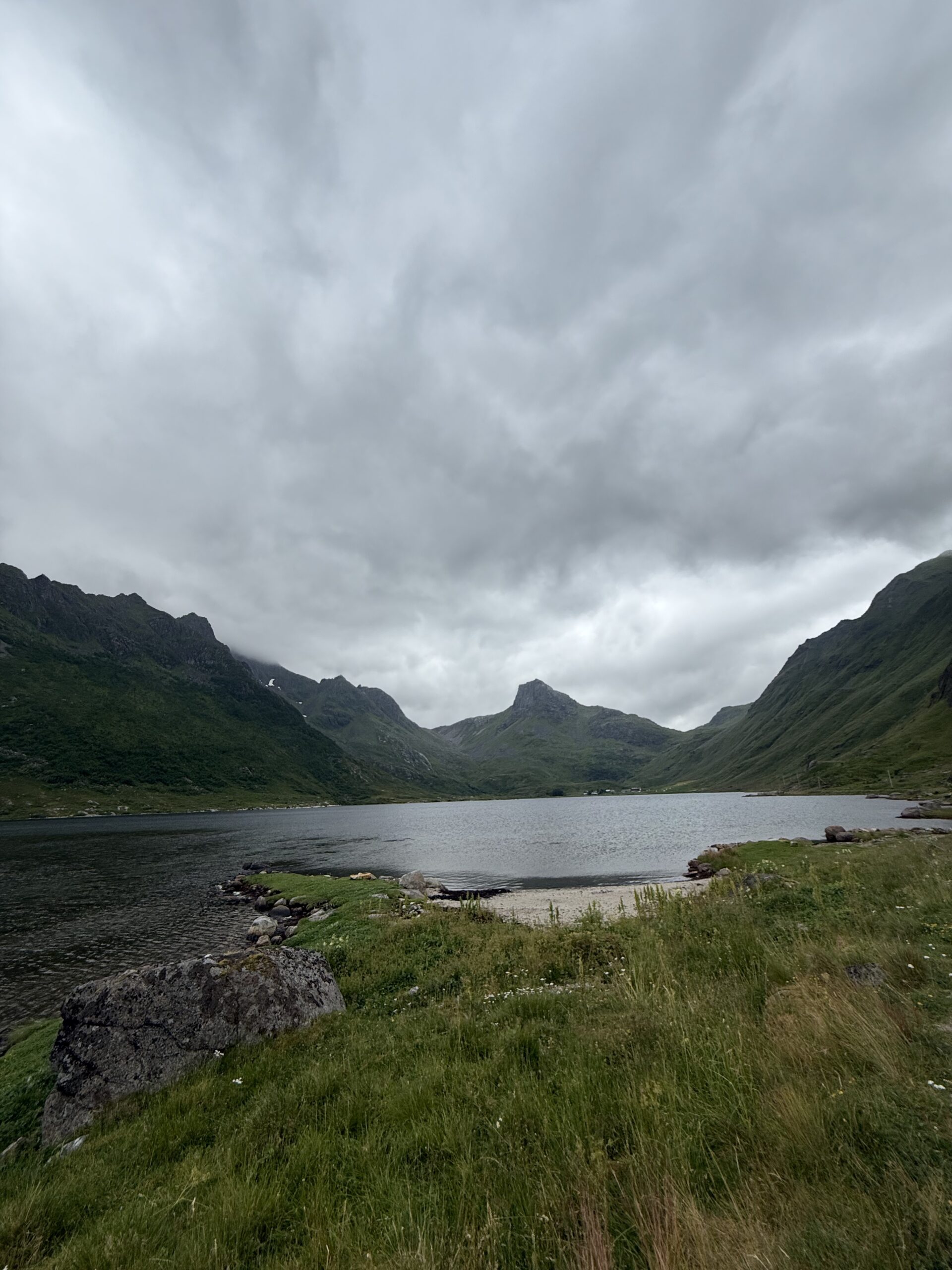
For most Norway trips, a smaller campervan (a converted van rather than a boxy motorhome) is the easier, more forgiving choice — it fits Norway’s narrow fjord roads, single-track tunnels and tight ferry decks without drama, and it’s cheaper to hire and run. A full motorhome earns its keep if you’re a larger group or family who genuinely need the extra beds and a fixed indoor bathroom, and you’re willing to plan your route around its size. Compare live availability and current rates for both vehicle classes for Norway on CampervanPlanet before you decide — fleet size and pricing shift by season.
Motorhome vs campervan: what’s actually different
The two words get used almost interchangeably by first-time renters, but on the ground in Norway the difference matters. A campervan is usually a converted van — a Volkswagen, Ford Transit or similar — with a bed, small kitchenette and maybe a pop-top roof, built on a chassis that drives and parks close to a normal car. A motorhome is a purpose-built vehicle on a larger cab chassis, often with a fixed bathroom, a proper indoor kitchen, and considerably more length, width and height.
Rental fleets across the Nordics group these into classes — compact campervan, family campervan, small motorhome, large motorhome — and the class matters more for a Norway trip than the badge on the front. A 5.5-metre campervan and a 7.5-metre motorhome are, practically speaking, two different ways of travelling the same route.
There’s also a middle ground worth knowing about: the “panel van” or “compact motorhome” class, built on a van chassis but with a slightly raised roof and a small fixed kitchen block. It splits the difference reasonably well — still narrow enough for most Norwegian roads, but with a bit more of the comfort a motorhome offers. If you’re torn between the two extremes, it’s worth checking whether this middle class is available for your dates before committing either way.
Driving each one on Norway’s roads
This is the section that actually decides most people’s choice, and it’s the one that gets underestimated most. Norway’s scenic routes — the fjord roads around Geiranger, the Atlantic Road, most of Lofoten — are narrow, twist constantly, and regularly pass through single-track tunnels where oncoming traffic has to use passing bays cut into the rock. Joona has driven both a compact campervan and a full-size motorhome on these roads, and the difference in how relaxed the drive feels is real — there’s a particular kind of quiet dread that comes with watching a headlight approach in a tunnel barely wider than your wing mirrors, wondering whether the next passing bay is close enough.
A smaller campervan handles hairpin bends, narrow bridges and tight village streets the way a large estate car would — it needs care, but not constant anxiety. A large motorhome needs you to plan ahead: check bridge height and weight limits before you commit to a route, expect to reverse out of a passing bay occasionally, and accept that some of the most beautiful minor roads in Norway are simply a worse idea in something that size. Ferries add another layer — most car ferry decks handle standard vehicle lengths without issue, but an oversized motorhome can occasionally be bumped to a later sailing if the deck is already full of trucks.
Weather adds one more variable regardless of vehicle size: a sudden crosswind on an exposed coastal stretch, or an early-season dusting of snow on a mountain pass, is felt far more in a tall, boxy motorhome than in a lower, narrower campervan. If you’re travelling in shoulder season (May or September, when prices and crowds both ease), factor that into which vehicle you’d feel steadier in on an unfamiliar road.
Space, sleep and cooking: where the extra size actually goes
The size difference isn’t wasted — it goes somewhere real. A motorhome typically means a fixed double bed you don’t have to make up each night, a proper indoor bathroom with a shower rather than a portable toilet and a campsite shower block, and enough counter space to actually cook a meal rather than balance a pan on your knees. For a family of four or a group of friends splitting the driving, that’s a genuine quality-of-life upgrade over two or three weeks.
A campervan trades that for manoeuvrability and a lower cost. Beds are usually a fold-out or a pop-top loft, the kitchen is a single-burner affair you supplement with a camp table outside, and the toilet, if there is one, is a portable cassette rather than a fixed bathroom. For a couple, or anyone genuinely happy cooking outside and using campsite facilities, none of that feels like a sacrifice — it’s just a different, more nimble way to travel.
💡 Our campervan tip: prices for the same van vary a lot between rental brands. We compare Norway campervans across 160+ rental companies on CampervanPlanet — and code HUNGRYTRAVELFAMILY5 takes 5% off.
The price gap between the two
Motorhomes cost meaningfully more to hire than campervans — the larger chassis, the fixed bathroom and kitchen, and the extra beds all add to the daily rate, and fuel consumption tends to be higher too given the extra size and weight. Exact day rates shift by season, vehicle age and how far ahead you book, so rather than quote a number that’s stale by the time you read this, we’d point you to comparing live rates for both classes for Norway before you decide — that’s the only way to see the actual gap for your dates. Use code HUNGRYTRAVELFAMILY5 for 5% off whichever you choose.
What we can say with confidence from having rented both: the price difference is rarely trivial, and it’s worth weighing against how many of the motorhome’s extras (fixed bathroom, full kitchen, extra beds) you’d actually use versus how many nights you’d spend wishing you had the smaller vehicle’s manoeuvrability instead.
Parking and overnighting rules in Norway
Norway’s allemannsretten — the right to roam — allows wild camping in most natural areas for a night or two, away from buildings and cultivated land, and it applies to camper vehicles as well as tents in most cases, though local and seasonal restrictions do exist in busier spots, and some municipalities have started posting no-camping signs along the most Instagrammed fjord viewpoints after a few badly behaved visitors spoiled it for everyone. A smaller campervan makes this genuinely easy: pull into a gravel layby by a fjord, and you’re set for the night. A large motorhome can do the same, but the list of spots wide and flat enough to accommodate it is shorter, and reversing a big vehicle into an unfamiliar spot at 9 pm is its own small stress test.
Both vehicle types are equally welcome at Norway’s network of proper campsites, which typically offer full hookup, showers and laundry — useful for topping up water and emptying waste regardless of which you’re driving. In town centres and at popular trailheads, dedicated “bobil” (motorhome) parking areas exist specifically because ordinary car parks often can’t fit a large vehicle — worth checking on a map before you arrive somewhere busy, in either vehicle type but especially the larger one. If you’re weighing up your first Norway trip more broadly, we’ve also written a first-timer’s walkthrough of renting a campervan in Norway that covers licences, deposits and pickup inspection in more depth.
Fuel, ferries and tolls: does vehicle size change the bill
Yes, in a few specific ways. Norway’s AutoPASS toll system and its car ferries generally charge by vehicle length and weight class, so a large motorhome will often land in a higher toll and ferry bracket than a compact campervan — worth factoring in if your route includes several fjord crossings. Fuel consumption follows the same pattern: the bigger, heavier vehicle drinks more per 100 km, which adds up over a multi-week route at Norway’s fuel prices.
None of this makes a motorhome a bad choice — it just means the running costs, not only the rental price, scale with size. If you want the fuller number-by-number picture, our breakdown of what campervan rental in Norway actually costs walks through tolls, ferries and fuel for a typical route, and the same logic applies whichever vehicle class you book through our campervan rental guide.
Who should pick which
Pick a campervan if: you’re a couple or solo traveller, you want to reach the smaller fjord roads and villages without a second thought, you’re comfortable with outdoor cooking and campsite showers some nights, and keeping costs down matters. Pick a motorhome if: you’re travelling as a family or a group of four-plus, a fixed bathroom and proper kitchen genuinely improve your trip rather than just being nice to have, and you’re happy to plan your route with the vehicle’s size in mind rather than chasing every single-track road on the map.
There’s a third case worth naming honestly: if this is your first time driving in Norway at all, regardless of group size, we’d lean towards the smaller vehicle for the first trip. Learning single-track tunnels, ferry queues and mountain passes is enough of a job on its own without also learning to judge the corners of a much longer vehicle. A second Norway trip, once you know the roads, is a more confident time to size up.
If you’re still undecided, our honest advice — having done both — is to default to the smaller vehicle unless you have a specific reason not to. Norway rewards flexibility more than almost anywhere else we’ve driven, and a campervan gives you more of it. Whichever class you land on, code HUNGRYTRAVELFAMILY5 takes 5% off at checkout.
Honest travel from the Arctic Circle
We send one letter a month — no roundups, no sponsored fluff. Just what we’re doing, where we’re going, and what we actually think.
Book your Norway campervan
Compare prices across 160+ campervan and motorhome rental brands, get a free 1GB eSIM with every booking — and 5% off with code HUNGRYTRAVELFAMILY5.
Check prices & availability →Frequently asked questions
Can a standard driving licence cover a motorhome in Norway?
In most of Europe, a normal car (category B) licence covers vehicles up to 3,500 kg, which includes the great majority of rental campervans and smaller motorhomes. Larger motorhomes can exceed that weight and require a higher licence category — always check the specific vehicle’s weight and your licence category with the rental company before booking.
Is a campervan or motorhome easier on Norway’s mountain passes?
The campervan, generally. Norway’s mountain and fjord roads include tight hairpins, narrow bridges and single-track tunnels with passing bays — a smaller vehicle handles these with far less stress, and some of the most scenic minor roads are genuinely not advisable in a large motorhome.
Do both vehicle types allow wild camping in Norway?
Yes, allemannsretten (the right to roam) generally covers camper vehicles as well as tents, away from buildings and farmland, for a night or two at a time. A smaller campervan simply has an easier time finding a spot it can fit into and reverse out of safely.
Are tolls and ferries more expensive for a motorhome?
Usually, yes — Norway’s AutoPASS toll system and car ferries typically price by vehicle length and weight class, so a larger motorhome often lands in a higher bracket than a compact campervan on the same route.
Which is better for a family of four?
A motorhome is usually the more comfortable choice for a family of four over a longer trip, thanks to fixed beds, a real bathroom and proper kitchen space — just budget for the higher rental price, fuel use and toll/ferry costs that come with the extra size.
Does the code HUNGRYTRAVELFAMILY5 work on both vehicle classes?
Yes — 5% off any campervan or motorhome rental booked through our CampervanPlanet link, regardless of vehicle class.