Rovaniemi Weather by Month: Temperature, Snow and Daylight From Official Data
Monthly temperature, precipitation and daylight for Rovaniemi, based on Finnish Meteorological Institute climate normals for 1991–2020, with a local reading of what the numbers mean for visitors.
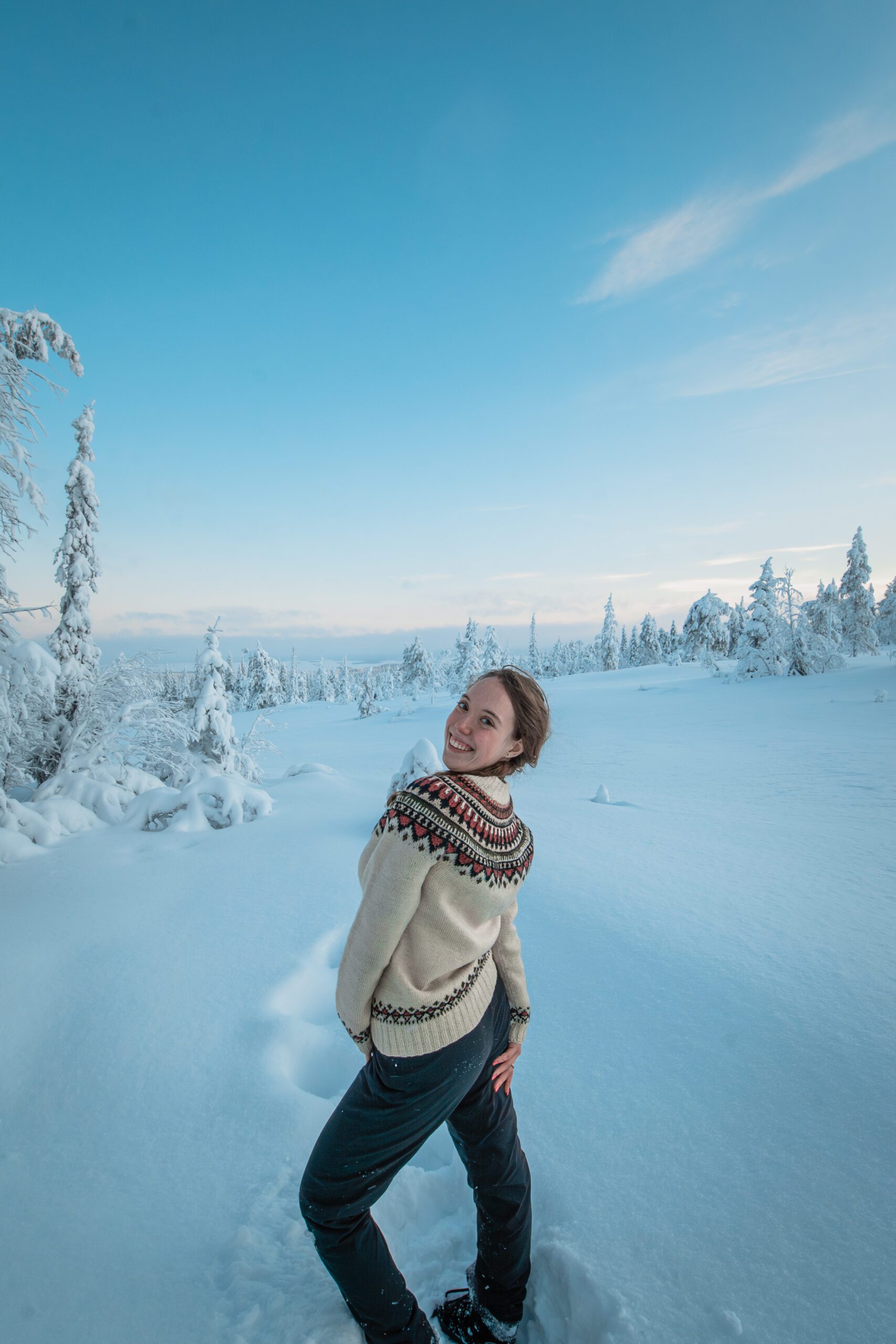
Rovaniemi sits on the Arctic Circle, but its weather is milder and more changeable than many people expect, and far less extreme than the “minus 40” headlines suggest. The numbers below are climate normals: the averages for a 30-year reference period (1991–2020), not forecasts and not records.
We are Joona and Alla, a couple living in Rovaniemi, and we both work in tourism marketing in Lapland. We use the official data first and add what we have learned from living here second, and we mark clearly which is which.
According to Finnish Meteorological Institute normals for 1991–2020 (Rovaniemi airport), January and February average about −10.3 °C and July about 15.6 °C. The year averages 1.5 °C. Daylight ranges from roughly 2.5 hours in mid-December to a midnight sun period around midsummer (our calculation). Visit Rovaniemi describes about five to six months of snow cover.
The monthly normals
This table uses the Finnish Meteorological Institute’s (FMI) 1991–2020 normals for the Rovaniemi airport weather station (elevation about 196 m), as compiled in public climate tables. “Daily high” and “daily low” are the average of each day’s highest and lowest temperature in that month, not the extremes. Precipitation includes snow, measured as melted water.
| Month | Mean temp (°C) | Daily high (°C) | Daily low (°C) | Precipitation (mm) | Days with precipitation |
|---|---|---|---|---|---|
| January | −10.3 | −7.3 | −13.5 | 46 | 11 |
| February | −10.3 | −7.3 | −13.3 | 37 | 10 |
| March | −5.6 | −1.9 | −9.1 | 37 | 8 |
| April | 0.1 | 4.1 | −3.4 | 34 | 8 |
| May | 6.5 | 11.0 | 2.5 | 48 | 8 |
| June | 12.5 | 17.0 | 8.5 | 64 | 10 |
| July | 15.6 | 20.1 | 11.8 | 81 | 10 |
| August | 13.1 | 17.2 | 9.6 | 68 | 9 |
| September | 7.7 | 11.1 | 4.9 | 60 | 9 |
| October | 0.8 | 3.1 | −1.3 | 54 | 10 |
| November | −4.4 | −2.1 | −6.7 | 55 | 13 |
| December | −7.7 | −4.9 | −10.6 | 51 | 12 |
| Year | 1.5 | 633 | 118 |
One caution on method: public climate tables sometimes differ by a few tenths of a degree depending on which FMI station and which tool they use (Rovaniemi airport versus other stations in the area). If you are quoting a precise value, check the FMI’s own climate normals page for 1991–2020 and cite it directly.
Winter: December to February
The three coldest months are December (mean −7.7 °C), January and February (both −10.3 °C). The average daily high stays below freezing, between −4.9 °C and −7.3 °C, and the average daily low is between −10.6 °C and −13.5 °C. Those are averages: individual nights can be colder, and we cover real-world cold and what to wear in our guide to how cold Lapland actually is.
Precipitation in these months is modest, 37 to 51 mm, but it falls as snow, and the number of days with precipitation is the highest of the year in December (12) and November (13). In our experience living here, this is why midwinter feels more overcast than snowy: many days have some snow, and few have a lot.
Spring and summer
March is the turning point. The mean is still −5.6 °C, but the daily high is close to freezing (−1.9 °C) and the days lengthen quickly. April averages 0.1 °C; this is the month when snow starts to go. By May the mean is 6.5 °C, and June, July and August average 12.5, 15.6 and 13.1 °C. The daily high in July averages 20.1 °C.
July is also the wettest month in the table (81 mm over 10 days). Visit Rovaniemi says the midnight sun, the period when the sun does not set, runs from early June until early July, and nights are white throughout the summer.
Autumn
September averages 7.7 °C and October 0.8 °C, so temperatures cross freezing during this window. November averages −4.4 °C and is, by the number of days with precipitation (13), the most unsettled month of the year. We find that the ground is often not yet properly covered in early November, which is why we advise visitors who want a snowy landscape to avoid planning around that period; the statistics do not give a first-snow date, so this is our local impression, not an FMI figure.
Daylight through the year
Daylight is the factor most visitors underestimate. The table shows the length of time between sunrise and sunset on the 15th of each month for Rovaniemi (66.5° N), calculated with the NOAA solar position equations. It assumes a flat, unobstructed horizon and the standard refraction correction, and it ignores trees, buildings and hills.
| Mid-month | Sunrise to sunset (hours) |
|---|---|
| January | about 4.2 |
| February | about 8.1 |
| March | about 11.6 |
| April | about 15.4 |
| May | about 19.4 |
| June | sun does not set (midnight sun) |
| July | about 21.6 |
| August | about 17.1 |
| September | about 13.3 |
| October | about 9.6 |
| November | about 5.8 |
| December | about 2.5 |
Around the winter solstice (21 December 2026) the same calculation gives roughly 2 hours 15 minutes between sunrise and sunset, around 11:07 to 13:22 local time. Here the sources do not neatly agree: Visit Rovaniemi describes the sun as not rising above the horizon in late December, which is how most locals experience it because trees and low terrain hide the sun. A strict calculation for a flat horizon puts its upper edge just above it for about two hours. Both statements are true in their own terms, which is why we recommend saying “the sun barely clears the horizon” when you want to be precise.
Even then it is not dark at midday. Visit Rovaniemi notes that during the polar night, when the sun is below the horizon, sunlight still reaches the upper atmosphere and the middle of the day is often filled with a blue glow.
Snow: how long does it stay
Visit Rovaniemi gives two figures on different pages: “around five months of snow each year” on its seasons page and “approximately six months” on its snow and ice page. We read that as five to six months, mainly from about November to April, though the start and end vary by year and the normals above do not include a snow-depth table that we can cite.
For the depth in northern Finland, a Finnish Meteorological Institute study of 1961–2014 reported by Yle found that maximum snow cover averaged more than one metre in Finnish Lapland, against 20 to 40 centimetres in south-western Finland. We discuss how that is changing in our post on climate change and Lapland tourism.
What this means for planning (our reading)
These are our own conclusions from the numbers above and from living here, not FMI statements.
- Christmas week falls in the month with a mean of −7.7 °C and about 2.5 hours between sunrise and sunset. Expect dim days and plan activities around the middle of the day.
- February and March combine mean temperatures of −10.3 to −5.6 °C with rapidly lengthening days (8.1 hours in mid-February, 11.6 in mid-March). That is why many locals like them, and FMI names February–March as one of the best aurora windows.
- June to August have means of 12.5 to 15.6 °C with long days, and July is the wettest month, so rain gear matters more than people expect.
- Shoulder months (April, October, November) are the least predictable, with means near or below freezing and the most days of precipitation in November.
For clothing, the principle that works for us is layers, with the outer layer chosen for the wind rather than for the average temperature. Many tours supply thermal overalls and boots, which helps with luggage.
Normals versus extremes
Averages hide extremes in both directions. A normal January means of −10.3 °C does not mean you will never see −30 °C, nor that a January day cannot be near zero. Normals are also updated periodically; the current reference period is 1991–2020, so the figures do not capture every recent warm or cold winter. The FMI publishes its own normals and monthly statistics, which are the right place to check a figure before printing it. If you want to describe a specific recent winter, such as 2025–26, compare its monthly mean with these normals rather than with a single memorable cold night, because a month’s average is what the statistics actually measure.
We are happy to help journalists with local context; our press page has the details.
FAQ
How cold is Rovaniemi in January?
The 1991–2020 average is −10.3 °C, with an average daily high of −7.3 °C and low of −13.5 °C (FMI normals, Rovaniemi airport). Individual days can be much colder or milder.
What is the warmest month in Rovaniemi?
July, with an average of 15.6 °C and an average daily high of 20.1 °C.
How much daylight does Rovaniemi get in December?
About 2.5 hours between sunrise and sunset in mid-December by calculation, and the sun barely clears the horizon around the solstice.
How long is the snow season?
Visit Rovaniemi describes roughly five to six months of snow.
When is the midnight sun?
Visit Rovaniemi says from early June until early July.
Quotable · free to use with credit
“The coldest month in Rovaniemi averages about −10 °C, which is cold but a long way from the minus 40 that headlines like to promise.”
— Joona & Alla, Hungrytravelfamily, Rovaniemi
“The thing visitors underestimate is not the cold but the daylight: in December you get about two and a half hours between sunrise and sunset.”
— Joona & Alla, Hungrytravelfamily, Rovaniemi
“We would always say quote the normal and the period, and then check it against the Finnish Meteorological Institute before printing.”
— Joona & Alla, Hungrytravelfamily, Rovaniemi
Please credit “Joona & Alla, Hungrytravelfamily (hungrytravelfamily.com)”. Need a fresh quote or an interview? Contact us.
For journalists, TV & podcast producers
Working on a story about Rovaniemi's weather and climate?
We’re Joona & Alla — we live in Rovaniemi on the Arctic Circle and both work in tourism marketing in Lapland. We can help with:
- On-camera interviews and expert comments in English (Joona also speaks Finnish)
- Story research, real prices and location ideas in Rovaniemi and Finnish Lapland
- Filming days and contacts with local husky, reindeer, snowmobile and northern lights operators
Send your outlet, topic, dates and deadline — we try to reply within 24 hours.
Email a media requestPress & media pageSources & further reading
- Climate normals 1991–2020 (Finnish Meteorological Institute, ilmastollinen vertailukausi)
- Rovaniemi climate table, 1991–2020 normals (compiled from FMI data, Wikipedia)
- NOAA Global Monitoring Laboratory: solar calculator equations
- Polar Night (Visit Rovaniemi)
- The Official Hometown of Santa Claus (Visit Rovaniemi; midnight sun dates)
- Less snow cover, shorter winters in Finland since 1960s (Yle News via Eye on the Arctic, 2019)
Get our best travel tips in your inbox
Monthly stories from Rovaniemi — Arctic tips, packing lists, and the places we keep coming back to.