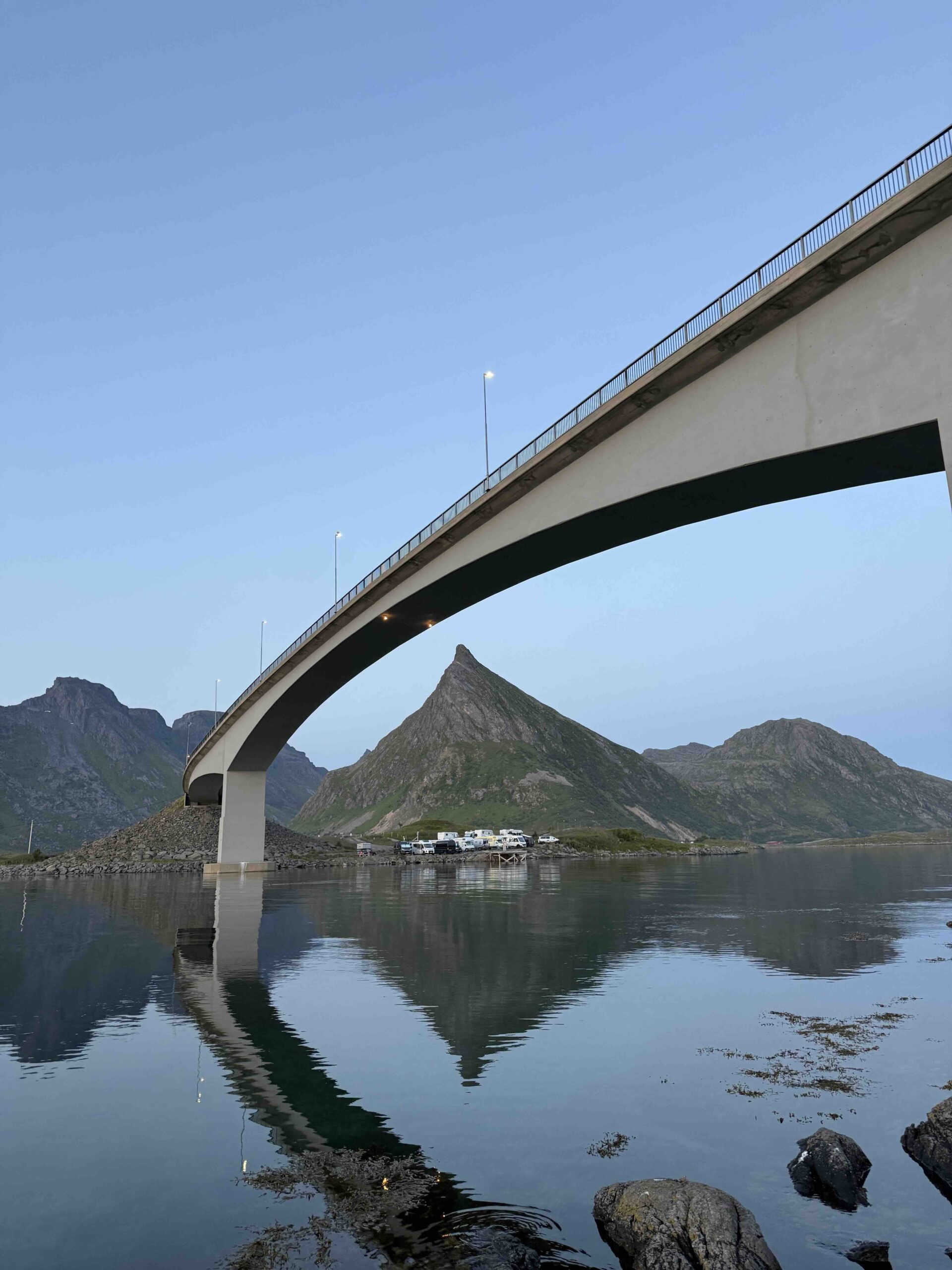
We live in Rovaniemi, at the Arctic Circle in Finnish Lapland, so a Scandinavia campervan route is not an abstract plan for us. It is the road we know: down through Sweden or Norway, across the fjords, up to the Lofoten islands and back through Lapland. This guide pulls that into a three-week plan that a first-timer could follow.
The prices here come from CampervanPlanet’s live data, which we checked in November 2026, and the road advice comes from our own trips and from stable local knowledge. If you want shorter or more specific trips first, our Norway fjords campervan route and Lofoten campervan guide each cover a part of this loop, and our campervan rental guide explains how renting a camper works.
A three-week Scandinavia campervan route from Oslo to Lapland covers about 4,500 to 5,000 km and crosses three countries. Norway campervans start from about €111 a day, and the typical summer price is about €379 a day on CampervanPlanet, so the cheapest plan is a shoulder-season trip with a one-way drop-off agreed in advance.
The three-week Scandinavia campervan route at a glance
This is the loop we would plan, assuming a campervan collected in Oslo:
- Days 1–2: Oslo, collect the van, shop for supplies.
- Days 3–6: Over the mountains to the fjords near Bergen and the Sognefjord region.
- Days 7–9: North along the coast to Trondheim, with the option of the Atlantic Road.
- Days 10–14: North to Lofoten, with fishing villages, beaches and the E10 road.
- Days 15–17: Tromsø and the Arctic coast, then east into Sweden and Abisko.
- Days 18–21: Swedish Lapland to Finnish Lapland, ending in Rovaniemi.
In total it is roughly 4,500 to 5,000 km depending on the detours, which means averaging 200–250 km a day. That is a comfortable pace for Scandinavian roads, which are slower than motorways elsewhere, and it leaves time for stops. If you have only two weeks, cut the Bergen section or the final stretch through Lapland.
What the Scandinavia campervan route costs
CampervanPlanet’s Norway page, based on its November 2026 price index of 33 campervans and motorhomes from 7 rental companies, shows rentals from about €111 a day for a budget camper, rising to about €335 for a family motorhome. The typical price depends on the month: about €178 a day in November, about €211 in May and about €394 in July for a 7-night rental. The page also gives a typical summer price of about €379 a day.
Sweden is cheaper. The Sweden page shows campervans from about €70 a day, with typical prices of about €141 a day in winter and about €242 in summer, and a best-value window in May and September. You can check live prices on the Norway page and the Sweden page.
For three weeks in July, that adds up to roughly €8,000 to €8,300 for a typical Norwegian campervan before insurance, fuel and ferries, so shoulder season matters. In May or September, the typical Norway price is about €211 a day, which for 21 days is about €4,400. That is a big saving, but the north is colder and some mountain roads and attractions open late or close early.

Norway: fjords, ferries and tolls
Norway is the highlight and the budget challenge. The roads are spectacular but slow, with winding fjord roads, tunnels and ferries. Allow generous driving times, and book ferries in July if you are travelling in a larger vehicle.
Tolls are automatic. As a visitor in a rental vehicle, the tolls are normally billed to the rental company, who pass the cost on to you, sometimes with a handling fee. Our guide to tolls and ferries in Norway explains how it works in practice. Fuel is expensive compared with Finland and Sweden, so fill up in cities when you can.
For wild camping, Norwegian rules are generous but not unlimited: camping is allowed away from houses and cultivated land, but vehicles are different from tents, and some popular areas have restrictions. Our Norway wild camping guide explains the details. Campsites are a safe option in the busiest areas, and many have kitchens and showers.
Lofoten and the Arctic coast
Lofoten is the part of the route we most often recommend. The E10 road runs through the islands past red fishing huts, steep mountains and white-sand beaches that look tropical until you step in the water. In summer the midnight sun makes evenings long and magical, and in autumn the northern lights are possible from September.
Lofoten is popular, so book campsites early in July and August, and do not leave valuables in the vehicle at trailheads. Our Lofoten guide for summer 2027 covers the details, and the ferry or bridge connections are clear on a map.
Further north, Tromsø is a good base for the Arctic coast, and CampervanPlanet lists a pick-up there, which can be useful if you want to fly in or out of the north. You can check the Tromsø page for vehicles, and our Tromsø guide covers the area. A one-way trip from Oslo to Tromsø is possible, but the fee can be high, so compare it with a round trip.
💡 Our campervan tip: prices for the same van vary a lot between rental brands. We compare Scandinavia campervans across 160+ rental companies on CampervanPlanet — and code HUNGRYTRAVELFAMILY20 takes €20 off your booking.
Swedish and Finnish Lapland
The last part of the loop is the quietest. East of Narvik, the road crosses into Sweden and runs towards Abisko, one of the best places in Europe for the northern lights and for hiking on the Kungsleden trail. From there, the roads lead through Kiruna and down through the forests to the Finnish border.
Finnish Lapland is the end of our route, and it is the easiest country to drive in. Roads are excellent and traffic is light, and there are no road tolls, which our guide to campervans in Finland explains. The Arctic Circle crossing at Rovaniemi is a good finale, and our Rovaniemi to North Cape road trip guide covers the northern roads if you want to go further.
Check each country’s rules for everyman’s right: the principle is similar across the region, but details differ, and it is more generous for tents than for vehicles. Our Swedish Lapland guide has more on the Swedish part.
Why the north is slower than the map suggests
One lesson from living up here is that kilometres mean less than hours. A 300 km day in Norway’s fjord country can take six or seven hours once you add ferries, single-lane tunnels, roadworks and photo stops, while 300 km in Finnish Lapland can pass in under four. We plan around driving time, not distance, and we aim for no more than five or six hours behind the wheel on a normal day, with a long stop in the middle.
Weather is the other variable. In June and July the Arctic is bright and mild, but a cold front can bring rain and wind for several days, and fog on the coast hides the views you came for. Keep one or two spare days in the plan so you can wait out a bad day with a book and a coffee instead of driving through it. And remember that daylight is a gift in summer but a limit in autumn: by late September, evenings draw in quickly in the north, so plan to arrive at campsites in good time.
If you are driving a large vehicle, take extra care on narrow mountain roads and in tunnels, and read the signs for height and width limits.
When to go and what to book first
For this route, the best months are from late May to September. July is the warmest and brightest, but also the most expensive and busiest. In late May and early June, the light is long, prices are lower, and the mountains still have snow. In September, the colours begin to turn, the crowds thin out and the northern lights return in the north.
Book the vehicle first, because summer fleets are limited, and our Norway summer 2027 booking guide explains how fast they sell out. Then book the Lofoten and fjord campsites, and the ferries you cannot skip. Leave the rest flexible, because weather in Norway can change plans quickly.
If you are crossing borders, ask the rental company whether it allows travel between Norway, Sweden and Finland, and whether there are extra fees. Also ask about one-way drop-offs in another country, which are usually the most expensive.

What to pack and how to save
Pack layers, a good rain jacket, an eye mask for the midnight sun and mosquito repellent for the north. Our Nordic packing list has everything we bring. Buy groceries in Sweden or Finland before crossing into Norway, where food is more expensive, and cook most meals in the van.
To save money, travel in the shoulder season, avoid the most expensive ferries when a road alternative exists, and compare the vehicle at the same insurance level. Check your card’s limit for the bond.
When you are ready, compare vehicles on CampervanPlanet and use code HUNGRYTRAVELFAMILY20 at checkout to take €20 off. It is a fixed discount, and it works on one-way rentals too. Visitors who book within 30 days of clicking our links are credited to us at no extra cost to you, which is how we keep this blog on the road.
Honest travel from the Arctic Circle
We send one letter a month — no roundups, no sponsored fluff. Just what we’re doing, where we’re going, and what we actually think.
Book your Scandinavia campervan
Compare prices across 160+ campervan and motorhome rental brands, get a free 1GB eSIM with every booking — and €20 off with code HUNGRYTRAVELFAMILY20.
Check prices & availability →Frequently asked questions
How long does a Scandinavia campervan route take?
About three weeks for a loop from Oslo through the fjords, Lofoten and Lapland, covering roughly 4,500 to 5,000 km. Two weeks works if you shorten the fjord or Lapland sections.
How much does a campervan cost in Norway?
CampervanPlanet’s Norway page shows campervans from about €111 a day, with typical 7-night prices of about €178 a day in November, €211 in May and €394 in July.
Can I take a rental campervan across the border?
Often yes within the Nordic countries, but you must check the rental terms and any cross-border fees. Ask before you book.
Is it cheaper to start in Sweden or Norway?
Sweden is cheaper: CampervanPlanet’s Sweden page shows campervans from about €70 a day. Many travellers start in one country and cross into the other to save money.
Is there a discount code for CampervanPlanet?
Yes. Our reader code HUNGRYTRAVELFAMILY20 takes €20 off your booking when you enter it at checkout on CampervanPlanet. It is a fixed €20 discount.
When is the best time for a Scandinavia campervan trip?
Late May to September. July is warmest but most expensive, while May, June and September give better prices and fewer crowds.