Can You Road Trip Scandinavia Without Speaking the Language?
We’ve driven through Norway, Sweden, Finland, and Denmark speaking exactly zero words of Norwegian, Swedish, or Danish. Here’s the honest answer — and the few places where it actually matters.
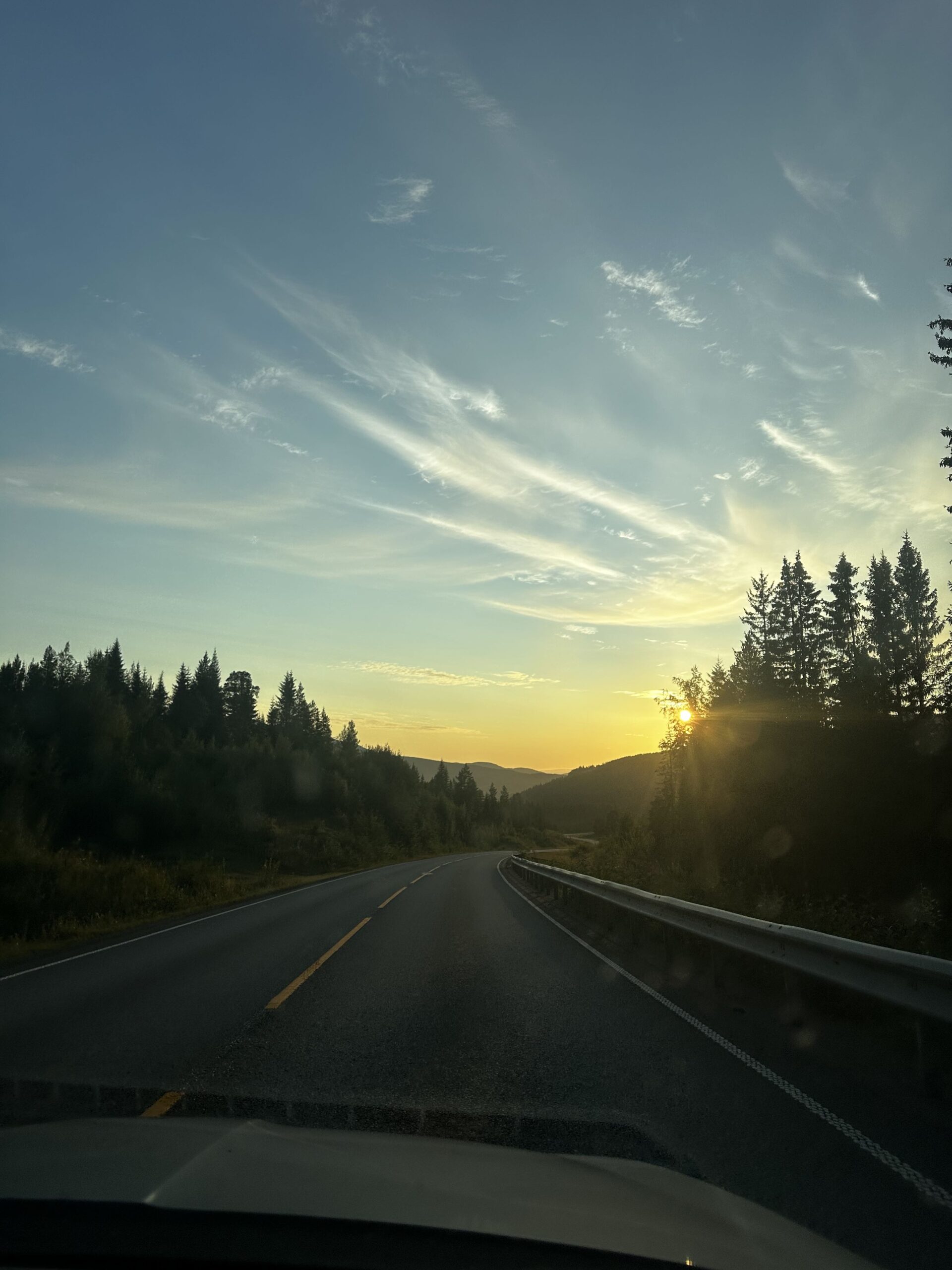
Before we drove Norway’s Atlantic Ocean Road, neither of us spoke a word of Norwegian. Before we crossed into Sweden on a road trip from Rovaniemi, our Swedish was limited to hej and tack. And before we spent a long weekend exploring Copenhagen and the Danish countryside, Danish was essentially a mystery. We went anyway — and every single trip went just fine.
This guide answers the question we get every week from readers planning their first Scandinavia road trip: do you actually need to speak Norwegian, Swedish, Danish, or Finnish to get around? The honest answer is almost certainly no. But “almost” does some work in that sentence, so let’s break it down properly. We’ll tell you why Scandinavia road trip language skills matter far less than you think — and the handful of situations where a few phrases still help.
Yes, you can absolutely road trip Scandinavia without speaking any local language. English is nearly universal across Norway, Sweden, Denmark, and Finland, and road signage follows international standards. A handful of phrases goes a long way socially, but language will not be the thing that stops your trip.
- English in Scandinavia: what to actually expect
- Road signs, apps, and navigation without the language
- Quick-reference: 18 phrases that will help on the road
- Situations where language matters most
- Scandinavia vs Finland: is Finnish harder?
- Mistakes we made on our first Nordic road trip
- FAQ
- A final word from Rovaniemi
English in Scandinavia: what you can actually expect country by country
Scandinavia has some of the highest English-proficiency scores in the world, and it’s not close. The EF English Proficiency Index consistently places the Netherlands, Sweden, Norway, and Denmark in the top five globally. Finland is close behind. What this means in practice is that you can walk into a petrol station in rural Norway, a campsite reception in Swedish Lapland, or a ferry terminal in Denmark and have a perfectly normal English conversation with whoever is working there.
Norway
English fluency is remarkably high, even in small coastal villages. Younger Norwegians especially have near-native English from television, school, and gaming. We have never once been stuck in Norway due to a language gap. Even older Norwegians working at remote toll booths or local shops managed functional English without blinking.
Sweden
Sweden regularly tops the European English-proficiency rankings. In cities, it’s essentially a second language. On rural roads and at small campsites you may encounter slightly less fluent English, but we’ve never had a problem that a pointing finger and a smile couldn’t solve. Menu items in most restaurants are either in English or have English translations, even well off the tourist trail.
Denmark
Copenhagen is one of the most English-friendly cities in Europe, full stop. Outside the capital in Jutland or on the islands, English drops slightly but remains very functional. We spent a week driving through rural Denmark and never once needed a phrasebook.
Finland
Finland is interesting because it has two official languages (Finnish and Swedish) plus very high English fluency among anyone under 50. Older Finns in small rural communities may be the one exception — we cover this more in Section 5 below. But for most of the country, including Rovaniemi where we live, English works everywhere.
Road signs, navigation apps, and driving without the language
This is the area where language matters least of all, because Scandinavian road signs follow international ISO standards — the same visual language used across most of Europe. Speed limits are numbers. Warning signs are triangles. Stop signs are red octagons. You won’t need to read Norwegian to know what a “vikeplikt” sign means once you learn the shape.
The navigation apps that work best in Scandinavia
- Google Maps: works excellently across all four countries. Set your interface to English before you go, and all prompts, warnings, and roundabout instructions come in English regardless of where you are.
- Waze: good coverage and the community-submitted hazard alerts are particularly useful on Norwegian mountain roads where rockfall or ice patches get flagged in real time.
- Maps.me / OSMAnd (offline): both use OpenStreetMap data and work fully offline. We always download the offline maps for every country before a road trip — mobile data can drop in fjord valleys and mountain tunnels.
- AutoPASS (Norway): Norway’s toll system is fully electronic. Register your plate or rent a transponder. The app and website are available in English. Ignore toll language entirely — it deducts automatically.
Related guide Road-tripping Scandinavia: essential tips before you go — the full practical guide covering ferries, fuel, campsite bookings, and mountain passes.
Quick-reference: 18 phrases that actually help on a Scandinavia road trip
You don’t need these phrases to survive. You need them to be polite and to occasionally make someone’s day. We’ve found that leading with even one word in the local language genuinely warms up interactions everywhere in Scandinavia.
Norwegian (Norsk) — essential six
- Hei / Hei hei — Hello / Bye-bye (informal, used constantly)
- Takk — Thank you
- Unnskyld — Excuse me / Sorry
- Hvor er…? — Where is…?
- Kan du hjelpe meg? — Can you help me?
- Snakker du engelsk? — Do you speak English?
Swedish (Svenska) — essential six
- Hej / Hej då — Hello / Goodbye
- Tack — Thank you
- Ursäkta — Excuse me
- Var är…? — Where is…?
- Kan du hjälpa mig? — Can you help me?
- Pratar du engelska? — Do you speak English?
Danish (Dansk) — essential six
- Hej / Hej hej — Hello / Bye
- Tak — Thank you
- Undskyld — Excuse me
- Hvor er…? — Where is…?
- Kan du hjælpe mig? — Can you help me?
- Taler du engelsk? — Do you speak English?
Road-trip guides, packing lists & Arctic dispatches
We send one email a week from our home on the Arctic Circle. No fluff — just what we’re actually doing, planning, and discovering.
Situations where language actually matters (and what to do)
- Ferry crossings: Norway has hundreds of ferry crossings on its coastal roads. The deckhand collecting payment usually speaks English fine, but knowing to say “takk” after paying gets you a much friendlier smile — and sometimes they flag you through without stopping.
- Emergency situations: All Scandinavian countries have 112 as the universal emergency number. Operators speak English. Programme it in your phone before you go. In Finland, 112.fi also has an app that pinpoints your GPS location for rescue services.
- Small rural campsites and cabins: These are the one category where you might occasionally encounter a host with limited English, particularly older hosts in very remote areas of inland Norway or Finnish Lapland. In these cases, translation apps (Google Translate camera mode, or DeepL) are your friend. We’ve used them a handful of times and always gotten through fine.
- Medical situations: Pharmacies (apotek in Norway/Sweden, apteekki in Finland) are well-stocked and staff speak English. ERs are another matter if you go very rural — always carry your travel insurance documents and the emergency number for your insurer.
- Ordering food at local markets: Fish markets, farm stands, and local food trucks sometimes have no English menus. This is where pointing confidently and smiling gets you a long way. It’s also how we accidentally ordered a very large amount of cloudberry jam at a Norwegian market. Worth it.
Scandinavia vs Finland: is Finnish a bigger barrier?
Finnish is in a completely different language family from Norwegian, Swedish, and Danish. It bears no resemblance to any language you’ve likely studied, and its grammar is notoriously complex. Does this mean Finland is harder to road-trip without the language?
Not really, for two reasons. First, Finland has two official languages — Finnish and Swedish — and Swedish shares strong roots with Norwegian and Danish, so if you’ve picked up any of those you’ll recognise patterns on bilingual signs. Second, and more importantly, Finnish English-fluency rates are extremely high, especially among anyone who went to school after the 1990s. In cities like Helsinki, Tampere, and Oulu, and in tourism-heavy areas like Rovaniemi (where we live), English is essentially the default service language.
The one genuine exception is older rural communities in central and northern Finland, where you might meet a farmer or small-shop owner who prefers Finnish or Swedish and finds English uncomfortable. This has happened to us three or four times over the years. The solution is always the same: Google Translate camera mode pointed at a handwritten sign, a friendly nod, and patience on both sides.
Mistakes we made on our first Nordic road trip
- Overthinking the language barrier before we went. We spent time on a phrasebook app that we barely used. The time would have been better spent downloading offline maps.
- Not downloading Google Maps offline for every country. Mobile data in deep fjords and Norwegian mountain tunnels drops completely. Download before you go.
- Assuming toll roads needed cash. Norway’s entire toll network is cashless and electronic. You register your plate online, and it charges automatically. We wasted an afternoon worrying about this.
- Not learning even one word of the local language. Not for survival — just for warmth. A single “takk” or “hei” changes how locals respond to you. It costs nothing and the difference in body language from the person across the counter is immediate.
- Relying only on Google Maps in remote areas. In Finnish and Norwegian wilderness, OSMAnd with downloaded offline maps picks up trails and forest roads that Google ignores. Keep a backup.
- Underestimating how long rural ferry crossings take. Norwegian ferries run on timetables, and missing a sailing can add an hour or more. Always check the timetable at Ruter or Fjord1 before planning your day.
Related guide Wild camping by car in Scandinavia — Everyman’s Right explained for each country, with our best overnight spots.
Frequently asked questions
Is English spoken everywhere in Norway?
Very nearly. In cities and tourist areas it’s universal. In remote rural areas you’ll sometimes meet older residents whose English is limited, but they’re always willing to try — and a translation app bridges the gap in seconds. We have never failed to communicate in Norway.
Do I need to know Swedish to drive in Sweden?
No. Sweden ranks among the top three countries in the world for English proficiency. Road signs follow international visual standards. Your biggest challenge on a Swedish road trip is not language — it’s moose crossing after dark.
Can you manage in Denmark without Danish?
Easily. Danish sounds notoriously different to its written form (Danes joke about this themselves), but that’s irrelevant because almost everyone in Denmark speaks excellent English. Copenhagen is one of the most English-friendly cities in Europe.
What about Finland — is Finnish hard?
Finnish is linguistically unlike any other Scandinavian language, but English fluency in Finland is very high. In major cities and tourist areas, English works perfectly. In older rural communities you may occasionally need a translation app, but this is rare.
What translation app works best in Scandinavia?
Google Translate with camera mode is what we use most — point it at a menu or sign for instant translation. DeepL gives more natural-sounding text translations and works well for Norwegian and Swedish. Both have offline modes worth downloading before you go.
What is the single most useful phrase to know for a Scandinavia road trip?
“Do you speak English?” in the local language — but honestly you rarely need it. Starting with “hei” (hello, used in Norway and Denmark) or “hej” (Sweden and Finland) signals respect and almost always triggers an instant switch to fluent English from the other person.
A final word from Rovaniemi
We’ve driven the E10 to the Lofoten Islands, taken the Trollstigen mountain pass in a rental car with a nervous second-gear engine, camped on frozen Swedish lakes, and wound along the Norwegian Scenic Routes from coast to mountain. Not once did speaking Norwegian, Swedish, Danish, or Finnish feel like a hard requirement.
What the language question really reveals is anxiety about the unfamiliar — which is completely understandable when you’re planning a first trip abroad. But Scandinavia is, in practical terms, one of the most accessible regions on earth for English speakers. The infrastructure is excellent, the locals are almost universally helpful, and the road network is signed so clearly that even in the deepest fjord valley you know exactly where you’re going.
Spend your preparation time downloading offline maps, checking the ferry timetables, and learning how the electronic toll system works in each country. Learn to say “takk,” smile when you do, and the rest will look after itself. We’ll see you on the road.
Joona & Alla
A Finnish-Ukrainian couple living in Rovaniemi, Finland. Joona is a marketing professional in Lapland tourism; Alla is an AI Engineer. Together we’ve visited 25 countries and share honest, locally-grounded travel writing from our home in the Arctic.
Read our full story →