How to Road Trip Scandinavia: Essential Tips Before You Go
We’ve driven Scandinavia’s roads from the Arctic Circle down to Copenhagen — and learned what nobody warns you about. Here’s the honest, practical road trip Scandinavia tips guide we wish we’d had.
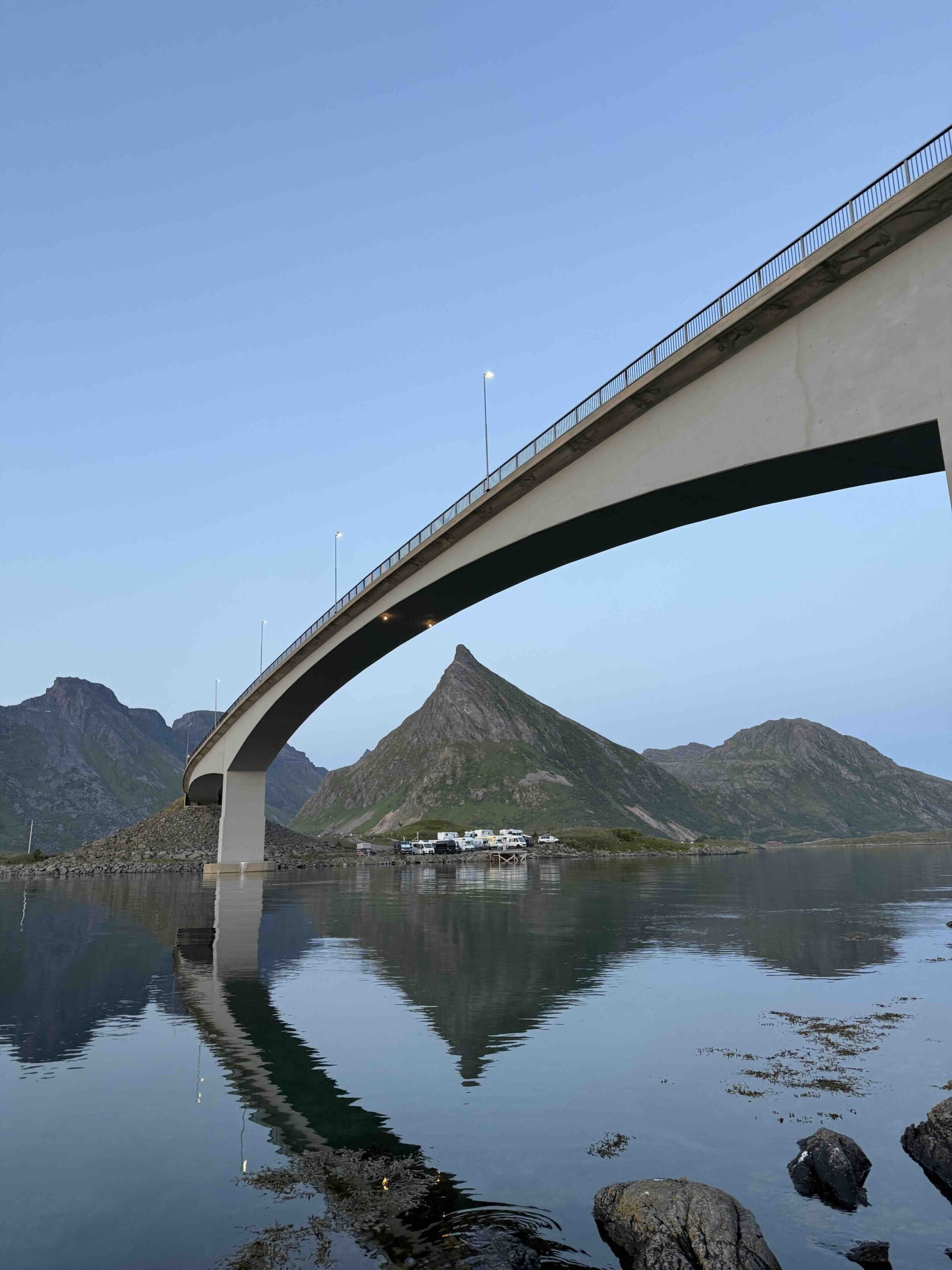
We live on the Arctic Circle in Rovaniemi, Finland, which means Scandinavia is not just a travel destination for us — it’s the backyard we drive through every time we head south or west. Over the years we’ve taken the car through Norway’s fjord country, looped Sweden coast to coast, crossed the Finnish archipelago, and ferried between the Nordic capitals more times than we can count. And every single trip has taught us something the travel blogs forgot to mention.
This road trip Scandinavia tips guide is the briefing we give friends who are about to drive the region for the first time. Not a highlight reel — the actual practical stuff that determines whether your trip runs smoothly or sideways.
A Scandinavian road trip is one of the most rewarding drives in the world — but it requires a manual car rental check, a winter tyre awareness, a solid budget buffer, and a firm understanding of road toll systems. Plan for 300–400 km per day maximum, carry a physical map as backup, and always book ferries in advance in peak season.
Choosing your car and understanding Nordic rental rules
The car you choose will define the trip more than your route does. Scandinavia has specific regulations and terrain demands that catch first-time visitors off guard.
Automatic vs manual — and why it matters here
Most rental fleets in Scandinavia are a mix of automatic and manual, but availability varies wildly by country and season. In Norway and Sweden you can usually get an automatic without too much trouble. In Finland, the cheapest categories are often manual. If you’re not confident with a manual gearbox, book automatic explicitly and confirm it twice — we’ve seen travellers arrive to find their “standard” car has a stick shift.
Cross-border restrictions are real
- Many Nordic rental agreements prohibit taking the car into other countries without prior approval and often a cross-border fee. Finland to Estonia by ferry? Usually needs explicit permission. Norway to Sweden? Often allowed within the Nordic region, but read the fine print.
- Russia and Belarus are almost universally prohibited by every major rental company, and any accidental crossing voids your insurance.
- If you’re planning a multi-country loop, rent from a company that explicitly covers the Nordic region — Hertz, Avis, and Europcar all have clear cross-border policies online.
- Winter tyres are legally required in Finland, Norway, and Sweden under certain conditions (typically when there is snow or ice on the road). Reputable rental companies in these countries will fit winter tyres automatically from October onwards — but always confirm at pickup, especially in shoulder season.
Planning realistic daily distances in Scandinavia
Scandinavia looks compact on a map of Europe. It is not. Norway alone is roughly the same driving distance from Oslo to the North Cape as from London to Istanbul. Here is how to calibrate your expectations before you arrive.
The 300 km rule
We cap our driving days at 300–400 km in Scandinavia and we still sometimes feel rushed. The reasons stack up quickly:
- Norwegian fjord roads are slow, narrow, and full of hairpins. The Atlantic Road (Atlanterhavsveien) is 8 km long. It will take you 45 minutes because you’ll stop at every viewpoint.
- Summer traffic in July on popular routes like the E6 north of Trondheim or the road to Lofoten is noticeably heavier than you might expect for such a sparsely populated country.
- Ferry crossings add unpredictable time. A fjord crossing that looks like “20 minutes” on the map can mean 45 minutes waiting, 20 minutes crossing, and 10 minutes off-loading.
- Speed limits in Scandinavia are strict and enforced. Norway has automatic speed cameras on major roads. Sweden has an extensive average-speed camera system. Budget time, not just kilometres.
The golden ratio: 60/40
A Scandinavia road trip works best when you split your time roughly 60% driving days and 40% base days — meaning days where you stay put, do a day hike or boat trip, and don’t move the car. The biggest mistake we see is people trying to cover a different city every single night. Scandinavia rewards lingering.
Related read Planning a Nordic multi-country loop? See our guide on How to Plan a Multi-Country Nordic Trip in Summer 2026 for route-by-route logistics and the ferries worth booking in advance.
Road toll and ferry quick-reference: the essential cheat sheet
Tolls and ferries are the two costs that most Scandinavia road trip budgets underestimate. Here is the information we wish someone had handed us on day one.
Norway has an extensive toll road system (bomveier). Foreign-registered rental cars are captured automatically by cameras. Your rental company will charge you for tolls incurred — sometimes with a significant admin fee per toll road. The easiest workaround: sign up for AutoPASS Visitor online before your trip, which links your car to a pre-paid account and typically removes the per-incident admin fee. Budget at least NOK 300–600/day if you’re near Oslo or driving major routes.
Stockholm and Gothenburg have congestion charges (Trängselskatt). If you enter either city, charges are applied automatically. Rental companies bill these back, again sometimes with admin fees. If you’re bypassing these cities, you won’t encounter tolls elsewhere in Sweden.
Finland has no road tolls, which always surprises first-timers. Budget zero for Norwegian-style toll costs when driving in Finland.
The Øresund Bridge (Sweden–Denmark) and the Great Belt Bridge (crossing Fyn) both carry significant tolls. The Øresund bridge costs around SEK 450/DKK 375 for a standard car (2026 rates). Factor this into any Copenhagen loop.
These are not optional for many western Norway routes — the fjords physically block the road. Most short crossings run frequently and you can pay on arrival. For longer crossings (e.g. Stavanger–Bergen route ferries, or the Hurtigruten if you’re shipping the car), pre-booking in peak season is essential. Check Fjord1, Norled, and Bastø Fosen for western Norway routes.
If your loop includes Estonia or other Baltic states, Tallink Silja and Viking Line run multiple daily sailings. Book 3–4 weeks ahead in summer — car spaces fill before passenger spots.
Get our road trip notes, direct from the Arctic
Monthly dispatches on Nordic travel, honest itineraries, and the routes we’re planning next — no filler.
Fuel, EV charging, and the cost reality check
Scandinavia is expensive. That’s not a secret. But the specific ways it costs more than your budget predicts are worth knowing in advance.
- Petrol in Norway is among the most expensive in Europe, typically around NOK 19–22 per litre in 2026. Fill up on the Swedish side of any Norway–Sweden border crossing — the difference is noticeable.
- EV charging in Norway and Sweden is excellent — both countries have dense IONITY, Recharge, and Fortum networks. Finland is catching up fast but has gaps in Lapland and along eastern routes. If you’re renting an EV, download Recharge and Virta apps before you land.
- Supermarkets are your best friends for food costs. Coop, ICA, Lidl (Sweden, Norway, Finland), and Prisma carry quality produce. A road trip lunch from a supermarket costs one-third of a café equivalent.
- Free camping (wild camping) is legal under Scandinavian Everyman’s Right (Allemansrätten in Sweden, Friluftsloven in Norway, Jokamiehenoikeus in Finland) but comes with rules. In Norway you must camp at least 150 metres from the nearest house. In Sweden, 2 nights maximum in one spot without landowner permission.
- Budget at minimum €150/person/day for a self-drive Scandinavia trip staying in a mix of budget hotels and camping. In Norway or Iceland, push that to €200+ to avoid running short.
Seasonal differences: summer vs shoulder vs winter driving
Scandinavia changes dramatically by season. This isn’t just about weather — it affects which roads are open, which ferries run, and what the experience actually looks and feels like.
- June–August (peak summer): midnight sun north of the Arctic Circle, all mountain roads open, maximum ferry frequency, maximum crowds on popular routes (Lofoten, fjord villages). Book accommodation 6–8 weeks ahead for July. Driving in eternal light disorients your sense of time — you will accidentally drive until 2 am thinking it’s 7 pm.
- September–October (shoulder): our favourite season. Autumn colour in Lapland (ruska) peaks in mid-September. Fewer people, lower prices, shorter days but still mostly manageable light. Some high mountain passes in Norway and Sweden begin to close in late October.
- November–March (winter): studded or winter tyres are mandatory in most conditions. Many scenic mountain roads (like Trollstigen in Norway) are closed until May. The rewards are aurora sightings, frozen lake crossings, and empty roads. Driving on ice requires practice — rent from a company that provides you a proper winter-spec car, not a summer-prepared vehicle slapped with snow tyres.
- April–May (late winter/spring): a transition period. Roads in Lapland can still be icy through April. May brings the snow melt, which makes some gravel forest roads temporarily impassable.
Useful companion If you’re planning the Finnish leg, read our local guide: How to Road Trip Finland in 10 Days — written from Rovaniemi, covering both the coast and the Lapland interior.
What we got badly wrong on our first Scandinavia road trips
- Underestimating Norwegian road times. We once planned 500 km across western Norway in a single day. It took nine hours including two ferry waits. We arrived after dark having missed the viewpoints we drove all that way to see.
- Not pre-registering for AutoPASS. On our first Norway trip we got a bill from our rental company two months later for tolls plus a processing fee of €30 per toll event. That was a painful lesson.
- Booking too few nights in popular spots. In Lofoten in July, we couldn’t extend our stay because everywhere was fully booked. If you find a place you love, call ahead to the next night and confirm before you leave.
- Trusting Google Maps for Norwegian B-roads. Google Maps will cheerfully route you over a mountain pass that is closed until June. Use ViaMichelin or the Norwegian Public Roads Administration website (vegvesen.no) to check road status.
- Ignoring the petrol gauge in Lapland. Between some northern Finnish towns, the next fuel stop can be 80–120 km away. We nearly ran out at 11 pm on a Sunday — the one time the station was closed.
- Driving too tired in the midnight sun. The constant light tricks your body into ignoring how long you’ve been awake. Set a firm stop time based on hours driven, not on how dark it is outside.
Frequently asked questions about road tripping Scandinavia
How long do I need for a Scandinavia road trip?
A meaningful loop — say, Oslo to Bergen, up to Tromsø and back, or Helsinki to Stockholm via Tallinn — needs at least 10–14 days. Two weeks gives you time to actually stop and linger. Three weeks lets you do a proper multi-country loop without feeling rushed. Anything under a week works only if you pick one country and stay in one region.
Is it safe to drive in Scandinavia as a foreign visitor?
Very safe. Road conditions, signage, and driver behaviour are all excellent by international standards. The main adjustments: speed limits are strict and well-enforced, roundabout etiquette differs slightly from country to country, and in winter you need to genuinely respect ice. A rented car from a reputable company in Scandinavia will always be properly maintained.
Do I need an international driving licence?
No, not if you hold an EU/EEA licence or a licence from most major English-speaking countries (UK, US, Canada, Australia, New Zealand). Scandinavia accepts these directly. If your licence is not in the Latin alphabet (e.g. Japanese, Korean, Chinese, Arabic script), you will need an International Driving Permit alongside your national licence.
Can I take a rental car from Finland to Norway by ferry?
Usually yes, but you need to declare this at pickup and ensure the rental agreement covers cross-border travel. Always confirm with your rental company in writing before booking, because policies vary and some smaller companies restrict you to one country.
What is the cheapest way to road trip Scandinavia?
The cheapest combination is: book the car well in advance (6–8 weeks out), camp or use budget cabin chains (STF in Sweden, DNT huts in Norway), shop at supermarkets, and time your trip to shoulder season (September or late May) rather than peak July. Norway is the expensive one — Sweden and Finland are substantially more affordable.
Is the Lofoten road trip actually worth it?
Without question. The E10 through Lofoten in Norway is one of the most beautiful drives on earth — mountain walls dropping into blue fjords, fishing villages painted in bright reds and yellows, and roads that feel like they shouldn’t exist. Go in early June or late August to miss the worst of the July crowds. Yes, absolutely worth it.
A final word from Rovaniemi
We’ve driven roads in 25 countries, and Scandinavia still has our favourite miles. There is something about the combination of scale, emptiness, and absolute road quality that makes you feel genuinely free in a way that a curated tour bus never can.
The things that make it harder — the tolls, the ferry schedules, the pace at which the scenery demands you slow down — are also the things that make it unforgettable. You end up with days that lasted twelve hours of daylight-filled driving, stopping seventeen times for photos you didn’t plan, and arriving somewhere you didn’t know you needed to see.
If you’re planning a Scandinavia road trip and have a specific question about a route, a border crossing, or whether a particular road is worth the detour, drop us a line. We’ve probably driven it, or know someone who has.
Joona & Alla
A Finnish-Ukrainian couple living in Rovaniemi, Finland. Joona is Head of Marketing at Stay Lapland; Alla is an AI Engineer and content specialist. Together we’ve visited 25 countries and share honest, locally-grounded travel writing from our home on the Arctic Circle.
Read our full story →