Camping in Wind, Rain, and Cold — What Actually Works
After years of camping through Lapland winters, Norwegian fjord storms, Icelandic gales, and Faroe Islands weather that changes four times before lunch, we have learned what the internet does not tell you about bad-weather camping.
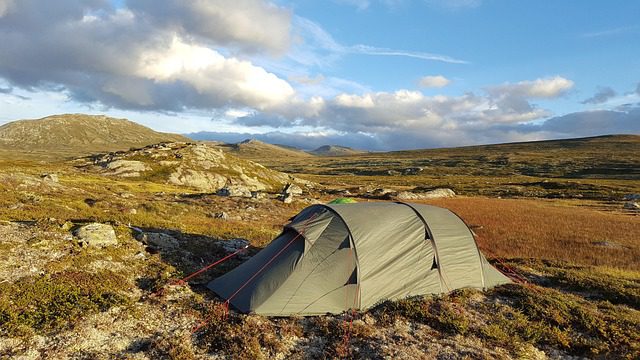
We have camped through a lot of bad weather. Torrential rain in the Norwegian fjords that did not stop for three days. Wind on the Faroe Islands that rocked our rooftop tent like a hammock. A night in Lapland where the temperature dropped to minus twenty-two and nothing we had planned for warmth was quite enough. And a tent in Iceland that nearly turned into a kite on the Snæfellsnes peninsula.
Every one of those nights taught us something. Most of the advice we had read before was either too gear-focused, too theoretical, or too optimistic. Here is what actually works — the honest version, written from experience across twelve countries and more bad-weather nights than we would like to admit.
Bad-weather camping works when you have the right shelter, layering system, and mental approach. The biggest reasons people suffer are: an underspec tent for the conditions, no dry-bag system for clothing, and the assumption that you can wait the weather out. In the Nordic countries, you cannot wait — you adapt. This guide covers what to buy, how to set up, and how to stay genuinely comfortable when conditions turn ugly.
Choosing a tent that actually handles bad weather
The most common bad-weather camping problem we see is people with three-season tents trying to camp in Nordic conditions. A tent rated “for all conditions” by a budget brand is not the same as a tent rated for 40-knot wind and sustained rain. The marketing language is almost useless — you need to look at the specs.
What to look for in the spec sheet
- Hydrostatic head (HH) of the flysheet: anything below 3,000mm will let water through during heavy rain. Look for 5,000mm or above for serious use. The groundsheet should be even higher — 10,000mm is a solid baseline.
- Guy line points: a true storm tent has eight or more anchor points, not four. In serious wind, more attachment points spread the load and stop the poles flexing to the point of failure.
- Pole material and diameter: DAC aluminium poles at 8.5mm or above are significantly more resilient than fibreglass in cold. Cold makes fibreglass brittle. We have had fibreglass poles snap at minus fifteen.
- Geodesic vs tunnel vs dome: for serious wind, geodesic is best — the poles cross-brace each other and there is no large flat surface to catch gusts. Tunnel tents are lighter but need to face the wind correctly. Dome tents are fine for moderate conditions but have large flat panels that act like sails.
Our honest tent picks by condition
- Light rain and wind (typical Lapland summer or Faroe drizzle): a quality three-season tent with 3,000mm HH and solid pole construction handles this. We use this for about 80% of our camping nights.
- Sustained heavy rain, coastal wind, or Icelandic conditions: a four-season or expedition tent. Hilleberg, MSR, or similar. Yes, they are expensive. Yes, they are worth it after your cheap tent leaks at 2am in Iceland.
- Winter camping below minus ten: four-season minimum, with an inner that manages condensation. Frost on the inside of a tent is brutal — ventilation matters more than you think.
Setting up camp in bad conditions — the first ten minutes matter most
You can have the best tent in the world and still have a miserable night if you pitch it poorly. Bad-weather camp setup is a skill, and most people only learn it by making mistakes. Here is what we have figured out.
Site selection is your most important decision
- Wind: always find natural wind breaks — a tree line, a hillside, a rock face. Even a metre of height difference can cut wind significantly. In Norway above the tree line, look for depressions and boulders. In Lapland, the pines break wind remarkably well. Never pitch on a ridge if you can avoid it.
- Rain: look for ground that drains. Even with a great groundsheet, pitching in a hollow means water collects underneath. Slight elevations or slopes — even two degrees — make a difference.
- Cold: valley floors collect cold air overnight and can be five to eight degrees colder than the slope above. This matters below zero. A mid-slope position is warmer and usually drier.
Speed and sequence
In rain, the goal is to get the flysheet up first before anything else. On most tents you can do this with a single person in under three minutes if you practice the sequence at home before a trip. Stake out the footprint, clip the fly over the poles, stake four corners, then adjust the inner from the dry space you have created. We have pitched tents in full Faroe Islands horizontal rain in under five minutes using this sequence — and the inner stayed completely dry.
In serious wind, stake the windward corner immediately after the first pole goes up. Do not wait until the tent is fully assembled. One gust on an unstaked tent can collapse the whole structure and damage poles. Stake windward first, always.
Most campers only stake the corners and skip the guy lines when the weather looks fine. We stake all guy lines every single night, regardless of forecast. Weather in Norway and Iceland can change in twenty minutes. The ten seconds it takes to run a guy line is always worth it.
Bad-weather camping essentials: a quick-reference checklist
This is what we actually pack when we know conditions will be rough. Nothing theoretical — these are the items that have earned their place over years of Nordic and North Atlantic camping.
- Compression dry bags (at least three): one for sleeping bag, one for spare clothes, one for electronics. Everything else can be damp. These three cannot.
- Seam sealer: even branded tents benefit from a seam seal on the floor corners and zip areas before a long trip. Takes twenty minutes. Saves hours of misery.
- Titanium tent stakes (12–16): in Nordic soil and rock, aluminium bend and V-stakes pull out. Titanium shepherd’s hook stakes grip better and do not bend.
- Lightweight groundsheet (footprint): extends tent life and adds a waterproof layer under the floor. In wet conditions, worth the extra 300g.
- Microfibre towel (large): for mopping condensation off the inner before packing. Stops your tent bag from soaking the gear around it.
- Merino wool base layer (two sets): wool insulates even when damp, does not stink after multiple days, and regulates temperature better than synthetic in variable conditions.
- Sleeping bag rated five degrees below your expected low: most campers bring a bag rated for the forecast, not the worst case. At minus fifteen with a minus ten bag, you do not sleep.
- Hot water bottle: fill it before bed, stuff it in the bottom of your sleeping bag. In cold camping, this is the single most effective comfort upgrade that costs almost nothing.
Camping tips, Nordic guides, and honest travel writing
We write from Finnish Lapland. No algorithms, no filler — just what we actually did and what worked.
💡 Our campervan tip: prices for the same van vary a lot between rental brands. We compare the Nordics campervans across 160+ rental companies on CampervanPlanet — and code HUNGRYTRAVELFAMILY20 takes €20 off.
Staying warm and dry inside the tent
Getting the tent up is half the job. The other half is managing what happens inside — condensation, heat loss, wet gear, and that slow creep of cold that starts at the feet and moves up if you do not address it early.
Condensation is your overnight enemy
- Never seal the tent completely: in cold and rain, the instinct is to close everything. This is wrong. Condensation from breathing fills a sealed tent fast, soaking the inner and eventually your sleeping bag. Keep at least one vent slightly open on the leeward side, even in rain.
- Store wet gear in the porch, not the inner: wet boots, a damp jacket, a rain-soaked day pack — all of these release moisture into the sleeping space. Use the vestibule for wet gear.
- Wipe the inner each morning: two minutes with a microfibre cloth to wipe condensation off the inner before packing keeps your tent dry and extends its life significantly.
Warmth management through the night
- Eat a proper dinner before sleeping: digestion generates heat. In cold camping, a warm, calorie-dense dinner is part of your insulation system. We eat much more on cold nights — oats with butter, pasta with cheese, anything high in fat and carbohydrates.
- Insulate from below: the ground conducts cold far more efficiently than air. A sleeping pad with an R-value of at least 4 is the minimum for camping in Nordic conditions below five degrees. We use R-5 inflatable pads in Lapland.
- Wear a hat to sleep: in cold camping, you lose a significant amount of heat through your head even inside a hood. A simple merino hat that covers your ears can raise your perceived warmth by several degrees.
Wind vs rain vs cold — what is actually the hardest to manage
After camping in all three conditions across the Nordics, Iceland, and the Faroe Islands, our honest ranking from hardest to easiest to manage is:
- Wind is the hardest. It is relentless, unpredictable, and physically exhausting. It keeps you awake, stresses your tent constantly, and makes every task outside harder. Wind on the Faroe Islands is a different animal from anything in mainland Scandinavia. We have been genuinely scared of it.
- Sustained rain is second. The psychological toll of rain that does not stop for two or three days is significant. You are never completely dry. Everything smells. But the danger is lower than wind — a rain-soaked camp is uncomfortable, rarely dangerous.
- Cold is the most manageable with the right gear. In Lapland in winter we camp at minus twenty in complete darkness. But cold is predictable and the rules are clear. The right sleeping system plus the right camp setup and cold camping is genuinely enjoyable. It is the condition where preparation matters most and improvisation matters least.
Mistakes we made so you do not have to
- Sleeping bag in a stuff sack that had been rained on. The bag looked fine — the stuff sack had soaked through. Lesson: always use a dry bag liner, not just a stuff sack.
- Pitching in a beautiful flat meadow without checking drainage. Norway, overnight. Woke up with two centimetres of water under the groundsheet as the meadow drained into our spot. Lesson: beautiful flat ground is sometimes beautiful because water likes to sit there too.
- Not practicing the setup at home. The first time we tried to pitch our four-season tent it took forty minutes. The second time we tried it in Faroe Islands horizontal rain, it took twelve. Practice is not optional — it is safety.
- Relying on a weather forecast in the Faroe Islands. The forecasts there are advisory at best. We have had “light cloud, mild wind” turn into a genuine gale in ninety minutes. In the Faroes specifically, always be ready for worse.
- Leaving the sleeping pad at home on a short trip. Thinking one night would not matter. It mattered. Cold ground extracts heat faster than cold air. The pad is not optional, ever.
- Letting boots get wet on the first day of a multi-day trip. In sustained rain, wet leather boots can take two to three days to dry. Gaiters and waterproof boots — or trail shoes with a backup pair of camp shoes — change everything.
Book your the Nordics campervan
Compare prices across 160+ campervan and motorhome rental brands, get a free 1GB eSIM with every booking — and €20 off with code HUNGRYTRAVELFAMILY20.
Check prices & availability →Frequently asked questions
What is the minimum tent rating for bad-weather camping in Norway or Iceland?
A hydrostatic head of at least 3,000mm on the flysheet and 8,000mm on the groundsheet for Norway. For Iceland, especially the Westfjords or highland roads, 5,000mm flysheet minimum — the rain comes in sideways and the wind loads are high. In both countries, a geodesic or semi-geodesic pole structure handles wind far better than a standard dome or tunnel tent.
How do I stay warm in a tent when it is below freezing?
The four things that matter most: a sleeping bag rated at least five degrees below the low you expect, a sleeping pad with R-value 4 or above, eating a calorie-dense dinner before sleep, and filling a hot water bottle to put at the foot of your bag. A merino hat worn to sleep adds meaningful warmth too. None of this requires expensive gear — the hot water bottle costs almost nothing and is one of the most effective things we have found.
Is rooftop tent camping better than ground camping in bad weather?
A rooftop tent has one major advantage in rain: you are off the saturated ground entirely, so drainage is not an issue. The disadvantage is wind — a rooftop tent has a much higher centre of gravity and catches wind more aggressively than a ground tent pitched behind a windbreak. In Lapland and Norway we have done both; ground tents beat rooftop tents in serious wind, but rooftop tents win in sustained rain with moderate wind.
What should I do if my sleeping bag gets wet inside the tent?
If it is a down bag, get it out of the wet environment immediately and spread it flat — compressed wet down loses insulation fast. If you have a warm vehicle, run the heater. A slightly damp synthetic bag can still insulate reasonably well; a damp down bag cannot. This is why we use dry bags even inside the tent for our sleeping bags — condensation alone over multiple nights is enough to cause problems.
Can I camp safely in Lapland in winter without a four-season tent?
Technically yes, but it is not comfortable or safe below minus fifteen. At those temperatures, condensation on the inner of a three-season tent freezes, the poles can become brittle, and the zips can ice up. If you are camping in Finnish Lapland in December through March, a four-season tent is worth the investment. Many people also use heated Kota-style shelters or snow camps for real winter conditions.
How do you manage cooking in rain and wind?
We cook in the tent vestibule — never inside the inner because of carbon monoxide risk, but the porch area is usually wind-sheltered enough to light a stove. A windshield around the burner is essential; without one you burn twice the fuel. We use an MSR Windburner for exactly this reason — it has an integrated windshield and ignites reliably at minus twenty. Cooking outside in serious Nordic rain is possible but exhausting; use the vestibule.
A final word from Rovaniemi
Bad weather camping has a reputation it does not deserve. Most of the horror stories — the flooded tent, the frozen bag, the storm that turned everything sideways — come from under-preparation, not from conditions that are actually unmanageable. The Nordics are not forgiving of shortcuts, but they reward people who take the time to understand what they are dealing with.
We live in Rovaniemi, which means we have a front-row seat to what the Arctic does to travelers who arrive without the right mindset. The ones who struggle are not the ones who get bad weather — everyone gets bad weather here. The ones who struggle are the ones who expected the weather to cooperate and did not have a plan for when it did not.
Make your plan before you need it. Practice your tent in the garden. Test your layers in the cold. Fill the hot water bottle. And then go — because a storm-lit night in a Lapland pine forest, or watching rain sheets roll across a Norwegian fjord from the dry comfort of your vestibule, is an experience that genuinely cannot be replicated anywhere else.
Joona & Alla
A Finnish-Ukrainian couple living in Rovaniemi, Finland. Joona is a marketing professional in Lapland tourism; Alla is an AI Engineer. Together we have visited 25 countries and share honest, locally-grounded travel writing from our home in the Arctic.
Read our full story →