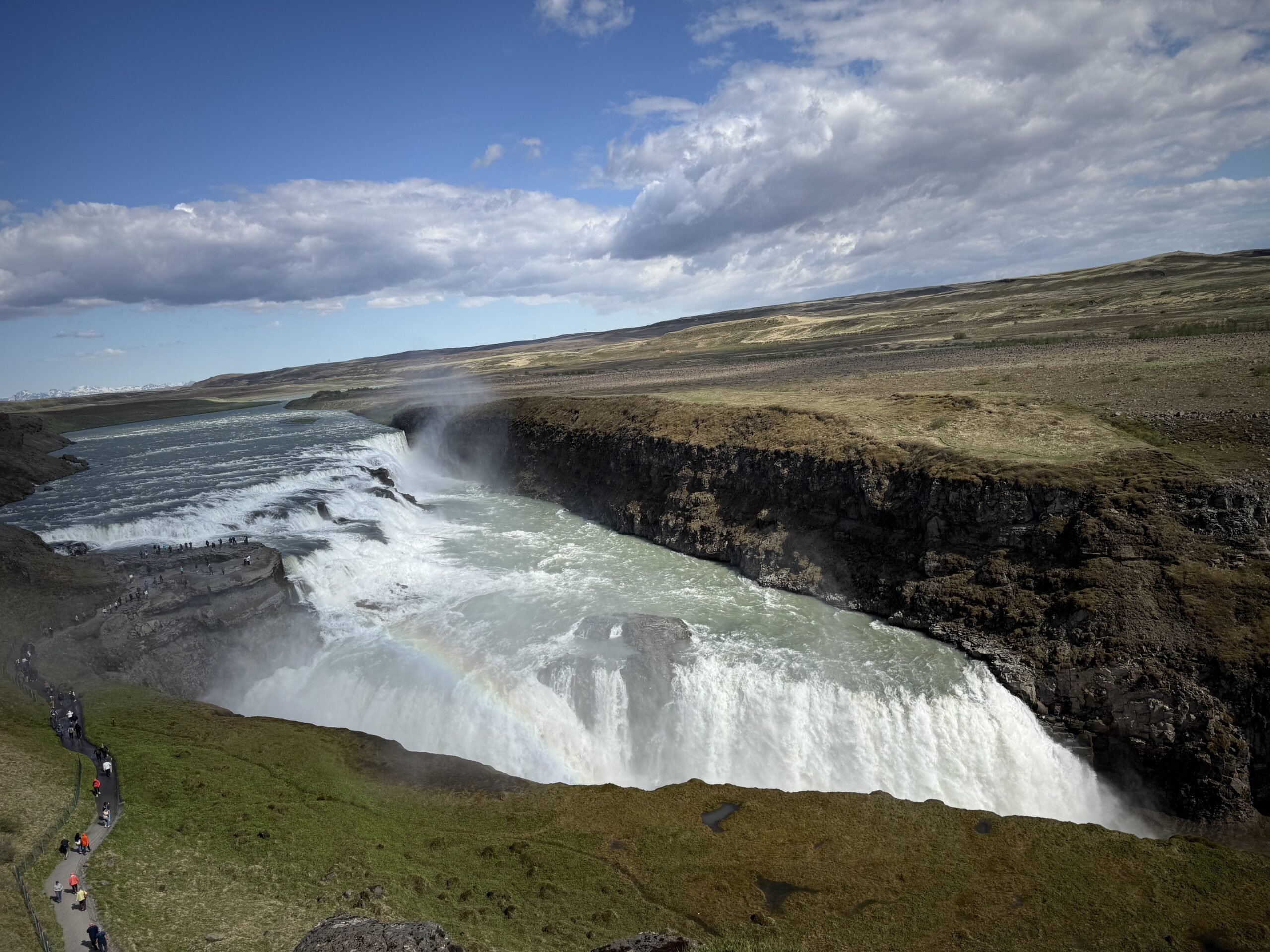
Not everyone has two weeks for Iceland, and you do not need them. An Iceland south coast campervan trip is the short version that still feels like the real thing: three to five days out and back from Keflavík or Reykjavík, with most of the famous scenery packed into one stretch of Route 1.
We live in Rovaniemi, so cold, dark and wide-open landscapes are familiar to us. Even so, the south coast surprises us each time, because the scenery changes every thirty minutes. It is also the best place to try a campervan if you are unsure, since the road is paved, the distances are short, and help is never far.
If you are weighing the whole island instead, our Iceland budget breakdown shows what a longer trip adds to the bill.
The south coast is an easy 3 to 5 day out-and-back on paved Route 1, so a 2WD campervan is enough, and you sleep at official campsites because wild camping is not allowed. On CampervanPlanet’s October 2026 price index a typical camper is about €147 a day in November and about €260 in May, with the cheapest offers from €40 a day, and the live price for your dates is what counts. Our €20 reader coupon, HUNGRYTRAVELFAMILY20, takes €20 off at checkout.
Why the south coast is the best short Iceland trip
The south coast packs more variety into less driving than anywhere else we know. Within a few hours of Reykjavík you have waterfalls you can walk behind, black sand beaches, glacier tongues and sea stacks, and the Golden Circle is a short detour away.
It is also kind to beginners. Route 1 here is paved, services are frequent, and a campsite is never far. The Ring Road beyond is long and committing, but the south coast is a trip you can shorten or extend depending on weather and mood.
There is a second advantage that is easy to overlook: a short trip lets you choose your weather. With only four days of driving, you can watch the forecast and shift the order of the days, going east first if the west is wet, instead of being locked into a fixed ten-day loop. A van makes that flexibility cheap, because your bed travels with you and there are no hotel bookings to change.
It is an excellent fit for a long weekend or a stopover that you want to turn into a proper holiday. CampervanPlanet lists a Golden Circle and south coast route as one of its mapped itineraries, which lines up with our own sense of the right size.
A 4-day south coast itinerary, day by day
We would plan four days and leave room to stretch to five. Drive times are approximate and assume photograph stops.
Day 1, Keflavík to the Golden Circle. Collect the van, buy groceries, and head to Þingvellir, Geysir and Gullfoss. It is a short, easy first day, and a good way to learn the van while the daylight is still on your side.
Day 2, Gullfoss to Vík. Rejoin Route 1 and visit Seljalandsfoss and Skógafoss, then continue along the coast towards Vík. The sea stacks and black sand beach near Vík deserve a long, windy walk, with care near the waves.
Day 3, Vík to the Glacier Lagoon area and back, or an overnight further east. This is the far point of the out-and-back. The scenery turns glacial and huge. Keep the day relaxed, and decide on the road whether to stay near the end or start heading back.
Day 4, return west. Stop for anything you skipped on the way out, then return the van with time to spare before any flight.
With a fifth day, we would add a second night at the far end or a relaxed day around the Golden Circle.
Which campervan suits a short south coast trip
You do not need a 4×4 for the paved south coast. A 2WD campervan is fine on Route 1 and the most popular routes. The F-roads into the Highlands are a separate matter: they need a high-clearance 4×4 and usually open only in summer.
On CampervanPlanet’s Iceland page, the Budget Camper sleeps two and starts at €40 a day, the Comfort Camper sleeps up to three with a heater and kitchen from €129, the 4×4 Highland Camper sleeps up to four from €189, and the Family Motorhome sleeps four to six from €219. Those are starting prices, and the live price for your dates is what you pay.
For a short trip we usually go for something with a heater and a simple kitchen. A very basic van can work in a warm month, but the south coast is windy and wet, and a warm, dry place to retreat to matters more than extra square metres.
Think about the number of people as well. A two-berth van is cosy for a couple and gets cramped when it rains for two days. If you are three or four, a bigger van costs more per day, but the extra room is what keeps everyone in a good mood. Compare the sleeping layout in each offer, and look at whether beds need to be made up every evening, since that is a chore you repeat daily.
💡 Our campervan tip: prices for the same van vary a lot between rental brands. We compare Iceland campervans across 160+ rental companies on CampervanPlanet — and code HUNGRYTRAVELFAMILY20 takes €20 off your booking.
What it costs, and how season changes the bill
The honest answer is that it depends on the month. CampervanPlanet’s October 2026 price index shows a typical camper at around €147 a day in November, €260 in May and €400 in July. A typical price below about €150 a day is a winter price, and above €300 usually means June to August. The cheapest offer on the page starts at €40 a day.
For a four-day trip, that means the van alone can swing by hundreds of euros between seasons. Add fuel, which is a real cost even on a short loop, plus campsite fees and groceries, which we cover below.
If your dates are flexible, May and September give a good balance of daylight and price. If they are not, book early. You can compare Iceland campervans for your dates on CampervanPlanet, and code HUNGRYTRAVELFAMILY20 takes €20 off the booking at checkout, which is a useful dent on a short trip.
Winter or summer: what changes
Summer gives long daylight, open roads and the most reliable conditions. It also gives crowds and the highest prices. Winter gives dark skies, a chance of Northern Lights, empty roads and low prices, but short days and real weather.
In winter, the south coast trip is possible, but it needs more caution. Roads can ice over, wind can close sections, and daylight is short, so the drive plan has to be smaller, with fewer stops and a firm rule to be parked before dark. Check road conditions and the forecast every morning, and keep drives short. Also check that your campsites are open, because many close for the winter. A heater is not optional.
The reward for winter is the quiet. The waterfalls are often framed by ice, the car parks are half empty, and on a clear night you may see the Northern Lights from the campsite, which no summer trip can promise. We would only recommend winter to people who are comfortable with a flexible plan and a cold van at 7 am.
Dressing properly matters as much as the van. Our guide on what to wear in Iceland in winter comes from a Lapland local’s point of view and applies to any cold-season trip.
Campsites, food and fuel
Wild camping is not allowed in Iceland, so plan your nights at official campsites. Along the south coast there are options near the main sights, and the popular ones fill quickly in July, so book or arrive early. Outside the summer months, check which are open.
For food, the cheapest supermarkets are Bónus (the pink pig logo) and Krónan, and it pays to stock up near Reykjavík before heading out. Cooking in the van is the single biggest saving.
Fuel stations are frequent on the south coast, but we fill up when half empty to be safe. Download the N1 app for locations and discounts, and keep a backup credit card for unmanned pumps. Iceland has no road tolls on Route 1 and its tunnels in this area, which is a small relief compared with some Nordic neighbours.
Safety and etiquette on the south coast
The south coast’s biggest hazards are natural ones. The black sand beaches have powerful waves that can arrive without warning, and every year people are caught by them, so stay well back from the water. Glacier tongues and ice caves should be visited with a proper guide, not on your own. Wind can slam van doors, so hold them with both hands.
Etiquette matters too. Stay on marked paths to protect fragile moss, park only in designated areas, and never sleep at a roadside. It is a small country with a lot of visitors, and the landscape does not forgive carelessness.
Before you go, it is worth reading our campervan rental guide for the general rules of renting a van, from deposits to pick-up inspections.
Book your Iceland campervan
Compare prices across 160+ campervan and motorhome rental brands, get a free 1GB eSIM with every booking — and €20 off with code HUNGRYTRAVELFAMILY20.
Check prices & availability →Frequently asked questions
How many days do you need for Iceland’s south coast by campervan?
Three to five days works well as an out-and-back from Keflavík or Reykjavík. Four days gives a relaxed pace with time for the waterfalls, Vík and the glacier area.
Do I need a 4×4 for the south coast?
No. A 2WD campervan is fine on the paved Route 1 and the most popular routes. A high-clearance 4×4 is only needed for the Highland F-roads, which usually open in summer.
Is there a discount code for CampervanPlanet?
Yes. Enter code HUNGRYTRAVELFAMILY20 at checkout on CampervanPlanet to take €20 off your booking. It is a fixed amount in euros and works for short trips as well as long ones.
Can I wild camp on the south coast?
No, wild camping is not allowed in Iceland. Plan each night at an official campsite, and check opening dates if you travel outside summer.
What does a campervan cost for a short trip?
It depends on the season. CampervanPlanet’s October 2026 index shows a typical camper at about €147 a day in November, €260 in May and €400 in July, with the cheapest offers from €40 a day.
Can I do the south coast in winter?
Yes, with caution. Roads can ice and daylight is short, so keep drives small, check the forecast and road conditions each morning, and confirm campsites are open.
Keep your crypto offline, not in an exchange app
Any crypto we hold lives on a Trezor hardware wallet — a small offline device in a drawer in Rovaniemi, not on a phone that crosses borders every month. If you’ve been meaning to sort that out, this is the link we’d send a friend.