Ireland is one of the great countries for a campervan trip, and also one of the first that makes visitors nervous about the driving. Campervan rental in Ireland means driving on the left, sometimes on roads so narrow that two vehicles cannot pass without one pulling into a gateway, and learning a few local rules such as the M50 toll system.
None of it is difficult once you know what to expect. This guide is built from the CampervanPlanet Ireland listings and general road-rule knowledge, and it focuses on the practical questions first-timers ask: which van, which route, what the driving is like, and what it costs. If you are new to hiring a van at all, start with our campervan rental guide.
Pick up at Dublin or Shannon airport, drive on the left, and keep to a compact van if your route includes the Ring of Kerry or Dingle. When we checked, campervans in Ireland ranged from a typical €132 a day in winter to €231 a day in July and August, with May and September around €180. Speed limits are in km/h (50, 80, 100, 120), and distances take far longer than the map suggests: a 150 km day on the Wild Atlantic Way can fill the whole day.
Pick-up points, seasons and prices
The Ireland campervan page lists two pick-up locations, Dublin Airport and Shannon Airport. Dublin suits an east-to-west trip, while Shannon is handy for the Cliffs of Moher, Galway and the south-west. Many people fly into one and return from the other, though one-way fees vary by company and should be checked before you book.
Prices follow the seasons. The listing gives a typical €231 a day in the June–August peak, around €180 a day in May and September, a moderate €132–180 in April and October, and about €132 a day in the November–March off-season. Budget campervans start from roughly €113 a day in the low season. Daylight is a factor too: up to 17 hours in summer, with light until about 22:00, but only 8–9 hours in midwinter.
The sweet spot is May or September: lush green countryside, decent weather, fewer visitors and prices well below July. If you have school holidays to work around, book early, as the best vans go first.
Driving on the left: the golden rule
If you normally drive on the right, the first day takes concentration. The golden rule is to keep your body, the driver, toward the centre of the road at all times. Roundabouts run clockwise, and you give way to traffic already on the roundabout, coming from your right. Many first-timers go wrong when pulling out of a car park or a quiet junction, because there is no traffic to remind you which side to take.
Practical habits help. Say “left, left, left” at junctions if you need to. Ask your travel partner to act as a spotter on the passenger side, who can watch the nearside kerb and hedge. Take the first hour slowly in a quiet place after pick-up, and avoid driving into central Dublin on day one.
Check the licence rules for your country before you book: the Ireland listing covers licences and minimum age, and companies often have their own rules for younger or newly qualified drivers.
Narrow roads, boreens and livestock
This is where Ireland differs most from the motorway-based trips many visitors know. Rural lanes, called boreens, can be single-track with stone walls or hedges on both sides. Passing places are not always marked. The rule of thumb is that the vehicle closest to a gap or gateway reverses or pulls in, and a wave of thanks is expected.
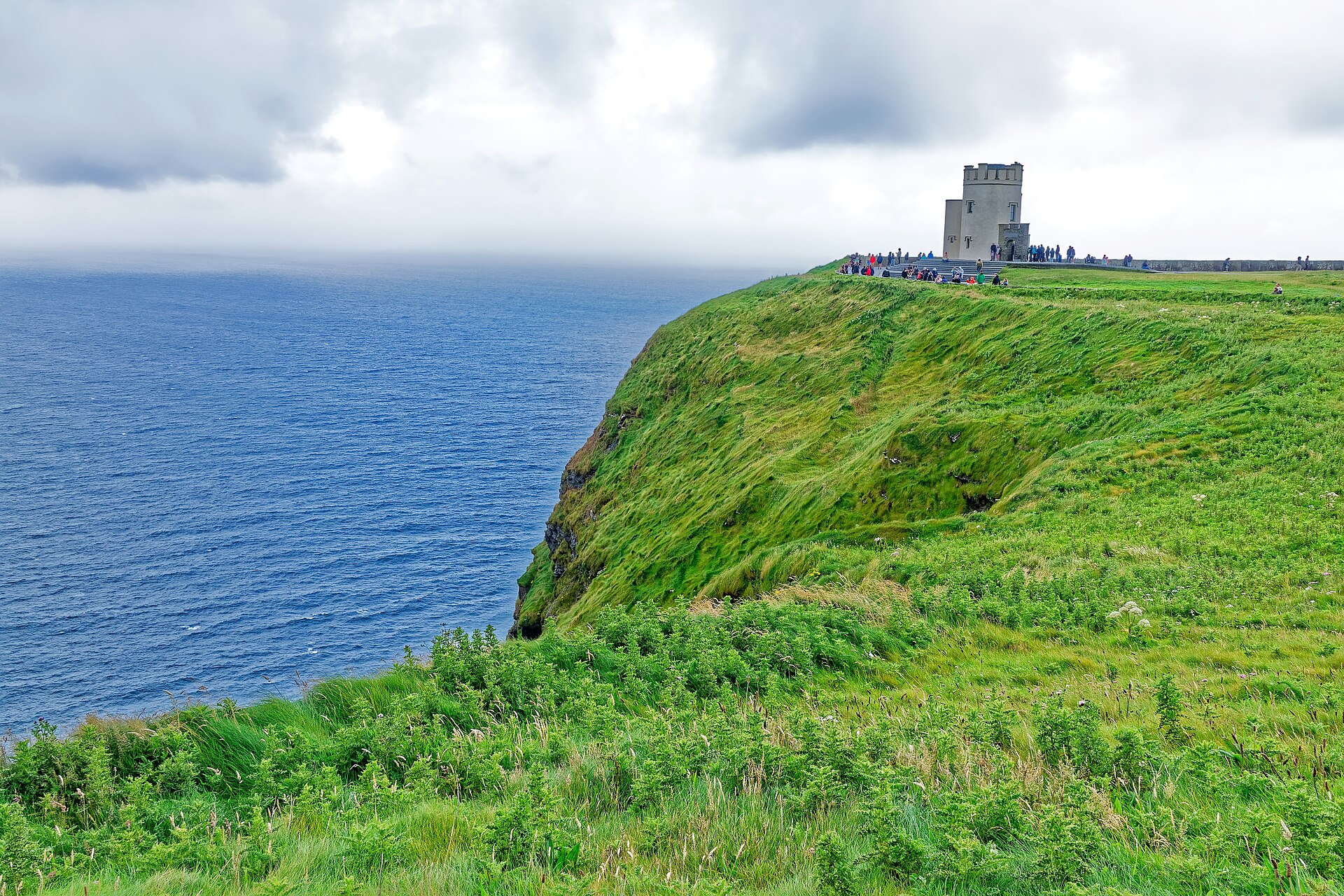
The Ring of Kerry, a 179 km loop around the Iveragh Peninsula through Killarney, Kenmare, Sneem and Waterville, is the classic test. In summer, tour coaches use it in one direction, so if you drive against the flow you will meet them on the narrowest bends. A compact campervan makes this much easier, and the listing itself recommends one for the Kerry route.
- Livestock. Sheep and cows on rural roads are normal. Slow down and let them move.
- Visibility. Rain, mist and hedges hide bends; use dipped headlights in poor light.
- Fuel. On the Wild Atlantic Way, stations appear about every 30–60 km. Top up when you pass one.
💡 Our campervan tip: prices for the same van vary a lot between rental brands. We compare Ireland campervans across 160+ rental companies on CampervanPlanet — and code HUNGRYTRAVELFAMILY20 takes €20 off your booking.
Speed limits, the M50 and tolls
All Irish speed limits are in kilometres per hour, on round white signs with a red border. The standard pattern is 50 km/h in towns, 80 km/h on regional and local roads, 100 km/h on national N roads (green signs) and 120 km/h on motorways (blue M signs). A limit is a maximum, not a target. Even if the van’s speedometer shows mph, work in km/h.
Tolls in Ireland are mostly on motorways, but the one that surprises visitors is the M50 around Dublin, which uses a barrier-free electronic system called eFlow. There is no booth: cameras read the number plate and the toll has to be paid within a short deadline, or a penalty applies. Ask your rental company how it handles this; many manage it for you and bill afterwards, sometimes with a fee. If you collect at Dublin Airport and head west or north, you may meet the M50 in the first hour.
Where to sleep: campsites, aires and wild camping
The legal picture on wild camping is less relaxed than in the Nordics. In practice, the safest approach is to use campsites, small caravan and camping parks, or designated motorhome stopovers. Expect roughly €25–40 per night for two adults with a hook-up, more at premium coastal parks in peak season. The Ireland listing counts more than 40 coastal campsites along the Wild Atlantic Way alone.
Leave-no-trace is the unwritten rule that keeps good places open for everyone: take rubbish away, use proper waste points and stay away from farm gateways. If you want a little independence, look for service points and aires, which sit between full campsites and wild camping on both price and comfort.
Whatever you choose, book ahead in July and August, when popular coastal campsites fill up, and have a plan B if you arrive late.
How to plan the days
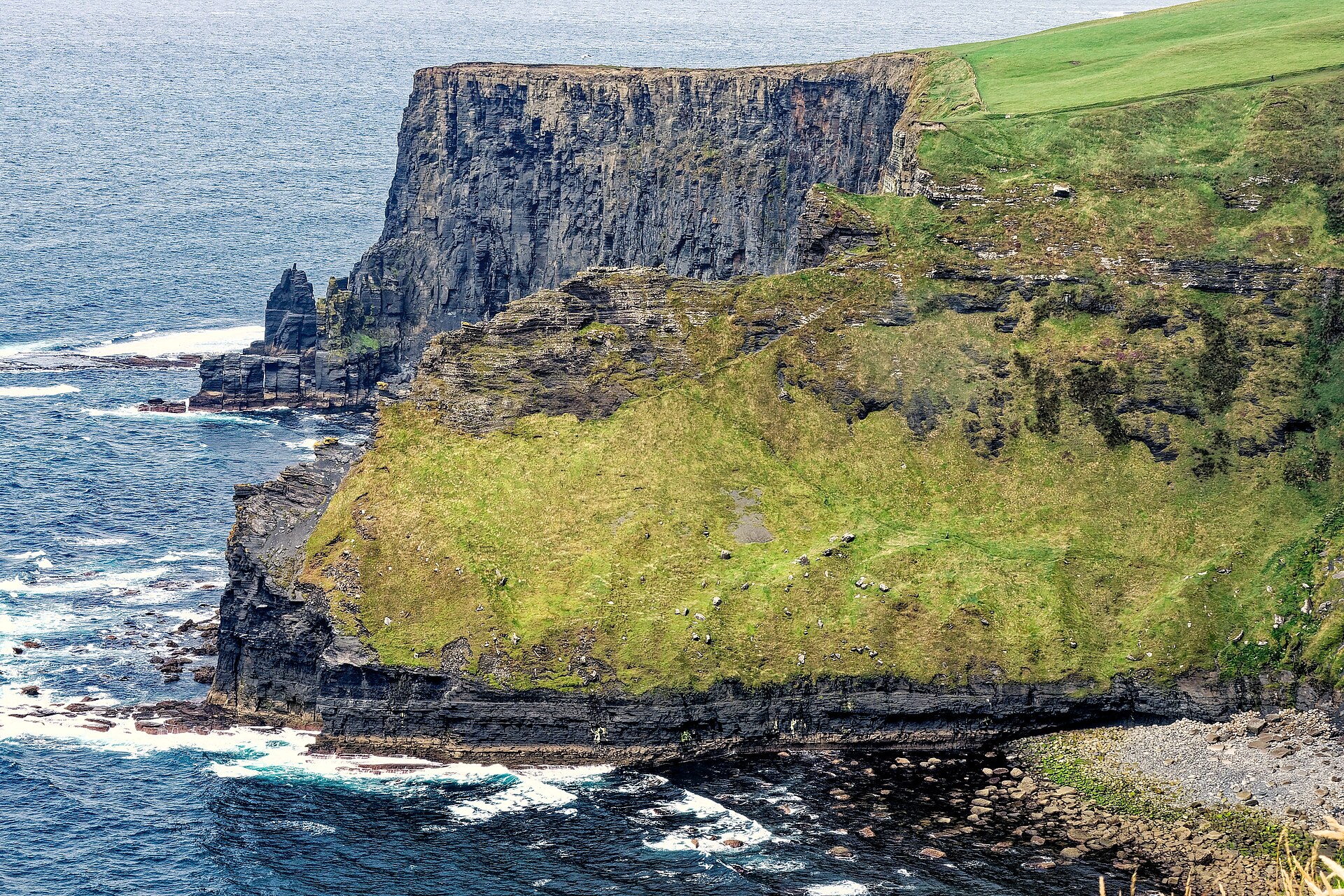
Distances in Ireland deceive. The Wild Atlantic Way is about 600 km of the listing’s headline route over 9–12 days, but a single 150 km day along the coast, with headlands, photo stops and a coffee in every harbour village, can take all day on its own. The Ring of Kerry fits comfortably in a day or two, and Ireland’s Ancient East (Dublin, Glendalough, Kilkenny, Rock of Cashel and Cobh) works well year-round at around 400 km over 6–8 days.
Plan for three to four hours of driving a day, no more, and leave slack for weather. If your route includes Northern Ireland, the border crossing is invisible, but rental terms and insurance can change, so ask before you cross; you will also find speed limits switching to miles per hour. Our Wild Atlantic Way guide maps out a full route, and for the next island over, our Scotland motorhome guide covers the North Coast 500.
Choosing your van and booking
For two people on a one-to-two-week trip, a comfort or compact campervan is the right size. A family of four will want a motorhome, but be ready for narrow roads and think twice about the Kerry loop and the Dingle Peninsula. Compare kilometre allowances, bedding and kitchen kits, and the excess you pay if something is damaged, which is usually the biggest difference between cheap and expensive offers.
When you are ready, compare Irish campervans for your dates, or look at the UK motorhome hire page if you are combining the islands. Code HUNGRYTRAVELFAMILY20 takes €20 off at checkout through our links, and a booking within 30 days of your click is credited to us.
Book your Ireland campervan
Compare prices across 160+ campervan and motorhome rental brands, get a free 1GB eSIM with every booking — and €20 off with code HUNGRYTRAVELFAMILY20.
Check prices & availability →Frequently asked questions
Is it hard to drive a campervan on the left in Ireland?
Most visitors adapt within a day. Keep the driver close to the centre line, take roundabouts clockwise, and spend the first hour somewhere quiet. A passenger acting as spotter helps on narrow roads.
How much does campervan rental in Ireland cost?
When we checked, the typical price was about €132 a day in winter, around €180 in May and September, and about €231 in July and August. Budget campervans started from roughly €113 a day in low season.
How does the M50 toll work in a rental campervan?
The M50 around Dublin uses barrier-free electronic tolling with number-plate cameras. Ask your rental company whether it pays the toll for you and how it bills it, as some add an admin fee.
Is there a discount code for CampervanPlanet?
Yes. Code HUNGRYTRAVELFAMILY20 takes €20 off your booking at checkout when you book through our links.
Can I wild camp in Ireland?
Not freely in the way you can in the Nordics. Stick to campsites and designated stopovers, which cost roughly €25–40 a night, and check local rules before parking overnight.