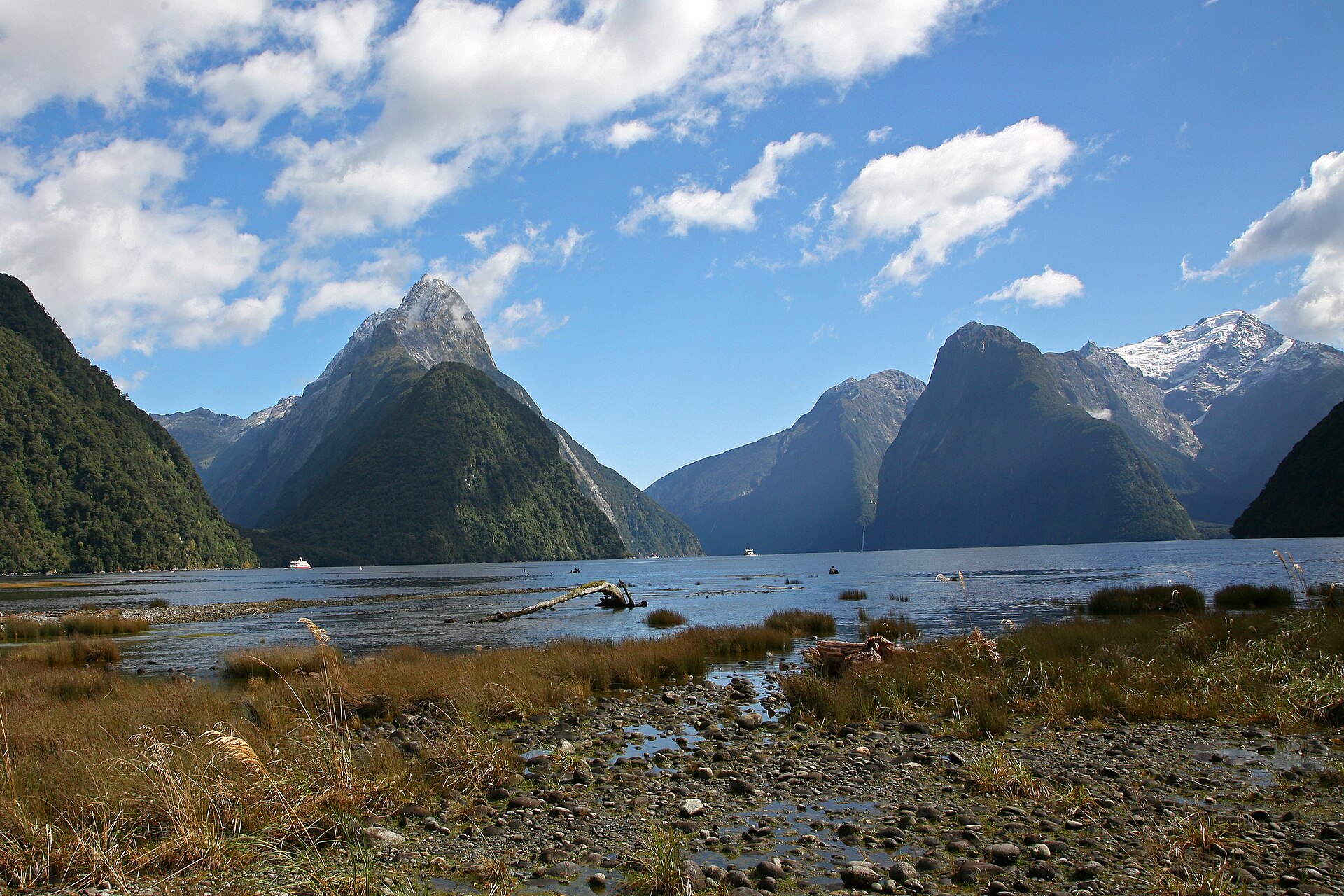
New Zealand is the country that made campervan travel a national hobby. There are 35 companies in the CampervanPlanet comparison, from budget sleepervans to luxury motorhomes, and the South Island alone can feel like one long showroom of white vans with coloured stripes.
That choice is a blessing, but it makes the research slow. We went through the comparison to work out which companies suit which trips. We are writing as researchers rather than as people who have hired from all 35, and we stick to what the page says. If you are new to this, start with our campervan rental guide, then come back here.
The southern summer is starting, so December to February vans are already moving fast. If you are planning for the next few months, compare this week rather than next.
The comparison covers 35 New Zealand companies, with rates from about €18 a day in low season (typically €71 a day in June and around €194 in high season). The names to look at first are JUCY, Maui, Britz, Apollo, Mad Campers and Wilderness. A fixed toilet is now needed for the green self-containment warrant card, which affects freedom camping. Our code HUNGRYTRAVELFAMILY20 takes €20 off at checkout.
- What the comparison actually covers
- Budget sleepervans versus full motorhomes
- Self-containment and freedom camping
- 2WD or 4WD, and rooftop tents
- One-way trips and relocation deals
- Insurance and the cost nobody mentions
- Timing: when to book and when to go
- How we would choose, in five minutes
- Frequently asked questions
What the comparison actually covers
The CampervanPlanet guide looks at all 35 New Zealand campervan and motorhome companies using real customer reviews, price, two-wheel versus four-wheel drive and self-containment. It treats the North and South Islands as one trip, and explains how the Cook Strait ferry links them.
Prices come from the company’s own November 2026 searches. The headline number is €18 a day, the lowest price found for a seven-night rental. The typical figures are more useful: about €71 a day in June (low season) and around €194 in January (high season). That is a big gap, and it is why our post on New Zealand campervan hire costs over Christmas exists.
In short, the first question is not “which company” but “which month”. Pick the month, and half of the shortlist decides itself.
Honest travel from the Arctic Circle
We send one letter a month — no roundups, no sponsored fluff. Just what we’re doing, where we’re going, and what we actually think.
Budget sleepervans versus full motorhomes
The cheapest end of the market is small vans with a bed and a basic kitchen, often called sleepervans. They are cheap, easy to park and fine for a couple who spend all day outdoors. Brands such as JUCY and Mad Campers are among those the guide discusses at the budget end. At the other end, Maui, Britz and Apollo run bigger motorhomes with kitchens, showers and toilets, and the page also mentions boutique services at roughly double the budget from-price.
Our rule of thumb is simple. For two people, under two weeks, who want maximum flexibility, take a small van. For families, or for trips of three weeks or more, take the larger vehicle with a bathroom, because comfort adds up. If you are in between, think about how you sleep and how you cook. A van with a fixed bed saves ten minutes every evening. A convertible bed saves space in the day.
Whichever you choose, ask about the rear seatbelts and the number of sleeping berths, because “sleeps four” sometimes means two adults and two small children.
Self-containment and freedom camping
This is the part of New Zealand campervan hire that confuses the most people. The guide explains the green self-containment warrant card, and highlights that a fixed toilet is now required. That matters because many councils only allow freedom camping in certain places for vehicles that carry the card. Some vans on the list are certified self-contained, and the price page notes that 63 of the 111 vehicles in the NZ search are.
If you want to stay in free or low-cost spots, choose a certified self-contained vehicle. If you will mostly use holiday parks, a non-certified van may be fine and cheaper. Rules vary by council and change over time, so check the current local rules before you rely on a particular spot. We wrote a separate post on New Zealand freedom camping rules with the details.
A word of caution about fines: councils do enforce the rules, and the penalty falls on you as the hirer.
2WD or 4WD, and rooftop tents
Almost all of New Zealand’s classic routes are sealed. Milford Sound, Mount Cook, the Coromandel and the Bay of Islands are all fine in a normal campervan. A 4WD matters only if you want gravel roads into the high country, and then the rental contract usually decides what you may do. Read it before you plan.
If you like the idea of a smaller, lighter vehicle, look at a rooftop tent on a car. Rooftop tent hire in New Zealand is a growing option, and the same CampervanPlanet network also lists 4WD camper hire in New Zealand for the high country. Tents are cheaper and more adventurous, though they depend on the weather and take longer to set up each evening.
For most first-timers, the sensible middle is a self-contained campervan on sealed roads.
💡 Our campervan tip: prices for the same van vary a lot between rental brands. We compare New Zealand campervans across 160+ rental companies on CampervanPlanet — and code HUNGRYTRAVELFAMILY20 takes €20 off your booking.
One-way trips and relocation deals
New Zealand is a classic one-way country. Many people fly into Auckland, drive south, and fly out of Christchurch or Queenstown. The comparison page mentions one-way and $1 relocation deals, where a company needs a van moved between depots and offers it for almost nothing. These are great if you are flexible on dates and can take the van on the day it is needed, but they come with fixed time limits and are not always available.
The live price page also gives an example: Auckland to Christchurch one way costs about NZ$343 a day, compared with NZ$258 a day for a round trip. So a one-way trip is not free, but it saves you backtracking across the Cook Strait. Our South Island loop with Queenstown shows a round-trip alternative.
When comparing, always look at total price, not just the daily rate.
Insurance and the cost nobody mentions
The page is very clear about this: insurance is the biggest hidden cost in New Zealand. Standard excess runs from NZ$1,000 to NZ$7,500, and most companies sit between NZ$3,000 and NZ$7,500. Counter-sold zero-excess cover costs NZ$30 to NZ$97 a day, or a pack of roughly NZ$673 to NZ$818 per rental at some companies.
That means a cheap van with a high excess and costly top-up cover can end up more expensive than a mid-priced van with a lower excess. It also means you should decide before arrival whether to buy the top-up cover, because pick-up desks are not a good place to compare. Some travellers use separate excess insurance, which can be cheaper, though you then need to pay any claim first and recover it later. Read the terms before you rely on it.
Our general guide to campervan insurance, deposits and excess has a checklist.
Timing: when to book and when to go
New Zealand sits in the southern hemisphere, so the busy season runs from December to February, when the days are long and the South Island is at its best. The guide describes the typical price in January as around €194 a day, against about €71 in June. If your dates are in the summer holidays, book early and expect to pay more.
Autumn, from March to May, is our favourite compromise. The weather is settled, the crowds thin out after Easter, and the autumn colours around Arrowtown and Wanaka are beautiful. Winter is cheap and is the season for ski towns, but you will need chains for some alpine roads, and daylight is short. Spring, from September to November, has lambs, blossom and changeable weather.
If you want a single tip, avoid collecting a van on a public holiday or Christmas Eve, when depots are crowded and staff are stretched. Our post on low season versus peak campervan prices shows the gap for other countries too, and code HUNGRYTRAVELFAMILY20 works at any time of year.
How we would choose, in five minutes
Open CampervanPlanet’s New Zealand comparison and enter your dates, pick-up and drop-off cities. Filter by self-contained if you want to freedom camp. Sort by price, then by review score, and take the best three from each list. Check the excess and the top-up cover price for each. Check the pick-up depot, because airport depots are convenient but sometimes busier. And check the cancellation terms.
Then book early for December to February. If your dates are fixed, book as soon as you have a van you like. If your dates are flexible, shift towards March to May for lower prices and calmer roads. When you are ready, enter HUNGRYTRAVELFAMILY20 at checkout and €20 comes off your booking.
Book your New Zealand campervan
Compare prices across 160+ campervan and motorhome rental brands, get a free 1GB eSIM with every booking — and €20 off with code HUNGRYTRAVELFAMILY20.
Check prices & availability →Frequently asked questions
Which is the best campervan rental company in New Zealand?
There is no single winner. The comparison covers 35 companies, and the better choice depends on whether you want a budget sleepervan, a full motorhome, one-way flexibility or self-containment. Compare your dates on CampervanPlanet.
How much does a campervan cost in New Zealand?
The lowest price in the November 2026 searches was about €18 a day. Typical prices are around €71 a day in June and around €194 in January.
Do I need a self-contained campervan in New Zealand?
Only if you want to freedom camp in places that require it. The guide notes that a fixed toilet is now needed for the green self-containment warrant card. Check the current local rules before you rely on a site.
Is one-way cheaper than a round trip in New Zealand?
No. The price page gives Auckland to Christchurch at about NZ$343 a day one way against NZ$258 for a round trip. Relocation deals can be cheap but are limited.
Is there a discount code for CampervanPlanet?
Yes. Our reader code HUNGRYTRAVELFAMILY20 takes €20 off your booking at checkout. It comes from our commission, so it costs you nothing extra.
What is the biggest hidden cost?
Insurance. Standard excess ranges from NZ$1,000 to NZ$7,500, and zero-excess cover costs NZ$30 to NZ$97 a day, so check this before you choose the cheapest van.