Norway Toll Roads: Exactly How It Works for Foreign Drivers
We drove thousands of kilometres across Norway — through tunnels, over bridges, and past charging stations that billed us weeks later. Here is everything you actually need to know about Norway toll roads before you pick up that rental car.
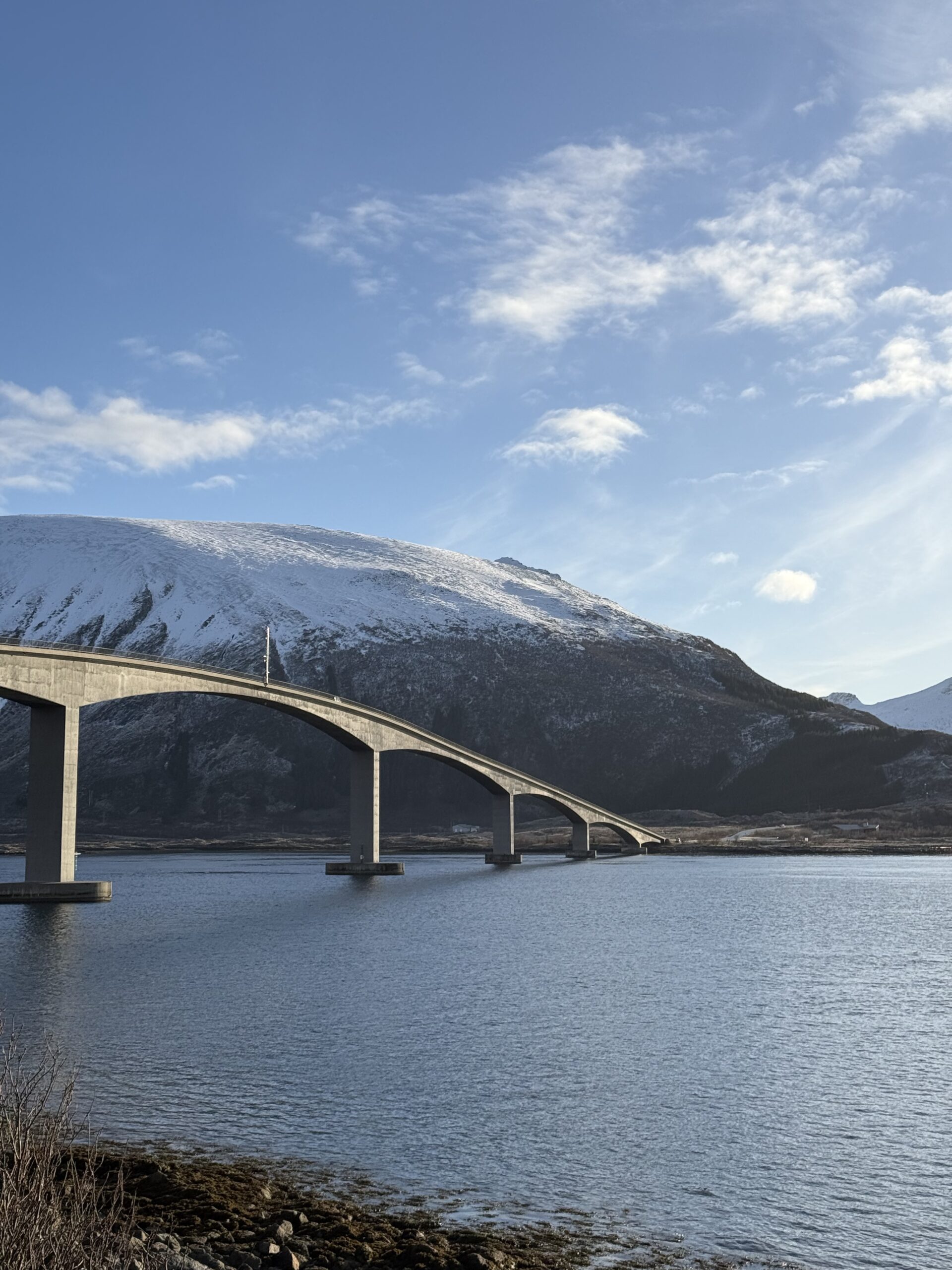
We crossed our first Norwegian toll point somewhere outside Bergen, squinting at a yellow gantry that photographed our car and gave us nothing — no barrier, no attendant, no receipt. A week later, an invoice arrived in our email. We had no idea that was coming.
That is Norway’s AutoPASS system in a nutshell: fully automated, very efficient, and completely invisible to the driver in the moment. If you are renting a car and driving Norway without knowing how tolls work, you will pay — either correctly through the system, or expensively through a rental company’s admin fee. This guide covers everything we wish we had read first.
Norway toll roads are fully automated — no stopping, no cash. Cameras photograph your plate at every toll point. Foreign rental cars are billed through the AutoPASS system or your rental company. Tolls are unavoidable on most major routes, typically costing €1–€5 per charge point. You can register a payment method at autopass.no to pay at the lower AutoPASS rate instead of the higher foreign-plate rate your rental company will bill you for.
How Norway’s AutoPASS toll system actually works
Norway has no manned toll booths on its main roads anymore. Every toll point is a gantry — a metal arch above the road carrying cameras and sensors. As you drive under it, the system photographs your number plate, identifies your vehicle class, and logs a charge against your account or your plate number. You do not stop. You do not slow down. You probably do not even notice it.
The two types of toll charge points
Understanding the difference between these two saves confusion on your invoice:
- Urban toll rings (bomring): surrounding the major cities — Oslo, Bergen, Stavanger, Trondheim. These charge you every time you enter or pass through the ring. In Oslo there are multiple charge points and you can rack up several charges on a single day of driving around the city.
- Road and infrastructure tolls: individual charges for specific bridges, tunnels, and mountain routes. The Atlantic Ocean Road, the Hardanger Bridge, the Ryfast tunnel under Stavanger — all have their own toll point. These tend to be single charges for a specific crossing.
How the camera reads your plate
The cameras read your plate automatically — this works on all standard European plates, including Finnish, Swedish, German, British, and most others. If your rental has a temporary plate or a damaged plate, you may need to contact the rental company, but in practice we have never had a plate reading fail on a standard car.
The charge is linked to your plate number in a national system. If you have an AutoPASS tag (a transponder) registered to your account, the charge goes directly there. If you have no tag but registered your plate online, it goes to your EasyPark or BroBizz account. If you have done nothing, the charge sits against your plate number and is eventually sent as an invoice — to you via your rental company, or directly if you registered online.
What foreign drivers actually pay — and how it gets to you
This is the part that surprises most tourists. The toll itself is not large — usually between 15 and 80 NOK (roughly €1.30–€7) depending on the route and vehicle class. What can make it expensive is how it gets collected when you have done nothing to register your plate.
The rental company route (the expensive default)
If you rent a car and do not register your plate with AutoPASS, here is what happens:
- Your plate is photographed at each toll point.
- The toll authority sends the charges to the registered owner of the vehicle — your rental company.
- The rental company pays those charges and then invoices you, usually weeks or even months later, often with a service fee of €15–€35 per invoice on top of the actual toll amounts.
- The charge appears on your credit card well after you have forgotten about your Norway trip.
We have seen rental company fees vary wildly. Some companies (Hertz, Avis) have a flat toll administration fee per rental period. Others charge per invoice received. A friend of ours drove three days in Norway and received a €68 admin fee on top of €22 in actual tolls. The tolls were unavoidable. The admin fee was not.
The self-registration route (the smart option)
You can register your rental car’s plate number at autopass.no or through the EasyPark app before or during your trip. This links the plate to a card you control. Charges go directly to your card at the standard rate — no rental company admin fee, no surprise invoice months later.
The standard rate is also cheaper than the unregistered foreign-plate rate, because unregistered foreign vehicles are billed at a slightly higher tariff in some toll rings. In Oslo’s bomring, the difference is meaningful if you drive through it multiple times a day.
Quick-reference: toll amounts, apps, and where to pay
A scannable overview of everything you need before you drive:
- autopass.no — the official portal. Register your plate here before your trip. You can pay directly by card. No account needed for basic plate registration.
- EasyPark app — a private service that also handles AutoPASS tolls. Useful if you already use EasyPark for parking elsewhere in Scandinavia.
- BroBizz — a transponder/tag popular with frequent Nordic drivers. Not worth buying for a single trip but good if you drive Norway regularly.
- Typical toll amounts: urban ring charges 15–45 NOK per pass; major bridges and tunnels 25–80 NOK per crossing; full Ryfast tunnel (world’s longest road tunnel) around 75–100 NOK for a car.
- Oslo Bompeng: Oslo’s city ring is one of the most expensive. Frequent city driving can add up to 150–300 NOK per day easily.
- Vehicle class matters: most rentals are Class 1 (under 3.5 tonnes). Campervans and larger vehicles may be Class 2 and pay roughly double.
- Time-of-day discounts: some toll rings charge less during off-peak hours (typically before 06:30 and after 22:00). If you are staying overnight outside the city and driving in early, this can save money.
- Electric vehicles: Norwegian-registered EVs have historically paid reduced tolls. Foreign EVs may or may not qualify depending on the specific scheme. Check current rates at vegvesen.no before assuming a discount.
Nordic road trips, honestly told.
We write from Finnish Lapland about what it actually costs, what actually surprised us, and where we are going next. No fluff.
💡 Our campervan tip: prices for the same van vary a lot between rental brands. We compare Norway campervans across 160+ rental companies on CampervanPlanet — and code HUNGRYTRAVELFAMILY5 takes 5% off.
Should you pre-register, or let the rental company handle it?
We get asked this a lot, so here is our honest take after doing it both ways:
- Pre-register your plate if you are doing any serious driving. It takes about 10 minutes on autopass.no, saves the admin fee, and gives you visibility into exactly what you are charged. For a week of driving across Norway we typically accumulate 20–40 toll charges. Seeing them itemised is useful.
- Consider letting the rental company handle it only if you are barely driving — a city pickup, a short airport transfer, or a single day where you avoid the toll ring entirely. In those cases the one-time admin fee may be worth the simplicity.
- Ask your rental company what their toll policy is before you pick up the car. Some companies include a toll package as an optional add-on (flat daily rate, all tolls covered). For heavy city driving in Oslo or Bergen, this can be good value. For rural fjord driving with few toll points, skip it.
- Check your rental contract for the fee structure. The admin fee is legitimate — it covers the company’s cost of receiving invoices from the toll authority and forwarding them. But you should know what it is before you decide.
Common Norway toll mistakes that cost more than necessary
- Not registering before your trip. The single most common and most avoidable mistake. Takes 10 minutes. Saves 15–35 euros in admin fees.
- Assuming the fjord roads are free. Many of Norway’s most scenic roads — the ones you specifically came to drive — have toll points. The Atlantic Ocean Road, the Hardanger Bridge, the Sognefjord ferries (ferries are separate, not AutoPASS) — budget for tolls on any famous route.
- Not checking if your city driving is inside the toll ring. Many hotels and Airbnbs are inside Oslo’s or Bergen’s bomring. If you drive in and out multiple times a day for sightseeing, tolls add up quickly. Consider parking outside the ring and using public transport for city days.
- Assuming electric vehicles are exempt. Foreign-registered EVs have varying status. Do not assume a discount unless you have confirmed it for your specific vehicle on the specific route.
- Ignoring the invoice email weeks later. Toll invoices from rental companies arrive late. Check your email and credit card statements 4–8 weeks after your Norway trip and you will likely find one.
- Paying the invoice late. Norwegian toll invoices from the authority (if sent directly) have a payment window. Missing it can result in a follow-up fee. Pay promptly.
What we actually learned from driving Norway three times
- The first time, we did nothing and got surprised. Two invoices from the rental company, 28 euros in admin fees, on top of 34 euros in tolls. The tolls were fine. The fees were annoying and avoidable.
- The second time, we registered on autopass.no from Rovaniemi before we crossed the border. We had full visibility into every charge. Total admin cost: zero. Actual tolls for a week in western Norway: around 480 NOK (about 42 euros). That is a lot of tunnels and bridges.
- Oslo is the most expensive toll city. We spent two days driving in Oslo and the bomring charges added up to roughly 180 NOK (16 euros) per day. Not ruinous, but meaningful over a longer stay.
- Rural Norway is cheaper than you expect. Once you leave the major cities and drive through the actual fjord country, toll points become sparse. The Lofoten islands have almost no tolls beyond one tunnel. The Hardangervidda plateau has none at all.
- The tunnel tolls feel weird but make sense. Norway has hundreds of subsea tunnels — the only way to connect many communities. Those tunnels are expensive to build and maintain. The tolls exist to pay for them. Once you understand the engineering reality, you stop resenting them.
- The system is genuinely well-run. We have driven through dozens of toll points and every single one processed correctly. Not once have we had a charge error. Norway’s infrastructure systems, AutoPASS included, are excellent.
Book your Norway campervan
Compare prices across 160+ campervan and motorhome rental brands, get a free 1GB eSIM with every booking — and 5% off with code HUNGRYTRAVELFAMILY5.
Check prices & availability →Frequently asked questions about Norway toll roads
Do I have to stop at Norway toll booths?
No. Norway has no manned toll booths on its main roads. All toll points are automated gantries that photograph your plate as you drive through at normal speed. You never stop. Payment happens automatically through AutoPASS, your rental company, or a direct invoice.
How do I avoid paying a rental company admin fee for Norway tolls?
Register your rental car’s plate number at autopass.no before or during your trip. This links the plate to your own card. Toll charges go directly to you at the standard rate, bypassing the rental company entirely and avoiding their administration fee (typically €15–€35 per invoice).
How much do Norway tolls cost in euros?
Individual charges are typically €1.30–€7 depending on the route and vehicle class. A day of city driving in Oslo or Bergen can add €10–€20 in toll ring charges. A week of mixed road tripping through western Norway typically costs €30–€60 in actual tolls, depending on your route.
Can I pay Norway tolls in cash?
No. The automated system does not accept cash. Payment is by registered bank card through autopass.no, EasyPark, BroBizz, or via your rental company. There is no way to pay at the toll point itself — everything happens after the fact.
Will I be fined if I do not register my plate?
Not immediately. Unregistered plates are still identified and invoiced through the rental company system. However, if a toll invoice goes unpaid for a long time, enforcement action is possible. In practice, paying through your rental company — even with the admin fee — is the fallback if you forget to register. Just pay the invoice when it arrives.
Are there any toll-free routes through Norway?
Yes — many rural and mountain routes have no toll points at all. The Hardangervidda plateau road, large sections of northern Norway, and many secondary coastal roads are toll-free. The toll-heavy routes are the main E-roads near cities and the major infrastructure links (long tunnels, large bridges). If you are road tripping through remote Norway, tolls may be a smaller factor than you expect.
A final word from Rovaniemi
We live in Finnish Lapland and drive into Norway several times a year. The toll system stopped surprising us a long time ago — it is just part of the cost of driving one of the world’s most spectacular countries. Norway is expensive, and that extends to its road infrastructure. But the roads are extraordinary.
The 10 minutes you spend registering on autopass.no before your trip will save you more than time and money. It gives you a clear record of every road you drove and every crossing you made — which turns out to be a surprisingly satisfying log of a Norway road trip. We have scrolled back through toll records and used them to remember exactly where we were on a specific evening when the light hit the fjord perfectly.
Register your plate, drive freely, and pay the tolls without drama. Norway has earned them.
Joona & Alla
A Finnish-Ukrainian couple living in Rovaniemi, Finland. Joona is a marketing professional in Lapland tourism; Alla is an AI Engineer. Together we have visited 25 countries and share honest, locally-grounded travel writing from our home in the Arctic.
Read our full story →