Norway Speed Limits and Driving Culture — What You Need to Know Before You Go
We’ve driven thousands of kilometres through Norway — from Oslofjord to Nordkapp. Here’s everything you actually need to know about speed limits, cameras, and how Norwegians expect you to behave on the road.
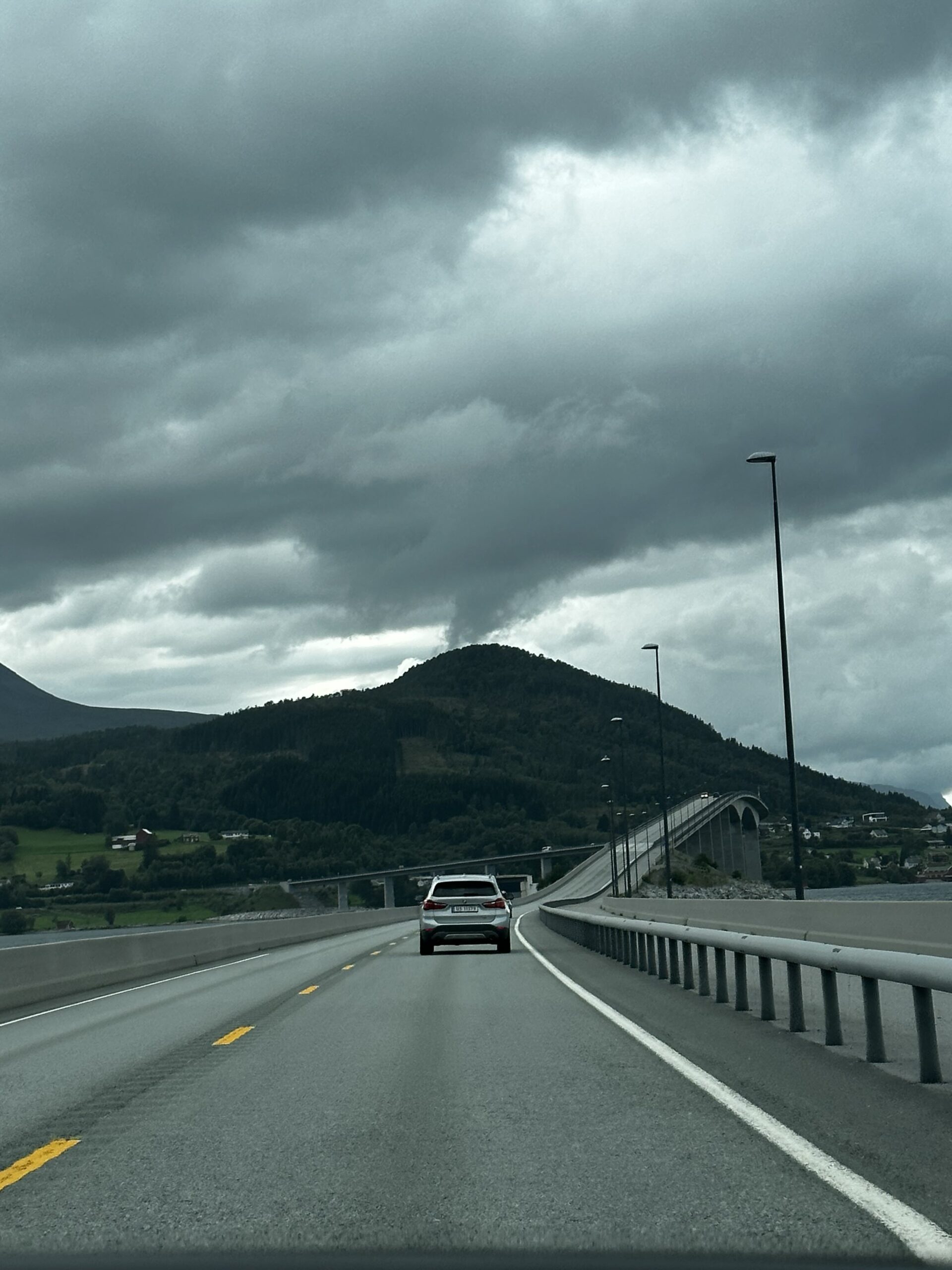
Norway speed limits are one of those topics that seem simple until you’re actually driving through a fjord tunnel at 70 km/h wondering if there was a sign you missed. We’ve driven across Norway multiple times — from the south coast up to Nordkapp, through ferry crossings, mountain passes, and the long straight stretches of the E6 — and the speed system is stricter, more automated, and more culturally loaded than most visitors expect.
This isn’t a legal disclaimer post. It’s what we genuinely wish we’d known before our first Norway road trip.
The standard Norway speed limit is 80 km/h on open roads, 50 km/h in towns, and 30 km/h in residential zones. Speed cameras are everywhere and strictly enforced — tolerances are low, fines are high, and Norwegians genuinely follow the rules. Plan your drive with the legal limits in mind and budget extra time.
The Norway Speed Limit System — How It Actually Works
Norway’s speed limits are set nationally and enforced consistently across the country. Unlike some countries where limits feel like suggestions, here they function as hard ceilings — the culture, the roads, and the enforcement all push in the same direction.
The core limits you’ll encounter
- 30 km/h: residential streets, school zones, pedestrian-heavy areas. Often marked with a yellow “30” zone sign.
- 50 km/h: the default urban and town limit. Applies wherever there’s a built-up area sign, even if you haven’t seen a specific speed sign.
- 70 km/h: common on wider regional roads and near towns where 80 would be too fast.
- 80 km/h: the default open road limit. This applies on most of Norway’s rural highways unless signed otherwise — it is not 90 or 100 by default.
- 90 km/h: some well-maintained national highways (riksveier). Look for the sign; don’t assume.
- 100–110 km/h: exists on a handful of four-lane motorway sections, mostly around Oslo. Norway has very few of these stretches.
Why 80 km/h feels slow (and why it matters)
Visitors from Germany or Finland — where 80–100 km/h is the norm on secondary roads — often underestimate how different 80 km/h feels in Norway. The roads are narrower, the bends are tighter, the scenery pulls your attention sideways, and a reindeer or elk can appear around any corner. We’ve driven 80 km/h stretches in mid-Norway that genuinely felt fast for the conditions. The limit exists for a reason. Don’t treat it as a floor.
Speed Cameras and Enforcement — What Makes Norway Different
Our Nordic trip planner (PDF)
The one-page planner we use ourselves, plus the HUNGRYTRAVELFAMILY5 5% code and one short email a week with real deals. Unsubscribe any time.
Norway takes speed enforcement seriously in a way that genuinely surprises first-time visitors. The country has invested heavily in automated systems, and the data is clear: the cameras work.
Types of enforcement you’ll encounter
- Fixed ATK cameras (Automatisk Trafikkontroll): the classic box-on-a-pole cameras. Marked with warning signs in advance. Trigger only if you exceed the limit — but the tolerance is very low, sometimes just 3–5 km/h above the posted limit.
- Streknings-ATK (average-speed cameras): Norway was a pioneer of this system. Two cameras sit kilometres apart. The system calculates your average speed between them. There is no way to brake before the second camera and get away with it. These cover major tunnels, mountain passes, and long highway stretches.
- Mobile police units: unmarked cars with LIDAR. We’ve seen them parked on the verge of perfectly empty stretches of the E6 in mid-summer.
- Tunnel cameras: many long tunnels have both speed and red-light cameras inside. The lighting change catches people accelerating without realising it.
Fines in Norway are income-adjusted and can reach into thousands of euros for significant speeding. Rental car companies will charge the fine to your card plus an administration fee, often weeks after you return home.
Road trips, honest tips, and stories from the Arctic
We send one email a month. No fluff, no sponsored listicles — just what we’ve actually learned on the road.
Quick-Reference: Norway Speed Limits at a Glance
Here are the limits you’ll actually encounter, in the order you’re most likely to need them on a typical road trip through Norway.
- Motorway (motorvei), 4 lanes: 100–110 km/h. Rare — mostly around Oslo and a few major corridors.
- National highway (riksvei), good condition: 80–90 km/h. Check signs; assume 80 until you see 90.
- Standard rural road: 80 km/h. The workhorse limit for most of your driving.
- Road entering a town or village: 50 km/h from the built-up area sign. No additional sign needed.
- Residential area (boliggate): 30 km/h. Often has traffic calming humps.
- School zone: 30 km/h during school hours, sometimes 40 km/h outside them. The sign tells you.
- Long tunnel (streknings-ATK zone): follow the posted limit, typically 70–90 km/h; your average is being measured.
- Mountain pass (fjellvei) in summer: usually 60–80 km/h. Blind bends and loose gravel sections — treat the limit as a maximum, not a target.
Driving Culture in Norway — The Unwritten Rules
The technical rules are one thing. The social contract on Norwegian roads is another — and violating the social contract can be just as jarring as speeding, even if it doesn’t trigger a camera.
What Norwegian drivers expect from you
- Keep right except to pass. This is taken very seriously. Sitting in the left lane on a two-lane highway is considered rude, not just inefficient.
- Use passing places on narrow roads. Single-track roads (typically in Lofoten, Hardangerfjord areas, remote valleys) have pull-outs (møteplasser) for two-way traffic. The rule is generally: the one going uphill, or the one closer to a pull-out, waits. Learn to read these situations fast or you’ll cause a standoff.
- No aggressive lane changes or tailgating. Norwegian drivers leave distance. If someone behind you is very close, it’s likely frustration with your speed, not aggression — let them pass.
- Headlights on at all times. Mandatory in Norway regardless of time or conditions. Many rental cars have automatic lights, but check before you leave the lot.
- Phone use is zero-tolerance. Even holding a phone at a red light can result in a fine. Use a mount or go hands-free.
The rhythm of Norwegian driving
On a long road trip, you’ll notice that Norwegians drive steadily, rarely in a hurry, and tend to stop — genuinely stop — at scenic viewpoints (utsiktspunkter). These are official pull-outs built into the road network specifically for the scenery. We spent an entire afternoon on the Nasjonal Turistveg between Geiranger and Trollstigen stopping at nearly every one. This is encouraged, not tourist behaviour to be embarrassed about.
Special Road Types: Tunnels, Mountain Passes, and Fjord Roads
Norway’s road network includes some of the most dramatic driving in Europe — and some road types that simply don’t exist elsewhere. Each has its own set of rules and etiquette.
- Undersea tunnels: Norway has the world’s longest road tunnel (Lærdal, 24.5 km) and many others that dip far below sea level. Inside, there are roundabouts and turnings — stay alert. Speed is usually 70–80 km/h; streknings-ATK is common.
- Mountain passes (fjellveier): many close in winter or require snow chains. In summer they open to tourist traffic — but they were built for local use, not sightseeing speed. The Trollstigen switchbacks have a posted limit; ignore it and you’re a danger to everyone.
- Atlantic Road (Atlanterhavsveien): the famous storm-bridge road has a 60 km/h limit that’s genuinely necessary in wind. Don’t let the Instagram instinct push you to rush it.
- Scenic Route National Tourist Roads: 18 designated routes with official pull-outs, rest stops, and architecture. Speed limits on these roads tend to be 60–80 km/h. Budget twice as long as the GPS says.
- Ferry crossings: Norway has dozens of short car-ferry hops (ferje). They are not free — you pay per vehicle, typically at a terminal or via AutoPASS. Queue early, follow crew directions, and remember the ferries run on a schedule.
Mistakes We (and Other Visitors) Made on Norwegian Roads
- Assuming 90 km/h on all rural highways. It’s 80 km/h unless the sign says otherwise. We got caught out on our first Norwegian drive, creeping up to what felt like a Finnish road speed before checking.
- Not knowing streknings-ATK was active. The warning signs exist, but if you’re jet-lagged and driving in unfamiliar surroundings, it’s easy to miss the second camera a few kilometres in.
- Entering a tunnel and speeding up without thinking. Tunnels feel like open road. They’re not — speed limits are posted inside and cameras are common.
- Parking on a scenic road to take photos without using a proper pull-out. We saw a local driver absolutely furious at a tourist parked half on the road on Hardangerfjord. Use the utsiktspunkter — they’re built for this.
- Underestimating drive times on scenic routes. Google Maps will say 3 hours; budget 5. The stops, the single-lane sections, the ferry waits, the 60 km/h mountain passes — they all add up and add value. Rushing through is the actual mistake.
- Forgetting to check winter road status even in May or September. Some mountain passes have snow as late as June. Statens vegvesen (vegvesen.no) gives live road conditions.
Frequently Asked Questions
What is the speed limit on Norwegian highways?
The default speed limit on open rural roads in Norway is 80 km/h. Some well-maintained four-lane motorways allow 100–110 km/h, but these are rare and always signed. Do not assume 90 km/h unless you can see the sign.
How strict are Norwegian speed cameras?
Very strict. Tolerances are typically just 3–5 km/h above the posted limit. Average-speed cameras (streknings-ATK) remove the option of braking before the camera. Fines are income-adjusted and significant — rental companies pass them on with an extra administration fee.
Can I drive faster on an empty Norwegian road?
No. The legal limit applies regardless of traffic. And Norway’s empty-looking roads are exactly where mobile police units tend to park. The cultural expectation is that you drive to the limit, not that you treat it as a minimum on clear roads.
What is the speed limit inside Norwegian tunnels?
Tunnels are typically signed at 70–90 km/h. Many have streknings-ATK (average-speed cameras) covering the full length. The Lærdal Tunnel and several other major tunnels have roundabouts inside — follow the signs, maintain your speed, and stay alert.
Do I need snow chains or winter tyres in Norway?
In winter, winter tyres are legally required on Norwegian roads. Snow chains may be required on specific mountain passes. Even in late spring or early autumn, some mountain roads can be snow-covered — always check vegvesen.no before driving a high-altitude route.
Are Norwegian road signs in English?
Most standard signs use international symbols. Direction and place-name signs are in Norwegian only, but Norwegian is phonetically logical and place names tend to be self-explanatory if you have a map. An offline map app (Maps.me or downloaded Google Maps) is essential for navigating remote areas.
A Final Word from Rovaniemi
Living in Finnish Lapland, we have a natural sympathy for Norway’s road culture. Both countries share a nordic logic about driving: the road is a shared resource, the rules exist for a reason, and the landscape is too good to rush through anyway. Every time we’ve arrived somewhere late in Norway — Ålesund at dusk, the Lofoten bridge at midnight sun — it’s been because we lingered somewhere earlier and didn’t regret it.
The Norway speed limits are not there to frustrate you. They’re calibrated to roads that are genuinely narrow in places, icy in others, and shared with elk, reindeer, cyclists, and tractors in summer. Drive to the posted limit, stay right except to pass, use the pull-outs, and you’ll find Norway is one of the most pleasant countries in Europe to drive through.
If you’re planning a Norway road trip and want to know what to realistically expect on the roads we’ve actually driven, we’ll write more about it — routes, costs, ferry logistics, and where we’d skip and where we’d spend a week. Sign up for Letters from Rovaniemi and you’ll get those posts when they go live.
Joona & Alla
A Finnish-Ukrainian couple living in Rovaniemi, Finland. Joona is a marketing professional in Lapland tourism; Alla is an AI Engineer. Together we’ve visited 25 countries and share honest, locally-grounded travel writing from our home in the Arctic.
Read our full story →