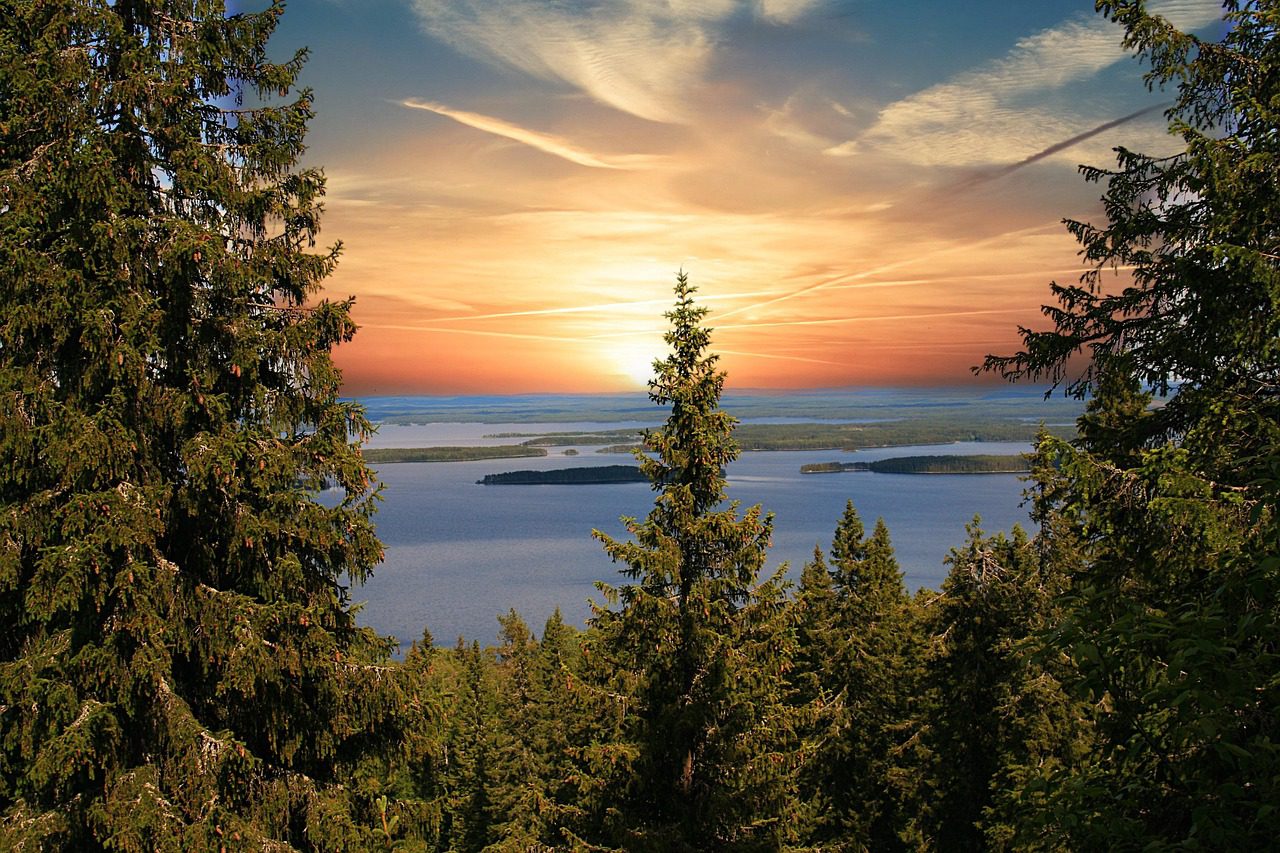
Every June, Finland essentially closes. Shops shutter, cities empty, and roughly five million people make a quiet migration toward lakes, forests, and old family cottages. Juhannus — Finnish Midsummer — falls on the weekend nearest to the summer solstice, and for Finns it is the year’s emotional peak: the long-awaited payoff for enduring eight months of cold and dark.
We’ve celebrated Finnish Midsummer in Rovaniemi and at lakeside cottages across the country, and every time we discover something new about how deeply the holiday runs. This guide explains what Juhannus actually looks like, how to experience it as a visitor, and what’s worth planning around versus what you can let surprise you.
Finnish Midsummer (Juhannus) falls on the Saturday between June 20 and 26 — in 2026 that’s June 20. Expect bonfires by lakeshores, smoke saunas, herring on the grill, and a country that almost entirely shuts down for two days. Most Finns spend it at a family cottage; visitors can experience it at lakeside resorts, open-air museums, or by renting a cottage of their own. The midnight sun means festivities continue well past midnight in a sky that never goes fully dark.
- What Juhannus actually is — and why it matters so much to Finns
- The Midsummer timeline: what happens and when
- Finnish Midsummer traditions at a glance
- How visitors can experience Juhannus authentically
- What to expect if you’re in a Finnish city over Midsummer
- Midsummer mistakes visitors make
- FAQ about Finnish Midsummer
- A final word from Rovaniemi
What Juhannus actually is — and why it matters so much to Finns
Juhannus is the Finnish name for Midsummer Eve and Midsummer Day. It marks the summer solstice — the longest day of the year — and has roots that go back long before Christianity arrived in Finland. The pre-Christian celebration of light and fertility was later merged with the Feast of Saint John the Baptist, which is why you’ll also hear it called Juhannusaatto (Midsummer Eve) or simply “the cottage weekend.”
Why Finns take it so seriously
Finland sits at the edge of the Arctic, which means its winter is genuinely hard. From November through February, daylight in Rovaniemi shrinks to a few pale hours, and the psychological weight of that darkness is real. Midsummer is the counterpoint — the moment when light has definitively won. The bonfire burning by the lake at midnight, under a sky that refuses to go dark, is a visceral celebration of that victory. Most Finns feel it in their chest in a way that’s difficult to explain to someone from further south.
The cottage culture connection
Finland has approximately 500,000 summer cottages — one for roughly every ten people in the country. The cottage, or mökki, is where Midsummer is meant to be spent. Urban Finland empties in the days before Juhannus as families travel to inherited or rented cottages, often the same one the family has used for generations. Helsinki traffic on Midsummer Eve is famously bad in the outbound direction, famously empty in the inbound one.
- When: the Saturday between June 20 and 26 (Midsummer Day); Eve is the Friday before. In 2026, Midsummer Eve falls on Friday, June 19 and Midsummer Day on Saturday, June 20.
- Public holiday: both days are Finnish public holidays. Many businesses close from Thursday evening through Sunday.
- Midnight sun connection: in Lapland, the sun doesn’t set at all around Juhannus. In southern Finland it dips briefly below the horizon for about an hour of twilight — which only amplifies the surreal atmosphere of a bonfire under a bright sky.
- National significance: Finns rank Juhannus alongside Christmas as the most important celebration of the year. Many consider it more emotionally meaningful than Christmas because it’s tied to nature rather than commerce.
The Midsummer timeline: what happens and when
If you’re visiting Finland around Juhannus, understanding the rhythm of the celebration helps you plan around it — and decide what you want to be part of.
Thursday and Friday: the great migration
By Thursday afternoon, Finnish roads leading out of major cities start filling. Finns load cars with food for the weekend — new potatoes, herring, sausages, strawberries — and head toward their cottages. Supermarkets are packed on Thursday and nearly empty by Friday evening. If you’re shopping for groceries, Thursday morning is your window.
Midsummer Eve (Friday evening into night)
This is the heart of Juhannus. By 6 pm, cottages are active: the sauna is heating up, the dock is cleared, and the bonfire — juhannuskokko — is being prepared by the lake. The bonfire is traditionally lit around 10 pm, as the sun begins its slow dip toward the horizon. In Lapland it never quite reaches it. In southern Finland, there’s a brief half-hour where the light softens to gold before brightening again.
Families gather around the fire. Sauna rounds follow. People wade into the lake even if the water is cold. The atmosphere is quiet and deeply communal — this is not a loud, alcohol-fueled party holiday, though drinks are present. It’s closer to a national exhale.
Midsummer Day (Saturday)
Saturday is slower. People sleep late, swim again in the morning, eat the remaining new potatoes, and sit on the dock. Some play mölkky or other outdoor games. The atmosphere is unhurried in a way that’s almost foreign to visitors from busier cultures. Very little is open. Very little needs to be.
Sunday: the return
Cities refill on Sunday afternoon. Roads back into Helsinki and other major cities are predictably congested. Monday returns to normal Finnish life, though many Finns take the full week off.
Finnish Midsummer traditions at a glance
Juhannus has a specific set of traditions that have stayed remarkably consistent across generations. These are the ones you’re most likely to encounter — or want to participate in.
The key traditions of Finnish Midsummer
- The Midsummer bonfire (juhannuskokko): almost every lakeside cottage builds one. Traditionally it was lit to ward off evil spirits; today it’s a focal point for gathering and a way to mark the longest night of the year. The larger the fire, the better.
- Sauna: Midsummer sauna is different from a regular sauna session. It’s often a smoke sauna — savusauna — which takes all day to heat and produces a gentler, deeper heat. Traditionally, a birch whisk (vihta) made of fresh summer branches is used to beat the skin gently, improving circulation and releasing a distinctive forest smell into the steam.
- Swimming: sauna and lake swimming are inseparable. You go from hot to cold and back as many times as feels right. The lake water in June is still cool — often 15–18°C in central Finland, colder in Lapland — but that’s part of the point.
- New potatoes: the first small potatoes of the Finnish summer are a Midsummer staple, boiled and served with butter and dill. Simple and seasonal in a way that Finns take seriously.
- Grilled sausages (makkara): cooked over the bonfire embers on sticks, not a gas grill. The specific Finnish sausage — usually a pork-based grillimakkara — is different from anything you’d find in Central Europe.
- Strawberries: June is Finnish strawberry season and the timing with Juhannus is close to perfect. Strawberries with cream are the dessert of the holiday.
- Flower crowns and birch branches: doorways and sauna benches are decorated with fresh birch branches. Young women traditionally pick seven different wildflowers and place them under their pillow on Midsummer night to dream of their future spouse — a tradition that’s kept with varying degrees of irony by younger Finns.
- Silence and darkness that isn’t dark: perhaps the most distinctive feature for visitors. Midsummer night around a Finnish lake is extraordinarily quiet. No fireworks (they’re largely banned), no loud music in most places. Just the fire, the water, and a sky that stays golden.
Dispatches from the Arctic, straight to you
We write about Finnish seasons, honest destination guides, and slow travel across 25 countries. No spam, ever.
How visitors can experience Finnish Midsummer authentically
The honest challenge for visitors is that Juhannus is a deeply family-oriented holiday. It’s not designed as a tourist event — there are no parades, no public concerts in most cities, and the best experiences happen on private cottage properties. But there are real ways in.
Option 1: Rent a cottage
This is the closest you’ll get to a genuine Finnish Midsummer. Cottage rental platforms like Lomarengas, Nettimökki, and Airbnb all have large Finnish cottage inventories. A lakeside cottage with a sauna for the Midsummer weekend costs anywhere from €150 to €600+ depending on size and location. Book early — well before April — because Juhannus is the single most competitive weekend of the year for cottage rentals. A cottage with its own dock, sauna, and firepit lets you recreate the full experience: bonfire, sauna, lake, new potatoes, silence.
Option 2: Open-air museums and public celebrations
Several Finnish open-air museums and cultural venues hold public Midsummer events. Seurasaari Open-Air Museum in Helsinki is the most famous: the island hosts a traditional Juhannus celebration with a large bonfire, folk dancing, and period demonstrations. The event is free to attend and genuinely lovely, even if it’s the “for visitors” version of a private cottage experience. Similar events happen at Kierikki Stone Age Centre in Oulu, Jyväskylä’s various lakeside parks, and at cultural sites across Finnish Lapland.
Option 3: Lake resort or rural hotel
Many Finnish lake resorts and rural hotels offer Midsummer packages that include sauna access, a bonfire, traditional Midsummer dinner, and accommodation. This is a middle path — more authentic than a city hotel, less personal than a private cottage. Resorts near Tampere, Savonlinna, and Kuopio in the Finnish lake district are popular for this.
Option 4: Ask a Finnish friend or colleague
This sounds like a joke but it’s genuine advice: Finns are quietly warm to visitors who show authentic interest in their culture. If you have a Finnish connection — a colleague, a friend of a friend — and you mention you’d love to experience a real Juhannus, the invitation often comes. Finns don’t typically invite outsiders lightly, but Finnish hospitality, once extended, is the real thing.
What to expect if you’re in a Finnish city over Midsummer
If your travel schedule puts you in Helsinki, Tampere, or another Finnish city over the Midsummer weekend, you should know what you’re walking into. The honest answer: the city will be very quiet, and that quiet has its own particular character.
- Most shops and services are closed on Midsummer Eve and Midsummer Day. Plan your groceries for Thursday. Pharmacies, gas stations, and some tourist-area restaurants stay open, but don’t expect normal city life.
- Public transport runs on a reduced holiday schedule. Check the HSL (Helsinki) or Tampereen Joukkoliikenne apps before you rely on a bus.
- The city itself is beautiful and peaceful. Helsinki in particular is stunning when empty. The market square, the waterfront, and the Esplanadi park feel genuinely different with almost no crowds. Walking or cycling around the city over Midsummer is a pleasure if you’ve arranged your food situation.
- Some bars and restaurants in city centers do stay open and draw the Finns who chose to stay in the city. These tend to be livelier than usual because everyone who’s there has decided to be there — it’s the anti-cottage crowd, and they’re having fun in their own way.
- Seurasaari’s public bonfire is a genuine highlight if you’re in Helsinki — worth the short trip even if you otherwise find the emptiness a bit disorienting.
Midsummer mistakes visitors make — and what we’ve learned
- Arriving in a major city without food plans. If you land in Helsinki on Midsummer Day and expect to find a full-service supermarket, you’ll be disappointed. Shop on Thursday, or book accommodation with breakfast included.
- Expecting the same vibe as Swedish Midsommar. Swedish Midsommar is a colorful, maypole-and-dancing social event. Finnish Juhannus is quieter, more private, and more nature-focused. They share the date and some traditions, but the emotional register is different. Don’t show up expecting a party.
- Booking a cottage for just one night. The full Midsummer experience unfolds over Friday evening through Sunday. A single night misses either the bonfire and sauna ritual or the slow Saturday morning. Book two nights minimum.
- Underestimating the mosquitoes. Finnish summer mosquitoes are serious. Around lakes and bogs, they are genuinely aggressive on calm evenings. Bring proper repellent — DEET-based if you can find it — and don’t rely on citronella.
- Not dressing for the cold after midnight. The sky stays bright, which fools the body into thinking it’s warm. At 1 am by a Finnish lake in June, temperatures can drop to 8–12°C, especially with a light wind off the water. A fleece by the bonfire is essential, not optional.
- Trying to drive anywhere on Midsummer Eve afternoon. Every Finnish road out of every Finnish city is packed from roughly 2 pm on Midsummer Eve. If you’re renting a cottage, leave Thursday evening or Friday very early morning. You’ll thank yourself.
Frequently asked questions about Finnish Midsummer
When exactly is Finnish Midsummer in 2026?
Midsummer Eve (Juhannusaatto) falls on Friday, June 19, 2026, and Midsummer Day (Juhannus) is Saturday, June 20, 2026. Both are Finnish public holidays. Most celebrations begin on Friday evening and continue through Saturday. Many Finns take the surrounding days off as well, making it a long weekend or even a full week away.
Is Finnish Midsummer the same as Swedish Midsommar?
They share the same calendar date and roots in the summer solstice, but the atmosphere is quite different. Swedish Midsommar is famously social and colorful — maypoles, flower crowns, group dancing, schnapps songs. Finnish Juhannus is quieter, more family-oriented, and more tied to nature and the cottage. Think of them as cousins with different personalities: Sweden’s is a party, Finland’s is a retreat.
Can I experience Midsummer in Finland as a solo traveler?
Yes, though it takes a bit of planning. The public bonfire at Seurasaari in Helsinki is welcoming and genuinely festive. Booking a solo cabin at a lake resort gives you sauna access and a bonfire without needing a cottage group. Some hostels in tourist areas also organize Midsummer events. If you’re comfortable with solitude and nature, renting a small cottage alone is also a perfectly valid — and very Finnish — way to spend the weekend.
What if it rains on Midsummer?
Finland shrugs and continues. Rain on Juhannus is common enough that Finns have essentially built it into the holiday. The sauna doesn’t care about rain. The bonfire gets lit anyway, or moved slightly earlier in the evening if the forecast looks bad. The lake swim happens regardless of temperature. A rainy Juhannus is still a Juhannus — and the misty lake with low cloud and a bonfire glow has its own particular atmosphere.
What food should I expect at a Finnish Midsummer celebration?
The classic menu: new potatoes (uudet perunat) boiled with dill, grilled sausages (makkara) cooked over coals, pickled herring (silakka), fresh strawberries with cream, and rye bread with butter. Drinks are typically beer, cider, or lonkero (a Finnish gin-grapefruit long drink that is a national institution). It’s not fancy food — it’s seasonal, simple, and deeply good.
Is it worth visiting Finland specifically for Midsummer?
Yes — if you plan properly. Midsummer is genuinely one of the most atmospheric times to be in Finland, and the midnight sun around the solstice makes the whole country feel slightly magical. The challenges are real: cottages book out early, cities go quiet, and transport can be tricky. But a Midsummer Eve by a Finnish lake, watching the bonfire reflected in still water under a golden sky that never goes dark, is one of those travel experiences that doesn’t require any justification afterward.
A final word from Rovaniemi
We’ve spent Juhannus in different parts of Finland over the years — at family cottages, at lakeside resorts, once unexpectedly in a Helsinki that was much quieter and more beautiful than we expected. Every time, something about the holiday gets under your skin a little deeper.
There’s a Finnish word, hiljaisuus, that means silence — but in Finnish usage it carries a specific kind of peaceful, chosen quiet. Midsummer is hiljaisuus made into a national holiday. A whole country stepping away from whatever it was doing and remembering, collectively, why it bothered enduring another winter.
If you’re traveling to Finland near the solstice, arrange your schedule around it. Even if you can’t get a cottage, even if you’re in a city that’s gone quiet around you — stay up past midnight at least once and watch what the sky does. It does something worth seeing.
Joona & Alla
A Finnish-Ukrainian couple living in Rovaniemi, Finland. Joona is a marketing professional in Lapland tourism; Alla is an AI Engineer. Together we’ve visited 25 countries and share honest, locally-grounded travel writing from our home in the Arctic.
Read our full story →