Best Free Camping Spots in Finland: Everyman’s Right Explained for Campervans
We live in Rovaniemi and have road-tripped Finland in a campervan more times than we can count. Here’s the honest guide to free camping Finland — what the law actually allows, where the best spots are, and the unwritten rules that keep it that way.
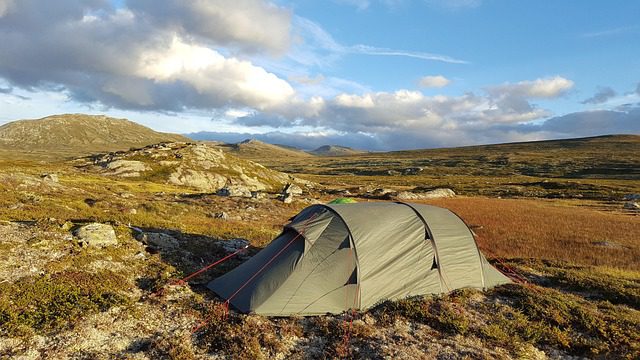
We first tried free camping in a campervan outside Rovaniemi on a warm July night when every official campsite in Lapland was full or charging city-hotel prices. We parked on a gravel track beside the Ounasjoki river, cooked pasta on the tailgate, and woke up to a moose thirty metres away. Nobody knocked. Nobody fined us. That’s the quiet magic of free camping Finland campervan travel — and it’s entirely legal here.
Finland’s jokamiehenoikeus — Everyman’s Right — is one of the most generous outdoor access laws in the world. It lets you camp almost anywhere in nature, on land you don’t own, for a reasonable time. That said, “almost anywhere” has limits, and vanlifers from outside Finland regularly get into awkward situations by misreading the rules. This guide is written from lived experience, not from a government PDF.
Free camping in Finland is legal for campervans under Everyman’s Right: stay 1–2 nights, keep 150 m from the nearest house, leave no trace, and avoid fenced fields or national park fire-restriction zones. The best spots are lakeside forest tracks in Lapland, the Finnish Archipelago, and national park periphery areas.
- What Everyman’s Right actually allows for campervans
- The unwritten rules locals follow
- Best free camping spots in Finland by region
- Apps and tools for finding overnight spots
- National parks: the rules are different
- Mistakes we’ve made free camping in Finland
- Frequently asked questions
- A final word from Rovaniemi
What Everyman’s Right actually allows for campervans
The legal basics
Jokamiehenoikeus gives everyone — residents and tourists alike — the right to access and camp in Finland’s forests, fields, and waterways without asking permission. For campervans, this translates into a straightforward set of rules.
- Duration: You may stay in one spot for one or two nights. Two nights is the practical norm. Three or more in the same spot is legally grey and locally unwelcome.
- Distance from dwellings: Your van must be far enough from the nearest house that you don’t cause disturbance. 150 metres is the widely cited rule of thumb.
- Leave no trace: You must not damage trees, plants, or the ground. No digging, no trenches, no cutting live wood. Take all rubbish with you.
- Fires: Open fires require bare ground or a fire ring away from trees, and are banned outright during fire warnings. A camp stove inside the van is always fine.
- Vehicles on terrain: Driving off-road on soft terrain is not covered by Everyman’s Right. You must use existing tracks, roads, or gravel laybys.
What it does NOT cover
Everyman’s Right does not override private property rights or municipal parking rules. You cannot camp in someone’s garden, on a private beach with a fence, in a car park for longer than posted, or at a roadside rest area with overnight-stay restrictions.

The unwritten rules locals follow
Finnish culture around outdoor access is built on mutual trust. Break the social rules and you won’t be arrested, but you’ll damage access for the van traveller who comes next.
Arrival and departure etiquette
- Arrive after 6 pm and leave before 10 am. This is unwritten but universal among experienced Finnish campers.
- If another van is already at a spot, park at least 50 metres away or find somewhere else. Spots are not first-come-first-served.
- Engine idling for longer than a few minutes is socially frowned upon, especially near water.
- Don’t occupy the only good lakeside access point on a summer weekend. Someone with a boat trailer needs it more than you do.
Waste and water
- Grey water should not be dumped at the roadside or directly into a lake. Use service stations where possible.
- Cassette toilet waste must go to a designated chemical waste point — service stations, campsite facilities, or dump stations marked on Park4Night and iOverlander.
- Finnish tap water is among the cleanest in the world; stock up at petrol stations or supermarkets rather than taking from lakes unless you have a good filter.
Related read Planning a longer Finland route? Our Finland Road Trip: 10-Day Local Itinerary maps out the best drives and overnight-stop regions end to end.
Best free camping spots in Finland by region
Finland has roughly 310,000 lakes and 75% forest cover. Finding a spot is almost never the hard part. Below are the regions and specific spot types we return to every time.
Turn off any main road in northern Lapland onto an unmarked gravel track and drive 500 m. Around Sodankylä, Saariselkä, and the Inarijärvi shoreline these lakeside pull-ins are everywhere.
The Road 196 coastal loop through Turku Archipelago has dozens of gravel laybys with sea views. Most are empty midweek even in July.
Quiet forest roads with multiple gravel spots beside the water. Twenty minutes from the city but it feels like deep wilderness at night.
Äland is a separate jurisdiction but the same Everyman’s Right applies. The smaller islands (Lemland, Föglö) have quiet forest tracks with sea inlet views.
Just outside the boundaries of Oulanka, Koli, and Pällästunturi national parks the terrain is state forest where Everyman’s Right applies fully. Some of the best views with none of the parking queues.
The east bank of the Ounasjoki south of Rovaniemi has gravel tracks used by local fishermen. In summer, the midnight sun reflects off the river until well after midnight.
Around Kerimäki and Savonlinna there are dozens of approved rest areas and forest tracks where overnight stays are normal and undisturbed. The lake system here is almost fractal in its shoreline.
The Kainuu region is the least-visited part of Finland. Abandoned logging roads here lead to completely untouched lakeside spots where you might not see another vehicle for 48 hours.
Get our weekly travel notes
Road-trip routes, new free camping finds, and honest guides — straight from Finnish Lapland.
💡 Our campervan tip: prices for the same van vary a lot between rental brands. We compare Finland campervans across 160+ rental companies on CampervanPlanet — and code HUNGRYTRAVELFAMILY5 takes 5% off.
Apps and tools for finding overnight spots
The right app turns a three-hour search into a ten-minute decision. We use three tools on every Finland campervan trip.
The three apps we actually use
- Park4Night — The global standard for van camping spots. Finland coverage is decent in Lapland and Lakeland; sparse in far eastern Kainuu. Filter by “nature spot” and check reviews from the last twelve months.
- iOverlander — Better for remote Lapland spots. More overlanding-focused, so descriptions are practical (“high clearance required”, “track is soft after rain”).
- Maasto (National Land Survey of Finland) — Free official app. Shows land ownership boundaries and track classifications. Invaluable for checking whether a track is state forest (Everyman’s Right applies) vs. private land.
Offline maps are essential
Mobile data is patchy in eastern and northern Lapland even in 2026. Download offline maps for your region before you go. Always cross-reference with Maasto before driving a track you’re not sure about.
Practical tip Our guide to using Google Maps offline in Lapland and Iceland walks you through exactly how to cache the maps you need before you lose signal.
National parks: the rules are different
National parks in Finland are managed by Metsähallitus. Everyman’s Right applies within them, but with additional restrictions. This is where most campervan tourists get it wrong.
What’s different inside national parks
- Vehicles: You cannot drive off designated roads inside a national park. Campervans must park at official car parks at the boundary or at designated camping areas.
- Camping zones: Many parks designate specific free camping areas. Outside these zones, wild camping is still technically permitted but fire lighting is often restricted or banned.
- Fire bans: Fire bans are enforced more strictly inside national parks and fines are real. Check Metsähallitus.fi before any open-fire plans.
- Dog rules: Dogs must be on a leash inside all Finnish national parks between May 1 and August 31 (reindeer calving and bird nesting season).

Mistakes we’ve made free camping in Finland
- Parking on private agricultural land. We once followed Park4Night to a “great lakeside spot” that was the edge of a farmer’s field. The satellite imagery on Maasto would have shown us the field boundary immediately.
- Underestimating mosquitoes in June. The first two weeks of June in Finnish Lapland have mosquito numbers that are genuinely oppressive near water. Net screens on every opening are not optional in June.
- Arriving at a well-known spot on a Finnish public holiday. Midsummer (Juhannus) and Vappu turn every good free camping spot into an impromptu party. Either embrace it or avoid well-known spots on those weekends.
- Not checking the fire-ban status. Finland’s fire warning system escalates fast in dry summers. We’ve driven 30 km to a spot only to arrive and find fires were banned for the whole region.
- Forgetting to empty the cassette before a remote stretch. Eastern Finland has long stretches with no service stations. Running out of cassette capacity with 200 km of forest ahead is an unpleasant experience.
- Trusting that “it’s dark enough” in early summer. Midnight sun in Lapland means genuine 24-hour daylight from late May to mid-July. If you need darkness to sleep, invest in blackout blinds before you go north.
Book your Finland campervan
Compare prices across 160+ campervan and motorhome rental brands, get a free 1GB eSIM with every booking — and 5% off with code HUNGRYTRAVELFAMILY5.
Check prices & availability →Frequently asked questions
Is free camping in Finland legal for foreign tourists?
Yes. Jokamiehenoikeus (Everyman’s Right) applies to everyone in Finland regardless of nationality. There is no permit required. The rules are identical for a Finnish local and a visiting tourist from New Zealand.
Can I park my campervan overnight at a roadside rest area?
Most Finnish roadside rest areas (levähdysalueet) allow overnight stays. A small number near larger southern cities have posted restrictions; check the signs. Rest areas outside the Helsinki–Tampere–Turku triangle are generally fine for one night.
Do I need a permit to have a campfire in Finland?
No permit is needed under normal conditions, but open fires are banned whenever the Finnish Meteorological Institute issues a fire warning. Check ilmatieteenlaitos.fi before lighting any fire.
What is the best time of year for campervan camping in Finland?
June to mid-August is the most comfortable, with warm nights. Late August and September are our favourite: autumn colours (ruska) peak, mosquitoes are mostly gone, and spots are far less crowded. Winter camping is possible but requires a properly insulated and heated van.
Can I empty grey water and cassette waste at petrol stations in Finland?
Most Finnish ABC and Teboil service stations have fresh water and chemical waste points (marked septitankki or saniteettijäte). Coverage is good on major routes. In remote eastern and northern Finland, plan around campsite facilities in small towns.
Is it safe to drink water from Finnish lakes?
Many Finnish lakes are very clean but Metsähallitus advises filtering or boiling any untreated surface water. In areas with active reindeer herding in northern Lapland, water sources near herding areas can carry parasites. We use a Sawyer Squeeze filter as standard kit.
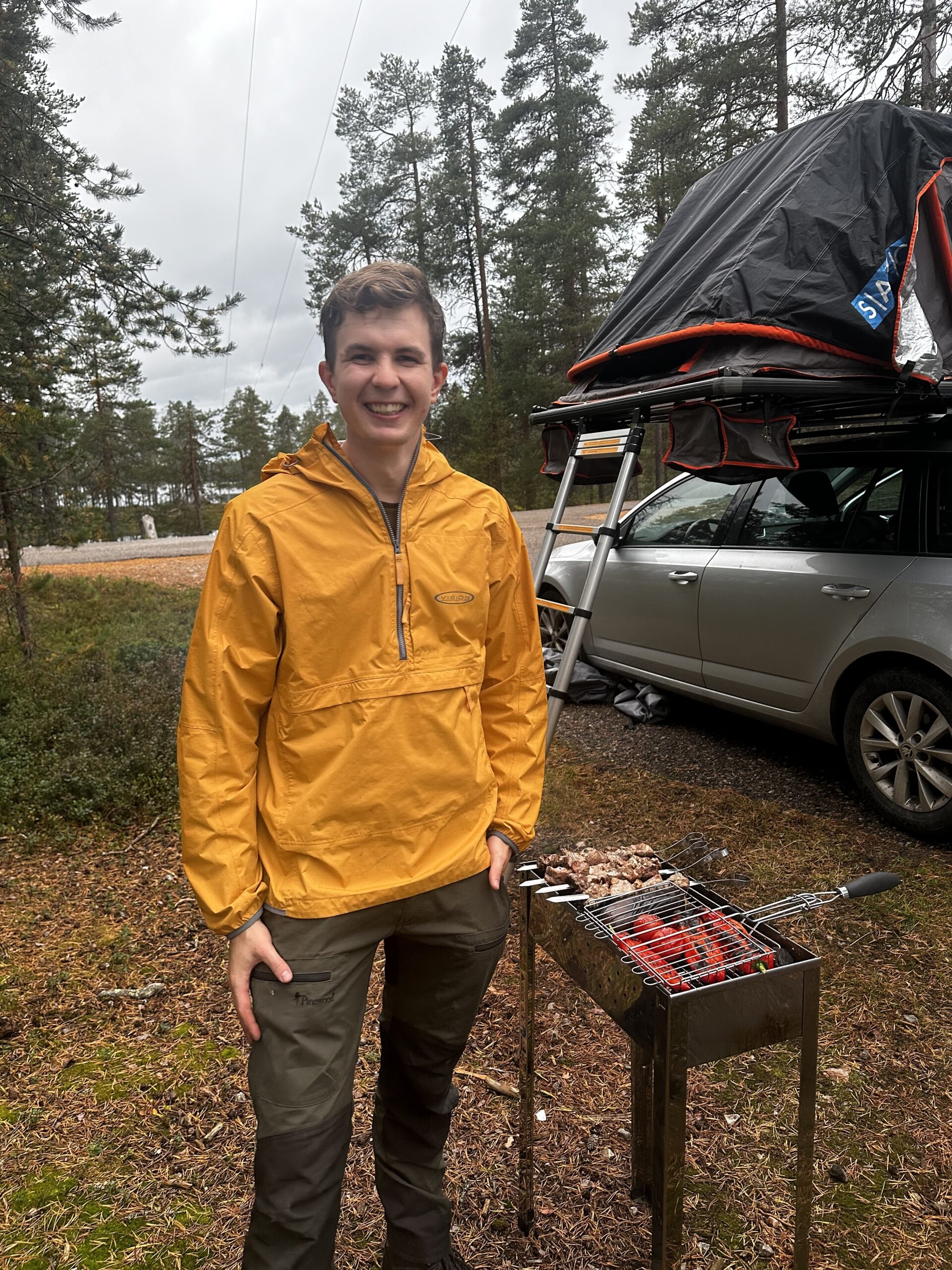
A final word from Rovaniemi
We’ve camped free in our campervan from the Gulf of Finland to the shores of Inarijärvi, and the experience is genuinely different from anything you get at a formal site. No check-in queues, no amenity blocks with lukewarm showers. Just a lake, a tree line, and the particular silence of a Finnish night.
The rule that makes all of this possible — Everyman’s Right — is upheld through cultural trust more than legal enforcement. Treat it that way. Move on after two nights, take your litter, don’t drive on soft ground, and the access that Finnish locals have given everyone will stay open for the next generation of van travellers too.
If you’re building a Finland campervan itinerary and want local insight on where to go, feel free to send us a message via the contact page. We answer every one.
Joona & Alla
A Finnish-Ukrainian couple living in Rovaniemi, Finland. Joona is a marketing professional in Lapland tourism; Alla is an AI Engineer. Together we’ve visited 25 countries and share honest, locally-grounded travel writing from our home in the Arctic.
Read our full story →Camping under Finnish skies
For the nights when everyman’s right gives you the best pitch in the country.
Take the Nordic light home
Aurora, fells and frozen lakes, shot by Joona and printed on museum paper. Ships worldwide from Printler.
Browse the prints →Edit your trip photos like ours
The exact presets behind the photos on this site — Winter Magic, Golden, Frost and more, from €34.
See the presets →Our Nordic trip planner (PDF)
The one-page planner we use ourselves, plus the HUNGRYTRAVELFAMILY5 5% code and one short email a week with real deals. Unsubscribe any time.