Cooking by the Lake in Finland: Simple Travel Moments We Keep Coming Back To
Joona and Alla on why the best meals in Finnish Lapland happen outside — on a fire, by water, with no recipe and no rush.
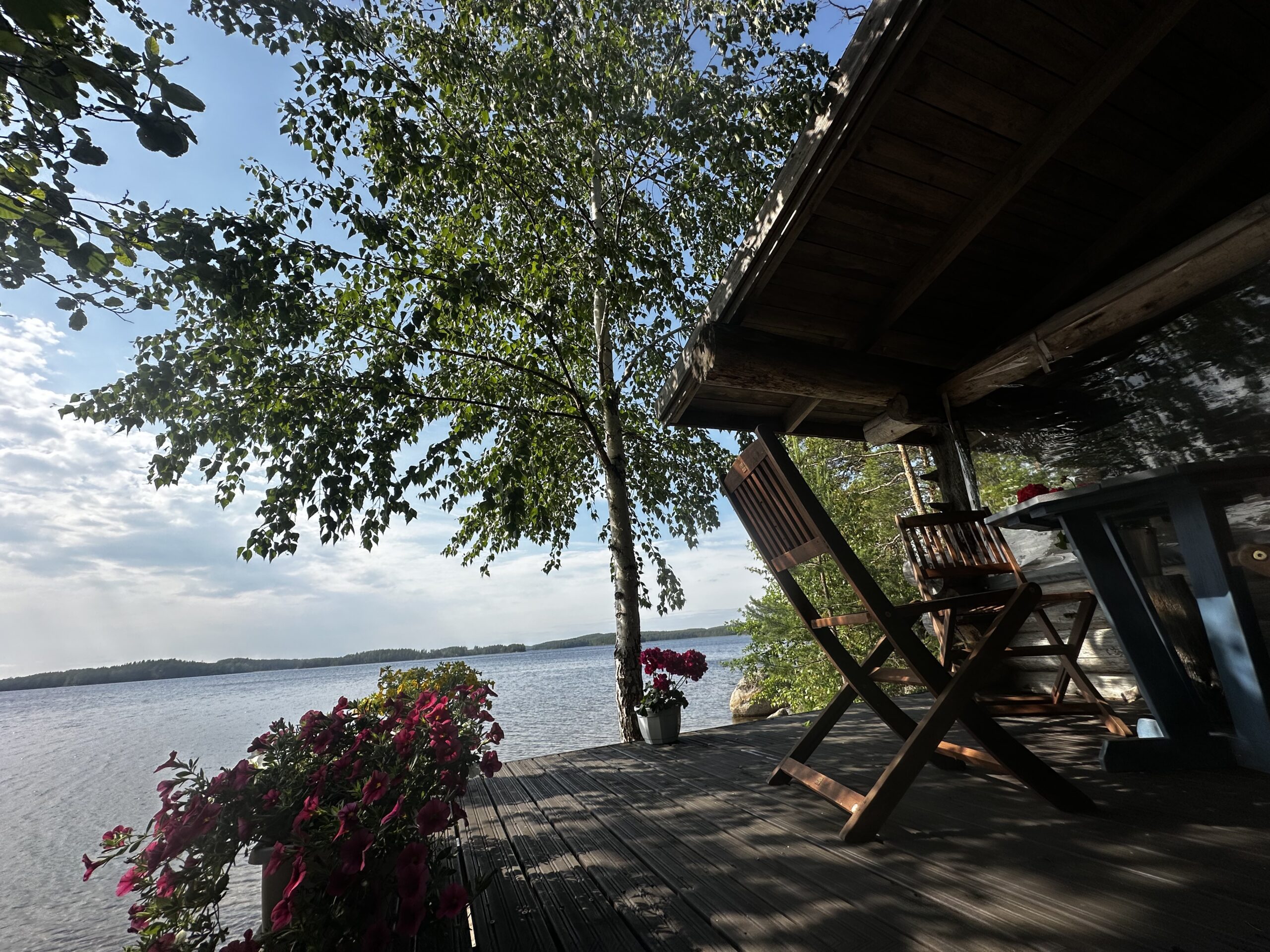
We have cooked in more than twenty countries. We have eaten at Michelin-starred tables in Copenhagen and grabbed street food in Singapore at midnight. But when people ask us about our favourite meal on the road, we almost always say the same thing: sausages on a stick above a lake fire somewhere north of Rovaniemi, with nothing but spruce trees and a pale July sky for company.
Lakeside cooking in Finland is not really about the food. It is about the particular quality of slowness that descends when you are sitting on a rock by the water with nowhere to be. This guide is an attempt to explain what that feels like, and how to find it yourself — whether you are renting a mökki (Finnish summer cottage) for a week, camping by Everyman’s Right, or making a day trip from any Finnish city.
Cooking by a Finnish lake is one of the most accessible and most rewarding travel experiences the country offers. You need a fire permit or a designated fireplace, simple ingredients from any supermarket, and nothing else. The best months are June through August, when the light never quite disappears and the water is warm enough to swim before and after the meal.
- Why lakeside cooking feels different in Finland
- What to cook — the classics and a few of our own
- What you actually need (and what to leave at home)
- Finding your spot: Everyman’s Right and mökki life
- The fire rules every visitor should know
- Mistakes we made so you don’t have to
- Frequently asked questions
- A final word from Rovaniemi
Why lakeside cooking feels different in Finland
Finland has 187,888 lakes. That number is technically a statistic, but once you have spent a few days here it starts to feel like an attitude — a quiet insistence that the country will never be more than a short walk from open water. Most Finns grew up going to a mökki every summer. The ritual of arriving, opening the windows, lighting the first fire, and cooking outside is not a lifestyle choice; it is closer to a cultural reflex.
As a Finnish-Ukrainian couple based in Rovaniemi, we have watched Alla go from politely confused by all this to the person most likely to suggest we drive forty minutes to eat by the river on a weeknight. Something about cooking outdoors beside Finnish water slows time in a way that is hard to explain and immediately recognisable when you feel it.
The light changes everything
In June and July the sun barely dips below the horizon in Lapland, and in southern Finland it sets for only a few hours. What this does to a lakeside meal is remarkable. You sit down to eat at nine in the evening and the light is still golden. You finish the last of the coffee at half past ten and the sky is a bruised pink-orange over the treeline. There is no pressure to go inside. The meal just extends naturally into the evening.
The atmosphere is unlike anything we have found in more obviously “scenic” countries. It is quiet — not lonely quiet, but the kind of quiet that feels deliberate. A distant loon calling. The small sound of the lake against the rocks. No music necessary.
It is genuinely for everyone
This is not adventure travel. You do not need bushcraft skills or expensive gear. Finnish lakeside cooking at its most authentic is a sausage on a stick over a public firepit, with a paper cup of coffee from a thermos. Families do it. Elderly couples do it. Groups of teenagers do it. The barrier to entry is lower than almost any other meaningful travel experience we know of.
What to cook — the classics and a few of our own
Finnish outdoor cooking is famously unfussy. The whole point is that the setting does most of the work. That said, there are a handful of dishes so attached to the lakeside experience that skipping them would feel like going to Naples and ordering a pizza without anchovies.
The non-negotiables
- Makkara on a stick (grilled Finnish sausage): The undisputed national outdoor food. Nakki or Lauantaimakkara from any K-Market or S-Market, skewered on a stick and held over coals until the skin blisters. Eat with mustard. Accept no substitutes.
- Potatoes in foil: Halved, buttered, salted, wrapped in foil, and pushed into the embers for twenty-five minutes. The Finnish potato variety is waxy and sweet and needs nothing else. This is how Finnish grandmothers have cooked for decades.
- Loimulohi (flame-grilled salmon): Salmon fillets pinned to a cedar board and angled toward an open fire. The smoke and heat do something to the fat that ovens cannot replicate. Traditional in Lapland especially — we have eaten this on the banks of the Ounasjoki river in Rovaniemi and it is one of the best things either of us has ever tasted.
- Nokipannu coffee (campfire coffee): Ground coffee boiled directly in a blackened enamel pot. Let it settle, pour carefully. Drink beside the fire with a pulla (cardamom bun) from the bakery aisle. This is not optional.
- Berries picked ten minutes ago: In summer, the edges of most Finnish forests around lakes are lined with wild strawberries, bilberries, and cloudberries. Pick a handful and eat them with the coffee. No recipe required.
A few things we have added over the years
- Reindeer sausage from the local market: Available in northern Finland, richer and smokier than pork makkara. Worth seeking out if you are in Lapland.
- Grilled halloumi and summer vegetables: For when we are cooking for vegetarian friends and want something that actually satisfies. Halloumi takes well to direct heat and needs only lemon.
- Cast iron eggs at sunrise: We own a small cast iron skillet that has seen every camping trip we have taken since 2019. Eggs, butter, fresh dill, eaten while watching the morning mist lift off the lake. This is our favourite meal, full stop.
What you actually need (and what to leave at home)
Finnish outdoor cooking rewards minimal packing. Here is what has actually earned its place in our kit after years of testing, and what we left behind after carrying it once and never using it.
- A sharp knife: Non-negotiable. A single good knife does everything. Spend money here.
- A cast iron or carbon steel pan: Heavier than a camping pan but worth it for the heat distribution. We use a 20 cm skillet for almost everything.
- A small cutting board: Thin bamboo, rolls into the bag easily.
- A thermos: Finnish summer mornings can be cold. A thermos of coffee at 6 am by the lake is a specific kind of luxury.
- A headlamp: Even in summer, midsummer campfire sessions can extend past midnight in southern Finland.
- Foil: For potatoes, for fish, for improvised lids. The most versatile camping tool.
- A lighter and a firestarter block: Birch bark lights easily in dry weather, but a firestarter block saves you from the humiliation of thirty failed attempts in front of a group of patient Finnish friends.
- A reusable cup and a small pot: For the nokipannu coffee. Skip the camping espresso gadget — it will break by trip two.
Leave at home: elaborate spice kits (simple salt, pepper, and butter is what Finnish outdoor food is), a full camp kitchen setup, and the idea that this needs to be complicated. The simpler you pack, the better the meal usually tastes.
Get the real stuff — from the Arctic Circle
Monthly notes on Nordic travel, slow Lapland life, and the meals worth driving for. No filler.
Finding your spot: Everyman’s Right and mökki life
One of the things that surprises visitors most about Finland is how accessible the outdoors is. Jokamiehenoikeus — Everyman’s Right — is a legal framework that allows anyone to walk, camp, and cook in nature, including on private land (with reasonable distance from buildings), without needing permission. You can legally pitch a tent and light a fire in a designated spot almost anywhere in Finland. This is not a loophole. It is the law.
- Camping in nature: You can camp for one or two nights in most places without permission. Move on after that.
- Lighting fires: Legal in designated firepits or in places where the fire risk is low. Always forbidden during official fire warnings (which are common in dry summers — check the Finnish Meteorological Institute website, en.ilmatieteenlaitos.fi).
- Swimming and boating: You can swim and row in any water body. Finland has no private beaches in the way some countries do.
- Picking berries and mushrooms: Legal everywhere, for personal consumption.
Renting a mökki
If Everyman’s Right camping is freedom, mökki rental is comfort. A mökki is a Finnish summer cottage — typically a simple wooden structure beside a lake, with a sauna, a wooden jetty, and a firepit. They range from genuinely rustic (outdoor toilet, wood-heated sauna) to surprisingly modern. Rental platforms like Lomarengas and Nettimökki have thousands of listings across Finland, with summer week rates typically running from €300–€800 depending on size and location.
We have rented mökkis around Rovaniemi, near Kuusamo, and in the lake district south of Tampere. Every single one has had a firepit or an open grill by the lake. Every single one has led to at least one meal outside that we still talk about.
The fire rules every visitor should know
Finland takes fire safety seriously, and summer droughts have made the rules stricter in recent years. Getting this wrong is not just embarrassing — it can result in fines and, in worst cases, criminal liability. Here is what you actually need to know.
- Check the fire warning level before lighting anything. The Finnish Meteorological Institute publishes daily forest fire warnings. “Forest fire warning” means open fires are forbidden in forests and other dry land. This applies even to campfires in nature.
- Designated firepits (laavu or nuotiopaikka) are almost always safe to use, even during warnings, unless a full fire ban is in place. Look for the brown signposts in national parks.
- Never light a fire on a rock. The heat can crack the stone. Use a prepared surface or existing ring of stones.
- Extinguish completely. Pour water until there is no steam and you can hold your hand over the ashes. Finnish “completely out” means completely out, not “it looks out.”
- Respect the wind. Finland’s lake shores can be gusty. Never build a fire when the wind is strong enough to carry sparks.
- In national parks, use only designated firepits. Collecting fallen wood is typically allowed; cutting live trees is not.
Mistakes we made so you don’t have to
- Bringing too much food. The first summer we tried this, we packed a full cool box for four people. Half came back untouched. Three sausages each, some potatoes, coffee and pulla. That is a complete meal by a fire.
- Not checking the fire warning. We drove forty minutes to a lake spot during a dry July, and the warning level was “extremely high.” No fire. We ate cold sandwiches and still had a good evening, but it was not what we planned. Always check first.
- Underestimating the mosquitoes. Finnish lake shores in June and early July can have intense mosquito activity around dusk. We now always bring a small bottle of DEET and a head net. Not glamorous, but necessary.
- Forgetting the coffee. Once. Never again. The meal is technically possible without it, but something fundamental is missing.
- Leaving before the embers are done. We once left a fire site thinking it was out. We went back five minutes later because Alla had forgotten her hat and smoke was still rising. Douse everything twice.
- Not swimming before the meal. Finnish lake water in summer reaches 18–22°C. A ten-minute swim before you cook transforms a pleasant evening into something that feels genuinely extraordinary. Do not skip it.
Frequently asked questions
Can anyone light a fire by a Finnish lake, or do you need permission?
Under Everyman’s Right (jokamiehenoikeus), you can light a fire in designated firepits in nature without permission. Open fires outside marked spots are governed by the fire warning level published daily by the Finnish Meteorological Institute. Always check before you go — forest fire warnings are common in dry summers and apply even to camp fires in natural areas.
What is the best time of year for lakeside cooking in Finland?
June through August is the classic window, with July being the peak. The water is warmest (18–22°C in many lakes), the evenings are long or endless, and berries are ripe in the surrounding forests. Early June can still feel cold in Lapland. September brings beautiful colours and fewer mosquitoes, but swimming becomes brisk.
Where can we find a good lakeside firepit without renting a mökki?
Finland’s national parks and state forests are dotted with free designated firepits (nuotiopaikka), often with a supply of firewood, a simple shelter (laavu), and sometimes a dry toilet. The Finnish national parks website (nationalparks.fi) has maps for all of them. Many are within day-trip distance of Finnish cities.
Do we need any special equipment for lakeside cooking in Finland?
Not really. A sharp knife, a small cast iron or camping pan, foil, a thermos, and a lighter will cover almost everything. Sausages on sticks — proper long green sticks cut fresh — are the only other tool. Finns have been cooking this way for generations without specialist gear.
Is it safe to swim in Finnish lakes?
Generally yes. Finnish lake water is among the cleanest in Europe — most lakes are fed by rain and snowmelt, not rivers with agricultural runoff. The main exception is blue-green algae blooms that can occur in warm, still weather in late July and August. The Finnish Environment Institute (syke.fi) monitors and publishes warnings. If you see or smell an unusual turquoise or green tinge on the water, do not swim.
Can you pick the berries growing around the lakeside and eat them?
Yes. Everyman’s Right includes the right to pick wild berries and mushrooms for personal consumption anywhere in Finland. In summer you will find wild strawberries, bilberries, and cloudberries within easy reach of most lake shores. Basic rule: only pick what you can clearly identify as edible. Wild strawberries and bilberries are hard to mistake; if you are uncertain about mushrooms, leave them.
A final word from Rovaniemi
We talk a lot on this blog about destinations — the places, the logistics, the comparisons. But the meals we actually remember from fifteen years of travel are almost never in restaurants. They are the ones where something else was happening: the light was strange, the setting was quiet, we were somewhere unfamiliar but felt completely at ease.
Cooking by a Finnish lake is that kind of meal. It does not require a recipe or a reservation. It requires showing up somewhere beautiful and being willing to slow down enough to notice it.
The practical takeaway: if you are spending any time in Finland between June and August, find a lake, buy some sausages, locate a firepit, and stay until the embers are cold. The midnight sun will handle the rest.
We are Joona and Alla — a Finnish-Ukrainian couple based in Rovaniemi. We travel slow, cook outside whenever possible, and write about both. If you found this useful, the newsletter is the best place to follow along.
Joona & Alla
A Finnish-Ukrainian couple living in Rovaniemi, Finland. Joona is a marketing professional in Lapland tourism; Alla is an AI Engineer and content strategist. Together they have visited 25 countries and counting — always hungry for the next honest travel moment.
Read our full story →