Reindeer Farm Experience in Rovaniemi: What to Actually Expect
We’ve visited every reindeer farm near Rovaniemi — multiple times. Here’s the honest, no-fluff guide to what the experience is really like, how much it costs, and which farms are actually worth your money.
We’ve planned more than a hundred trips from our home in Finnish Lapland — some for clients, some for weekend road trips across Norway, and more recently a lot of them chasing the aurora across Finnish Lapland. After years of winter chasing a year, we want to share what actually works, what breaks, and the exact prompts we use.
This is not a “10 ways AI will change travel” think-piece. It’s the workflow we use ourselves.
Most reindeer farm visits near Rovaniemi last 1–2 hours and include a short sledding ride, feeding the reindeer, and a warm drink in a kota hut. Prices run €45–€150 per adult. We recommend booking direct with family-run farms — you’ll get a more authentic experience and better value than through hotel desks.
What Is a Reindeer Farm Visit?
A reindeer farm visit in Rovaniemi is exactly what it sounds like — and also nothing like what the brochures show. The glossy photos suggest a magical forest adventure with twinkly lights and photogenic reindeer standing perfectly still while you scratch their ears. The reality is messier, louder, and — honestly — much more charming.
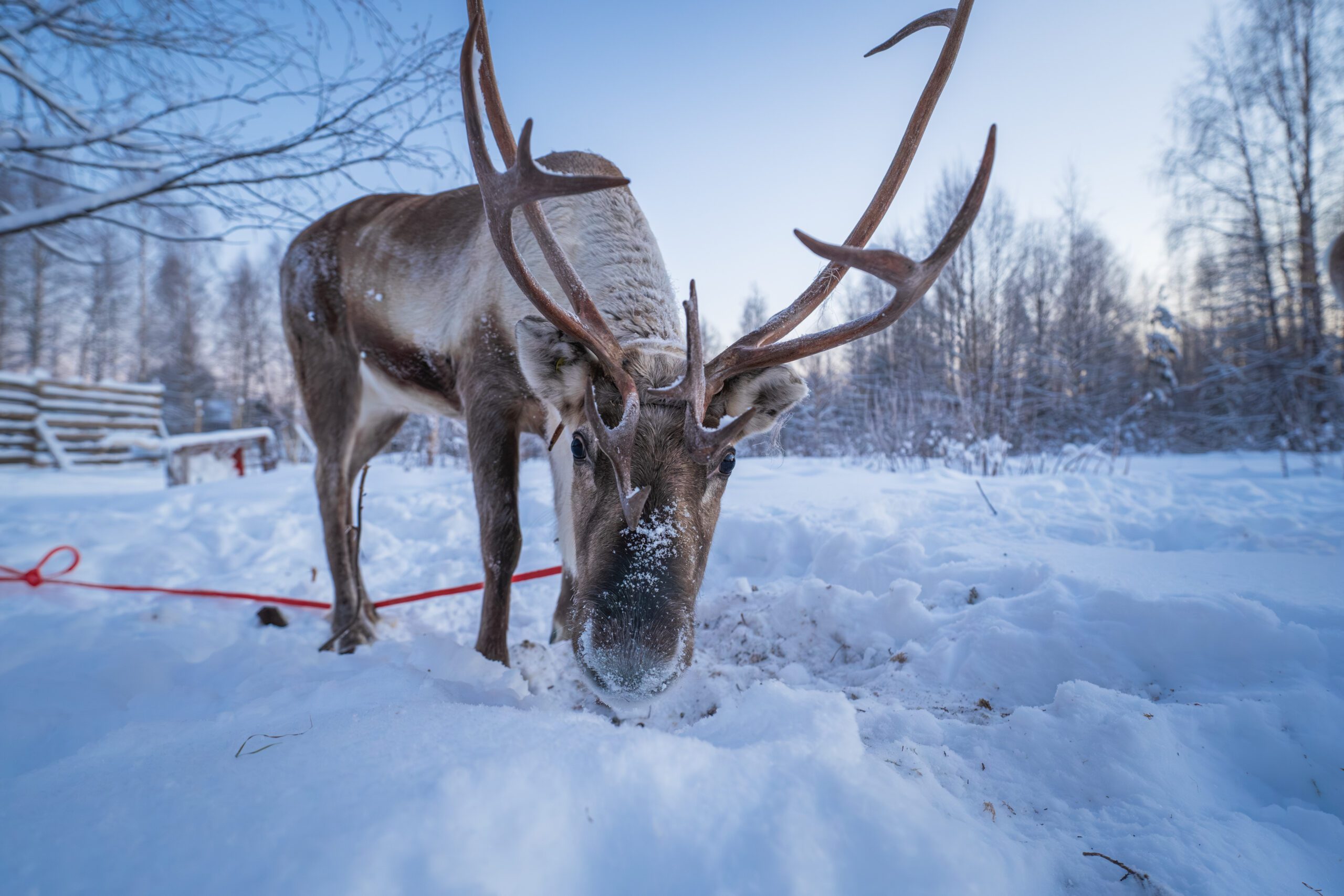
Most farms within 20–40 km of Rovaniemi are working farms first, tourist operations second. The reindeer are real working animals. Many of them are genuinely tame, some are skittish, and a couple will try to eat your jacket. This is a good thing. It means you’re interacting with real animals in a real environment, not a petting zoo dressed up for Instagram.
The typical visit structure: you arrive, get oriented, feed the reindeer by hand, take a short sledding ride (usually 500m–2km depending on snow conditions), and then sit down inside a traditional kota hut for hot drinks — usually coffee, cocoa, or a warm lingonberry juice — with optional snacks like cinnamon buns or sausage grilled over the fire.
Duration is typically 1–2 hours depending on the package you book. Some farms offer extended experiences: reindeer herding on foot, a longer sledding loop through the forest, or a full lunch with traditional Sami-influenced dishes. Those typically run 3–4 hours and cost considerably more.
One thing we always tell visitors: this experience is genuinely more enjoyable when it’s cold. Once temperatures drop to -10°C or below, the reindeer are livelier and the forest feels properly Arctic. If you visit in early November when it’s just above zero and grey, the atmosphere is flatter. January and February are the sweet spot.
What Happens During the Experience
Here’s a minute-by-minute breakdown of what a standard 90-minute reindeer farm visit actually looks like — based on our combined visits across five different farms outside Rovaniemi.
Arrival & Kitting up (10–15 min). Most farms provide overalls (haalari) and mittens if you don’t have your own. You’ll need them — standing still in a reindeer pen at -15°C is colder than it sounds. Good farms have proper warm gear in multiple sizes. Budget operations hand you a thin single-layer suit and leave you to it.
Feeding the reindeer (20–30 min). This is the heart of the experience. You’re given a bucket of lichen (jäkälä) — their favourite food — and the reindeer come right up to you. They are surprisingly bold when food is involved. Children love this, and so do adults who weren’t expecting to have a large Arctic deer nuzzle their hand. The guide will tell you about the herd, the individual animals, and Finnish reindeer herding culture. Good guides make this fascinating; average guides recite the same four facts on loop.
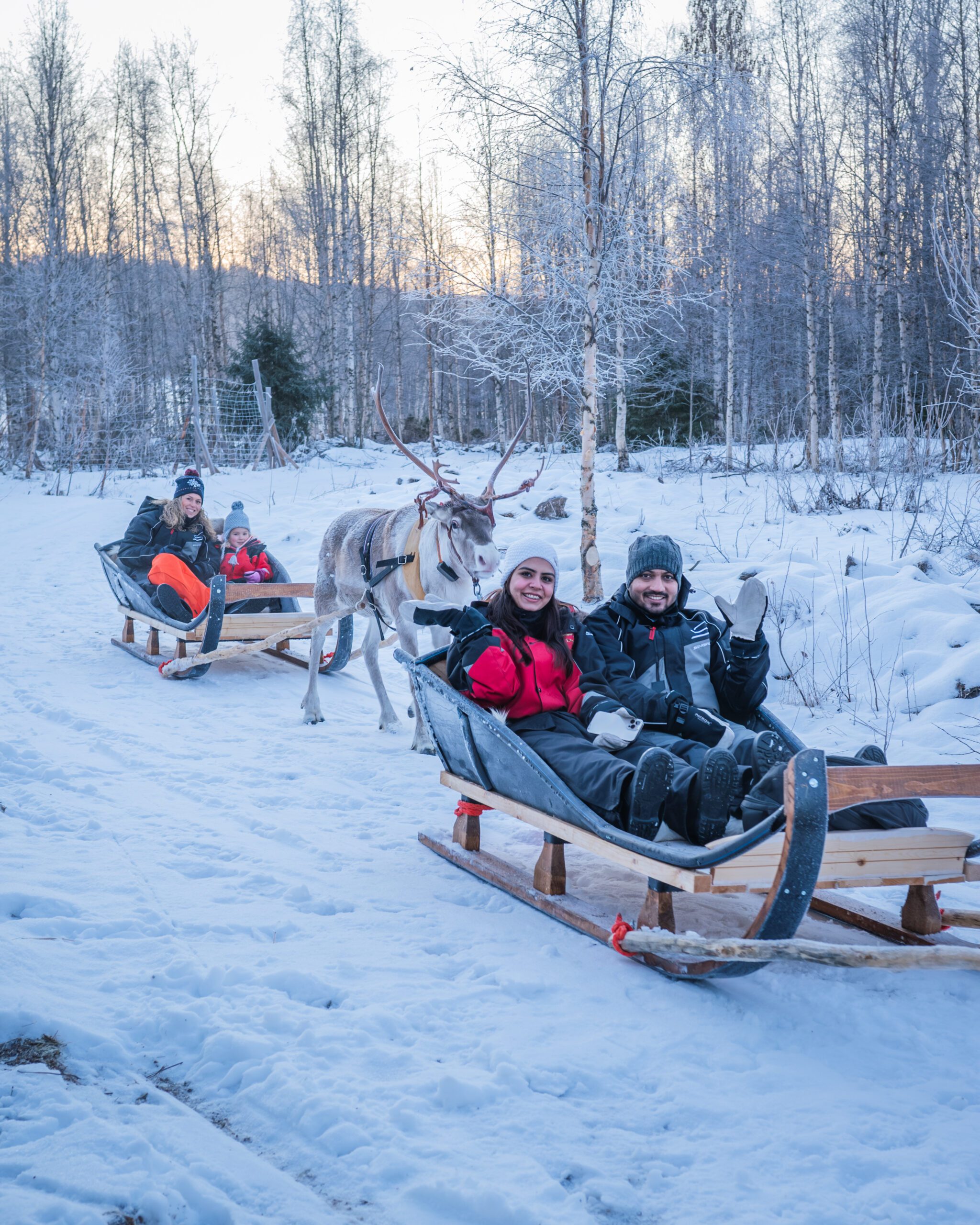
Reindeer sleigh ride (20–30 min). You sit in a traditional wooden pulkka sled while a single reindeer pulls you along a forest track. Each sled holds 1–2 adults (or 1 adult + 1–2 small children). The pace is gentle — a slow trot, not a gallop. The forest is quiet and beautiful. This is the photo moment everyone comes for, and it genuinely delivers.
Kota time (20–30 min). You move inside a kota — a traditional Lappish wooden hut with a central fire. Hot drinks are served. Some farms include sausages or bread to grill. This is where the guide shares more about Sami culture, reindeer herding traditions, and life in Lapland. If you have questions, ask them now. The good guides will talk as long as you want.
Best Reindeer Farms Near Rovaniemi
We’ve visited farms across the region and these are the ones we return to or recommend without hesitation. Note that farm quality varies significantly year to year — guides change, herd sizes shift — so always check recent reviews before booking.
StayLapland. About 35 minutes from central Rovaniemi. Family-run by a third-generation reindeer herder. Small group sizes (maximum 8 people), attentive guides, exceptionally well-socialised reindeer. The forest trail for the sleigh ride is one of the longest in the region at around 1.5 km. Slightly higher prices reflect the quality. This is where we take our own guests. Book direct on their website — the middleman platforms add 20–30%.
Reindeer Farm Harriniva (Torassieppi area). Further afield at about 90 minutes from Rovaniemi, but if you’re combining with a husky experience it’s worth the drive. Larger operation, more polished, less intimate. Better for families with young children due to the infrastructure. Their extended lunch programme is excellent.
Santa’s Reindeer (Arctic Circle area). Convenient location right at the Arctic Circle. The most tourist-facing operation on this list — expect other groups nearby and a faster-paced experience. Good for tight schedules. Not the place for quiet contemplation of Arctic nature, but reliable and professional.
Farms to approach with caution. We won’t name names, but several farms near central Rovaniemi cater almost exclusively to large hotel groups. You arrive in a bus with 25 others, get 10 minutes with the animals, and leave. Read reviews carefully — anything mentioning “rushed”, “large group”, or “felt like a conveyor belt” is a warning sign.
Our honest recommendation: always book direct with the farm, ask what the maximum group size is, and check if you’ll have your own guide or share one across multiple groups. These three questions separate the good from the average.
Prices & What’s Included
Reindeer farm prices in 2025/2026 season have risen noticeably across the board — fuel costs, staffing, and the general tourism premium in Lapland all play a role. Here’s what you can realistically expect to pay.
Standard package (feeding + 1km sleigh ride + kota drinks): €119–€189 per adult. Children typically €55–€95. This covers roughly 60–90 minutes. It’s the baseline experience and covers all the main moments.
Premium package (longer sleigh ride + guided herding walk + full kota meal): €200–€295 per adult. Worth it if you have 2+ hours and a genuine interest in the culture. The herding walk — where you move through the forest with the reindeer on lead ropes — is genuinely special and rarely offered in the standard tier.
Private group bookings: €1000–€1500 for groups of up to 8. If you’re visiting as a family or small group, this works out cheaper per head and significantly improves the experience. You get the full guide’s attention and can set your own pace.
What’s typically NOT included: transport to/from Rovaniemi (add €15–€25 per person via shared shuttle, or take a taxi for €35–€50 each way), professional photos (some farms offer this for €20–€40), and any upgrades like warm meals beyond the standard drink and snack.
Hotel booking desks and large tour aggregators typically mark up farm prices by 20–40%. We always book direct. Most farms have English-language websites and respond quickly to email enquiries. A few still prefer phone booking — worth the slight inconvenience for the price saving.
Prices are higher December 15 – January 5 (Christmas peak). If flexibility allows, visiting in early February gives you excellent snow conditions, smaller crowds, and standard-season pricing.
Animal Welfare: What We Actually Saw
We get asked about this a lot, and we want to give an honest answer rather than a diplomatic one.
Reindeer in Lapland are semi-domesticated animals that have lived alongside humans for centuries. They’re not wild animals being coerced into performing — they’re herding animals whose entire relationship with humans is based on proximity and feeding. A well-run reindeer farm is not ethically troubling in the way that, say, elephant riding is. The animals are not trained through fear, the sledding distances are short, and the reindeer we’ve seen are generally healthy and physically well-maintained.
That said, there’s a meaningful difference between farms. At the best farms, the animals have large pen areas, are clearly familiar with their handlers, and show no signs of stress during visitor interactions. At some of the busier tourist-facing farms, we’ve noticed reindeer that are visibly more habituated to constant visitor flow — not distressed, but less engaged. The difference is most visible during feeding: at quality farms the animals show genuine interest; at busier operations some animals barely look up.
The sledding itself covers short distances at a gentle pace. We’ve seen no evidence of overworked animals at any farm we’ve visited. Reindeer are sturdy Arctic animals and a 500m sled pull with one or two adults is genuinely light work for them.
Our practical takeaway: stick to smaller family-run operations, ask the guide directly how many groups the farm receives per day, and trust your instincts when you’re on site. A farm that’s proud of its animals will want to talk about them. One that rushes you through probably has reasons to.
Tips for Getting the Most Out of It
After more reindeer farm visits than we can count, here’s the practical knowledge we wish someone had given us on the first trip.
Dress warmer than you think you need to. You will be standing still outdoors for 30–45 minutes. At -15°C, even good outdoor clothing isn’t enough if it’s not layered properly. Merino wool base layer, insulating mid layer, waterproof outer. Thick wool socks. Hand warmers in your pockets. This is non-negotiable in deep winter.
Morning visits are better. The reindeer are livelier before midday, the light is better for photography (the golden hour in January lasts most of the morning), and the guides tend to be more energetic on their first groups. Avoid late afternoon visits in December — it’s dark by 2pm and the experience loses something.
Leave your phone in your pocket for the first five minutes. Every time we do this, we end up having a more real interaction with the animals. The photos you get after you’ve actually engaged with the reindeer are always better than the ones you take while fumbling for the camera immediately.
Ask the guide about their own reindeer. Every family farm has a lead guide who owns some of the animals personally. When you ask them about a specific reindeer by name, the whole tone of the visit shifts. You get better stories, more genuine insight, and usually more time in the kota afterward.
Book the first slot of the day when snow conditions allow. Untracked snow on the sledding trail looks dramatically better and the experience feels more private. By afternoon, the track is well-worn and it feels more like a theme park ride.
Combine with a husky safari on the same day. Physically, reindeer farms are quieter and more contemplative. Husky safaris are exhilarating and fast. Doing both in one day gives you the full range of the Lapland winter activity experience. Most farms and husky operations are used to being paired and can recommend each other.
FAQ: Reindeer Farms in Rovaniemi
How far in advance should I book a reindeer farm visit?
During peak season (December–January), book at least 2–3 weeks ahead, especially for smaller farms with limited daily capacity. February and March can often be booked a week out. We always recommend booking direct with the farm rather than through a hotel — you get better availability and lower prices.
Is a reindeer farm visit suitable for young children?
Yes — it’s one of the most child-friendly Arctic activities available. Children from age 2 upward can participate in the feeding and sledding. The pace is gentle and there’s nothing physically demanding. The main challenge is keeping small children warm enough; most farms provide good overalls but bring extra wool socks and mittens regardless.
Can I visit a reindeer farm without snow?
Technically yes — farms offer summer experiences including guided nature walks and reindeer feeding. But the full experience (sledding, kota fire, deep-winter atmosphere) only exists from November through March when there’s reliable snow cover. If you’re coming specifically for the reindeer sledding, plan your visit for December–February.
Are reindeer farms just for tourists, or do they do real herding?
The farms we recommend are genuine working operations. Reindeer herding is a living tradition in Finnish Lapland, practiced by Sami and Finnish herders alike. The tourist visits are a secondary income stream, not the primary purpose. You’ll notice this most clearly at smaller family farms — the animals behave differently when they’re used to real herding rather than just daily tourist handling.
What’s the difference between a reindeer farm visit and a reindeer safari?
A farm visit is based at a fixed location — you come to the reindeer. A reindeer safari typically involves a longer sled journey through forest terrain, covering 2–5 km, with the farm as the start/end point. Safaris cost more (€90–€150) and last longer, but offer a much more immersive feel of moving through the Arctic landscape. Both are worthwhile; the safari is the upgrade worth paying for if you have time.
Should I tip the guide at a reindeer farm?
Tipping isn’t expected or standard in Finland — you won’t cause offence by not tipping. That said, if you’ve had an exceptional guide who clearly went above and beyond, a €5–€10 gesture is always appreciated. The best way to support a small farm is honestly to leave a detailed positive review and recommend them directly to other travelers.