Husky Sledding in Rovaniemi: Which Farm to Book (2026)
We’ve tried nearly every husky farm near Rovaniemi — here’s our honest verdict on which ones are worth booking, which to skip, and what no tour operator will tell you.
We’ve planned more than a hundred trips from our home in Finnish Lapland — some for clients, some for weekend road trips across Norway, and more recently a lot of them chasing the aurora across Finnish Lapland. After years of winter chasing a year, we want to share what actually works, what breaks, and the exact prompts we use.
This is not a “10 ways AI will change travel” think-piece. It’s the workflow we use ourselves.
Rovaniemi has over a dozen husky farms within 20 km of the city centre. The best ones for welfare, experience quality and value are StayLapland, Winter Lapland Park Rovaniemi, and Ranua Wildlife Resort’s sled experience. Book at least 6–8 weeks ahead in peak season (December–February) and always ask about group size before you pay.
Why husky sledding in Rovaniemi
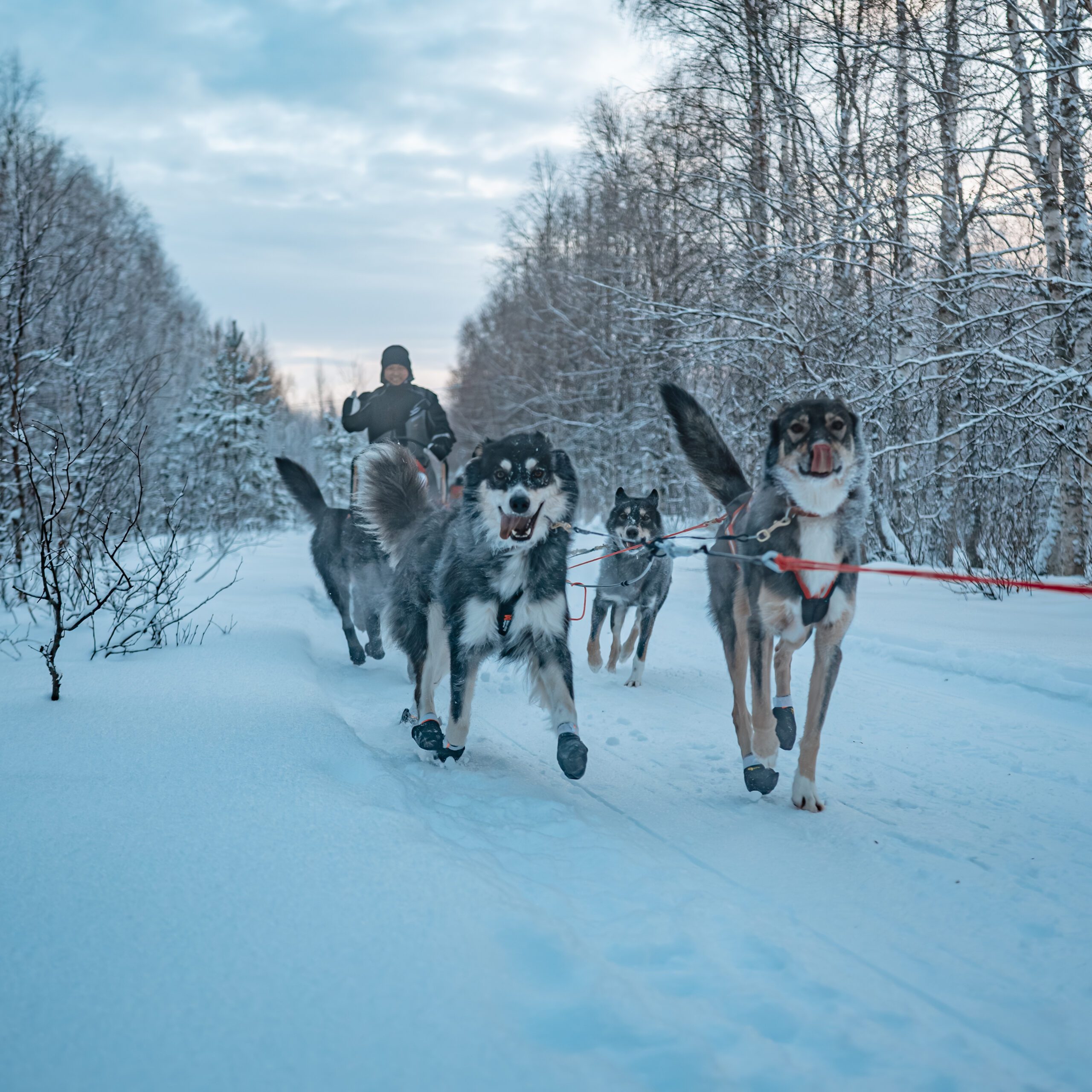
There’s a particular sound you hear when you arrive at a husky farm: hundreds of dogs barking, howling, pulling at their leads — not from distress, but from pure excitement. Huskies are working dogs and they genuinely want to run. Watching that energy channelled into a forest trail at sunrise, with snow spraying up from the sled runners and absolute silence closing in the moment the barking fades, is one of those experiences that stays with you.
Rovaniemi is one of the best places in the world to go husky sledding, and not just because of the Arctic scenery. The city sits at 66°N, which means proper snow from October through April, vast networks of forest trails, and a long-established tourism infrastructure that has given local farms decades to refine the experience. We’ve lived here for years and have visited most of the farms near the city — as guests, as locals hosting friends, and sometimes just because our daughter wanted to say hi to the dogs again.
The challenge isn’t finding a husky experience. It’s finding the right one. Rovaniemi’s farm scene ranges from genuinely excellent to distinctly average, and the price difference isn’t always a reliable indicator of quality. This guide is our honest breakdown, farm by farm, based on real visits — not press trips or affiliate arrangements.
How to choose the right farm
Before you book, there are a few things worth clarifying. First, group size matters enormously. Some farms load eight or ten people into a convoy and move them through the forest like a theme-park ride. Others cap at four or six guests and give you real time with the dogs and the guide. The difference in experience is significant, and most farms won’t volunteer this information upfront — you have to ask.
Second, consider who’s driving. The most memorable experiences are the ones where you drive your own sled with a guide at the front. Some budget options seat you as a passenger behind a guide’s sled, which is fine for very young children or people with mobility concerns, but removes most of the thrill. Ask specifically: ‘Will I drive my own sled?’
Third, look at trail length. A 4 km loop takes about 20 minutes and feels too short once you’re out there. We’d recommend nothing less than 8–10 km (roughly 45–60 minutes of mushing) to get a proper sense of rhythm in the forest. The longer 15–20 km safaris are genuinely special if your budget allows.
Finally, if animal welfare matters to you — and we think it should — visit the kennel area before or after your ride. Well-run farms will actively invite you in. The dogs should be alert, physically healthy, and housed in clean, spacious enclosures. Huskies that cower or show signs of fear are a red flag. The farms we recommend below all passed this test.
Top farms we recommend
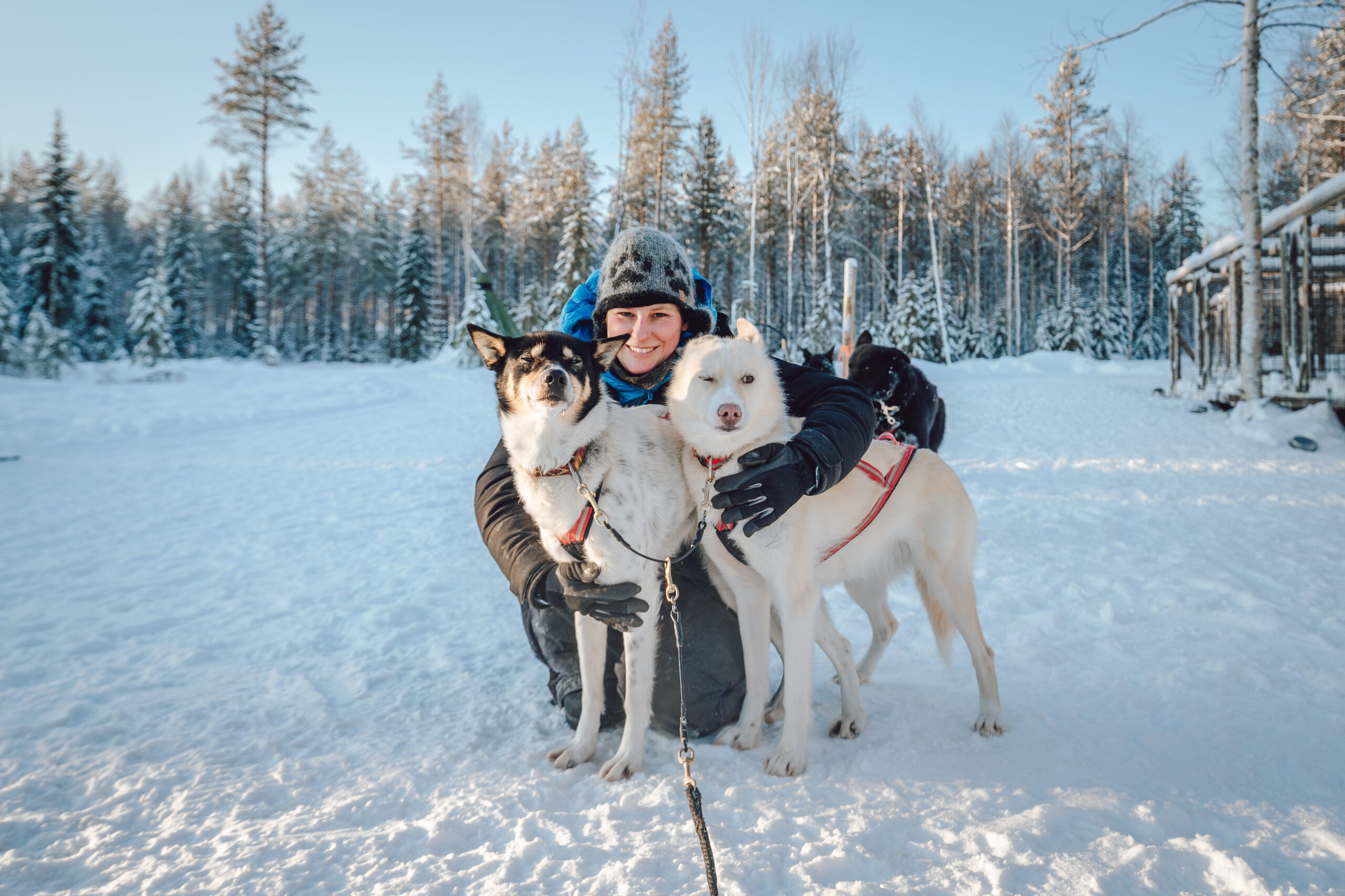
StayLapland is our top pick for visitors who want an authentic, small-group experience. It’s run by a family who have been breeding and racing huskies for over 20 years, and it shows — the dogs are in exceptional condition, the guides know every animal by name, and the trails wind through old-growth forest rather than a landscaped paddock. Group sizes are capped and you drive your own sled throughout. Book the 10 km or 20 km safari rather than the short loop. It sells out weeks in advance in January and February.
Husky Park Rovaniemi is a reliable mid-range option around 15 minutes from the city centre. The setup is more structured than StayLapland— this is a larger operation — but the trail quality is excellent and the staff are genuinely enthusiastic. Their 2-hour package includes a short kennel tour and hot drinks after the ride. Good for families with children aged 5 and up. We’ve recommended this one to visitors who couldn’t get into StayLapland.
Arctic Reindeer and Husky Farm combines two Lapland experiences in one visit. The husky element is shorter (around 4–6 km), but if you’re travelling with people who want to try both huskies and reindeer sledding without two separate half-days, this is a practical option. Not the most immersive dog experience, but it’s well-organised and the setting — in open fell country rather than forest — is striking.
What to avoid: We’d steer clear of the very cheapest options sold through large booking platforms that don’t name the operating farm until after purchase. We’ve visited two such operations and found large groups, short loops, and dogs that seemed underworked and poorly socialised. The price saving is not worth it.
What to expect on the day
Most farms ask you to arrive 15–20 minutes before your safari. This time is well spent: you’ll get a safety briefing, be fitted with an outer snowsuit if you haven’t brought your own gear, and — at the better farms — have time to meet your team of dogs and hear a little about their personalities. Mushers genuinely love introducing their dogs to guests, and starting with that connection makes the ride itself feel very different.
The sled itself is straightforward to operate. You stand on the runners at the back, hold the handlebar, and control speed with a foot brake between the runners. Your guide will demonstrate and then you’re off. The first few hundred metres through the farm yard are chaotic and exciting — the dogs are desperate to run — and then the forest closes in and everything gets quiet and fast.
Dress in warm, wind-resistant layers regardless of what the farm provides. At -15°C or below, your hands and face are the first things that suffer, and you’ll be standing still on the runners for much of the ride. Wool base layer, fleece mid-layer, waterproof outer, wool socks, good gloves and a balaclava under your helmet. If you’re visiting in November or March, conditions can be milder but still cold enough to demand the same preparation.
After the ride, the best farms offer a warm-up inside a traditional Lappish kota (a tipi-style hut) with hot coffee or cocoa and sometimes grilled sausages over an open fire. This is genuinely part of the experience, not a token extra — budget 30–45 minutes for it. It’s often when the guides relax and you get the most interesting conversation about the dogs and life in Arctic Finland.
Prices, duration & what’s included
Prices in Rovaniemi for husky safaris range from around €160–€190 per person for a short 4–6 km ride to €180–€280 for a 2-hour, 15–20 km safari. Prices are consistently higher in December and early January (peak Christmas and New Year tourism) and drop slightly in January and February when visitor numbers thin out but snow conditions are often at their best.
Most 1-hour packages (8–10 km) sit in the €150–€200 range per person. Prices typically include gear hire, the guide, insurance, and the kennel visit. Hot drinks are included at some farms but not all — worth checking. Transfers from the city centre are usually available as an add-on for €15–€25 per person, or you can drive yourself to the farm and park free.
Children’s pricing varies. Some farms charge full adult price for children over 3 who ride tandem with a parent; others have reduced rates up to age 12. If you’re travelling as a family, always ask about the specific group configuration — the overall cost per family can be significantly different depending on how the farm structures its groups.
One practical note: most farms charge per sled, not per person, for solo drivers. If two adults share a sled (one drives, one rides), you pay for one sled. If you both want to drive, you pay for two sleds. This can make a material difference to the final price, so clarify this when booking.
Animal welfare: what to look for
This is something we feel strongly about, and it’s increasingly something travellers ask us about. The good news is that most of the established farms near Rovaniemi keep their dogs well. Husky farming in Finland is regulated and the animals are working dogs bred for cold weather — they thrive in Arctic conditions and genuinely suffer if they can’t run regularly. A well-run farm isn’t just an ethical choice; it usually also means a better experience.
When you arrive, pay attention to the kennels. Dogs should be alert and interested in visitors — not fearful or lethargic. Enclosures should be clean. If the farm actively invites you to interact with the dogs before and after your ride, that’s a good sign. If they rush you past the kennels to get you on the sleds as quickly as possible, it’s worth asking why.
The team size matters too. You want a manageable number of dogs per sled — typically 4–6 for a tourist safari — working at a pace that’s energetic but not exhausting. Reputable farms monitor their dogs’ condition closely and rest animals that need it. If a guide mentions rotating dogs through different safaris rather than running the same team all day, that’s another positive indicator.
We’ve chosen not to name the farms we’d avoid in this article, but our general advice is: if a husky experience is being sold significantly below market rate through a booking aggregator that doesn’t list the operating farm, investigate further before paying. You can usually find the underlying farm by searching for the departure point on Google Maps and reading reviews on TripAdvisor or Google directly.
FAQ
How far in advance should I book husky sledding in Rovaniemi?
For December and the first two weeks of January, book 6–8 weeks ahead — the best farms sell out quickly. In January and February outside of school holidays, 2–3 weeks is usually sufficient. March can also get busy as spring safaris become popular.
What age is suitable for husky sledding?
Most farms accept children from around age 3 as passengers on a tandem sled with an adult. Children can typically drive their own small sled from around age 8–10 depending on the farm. Always check the specific farm’s policy and mention children’s ages when booking.
Do I need experience to drive a husky sled?
No experience is needed. The safety briefing covers everything and the dogs follow the trail with or without your input. The main skill is managing speed on downhill sections with the foot brake — guides will walk you through this before you set off.
What is the best time of year for husky sledding in Rovaniemi?
January and February offer the best combination of reliable snow, good trail conditions, long darkness for atmosphere, and slightly fewer crowds than Christmas. December is magical but very busy and expensive. March is excellent for snow and daylight is returning, giving you light safaris with a beautiful winter landscape.
Can I bring a baby or toddler on a husky safari?
Some farms have a minimum age of 3 years for passengers. Infants under 3 generally cannot participate for safety reasons. Contact the specific farm directly — a few offer infant-friendly alternatives where parents take turns on short loops while one adult stays with the baby.
Is tipping expected at husky farms in Finland?
Tipping is not culturally expected in Finland in the way it is in some other countries, but it is warmly appreciated, particularly if your guide was exceptional. A tip of €5–€10 per person for an outstanding experience is a nice gesture and means a lot to the farming families.