Is It Safe to Travel in Finland, Sweden, and Norway? A Nordic Safety Guide
We live in Finnish Lapland and have driven through all three countries more times than we can count. Here is our honest take on Nordic countries safety — from everyday crime rates to winter roads to solo travel.
We have crossed the border from Finland into Norway more times than we can easily count, driven through Sweden on road trips, and spent the last several years living in Rovaniemi right on the Arctic Circle. When friends ask us “is it safe?”, our instinctive answer is always the same: the Nordic countries are among the safest places on the planet to travel as a couple, a family, or a solo traveler. But “safe” covers a lot of ground, and some of the risks that do exist are genuinely different from what you would worry about in southern Europe.
This guide on Nordic countries safety covers everything we know from living here and traveling through these countries regularly — not just the statistics, but the practical, lived stuff.
Finland, Sweden, and Norway are among the safest countries in the world for travelers. Violent crime against tourists is extremely rare, healthcare is excellent, and infrastructure is reliable. The real risks to watch are winter road conditions, wilderness remoteness, and a few destination-specific issues like pickpocketing in city centers — not the things most people worry about before booking.
Overall safety overview: how Finland, Sweden, and Norway rank
All three countries consistently appear in the top tier of global peace and safety indexes. Finland, Iceland, Norway, and Denmark regularly trade the top four spots on the Global Peace Index, with Sweden not far behind. That is not marketing copy — it reflects consistently low homicide rates, minimal internal conflict, highly trusted institutions, and extensive social safety nets that reduce the conditions that breed crime.
The numbers in plain terms
- Finland: one of the top-three safest countries in the world by most global indexes. Low crime, high trust in police, clean and well-maintained infrastructure. Rovaniemi — where we live — has the feel of a small northern town where nothing much goes wrong.
- Norway: extremely safe, even in remote areas. The country invests heavily in mountain rescue infrastructure, coastal safety, and road maintenance. The risk profile here is more about the wilderness than about people.
- Sweden: generally very safe, though some Swedish cities — particularly parts of Stockholm, Gothenburg, and Malmo — have seen rising organized crime in recent years. This is heavily concentrated in specific neighborhoods and almost never affects tourists.
The practical takeaway: walking around Helsinki, Oslo, or Stockholm at midnight as a tourist feels categorically different from doing the same in many other major European cities. We have done it many times without a second thought.
Crime: what to actually watch out for
Violent crime against tourists in the Nordic countries is vanishingly rare. The crimes that do affect travelers are almost always opportunistic theft — and even that is low by European standards.
Petty theft and pickpocketing
The areas where you should stay alert are the same as anywhere in Europe: busy tourist zones, public transport hubs, and crowded summer markets. In practical terms:
- Helsinki: the Market Square, Senate Square, and the central railway station are the places to keep your bag in front of you.
- Stockholm: the T-Centralen metro hub and Gamla Stan attract the most tourist foot traffic and, with it, the most opportunistic theft. Stockholm is also where you are most likely to encounter distraction techniques used on tourists.
- Oslo: the main train station (Oslo S) and Karl Johans gate can be busy and attract petty theft, though still at low rates compared to most European capitals.
- Bergen, Tromso, Tampere, Turku: very low risk. These feel like genuine small-to-mid-sized Nordic cities where the main crime you will witness is someone cycling through a red light.
Scams targeting tourists
The Nordic countries have very little of the aggressive tourist-scam culture you encounter in parts of southern Europe. The things we would flag:
- Overpriced taxi rides from airports, particularly in Oslo. Always use a metered cab or book via app (Bolt and Uber work in all three countries).
- Unmarked tourist restaurants near major landmarks. Walk two streets back and the quality improves and the prices drop.
- Aurora-hunting tours in Lapland: not scams exactly, but quality varies significantly. Legitimate operators are registered and transparent about what they offer.
Road and driving safety in the Nordics
This is where Nordic safety becomes genuinely more complex — and where we see the most cases of travelers underestimating real risk. The roads here are excellent. The winter conditions are not.
Winter driving: the honest risk
In Finland, northern Sweden, and Norway, winter road conditions can change very fast. Black ice, compacted snow, and sudden blizzards are all real. Rental car companies provide winter tires as standard from roughly November to March, but tires alone do not make you safe on an icy mountain road if you have never driven in those conditions.
- Drive to your ability, not to Google Maps’ ETA. On snowy roads your journey will take longer. Accept it.
- Mountain passes in Norway — like Trollstigen and Sognefjellet — close in winter and can be hazardous in spring shoulder months. Always check vegvesen.no for road closures before setting out.
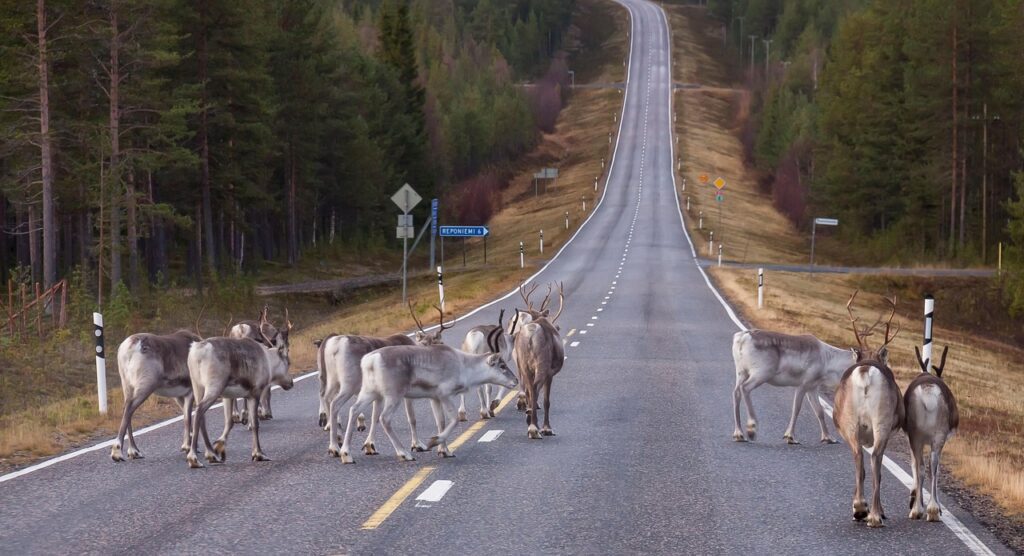
- Reindeer on roads in Lapland. This is not a joke. Particularly at dusk and dawn in Finnish and Norwegian Lapland, reindeer wander onto roads. A collision at highway speed is a serious accident. Use high beams on empty roads to spot them early.
- Single-lane mountain roads in the Faroe Islands and parts of Norway require etiquette: pull into a passing place and let oncoming traffic through. It feels awkward the first few times and becomes second nature by day three.
Summer driving
Summer driving in the Nordics is genuinely pleasant and very safe. The main adjustment is midnight sun fatigue: driving at 2 am in full daylight is disorienting if you are not used to it, and it is easy to push yourself further than you should. We have had moments where we realized we had been driving for four hours thinking it was still early evening. Set alarms and take proper rest breaks.
More like this, delivered monthly
Practical Nordic travel notes, local updates, and the things we do not publish on the blog — straight from Finnish Lapland.
Safety in the wilderness and national parks
The Nordic wilderness is genuinely wild in a way that surprises some travelers. Finland has 41 national parks, Norway has 47, and Sweden has 30. Many of them are remote, minimally signposted compared to Swiss or Austrian hiking trails, and see dramatic weather changes that are not always reflected in the morning forecast.
Key rules we follow
- Tell someone your plan. When we head into Urho Kekkonen National Park or Oulanka for a multi-day hike, we leave a note with a trusted contact: where we are going, which trail, when we expect to return. This is basic but frequently skipped.
- Download offline maps before you go. Mobile signal disappears fast in Finnish and Norwegian national parks. We use Maps.me and download the relevant area the evening before.
- Carry emergency supplies even on day hikes. A space blanket, waterproof layer, and basic first aid kit are small and light. Lapland weather can turn from sunny to genuinely dangerous in under an hour.
- Respect the water. Lake and river swimming in Scandinavia is brilliant, but the water is cold. Even in July, many Finnish lakes sit at 18–22 degrees Celsius. Enter slowly and know your limits.
- Wildlife: brown bears exist in Finnish and Swedish forests, but sightings are rare and attacks on humans are rarer still. The main wildlife hazard in Lapland is the mosquito in June and early July. A head net is not dramatic; it is functional.
Solo and female traveler safety
We get this question a lot from friends planning their first Nordic trip, particularly women traveling alone. Our honest answer: the Nordic countries are among the best places in the world for solo female travel.
- Street harassment is uncommon by European standards. Walking alone at night in Helsinki, Bergen, or Tampere is not the experience it might be in some Mediterranean cities.
- Public transport is well-lit, frequent, and monitored. Overnight trains in Norway and Sweden have lockable compartments. The Helsinki metro runs late and feels safe.
- Bar and nightlife culture is present in Helsinki and Stockholm and is generally orderly, though normal caution applies in city center areas on Friday and Saturday nights.
- In remote areas, solo hiking requires the same general precautions as anywhere: tell someone your plan, carry enough food and water, have a way to call for help. The 112 emergency number works across all three countries.
Alla travels solo when she is doing content research in Helsinki or Tampere and has never felt unsafe. The cultural baseline here reflects some of the highest levels of gender equality in the world, and that translates directly into how public space feels.
Health, emergency services, and travel insurance
The Nordic healthcare systems are excellent. If something goes wrong — a skiing accident, a reindeer collision, a burst appendix — the care you will receive is world-class. The complication for non-EU travelers is cost: Nordic healthcare is subsidized for residents and EU citizens, but foreigners without travel insurance can face significant bills.
Practical checklist
- Travel insurance is essential for non-EU visitors. A helicopter rescue from a Norwegian mountain can cost thousands of euros and is not covered by your home country’s insurance. Get a policy that includes emergency evacuation.
- EU citizens: bring your European Health Insurance Card (EHIC, or GHIC for UK citizens). It covers emergency treatment in public hospitals at local rates.
- Emergency number: 112 works across Finland, Sweden, and Norway. You do not need a SIM card or credit to call it — it works from any mobile in network range.
- Pharmacies (apteekki in Finnish, apotek in Swedish and Norwegian) are well-stocked and pharmacists are knowledgeable. For minor ailments, you can get solid advice over the counter without needing a prescription.
- Tick-borne encephalitis is worth knowing about if you are hiking in forests in summer, particularly in southern Finland, the Aland Islands, and coastal Sweden. A vaccine exists — ask your GP before you go if you are spending significant time in wooded areas.
Mistakes we see travelers make
- Underestimating winter conditions. A rental car with winter tires is not a guarantee that you can handle a snowy Norwegian mountain road if you have only ever driven in mild climates. Take it slowly, and do not be ashamed to turn back.
- Hiking without offline maps. Mobile signal in Nordic national parks is patchy to nonexistent. Download your maps the evening before you set out.
- Assuming nothing bad happens here. The Nordics are safe, not magical. Opportunistic theft, traffic accidents, and wilderness emergencies all happen. Basic precautions still apply.
- Skipping travel insurance. The remoteness of some Nordic locations makes rescue and evacuation more expensive, not cheaper. This is the exact wrong place to skip coverage.
- Forgetting about reindeer on roads. Every year, visitors to Lapland have collisions because they were not expecting reindeer to be on the road. Drive with high beams on empty stretches after dark, especially in Finnish and Norwegian Lapland.
- Letting the midnight sun override your body clock. In summer Lapland you can hike, drive, or paddle at midnight in full daylight. It is magical. It also destroys your sense of time and your sleep schedule. Bring an eye mask and plan rest stops deliberately.
Frequently asked questions
Is Finland safer than Sweden and Norway?
All three rank among the world’s safest countries, so the differences are small. Finland and Norway consistently land slightly higher on global peace indexes than Sweden. Sweden’s aggregate scores are pulled down by organized crime concentrated in a few urban neighborhoods — none of which typically affect tourists in the places they visit.
Is it safe to drive alone in Lapland in winter?
Yes, with the right preparation: winter tires (mandatory and always fitted to rental cars in season), driving at appropriate speeds for conditions, and knowing the warning signs of ice. The main risk is overconfidence. If you are not experienced with snow and ice driving, take it very slowly and allow double the normal journey time.
Are Nordic countries safe for solo female travelers?
Among the safest in the world. Gender equality is deeply embedded in all three cultures, street harassment is uncommon, and public spaces are well-lit and monitored. The same basic common sense applies as anywhere — particularly in busy nightlife areas on weekends — but the baseline is very reassuring.
What is the emergency number in Finland, Sweden, and Norway?
112. It works in all three countries and across most of Europe. It functions even without a SIM card or mobile credit, and even without network by roaming to any available signal. Save it before you go and share it with your travel companions.
Are there dangerous animals in the Nordic countries?
Brown bears exist in Finnish and Swedish forests, but encounters are rare and attacks on humans extremely so. Bears are shy and avoid people. In practice, the wildlife hazards most travelers actually encounter are reindeer on roads in Lapland (common and genuinely dangerous if you are driving fast) and mosquitoes in summer (annoying but not dangerous). A head net is your most useful piece of safety gear in June Lapland.
Do I need travel insurance for the Nordic countries?
Yes, absolutely, if you are a non-EU visitor. Nordic healthcare is excellent but expensive for foreigners. Emergency evacuation from a remote hiking area can run into thousands of euros. EU and EEA citizens should bring their EHIC card, which covers emergency treatment. Everyone else needs a policy that includes emergency medical evacuation — this is non-negotiable for anyone planning to hike or drive in remote areas.
A final word from Rovaniemi
We have lived in northern Finland long enough that “safe” feels like a given when we walk out the door — but we also know that “safe” has different dimensions for different travelers. The Nordic countries will not mug you. They might strand you on a remote trail in a sudden snowstorm if you did not tell anyone where you were going. They might exhaust you with driving because midnight looks like afternoon and you pushed too far.
The practical message is this: come with normal traveler caution, add specific awareness of winter driving and wilderness remoteness, get good travel insurance, and you will have one of the most relaxed and low-stress travel experiences anywhere in Europe. These are countries that function well, treat visitors with respect, and genuinely believe in personal safety as a shared value. That feeling is real, and it does not disappoint.
Joona & Alla
A Finnish-Ukrainian couple living in Rovaniemi, Finland. Joona is a marketing professional in Lapland tourism; Alla is an AI Engineer. Together we have visited 25 countries and share honest, locally-grounded travel writing from our home in the Arctic.
Read our full story →