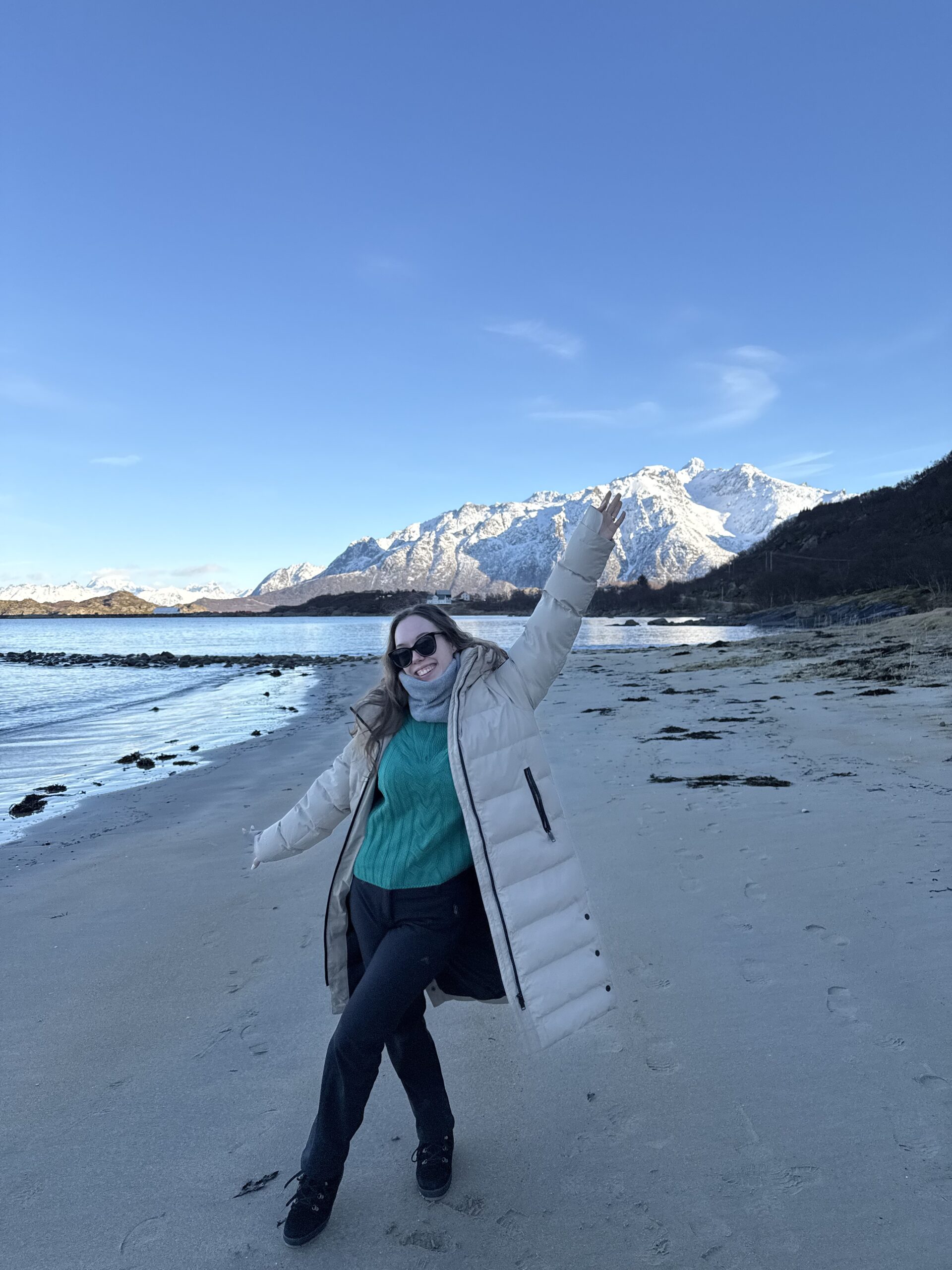
We’ve approached Norway in almost every way possible. Summer road trips with the car packed full, fjord hikes in twenty-four-hour daylight, January drives through Lofoten with snowdrifts on both sides of the road and the kind of blue silence you only get in the Arctic. After visiting Norway in at least six separate seasons — and living in Finnish Lapland, where the same summer-vs-winter debate comes up constantly — we have a lot to say about this one.
The honest answer is that both seasons are worth it, but for completely different reasons. Which one is right for you depends on what you actually want from the trip. This guide breaks it down as clearly as we can.
Summer gives you the midnight sun, epic hiking, and open roads — but crowds and higher prices. Winter delivers northern lights, snow-covered fjords, and a quieter Norway — but limited daylight and some road closures. Neither is objectively better. Your perfect season depends on what you’re chasing.
The core differences at a glance
Before we get into the detail, here’s the frame we use when recommending Norway to people who ask us this question. Neither season is universally superior — but they feel like completely different countries.
Norway in summer (June–August)
- Daylight: Up to 24 hours of light in the north. Midnight sun above the Arctic Circle (Tromsø, Lofoten) from late May to mid-July.
- Temperature: 15–22 °C on the fjord floor, cooler in the mountains. Still can get wet and cold; weather is unpredictable.
- Crowds: High season. Bergen, Flåm, Geirangerfjord, and Lofoten see genuine overtourism in July.
- Prices: Accommodation peaks. Budget options fill up months ahead.
- Roads: Almost all mountain passes open. The iconic Trollstigen, Aurlandsfjellet, and Hardangervidda are accessible.
Norway in winter (November–March)
- Daylight: 5–6 hours in the south, polar night (no sun at all) in Tromsø and further north for weeks.
- Temperature: −5 to −20 °C in the north and inland, milder on the west coast (Bergen rarely goes below 0 °C).
- Crowds: Significantly lower. You can have Lofoten almost to yourself in January.
- Prices: 30–50% cheaper for accommodation in many areas.
- Roads: Mountain passes close. Some fjord-side roads require chains. Lofoten roads stay open but can be icy.
Neither season is “easy” — but both are deeply rewarding if you go in knowing what to expect.
What summer in Norway is actually like
The first time we drove from Rovaniemi to Norway in June, we stopped at the Norwegian border just after midnight — and the sky was completely, brilliantly blue. Sun still high, shadows long and golden. It was 1 am. That moment alone tells you everything about Norwegian summer.
The midnight sun
If you’ve never experienced it, the midnight sun rewires your sense of time. You’ll hike at 10 pm, eat dinner at midnight, and somehow feel guilty for sleeping in at 7 am when it looks like 2 pm outside. This is both the magic and the challenge of Norwegian summer. Pack good blackout sleep masks — and lean into the disorientation.
- Midnight sun north of the Arctic Circle (Tromsø, Narvik, Lofoten): roughly end of May to mid-July.
- Very long days in Bergen, Oslo, Ålesund: 18–20 hours of daylight in June and July.
- Best for midnight sun hikes: Lofoten ridgelines (Ryten, Reinebringen), Tromsø peaks, Nordkapp plateau.
Hiking and outdoors
Summer is Norway’s hiking season — almost everything is accessible. The trolltunga queue is infamous, but there are hundreds of less-visited trails that reward a bit of planning. We’ve found that hiking anywhere in Norway before 7 am in July is an entirely different experience than arriving at 11 am with the tour buses.
- Preikestolen (Pulpit Rock): full summer access, very busy. Go early or very late.
- Trolltunga: bookings required at peak. Worth it for the silence of early morning.
- Lofoten ridges: some of the best hiking we’ve ever done, anywhere.
- Jotunheimen National Park: glaciers, highest peaks, best in July–August.
What winter in Norway is actually like
Norway in winter is one of the most visually dramatic places we’ve been. Lofoten in January — with snow-capped mountains dropping straight into still, ink-dark water, and occasional aurora reflected below — is the kind of scene that makes you understand why people become landscape photographers.
The northern lights
If chasing the aurora is your reason for visiting, Norway is excellent — though we’d honestly say Finnish Lapland (our home) gives you slightly more consistent clear-sky conditions inland. Norway’s west coast can be cloudy. But northern Norway — Tromsø, Alta, the roads around Lofoten — all offer genuine aurora opportunities from September through late March.
- Best northern lights areas: Tromsø (most infrastructure for aurora tours), Alta, Senja island, Lofoten interiors.
- KP threshold for northern Norway: KP 1–2 is enough for visible aurora overhead. You don’t need a major storm.
- Cloud cover is the enemy: exactly like in Lapland, be ready to drive 60–100 km to find clear sky.
- Best months: January and February have the darkest nights and some of the clearest skies.
The atmosphere of winter Norway
Winter brings something summer doesn’t: quietness. We walked into a Lofoten fishing village in January and had the entire harbor to ourselves. The red rorbuer cabins dusted in snow, the stillness, the occasional sound of a fishing boat. It genuinely felt like a different planet from the same spot in August with 40 people on the dock.
Cost comparison: summer vs winter
Norway is expensive in both seasons — let’s be honest about that upfront. But the gap between summer and winter is real and significant.
Accommodation
- Summer peak (June–August): Budget hostels in Bergen €40–70/night. Midrange doubles €120–200. Lofoten cabins (rorbuer) €180–350/night in July.
- Winter (November–March): Same Bergen hostel €25–40. Lofoten rorbuer €90–150. Tromsø Airbnbs drop 30–40%.
- Our rule: Winter savings on accommodation can fund a significant extra day or two.
Activities and transport
- Ferry prices stay similar year-round (fjord and island ferries are fixed-rate infrastructure).
- Aurora tours (winter only): €80–150 per person for guided chases from Tromsø.
- Summer fjord cruises: similar price range to aurora tours. Both are worth doing once.
- Fuel costs and driving distance don’t change by season — Norway is Norway-expensive at the pump regardless.
Our honest budget for two in Norway: roughly €150–200/day in winter (mid-range), €200–280/day in summer. That’s a meaningful difference over a 7–10 day trip.
Travel notes from the Arctic, twice a month
Real trip planning, honest costs, and the Norway updates we actually find useful. No filler.
Activities comparison: what you can and can’t do
This is where the decision usually gets made. What are you actually coming to Norway to do?
Summer-only or summer-best
- Trolltunga, Preikestolen, Kjeragbolten — all fully accessible only in summer.
- Midnight sun photography from fjord ridgelines.
- Kayaking in the fjords and on Lofoten waterways.
- Puffin watching (Røst, Runde) — peak June to mid-August.
- Glacier hiking (Jostedalsbreen, Folgefonna) — summer seasons only for guided walks.
- Atlantic Road drive and full Lofoten loop road without snow risk.
Winter-only or winter-best
- Northern lights — no other season offers this.
- Dog sledding, reindeer sleigh rides (Sami experiences in Finnmark).
- Ski touring and resort skiing (Hemsedal, Geilo, Voss).
- Snowmobile safaris in Finnmark.
- Ice fishing on the plateau lakes.
- The magical silence of snow-covered Lofoten without crowds.
Good in both seasons
- Bergen city exploration and Bryggen.
- Flåmsbana (Flåm Railway) — spectacular in summer greenery and winter snow.
- Tromsø city — excellent infrastructure, interesting food scene, good base year-round.
- Whale watching near Tromsø: orca and humpbacks arrive November–January for herring — this is actually a winter-only activity.
Crowds, access, and logistics
This section is where summer loses serious points, and winter gains them back.
Overtourism in summer
We’ve written about overtourism in Norway’s fjords before. Geirangerfjord in July now has ships anchoring offshore so cruise passengers can tender in. The trailhead for Trolltunga has a queue system. Reinebringen in Lofoten has had trail closures from erosion. This is the reality of Norwegian summer tourism in 2026.
- Bergen Bryggen: Genuinely packed July–August. Still beautiful, still worth it — just manage expectations.
- Flåm: Multiple cruise ships per day in peak season. Arrive before 8 am or after 5 pm.
- Lofoten in July: Every cottage booked months ahead, parking lots overflowing at viewpoints.
- The antidote: Travel north of Lofoten (Vesterålen, Senja), or push further into Finnmark. Still quiet in summer.
Winter logistics: what to prepare for
- Mountain passes: Trollstigen, Aurlandsfjellet closed November–May. Plan routes accordingly — you’ll need to go around or through tunnels.
- Winter tyres: Mandatory in Norway November–April (or when conditions require). Rental cars should come equipped, but verify.
- Polar night: Above Tromsø in December/January, there is no sun. Some people find this genuinely difficult. Others find it ethereal. Know which you are.
- Weather windows: A good winter weather forecast can evaporate overnight. Be flexible with plans — especially for aurora chasing.
Mistakes we made in both seasons
- Summer: booked too late. Lofoten rorbuer in July sell out 3–4 months ahead. We found this out the hard way and ended up in a campsite that was excellent but not what we wanted.
- Summer: underestimated the rain. Norwegian west coast summers are not Mediterranean. We got soaked on Trolltunga despite a “partly cloudy” forecast. Pack a proper rain shell regardless of the forecast.
- Winter: didn’t account for pass closures. We planned a scenic mountain drive that turned out to be closed November–May. Add 90 minutes to the route — just check Statens vegvesen before you plan any inland mountain road in winter.
- Winter: aurora on night one, nothing on nights two and three. Cloud cover. We didn’t have a backup plan for driving to clear sky. Always identify a direction with better forecast and be ready to cover 100 km at 11 pm.
- Both seasons: underestimated driving distances. Norway is long. Driving from Bergen to Lofoten is 18+ hours. Build buffer days or fly segments — Norwegian domestic flights are surprisingly affordable.
- Both seasons: converting time to money on toll roads. Norwegian toll roads add up. Budget €15–30 per day for tolls if you’re driving inland routes heavily. It’s not catastrophic but catches some travelers off guard.
Frequently asked questions
Is Norway better in summer or winter overall?
Neither is universally better — they’re genuinely different trips. Summer delivers hiking, midnight sun, and open mountain roads. Winter offers northern lights, snow landscapes, fewer crowds, and lower prices. We’d recommend summer for first-time visitors who want access to the most iconic spots, and winter for those who’ve already done summer or who specifically want the aurora.
When is the cheapest time to visit Norway?
Late autumn (October–November) and early spring (March–April) are the shoulder seasons with the lowest prices and thinner crowds, while still offering decent conditions. January and February are also affordable — especially in areas like Tromsø and Lofoten where winter tourism exists but hasn’t fully priced up yet.
Can you see the northern lights in Norway in summer?
No. The midnight sun means the sky never gets dark enough for aurora to be visible, roughly from mid-May to mid-August depending on latitude. For northern lights, you need darkness — visit between September and late March.
Is hiking possible in Norway in winter?
Some hiking is possible in winter — snowshoe trails near Tromsø and winter routes in Lofoten are manageable for prepared hikers. But the major summer trails (Trolltunga, Preikestolen) are closed or extremely dangerous in winter conditions. Winter hiking requires experience, the right gear, and local knowledge of avalanche risk.
How far ahead should I book Norway in summer?
For July and August in popular areas like Lofoten, Bergen, and the fjords, book accommodation 3–4 months ahead. For Trolltunga specifically, slots require advance booking through the management system. Winter is much more forgiving — 4–6 weeks ahead is typically fine except for Christmas and New Year.
We’re coming from Rovaniemi — which Norwegian season makes more sense as a day or weekend trip?
From Rovaniemi, winter Norway (especially northern Norway via E8 to Tromsø, or the E75 into Finnmark) is a natural extension of Lapland life — and we’ve done it many times. Summer opens up Lofoten as an epic road trip. Both work. If you only go once, drive Lofoten in summer — it’s one of the most beautiful places on earth in July. If you’ve done that, do Tromsø in January for the contrast.
A final word from Rovaniemi: Norway is worth it in every season. We keep going back — sometimes in the same year. The midnight sun version and the polar night version are two completely different countries that happen to share the same fjords. If you have the time and budget, do both. If you’re choosing, use the questions in this post to figure out which experience you’re actually hungry for — and then book it without overthinking it.
We’re always happy to answer specific questions about either season — drop us a message.
Joona & Alla
A Finnish-Ukrainian couple living in Rovaniemi, Finland. Joona is a marketing professional in Lapland tourism; Alla is an AI Engineer. Together we’ve visited 25 countries and share honest, locally-grounded travel writing from our home in the Arctic.
Read our full story →