Hurtigruten Coastal Express: Is It Worth It in Summer 2026?
We’ve driven Norway’s fjord roads and sailed its outer coast — here’s our honest take on whether the legendary coastal route lives up to the hype when the midnight sun is out.
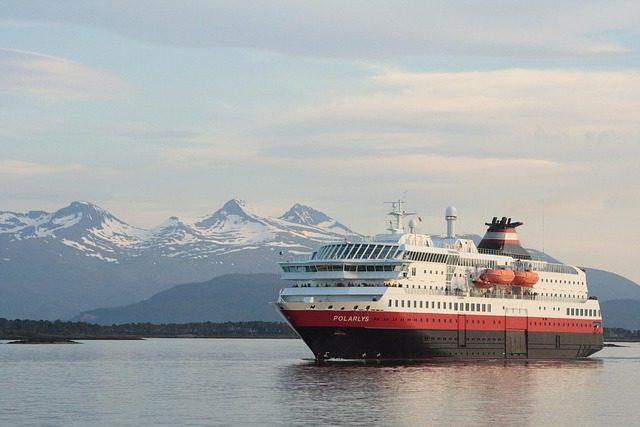
We first drove Norway’s fjord country a few summers ago — the winding E39, the ferry crossings, the moment you round a bend and a wall of rock drops straight into water so blue it looks unreal. Norway does that to you. So when people started asking us whether the Hurtigruten coastal route was worth adding to a summer trip, we had a lot to say.
The short answer is: it depends entirely on what you’re looking for. The longer answer is what this post is for. We’ve broken down the experience, the cost, the practical trade-offs, and the things we wish we’d known before booking.
The Hurtigruten Coastal Express is worth it in summer 2026 if you want a slow, scenic, port-hopping journey along Norway’s coast with minimal logistics. It’s not worth it if you’re expecting a luxury cruise, need flexibility, or are travelling on a tight budget. The Bergen to Tromsø segment (approx. 6 days northbound) is the most visually rewarding for first-timers. Book with meals included and choose an outside cabin — the view is the entire point.
- What is Hurtigruten and how does it work
- Summer 2026: what’s changed and what to expect
- The best route segments for first-timers
- What the experience is actually like on board
- Hurtigruten vs a road trip along Norway’s coast
- Mistakes we made (and what we’d do differently)
- Frequently asked questions
- A final word from Rovaniemi
What is Hurtigruten and how does it actually work
Hurtigruten (literally “the fast route” in Norwegian, though modern interpretations might argue that) is a coastal ferry service that has been running along Norway’s western and northern coast since 1893. Today, the express sailing connects Bergen in the south to Kirkenes in the north — a journey of roughly 2,500 km touching 34 ports along the way.
The basics you need to know
- Direction: ships run both northbound (Bergen→Kirkenes) and southbound (Kirkenes→Bergen). Northbound is the classic direction for scenery — you hit the dramatic Lofoten and Vesterålen stretch during daylight.
- Duration: the full route takes about 11–12 days. Most travelers choose a segment of 2–7 days.
- Ships: Hurtigruten operates a fleet of 9 ships. In 2026, the newer hybrid vessels (MS Roald Amundsen, MS Fridtjof Nansen) offer more expedition-style amenities; the classic ships (MS Nordlys, MS Richard With) feel more utilitarian and local.
- Booking: you can book cabin-only or with a full-board package. Outside cabins and meals-included packages are worth paying up for.
- Passengers: a real mix of Norwegian locals commuting between ports, international tourists, and older couples doing a bucket-list trip. Summer brings more families and younger travelers than winter.
It’s not a traditional cruise
Hurtigruten does not stop for long at most ports. You get 15 minutes to an hour in each town, enough to step off, walk the harbor, and get back on. A few stops (Bergen, Ålesund, Trondheim, Tromsø) give you long enough for a coffee or a short explore — but this is fundamentally a moving experience, not a port-hopping itinerary. Think of it as the Norwegian equivalent of a scenic train journey, except the train is a ship.
Summer 2026: what’s changed and what to expect on the route
If you’ve been watching Hurtigruten coverage from a few years ago, there are a few meaningful updates for 2026 that affect the value calculation.
Key 2026 changes to know
Hurtigruten has added dedicated expedition-style departures on some summer routes, with onboard naturalists, hikes at selected ports, and kayaking excursions in the Lofoten area. If you book an expedition package, the experience is meaningfully different from a standard coastal sailing.
Like most European travel, prices are up in 2026. A 6-night northbound Bergen–Tromsø voyage in an outside cabin with full board now runs roughly €1,800–€2,600 per person depending on the ship and departure date. Early-bird discounts (booking 6+ months out) can reduce this by 15–25%.
In summer 2026, the midnight sun is above the horizon in Tromsø from May 20 to July 22. If you want to see the phenomenon at its most dramatic — sunset and sunrise merged into one continuous golden hour — aim for a departure that has you north of the Arctic Circle between those dates.
Hurtigruten’s hybrid ships (MS Roald Amundsen, MS Fridtjof Nansen) now run on battery power in certain Norwegian fjords under new emissions regulations. If sustainability matters to your travel choices, these are the ships to request.
The best route segments for a first-time traveler in summer
You do not need to sail the full Bergen–Kirkenes route to get the best of Hurtigruten. These are the segments we would pick, ranked by value for first-timers.
The top segments by experience value
- Bergen to Tromsø (6 nights, northbound) — best overall pick: This covers the most dramatic scenery, including the Geirangerfjord region, Ålesund, the Lofoten passing, and the midnight sun crossing. It ends in one of Norway’s most interesting cities. This is the segment we’d book without hesitation.
- Bergen to Trondheim (2 nights, northbound) — best short version: Hits the Norwegian west coast fjords, feels complete, and is affordable enough to add to a wider Norway road trip. Perfect if you have 2–3 days to spare.
- Tromsø to Kirkenes (3 nights, northbound or southbound) — most remote and dramatic: Above the Arctic Circle the whole way, with Hammerfest, Honningsvåg, and the North Cape area. Quieter, starker, and genuinely unlike anywhere else. More appropriate for return travelers who already know Norway.
- Full route Bergen–Kirkenes (11–12 nights) — only if you have the time and the patience: The full voyage includes some slower stretches in northern Norway that feel repetitive to many first-time travelers. We wouldn’t recommend this as a first Hurtigruten experience.
Norway Fjords in Summer: The 6 Fjords Worth Your Time
Hurtigruten passes several fjords but doesn’t go deep into them. If the fjords are your main goal, pair the cruise with a road trip through Geirangerfjord and Nærøyfjord.
Read the guide →What the on-board experience is actually like (the honest version)
The Hurtigruten marketing imagery is gorgeous. The reality is excellent in some ways and underwhelming in others. Here’s what we actually experienced and heard from fellow travelers.
What works well
- The scenery, obviously. When you wake up in the morning and the ship is threading through a narrow coastal passage with waterfalls on both sides, it’s exactly as good as the photos suggest. No exaggeration.
- The food (on newer ships with full-board). Hurtigruten’s buffet meals have improved substantially. Fresh Norwegian fish, local produce, and good breakfast spreads. Not Michelin-level, but genuinely good.
- The pace. The rhythm of arriving at a small port, stepping off for 20 minutes, watching coastal life go by — it’s meditative. You don’t feel rushed.
- The mix of passengers. Unlike a traditional cruise ship, Hurtigruten carries locals alongside tourists. You see people heading to work, students, families. It feels more like a real transportation network than a floating hotel.
What falls short
- The cabin sizes on older ships. Outside cabins on the classic ships are small. Fine for sleeping, not for spending a rainy afternoon in. If you get weather (and in Norway, you will), plan to spend time in the common areas.
- Port stop duration. The 15–30 minute stops feel short once you’re there. You can’t genuinely explore anywhere. Longer stops in Ålesund and Tromsø are the exceptions.
- The price-to-value ratio if you don’t use the ship’s amenities. If you spend all your time in your cabin or on deck, you’re paying for a very expensive scenic ferry. The value improves substantially if you attend the onboard talks, join the excursions, and eat in the restaurant.
Get our best travel tips in your inbox
Monthly stories from Rovaniemi — Arctic tips, packing lists, and the places we keep coming back to.
Hurtigruten vs a Norway road trip: which is actually better?
This is the comparison question we get most often. Here’s how the two experiences stack up against each other, honestly.
Hurtigruten wins when…
- You want zero logistics — no driving, no booking accommodation every night, no ferry timetables to manage.
- You’re traveling solo or as a couple and prefer meeting other travelers on board.
- The coast and sea are the attraction for you, not specific inland sites.
- You have limited time to research and want a pre-packaged itinerary that handles itself.
- You’re not renting a car (no driving licence, traveling alone, or simply prefer not to drive in Norway).
A road trip wins when…
- You want to go deep into the fjords — Geirangerfjord, Nærøyfjord, Hardangerfjord. Hurtigruten doesn’t route through the most dramatic inner fjords.
- You’re traveling with young children who need space to move and structured activities that a ship doesn’t offer.
- You’re on a tighter budget — a 6-day Norway road trip (camping or budget hostels) is significantly cheaper.
- You want to spend real time in Lofoten or Vesterålen — the ship passes them at night sometimes, and a 20-minute port stop doesn’t do the islands justice.
- You want to control your own pace and stop whenever something looks interesting.
How to Avoid Overtourism in Norway’s Fjords This Summer
Hurtigruten is one way to see Norway without adding to the overtourism pressure in Geiranger and Flåm. We break down the alternatives.
Read the guide →Mistakes we made (and what we’d do differently on Hurtigruten)
- Booking an inside cabin to save money. The view is literally the whole point of this trip. We will never book an inside cabin on a scenic coastal route again. The cost difference is worth every euro.
- Not researching port stop durations in advance. Some stops we were excited about were 20 minutes; some ports we didn’t care about were 3 hours. Read the timetable before you board so you know where to plan your morning.
- Going in early June before the midnight sun window. The difference between 11 pm twilight and genuine midnight sun is enormous. If the midnight sun is a priority, check the exact dates for your latitude and plan accordingly.
- Not bringing a good jacket on deck. Norwegian coastal winds at sea are cold even in summer. We watched sunsets shivering in t-shirts. A windproof layer is essential even in July.
- Skipping the onboard talks. The naturalist and historian talks on Hurtigruten ships are genuinely good and free. We wasted two evenings in the bar when we could have been learning about the coast we were sailing past.
- Expecting Wi-Fi to work reliably. Norwegian coastal coverage is patchy. Embrace the offline time. It’s part of the charm — or at least that’s what we told ourselves after the third hour of no signal.
Frequently asked questions
Is Hurtigruten worth the money in summer 2026?
Yes, if you choose the right segment and cabin type. A 6-night Bergen–Tromsø voyage in an outside cabin with full board gives you an experience that genuinely can’t be replicated by any road trip. The scenery, the pace, and the logistical simplicity justify the cost for many travelers. It’s not worth it if you’re expecting a luxury cruise — it’s a premium working ship, and the atmosphere reflects that.
What is the best time of year to take Hurtigruten?
Summer (mid-May to late July) for the midnight sun and relatively mild temperatures. Winter (November to March) for the possibility of northern lights from the ship. Both are genuinely excellent — the experience is just completely different. For first-timers, we lean toward summer because the scenery is visible around the clock.
How long should you spend on Hurtigruten?
For a first trip, we recommend 4–6 nights. That’s long enough to feel the rhythm of the route and see the most dramatic scenery between Bergen and Tromsø. The full 11-night Bergen–Kirkenes route is better suited to return travelers or those who specifically want the remote far-north experience.
Can you get off the ship and rejoin later?
Yes, this is one of Hurtigruten’s underrated features. You can disembark at any port and rejoin the next southbound or northbound sailing with a valid ticket. This makes it possible to spend a full day in Ålesund or a night in Tromsø and then continue the journey. Advance planning is required, as the ships run on fixed schedules.
Is Hurtigruten good for solo travelers?
Very much so. The communal dining rooms, the onboard talks, and the shared observation decks make it easy to meet people. We’ve spoken to more solo travelers on Hurtigruten than on almost any other type of trip. The ship has a natural social rhythm that a road trip doesn’t.
What is the difference between Hurtigruten and Havila Kystruten?
Havila Kystruten is a newer competitor that took over two of the four annual sailings on the coastal route in 2021. Their ships are brand new and run on liquefied natural gas and battery power. The two companies operate the same coastal route on alternating days — in practice, the experience is similar, and the choice often comes down to departure day, price, and personal preference. Havila tends to be slightly cheaper for the same segment.
A final word from Rovaniemi
Living in Finnish Lapland, we spend a lot of time thinking about what makes Arctic and sub-Arctic travel genuinely worth doing. Norway’s Hurtigruten fits a very specific kind of traveler — one who values the journey more than the destination, who doesn’t need a packed itinerary, and who finds something deeply satisfying about watching a coastline unspool over days rather than hours.
We would take the Bergen–Tromsø summer sailing again without hesitation, particularly if we could time it for late June with the midnight sun at full strength. The combination of the ship’s unhurried pace and that golden-all-night light is something we’ve talked about ever since.
If you’re building a Norway trip around it, our suggestion is this: drive north from Bergen through the fjords, taking your time — Hardangerfjord, Flåm, Geiranger. Then board Hurtigruten in Ålesund or Trondheim and let the ship carry you up to Tromsø. It’s the best possible way to end a Norwegian summer trip.
Joona & Alla
A Finnish-Ukrainian couple living in Rovaniemi, Finland. Joona is a marketing professional in Lapland tourism; Alla is an AI Engineer. Together we’ve visited 25 countries and share honest, locally-grounded travel writing from our home in the Arctic.
Read our full story →