Faroe Islands vs Norway: Which North Atlantic Destination First?
A Rovaniemi-based couple who has visited both compares the Faroe Islands and Norway on scenery, cost, crowds, logistics, and the one question that actually decides which trip to book first.
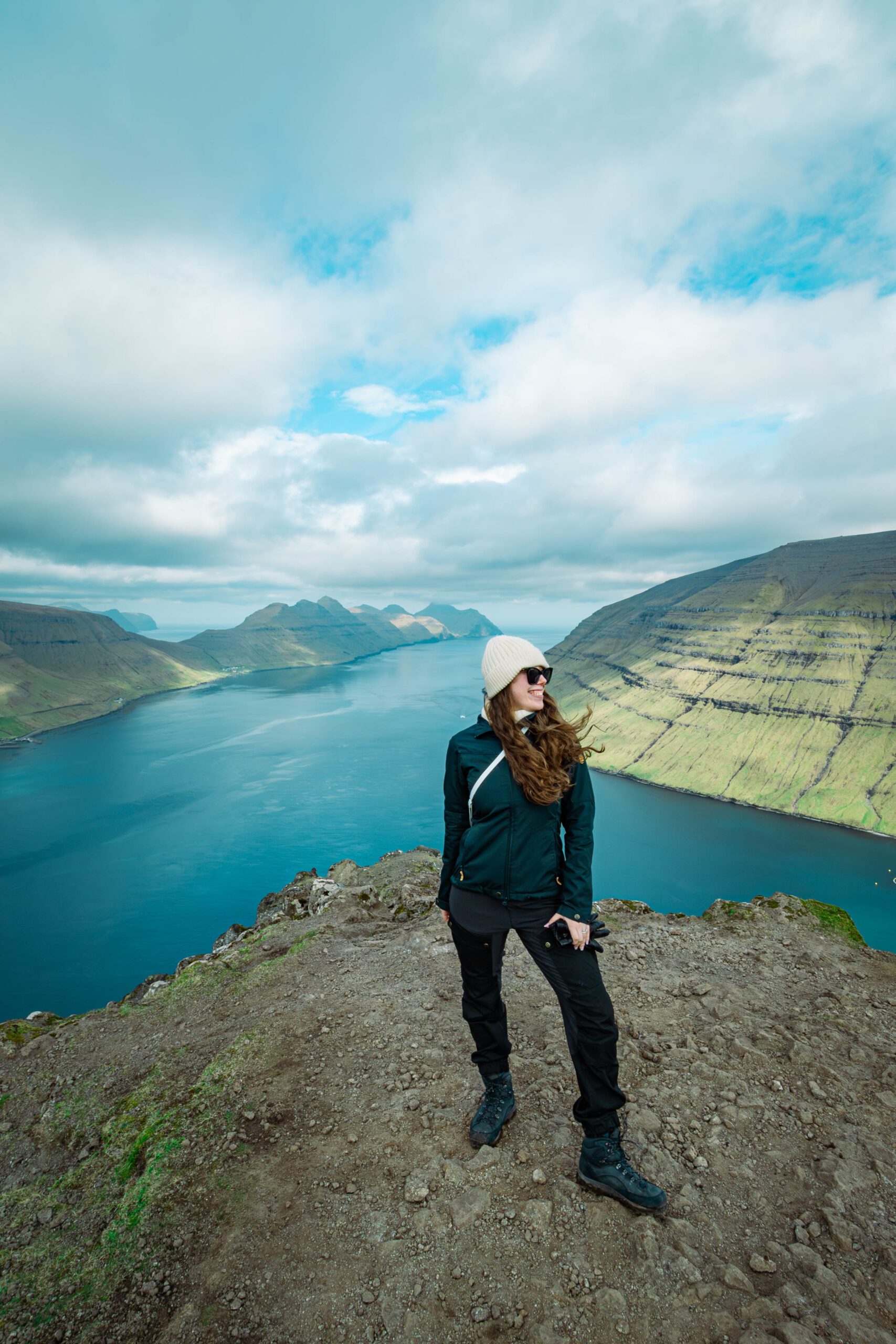
We visited the Faroe Islands and Norway within the same summer, and the contrast stayed with us for months. Both destinations sit in the North Atlantic, both deliver jaw-dropping scenery, and both are increasingly popular with travelers escaping southern European heatwaves. But they are very different trips — in cost, in logistics, in the kind of experience they reward.
If you’re deciding between the Faroe Islands vs Norway for your next trip, this is the honest comparison we wished we’d had before booking.
Choose the Faroe Islands if you want raw, uncrowded North Atlantic landscapes, don’t mind unpredictable weather, and prefer a compact trip (4–6 days). Choose Norway if you want fjords on a bigger scale, more infrastructure, and the flexibility to road-trip for 1–3 weeks. Both exceeded our expectations — but the right one for you depends on trip length, budget, and how much wilderness you can handle.
Scenery: what each destination actually looks like
Both the Faroe Islands and Norway are dramatic, green, and vertical — but the scale and feel are different in ways photos don’t quite capture.
The Faroe Islands: compact and alien
The Faroes are 18 islands packed into a space smaller than most Norwegian counties. Everything feels condensed — you drive 20 minutes and the landscape changes completely. Sea cliffs drop straight into the Atlantic, turf-roofed villages sit in valleys that look untouched since the Viking era, and fog rolls in so fast it rewrites the view while you’re watching. The signature images — the waterfall at Gasadalur, the optical-illusion lake on Vagar, the puffin colony on Mykines — are all real, but what struck us most was the emptiness between them. On some hikes we didn’t see another person for hours.
Norway: scale that doesn’t compute
Norway’s fjords are simply bigger than anything the Faroes can offer. The western fjords, the Lofoten wall rising from the sea, the drive along the Atlantic Road — these are landscapes that make your brain recalibrate what “big” means. But Norway also has more variety: Arctic tundra in the far north, midnight sun beaches in Lofoten, cosmopolitan harbour cities like Bergen and Tromso, and a highway system that includes some of the most scenic drives in Europe. Where the Faroes feel intimate and wild, Norway feels epic and engineered — in a good way, because those tunnels and bridges are staggering.
Cost comparison: real numbers from our trips
Neither destination is cheap. But the cost profiles are different, and knowing where the money goes helps you plan honestly.
Faroe Islands daily budget
- Accommodation: 120–180 EUR per night for a guesthouse or Airbnb (hotels are limited outside Torshavn)
- Rental car: 60–90 EUR per day (essential — there’s no realistic public transport for tourists)
- Food: 40–60 EUR per day for a couple (supermarket lunches + one restaurant dinner)
- Activities: most hikes are free; the Mykines ferry + puffin hike was about 45 EUR per person
- Realistic daily total for two: 250–350 EUR
Norway daily budget
- Accommodation: 130–220 EUR per night (wider range — cabins, hotels, camping available)
- Rental car: 50–80 EUR per day (cheaper than Faroes, but toll roads add up — AutoPASS is unavoidable)
- Food: 50–80 EUR per day for a couple (Norway is more expensive for eating out, especially in fjord towns)
- Activities: fjord cruises 50–100 EUR per person, most hikes free, coastal ferry segments vary
- Realistic daily total for two: 280–420 EUR
Norway costs more per day, but you can stretch a Norway trip longer because the infrastructure supports budget options (camping, cabin stays, cooking) more easily than the Faroes.
Head-to-head: Faroe Islands vs Norway at a glance
Here’s the quick-reference comparison we kept coming back to while planning. Eight categories, honest scores.
- Best for dramatic scenery: Tie — Faroes win on intimacy, Norway wins on scale
- Best for budget travelers: Norway (more budget accommodation and camping options)
- Best for a short trip (under 7 days): Faroe Islands (compact, you can see the highlights in 5 days)
- Best for a long road trip (10+ days): Norway (endless routes, Lofoten alone needs 4–5 days)
- Best for avoiding crowds: Faroe Islands (even in summer, most places feel empty)
- Best for food and culture: Norway (Bergen fish market, Arctic dining in the north, larger cities)
- Best for wildlife: Faroe Islands (puffins on Mykines are unforgettable; Norway has whales near Tromso)
- Easiest to reach from Europe: Norway (direct flights from most European hubs; Faroes require a connection)
Honest travel stories from the Arctic
One email a month — our latest posts, trip reports, and the occasional recommendation from a couple who lives above the Arctic Circle.
Logistics, flights, and getting around
This is where the two destinations diverge sharply — and where most first-timers underestimate the Faroes.
- Getting to the Faroes: Atlantic Airways flies from Copenhagen (2 hours), and occasionally from Edinburgh or Reykjavik. Limited schedules, and flights fill fast in summer. Book early or pay double.
- Getting to Norway: Direct flights from most European cities to Oslo, Bergen, Tromso, Stavanger, and more. Norwegian, SAS, and Wideroe cover domestic routes. Vastly more options and flexibility.
- Getting around the Faroes: Rent a car. Full stop. The islands are connected by tunnels (including a stunning sub-sea tunnel to Vagar), but buses are infrequent and won’t get you to trailheads. Drive times are short — the longest you’ll drive on a single island is about 40 minutes.
- Getting around Norway: Rent a car for fjord regions and Lofoten. But Norway also has a train network (the Bergen Railway is world-class), the coastal ferry, and good domestic flights. You can see a lot without a car if you plan around trains and ferries.
- Trip length: The Faroes are a 4–6 day trip naturally. Norway can absorb 2 days or 3 weeks without feeling rushed or stretched — it just depends on how much you want to cover.
Crowds, overtourism, and the best time to visit
Both destinations are part of the coolcation wave, which means visitor numbers are climbing. But the experience of crowds is very different.
- Faroe Islands in summer (June–August): Still uncrowded by European standards. Torshavn has some bustle, and Mykines can feel busy on clear days because the ferry has limited capacity. Everywhere else, we had trails and viewpoints largely to ourselves.
- Norway in summer (June–August): Popular spots like the famous cliff hikes, the western fjords, and Lofoten’s Reine get genuinely crowded. Northern Norway and the Scenic Routes are calmer. Shoulder season (May, September) is the sweet spot for Norway.
- Faroe Islands weather: Unpredictable year-round. Horizontal rain, sudden fog, and wind that makes standing upright a project. June and July are mildest but still require waterproof everything. This is part of the charm — and part of why the Faroes stay less crowded.
- Norway weather: More stable in summer, especially in the southern fjords. Lofoten and the north can still be volatile. But you’ll get more sunny days in a Norway summer than a Faroe summer, which matters for photography and morale.
- Midnight sun: Both destinations get extended light — Norway above the Arctic Circle gets true midnight sun from late May to mid-July; the Faroes don’t technically hit midnight sun but have civil twilight all night in June, so it never really gets dark.
The mistakes we made (in both places)
- Faroe Islands — not booking the Mykines ferry early enough. It sells out days in advance in summer. We almost missed the puffins because we assumed we could just walk up to the port.
- Faroe Islands — underestimating the wind. We brought rain jackets but not proper windproof layers. The wind on exposed ridges is violent and constant.
- Norway — trying to see too much. We crammed Bergen, the western fjords, and Lofoten into 10 days and spent too many hours driving. Next time we’d pick one region and go deep.
- Norway — not budgeting for tolls. AutoPASS charges add up fast, especially through tunnels. We blew through our transport budget by day 5.
- Both — not packing merino base layers. North Atlantic “summer” can feel like autumn in central Europe. Merino wool was the one thing we wished we’d brought more of.
- Both — comparing them while still on the trip. These are different experiences. Enjoy the one you’re on. We spent too much time in the Faroes saying “this reminds me of Norway” instead of letting the Faroes be the Faroes.
Frequently asked questions
Is the Faroe Islands or Norway cheaper to visit?
Norway has more budget-friendly options (camping, cabins, supermarkets everywhere), but both are expensive by European standards. For a comparable 5-day trip, the Faroes might cost slightly less overall because it’s shorter and there are fewer paid activities — but Norway gives more value per day on a longer trip.
Can I combine the Faroe Islands and Norway in one trip?
Yes, but flights between them usually route through Copenhagen. The most natural combo is Copenhagen to the Faroes (5 days) then back to Copenhagen and on to Bergen or Oslo. Allow at least 2 weeks for a combined trip to avoid exhaustion.
Which destination is better for hiking?
Norway has more variety and more multi-day options — famous cliff hikes, Lofoten ridges, and national park trails. The Faroes have shorter but equally dramatic hikes — the Kallur lighthouse, the Vagar lake trail, and Mykines are all half-day walks. For serious hikers, Norway wins on depth; for casual hikers who want payoff with less effort, the Faroes are perfect.
Do I need a car in both destinations?
In the Faroes, absolutely — there’s no realistic alternative. In Norway, a car is ideal for fjord country and Lofoten, but you can do a good trip by train, coastal ferry, and domestic flights without one.
Which is better for summer: Faroe Islands or Norway?
Norway gives you more reliable weather and midnight sun above the Arctic Circle. The Faroes give you puffins (June–August), 24-hour twilight, and fewer crowds. If weather reliability matters, Norway. If raw wildness matters, Faroes.
Is the Faroe Islands worth it for just 3 days?
Yes — but 5 days is the sweet spot. In 3 days you can see Torshavn, Vagar (the waterfall and the lake), and Mykines if you book the ferry in advance. You’ll feel rushed but satisfied. Under 3 days is too tight.
A final word from Rovaniemi
We’re often asked which one we preferred, and the honest answer is that they gave us different things. The Faroe Islands blew us away — it was one of those trips where you land back home and immediately start looking at return flights. Norway exceeded every expectation too, but in a slower, cumulative way: each fjord, each mountain road, each harbour town layered on top of the last until we realized we’d fallen in love with the country.
If you have a week or less and want something completely different from anything you’ve seen in Europe, start with the Faroes. If you have 10+ days and want the full road-trip experience with fjords, cities, and Arctic light, start with Norway. Either way, you’ll end up visiting both — the North Atlantic has that effect on people.
Joona & Alla
A Finnish-Ukrainian couple living in Rovaniemi, Finland. Joona works in Lapland tourism marketing; Alla is an AI Engineer. Together we’ve visited 25 countries and share honest, locally-grounded travel writing from our home in the Arctic.
Read our full story →