Faroe Islands in Autumn: Why September and October Are Underrated
Most visitors chase the Faroe Islands in summer. We went in autumn and found fewer crowds, moody light, and a rawness that made the islands feel truly wild. Here is why the shoulder season might be the better trip.
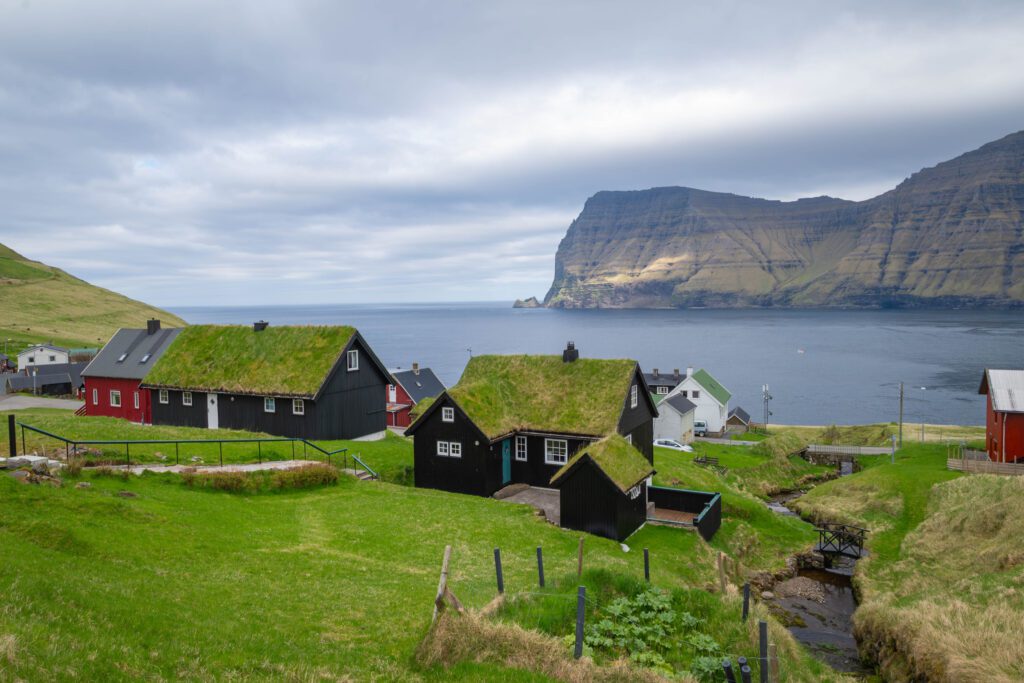
The Faroe Islands in autumn are a different place entirely. Gone are the midnight-sun hikers and the puffin chasers. What remains is fog rolling through valleys, waterfalls swollen from rain, and villages that feel like they belong to another century. We drove every major island in early October and came away thinking this might be the best-kept secret in North Atlantic travel.
If you have been considering the Faroes but feel like summer is too crowded or too expensive, autumn solves both problems with trade-offs you can plan around.
The Faroe Islands in autumn (September to October) offer dramatically fewer tourists, lower prices, and moody landscapes that photograph beautifully. The trade-offs are shorter days, unpredictable weather, and some hiking trails closing, but for couples and photographers, the shoulder season is genuinely better than peak summer.
Why autumn works in the Faroe Islands
The crowd factor
Summer in the Faroes has exploded. Mykines puffin trips sell out weeks ahead, rental cars double in price, and the tiny villages feel overwhelmed. By mid-September, most tourists have gone. We drove from Vagar to Eysturoy on a Thursday in October and passed maybe ten cars all day. Parking lots at famous viewpoints were empty.
This matters because the Faroes are small. The entire country has 54,000 people. When even a few thousand extra tourists arrive daily in summer, the roads, ferries, and guesthouses feel the strain. In autumn, the infrastructure returns to a comfortable rhythm.
The light and landscape
Autumn light in the North Atlantic is something photographers fly halfway around the world for. The sun sits low all day, casting long golden light across valleys before disappearing into fast-moving cloud systems. One hour you are in thick fog with zero visibility; the next, a break in the clouds lights up a single cliff face like a stage.
- Golden hour lasts hours — the sun barely climbs, so warm light stretches across the entire morning and afternoon.
- Fog and mist add depth — those iconic layered mountain photos are much easier in autumn than in clear summer skies.
- Waterfalls peak — autumn rain swells every stream. Mulafossur, Bosdalafossur, and the roadside cascades are all at their most dramatic.
- Grass turns golden-green — the hills shift from summer’s vivid green to a warmer, earthier palette that pairs with grey stone and white sea spray.
What September vs October actually looks like
September: the gentle transition
- Daylight: 12 to 13 hours at the start, dropping to about 11 by month end.
- Temperature: 8 to 12 degrees C — cool but comfortable with a good wind layer.
- Puffins: gone by late August. If puffins are your priority, September is too late.
- Hiking: all trails open, ground still firm, but wet weather gear is essential.
- Crowds: noticeably thinner than August but still some tourists mid-month.
- Flights: still multiple daily connections via Copenhagen. Prices start dropping.
October: the raw season
- Daylight: drops from 11 hours to about 9 by month end.
- Temperature: 5 to 9 degrees C with regular wind chill making it feel colder.
- Weather: more storm days, but also more dramatic skies. Prepare for horizontal rain.
- Hiking: most trails still accessible, but Kalsoy boat-and-hike trips may be cancelled in storms.
- Crowds: effectively gone. We had entire villages to ourselves.
- Costs: accommodation prices drop 30 to 40 percent from summer peaks.
8 things to do in the Faroe Islands in autumn
Our tested autumn highlights
The road between Vestmanna and Kvivik cuts through mountains that disappear into cloud. In autumn, the fog rolls through the passes like a living thing. It is atmospheric in a way summer’s clear days cannot match.
The famous lake-above-the-ocean viewpoint. In autumn you will likely have the trail to yourself. The wind is stronger, so anchor yourself at the edge, but the moody conditions make the optical illusion even more surreal.
This waterfall drops directly into the ocean. After autumn rain, the volume is enormous and the wind sometimes blows the water sideways or even upward. Dramatic does not begin to cover it.
The gorge village on Eysturoy is magical in any season, but in autumn the tourist coaches are gone. You can walk the gorge path alone, watch waves crash into the narrow inlet, and hear nothing but wind and seabirds.
The tunnels connecting the northern islands feel like science fiction in any weather, but driving into them during a storm — leaving howling wind and entering eerie silence — is uniquely autumn.
The tidal lagoon village is the Faroes’ most-photographed spot. In autumn, the light hits the grass-roofed church differently every hour. Arrive early morning or late afternoon for reflections in the lagoon.
Torshavn’s restaurants (KOKS, Raest, Barbara Fish House) are fully booked all summer. In October we walked into Barbara at 7 pm on a Saturday with no booking. The food scene is world-class and suddenly accessible.
The Faroe Islands sit at 62 degrees north, well within the auroral zone. From late September, dark nights return, and on clear nights the aurora is visible. We caught a faint green band over Vagar. It is not guaranteed, but it is a genuine autumn bonus.
Honest travel stories, once a month
We write about slow Nordic travel, shoulder-season trips, and the places we keep going back to.
Practical tips for an autumn visit
- Layer ruthlessly. Wind is the real enemy, not cold. A windproof shell over merino is more useful than a heavy jacket.
- Rent a car — there is no alternative. Public buses exist but are too infrequent for autumn exploration when daylight is limited.
- Book tunnels in advance. The subsea tunnels charge tolls. Register your car at tunnlar.fo before arrival to avoid surcharges.
- Check ferry schedules. Storm cancellations are more common in autumn. Always have a Plan B if the Kalsoy or Svinoy ferries are cancelled.
- Carry snacks and hot drinks. Cafes outside Torshavn keep shorter hours in autumn. A thermos and sandwiches save a cold, hungry afternoon.
- Download offline maps. Cell coverage is good on main roads but drops in valleys. Google Maps offline mode is essential.
- Headlamps for early and late hikes. With shorter days, you may start or finish trails in twilight. A headlamp weighs nothing and changes everything.
- Waterproof everything. Rain comes sideways. A waterproof phone pouch and dry bags for camera gear are non-negotiable.
Costs compared to summer
- Flights: Copenhagen to Vagar drops from 350 to 500 euro return in summer to 180 to 280 euro in September and October.
- Car rental: summer prices of 120 to 180 euro per day fall to 70 to 100 euro per day. Book early because supply is still limited.
- Accommodation: guesthouses that charge 180 to 240 euro per night in July drop to 110 to 160. Airbnb options increase as locals list homes after the summer rush.
- Restaurants: same prices year-round, but availability is the real saving. No need for the 50 euro tourist set menu when you can actually get into the places locals eat.
- Total for a 5-day couple trip: we spent roughly 2,100 euro in October versus an estimated 3,200 to 3,800 for the same trip in July. That is 35 to 45 percent less.
Mistakes we made on our autumn Faroe Islands trip
- Underestimating wind speed. We brought a tripod rated for light use. The wind literally blew it over on a cliff edge. Bring a heavy-duty tripod or sandbag weights.
- Planning too many islands per day. Ferry cancellations and tunnel queues ate into our schedule. Two islands per day is the autumn max. One is better.
- Skipping the weather window. We waited for perfect weather on day one to hike Traelanipa. It never came. By day three we hiked in light rain and had the best experience of the trip. Commit to going out regardless.
- Not packing enough dry layers. One day we got soaked on a morning hike and had nothing fully dry for the afternoon. Bring more base layers than you think.
- Expecting mobile data everywhere. Two valleys on Bordoy had zero signal. We missed a turn and added 40 minutes. Download everything offline.
- Assuming all hikes are marked. Some trails that are well-trodden in summer become harder to follow when grass grows over the path. GPS tracks via Komoot or AllTrails are essential in autumn.
Frequently asked questions
Is September or October better for visiting the Faroe Islands?
September gives you more daylight and milder weather, with most hiking trails in good condition. October is rawer and emptier, with better prices and more dramatic skies. For hiking, pick September. For photography and solitude, October.
Can you still hike in the Faroe Islands in autumn?
Yes. Most trails remain open through October, though some guided-only trails like the Kalsoy lighthouse may have fewer departures. Ground can be boggy, and shorter days mean you need to start earlier. Proper waterproofs and traction are essential.
Is it worth visiting the Faroe Islands without seeing puffins?
Absolutely. Puffins leave by late August. The islands’ appeal goes far beyond one bird. The landscapes, villages, food scene, and driving roads are the real draw. Autumn’s atmosphere more than compensates for the missing puffins.
How bad is the weather in October in the Faroe Islands?
Expect rain on most days, with regular wind gusts of 50 to 80 km per hour. Temperatures hover around 5 to 9 degrees C. But storms rarely last all day. Weather moves fast, and clear breaks appear between squalls. The key is being ready to move when the weather opens.
Can you see the northern lights in the Faroe Islands in autumn?
Yes, from late September onward. The Faroes are at 62 degrees north, within the auroral zone. On clear, dark nights with moderate solar activity, the aurora is visible. It is not as reliable as Rovaniemi, but it is a genuine possibility and a lovely surprise.
How many days do you need in the Faroe Islands in autumn?
We recommend 5 days minimum. Shorter days and possible ferry cancellations mean you need buffer time. With 5 days you can cover Streymoy, Vagar, Eysturoy, and one northern island comfortably, with a rest day built in for storms.
A final word from Rovaniemi
We live in a place where shoulder season is the season. In Rovaniemi, September means the first auroras and the birch forests turning gold. We have learned to love the in-between months, when a destination shows its real face rather than its postcard version.
The Faroe Islands in autumn gave us that same feeling. Fewer tourists, wilder weather, and a landscape that felt alive rather than curated. If you have been eyeing the Faroes but balking at summer prices or crowds, September and October are your answer. Pack layers, lower your expectations for sunshine, and raise them for everything else.
Joona & Alla
A Finnish-Ukrainian couple living in Rovaniemi, Finland. Joona is a marketing professional in Lapland tourism; Alla is an AI and content specialist. Together we have visited 25 countries and share honest, locally-grounded travel writing from our home in the Arctic.
Read our full story →