Driving Long Distances in Norway — What to Actually Expect
We’ve driven across Finland to Norway and back more times than we can count. Here’s what long-distance driving in Norway is really like — the distances, the ferries, the tunnels, the costs, and the things nobody warns you about.
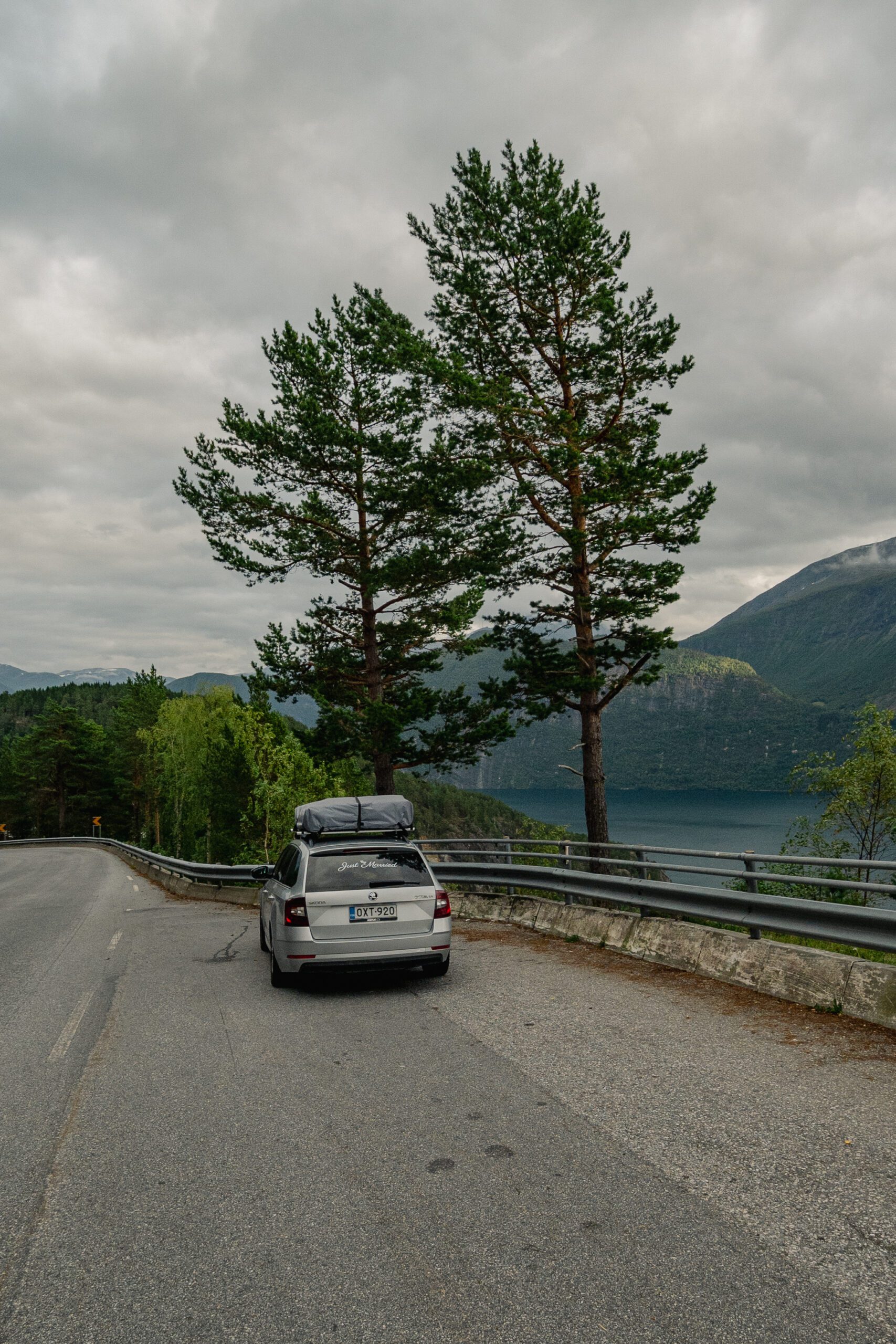
We live in Rovaniemi, right on the Arctic Circle in Finnish Lapland. Norway is our neighbour — the border is about 200 km west of our front door — and we’ve been driving there on weekends, long trips, and everything in between for years. Long-distance driving in Norway is genuinely one of the great road trip experiences in the world. It is also one that surprises almost everyone who tries it for the first time.
The roads are excellent. The scenery is extraordinary. But Norway is long — very, very long — and the infrastructure behaves differently from most of Europe. Ferries replace bridges. Toll roads are unavoidable. Distances that look manageable on a map can take twice as long as expected. This guide is what we wish we’d read before our first long drive through Norway.
Long-distance driving in Norway is slow, expensive, and spectacular. Plan for roughly 60–70 km/h average speed (including ferry waits and mountain passes), budget €20–40 per day for tolls and ferries, and give yourself at least one extra day of buffer for every 400 km of planned distance. It is absolutely worth it.
- How long does Norway actually take to drive?
- Planning the route: E6, E16, and the scenic detours
- Norway driving checklist: 8 things to sort before you go
- Newsletter
- Toll roads and AutoPASS: what it costs and how it works
- Ferries: the hidden variable in every Norwegian drive
- What we got wrong on our first long Norway drive
- FAQ
How long does Norway actually take to drive?
Norway is the second-longest country in Europe from north to south — roughly 1,750 km as the crow flies from Lindesnes in the south to Nordkapp in the north. Drive it straight and you are looking at well over 30 hours of pure driving time under ideal conditions. Nobody drives it straight.
The real-world speed calculation
Google Maps will show you a drive time. Norway will laugh at it. Here is why your actual average speed will be lower than expected:
- Speed limits are strictly enforced. Most main roads outside towns are 80 km/h. Mountain passes drop to 60 or 50 km/h. In many scenic sections you genuinely want to go slower.
- Ferry crossings add unpredictable time. A crossing that takes 20 minutes can mean a 40-minute wait on top of that, especially in high summer. Maps don’t account for queue times.
- Tunnel routing changes your path. Norway has over a thousand tunnels. Some save time. Others, especially on older routes, slow you down with single-lane sections and traffic lights.
- Mountain passes close or slow in bad weather. Roads like Sognefjellet or Trollstigen are seasonal — if you’re planning to drive them, always check current status.
Our rule of thumb: plan for 60–70 km/h average effective speed on a day with one or two ferry crossings. On a pure highway day with no ferries, 80–85 km/h is realistic.
Reference distances and realistic drive times
- Oslo to Bergen: 500 km / 7–8 hours (with Laerdal tunnel, no ferries)
- Oslo to Trondheim: 490 km / 5.5–6.5 hours (E6, fast road)
- Trondheim to Bodø: 720 km / 9–10 hours (E6, fjord crossings)
- Bodø to Lofoten: ferry from Bodø to Moskenes (3.5 hours) or drive via E10 from Narvik (280 km / 4 hours)
- Narvik to Nordkapp: 720 km / 10–11 hours (E6 north, long days)
- Rovaniemi (Finland) to Lofoten: our route, about 800 km / 11–12 hours
Planning the route: E6, E16, and the scenic detours
Norway has two main north-south spines. The E6 runs the entire length of the country — from just north of Oslo all the way to Kirkenes near the Russian border. It is the fastest option and the one truck drivers use. The E16 and other secondary routes offer more scenery but slower progress.
The E6: Norway’s backbone
If you are driving long distances and want to cover ground, the E6 is your highway. From Oslo to Trondheim it is genuinely fast — four lanes in places, gentle curves, very few ferries. North of Trondheim it narrows and becomes more interesting, passing through Mo i Rana, Bodø-area, Narvik, Alta, and eventually to Nordkapp or Kirkenes.
The scenic alternatives worth the time
- National Scenic Routes (Nasjonale Turistvegar): Norway has 18 official scenic routes, marked with signs on the road. They add distance and time but are specifically managed for the view. Gaularfjellet, Hardanger, and the Atlantic Ocean Road (Atlanterhavsveien) are the ones we come back to.
- Sognefjellet (RV55): Norway’s highest road pass, open summer only. Connecting Lom to Sogndal, it climbs above the treeline into a landscape that feels like another planet.
- Trollstigen: the famous hairpin road. Spectacular, very narrow, extremely busy in July and August. Worth going early morning.
- Lofoten via E10: once you cross the bridge to Lofoten, the road weaves between fish villages and dramatic peaks. Slow down on purpose — this is not a road for covering distance, it is a road for stopping every 10 minutes.
Norway driving checklist: 8 things to sort before you go
Before you set off on a long Norwegian road trip, these are the eight practical things we always sort in advance. Each one has caught someone we know off guard.
- 1. Register for AutoPASS Visitor or Frempass. Norway’s tolls are fully electronic — cameras read your plate. Register before crossing the border to avoid late invoice fees.
- 2. Check ferry schedules. Most crossings don’t need booking. The Bodø–Lofoten route in July–August is the exception — book it 2–3 days ahead.
- 3. Download offline maps. Mobile coverage drops in tunnels and remote mountain areas. Google Maps offline packs work well; Maps.me is a solid backup.
- 4. Check seasonal road status. Mountain passes open late and close early. The Statens vegvesen website shows real-time status for every road in the country.
- 5. Budget for fuel properly. Norwegian petrol is among the most expensive in Europe. A 1,000 km trip in a medium-size car will cost €130–180 in fuel.
- 6. Carry a card, not cash. Norway is nearly cashless. Cards work everywhere — including ferries — but keep a small NOK reserve for the rare spot that doesn’t.
- 7. Confirm accommodation at each end of long driving days. Free camping under Allemannsretten is great, but after a 10-hour drive day, a confirmed bed is worth it.
- 8. Bring a power bank and car charger. GPS running all day will drain your phone. Navigation is not optional in the remote north.
Road trip routes, honest costs, and Arctic life
We send one letter a month. No filler, no sponsored fluff — just what we’re driving, what surprised us, and what we’d do differently.
Toll roads and AutoPASS: what it costs and how it works
Norway’s toll system is one of the most comprehensive in the world. There are no booths — cameras read your license plate at toll stations and charge you automatically. As a foreign visitor, you are not exempt.
How the billing works
If you do nothing, Norwegian toll authorities will invoice your home address weeks or months after your trip, with handling fees added. To avoid this, register your vehicle and a payment card with AutoPASS Visitor (visitnorway.com/autopass) or a service like Frempass or EasyPark before you cross the border. This links your plate to a prepaid account, charges you the correct toll rate, and usually saves the surcharge.
What you’ll actually pay
- Typical urban toll ring (Oslo, Bergen, Trondheim): NOK 15–55 per pass (roughly €1.30–5.00), depending on time of day and vehicle class. Rush hour costs more.
- Major infrastructure tolls (tunnels, bridges): NOK 50–150 per crossing. The Atlanterhavstunnelen (Atlantic Ocean Tunnel) costs around NOK 100.
- Ferries: charged separately. A car + 2 passengers on a short crossing is typically NOK 100–250 (€9–23). Longer crossings like Bodø–Lofoten are NOK 500–700+ (€45–65).
- Realistic daily budget for tolls + ferries on an active road trip day: NOK 250–500 (€22–45).
EVs pay reduced or zero tolls at many Norwegian toll stations — this is worth knowing if you’re renting. Diesel and petrol vehicles pay the standard rate.
Ferries: the hidden variable in every Norwegian drive
Norway has more than 100 active car ferry routes. On any substantial road trip, you will take at least two or three. They are not an inconvenience — the ferries are part of Norway’s road network, and most Norwegians treat them like a moving car park where you get 15 minutes to eat lunch.
What a typical ferry crossing is like
You drive into a queue, wait for the ferry to dock, drive on, pay (or the charge is read from your AutoPASS tag), and cross. On short crossings of 10–20 minutes, you often stay in the car. On longer ones, you go up to the passenger deck, buy coffee, and watch the fjord. It is genuinely one of the pleasant parts of driving Norway.
The crossings that need advance planning
- Bodø to Moskenes (Lofoten): 3.5-hour crossing, very popular in July–August. Book at Torghatten Nord’s website at least 2–3 days in advance in peak season. In shoulder season, just turn up.
- Hjelmeland–Nesvik–Skipavik triangle (RV13, Ryfylke): three small ferries in sequence. Each is short but they add up. Budget an extra 1.5–2 hours for the chain.
- Festøya–Solavågen (RV60, Sunnmøre): popular crossing on the way to Geiranger — queues can be long in summer.
- Lavik–Oppedal (on the approach to Bergen from the east): one of the busiest crossings in western Norway. Pre-booking available.
What we got wrong on our first long Norway drive
We’ve made most of the classic mistakes. Here they are, so you don’t have to.
- We trusted Google Maps timing. It calculated a 6-hour drive that took 9 hours. Two ferry waits (not in the time estimate), one mountain pass at 50 km/h, and one “10-minute stop” at a viewpoint that turned into 40 minutes.
- We didn’t register for AutoPASS. Six weeks later we received an invoice by post from a Norwegian toll company, with a processing fee on top. Lesson learned.
- We didn’t check the Sognefjellet road status. We drove four hours out of our way to find it closed for snow clearance. This was in early June.
- We underestimated fuel costs in remote areas. Between stations in northern Norway can be 150+ km. We ran very low on petrol on the E6 north of Mo i Rana. Always fill up when you’re above half a tank.
- We skipped the breakfast stop to save time. Norway is not a country where you drive hungry. Roadside petrol stations serve surprisingly good hot food, and stopping for 20 minutes is far better than driving tired for 200 km.
- We tried to do Lofoten in one day. You need at least two nights on the islands, and three is better. One day felt like watching a film on fast-forward.
Frequently asked questions
What is the realistic average speed for long-distance driving in Norway?
Plan for 60–70 km/h effective average, including ferry waits and the lower speed limits on mountain and coastal roads. On pure highway sections like Oslo–Trondheim via E6, you can average 80–85 km/h. Build your itinerary around the lower figure and you’ll arrive relaxed instead of rushed.
Do I need to pay Norwegian tolls as a foreign driver?
Yes. Norway’s electronic toll system reads your license plate regardless of where it’s registered. If you don’t pre-register with AutoPASS Visitor or Frempass before your trip, you’ll receive an invoice by post weeks later, usually with handling fees added. Register before you go — it takes about 10 minutes online.
How far in advance should I book ferry crossings in Norway?
Most short crossings don’t need advance booking — you simply queue and board. The exception is the Bodø–Lofoten (Moskenes) route in July and August, which books out. For that one, book 2–3 days ahead in peak season. All other crossings: just turn up.
How expensive is fuel in Norway?
As of 2026, petrol in Norway costs roughly NOK 19–22 per litre (around €1.65–1.95/litre). It is among the most expensive in Europe, despite Norway being a major oil producer. Budget about NOK 130–180 (€11–16) per 100 km for a medium-size petrol car.
Is driving in Norway safe for someone used to flat, straight roads?
Yes, but the learning curve is real. Norwegian roads are well-maintained but often narrow, winding, and steep. Single-lane tunnels with passing bays exist. Mountain passes require care in changeable weather. Drive slower than you think you need to — not because of danger, but because the road demands it and the view deserves it.
Can you wild camp while road-tripping Norway?
Yes. Norway’s Allemannsretten (right to roam) allows free camping on uncultivated land as long as you’re at least 150 metres from the nearest house and you leave no trace. This makes Norway genuinely free-camping-friendly for road trippers with tents or a rooftop setup. Just avoid private farmland and follow the leave-no-trace principle strictly.
A final word from Rovaniemi
Every time we drive into Norway from Finland — watching the landscape shift from flat Finnish fell to deeper Norwegian valley — we feel the same thing. This is a road trip country. Not in the sense of empty American interstates, but in the intimate sense of a place that keeps revealing something extraordinary around every bend.
Long-distance driving in Norway demands patience and planning. But the payoff is proportional to the effort. Sort the AutoPASS before you cross the border, build one buffer day into every long stretch, and don’t try to rush Lofoten. Norway will fill every extra hour you give it.
Joona & Alla
A Finnish-Ukrainian couple living in Rovaniemi, Finland. Joona is a marketing professional in Lapland tourism; Alla is an AI engineer. Together we’ve visited 25 countries and share honest, locally-grounded travel writing from our home in the Arctic.
Read our full story →