How to Drive to North Cape (Nordkapp): The Route, Costs, and What to Expect
A Rovaniemi-based travel couple who’ve driven to Nordkapp via both the Finnish and Norwegian sides breaks down the full route, realistic costs, the logistics nobody warns you about, and whether it’s actually worth the drive.
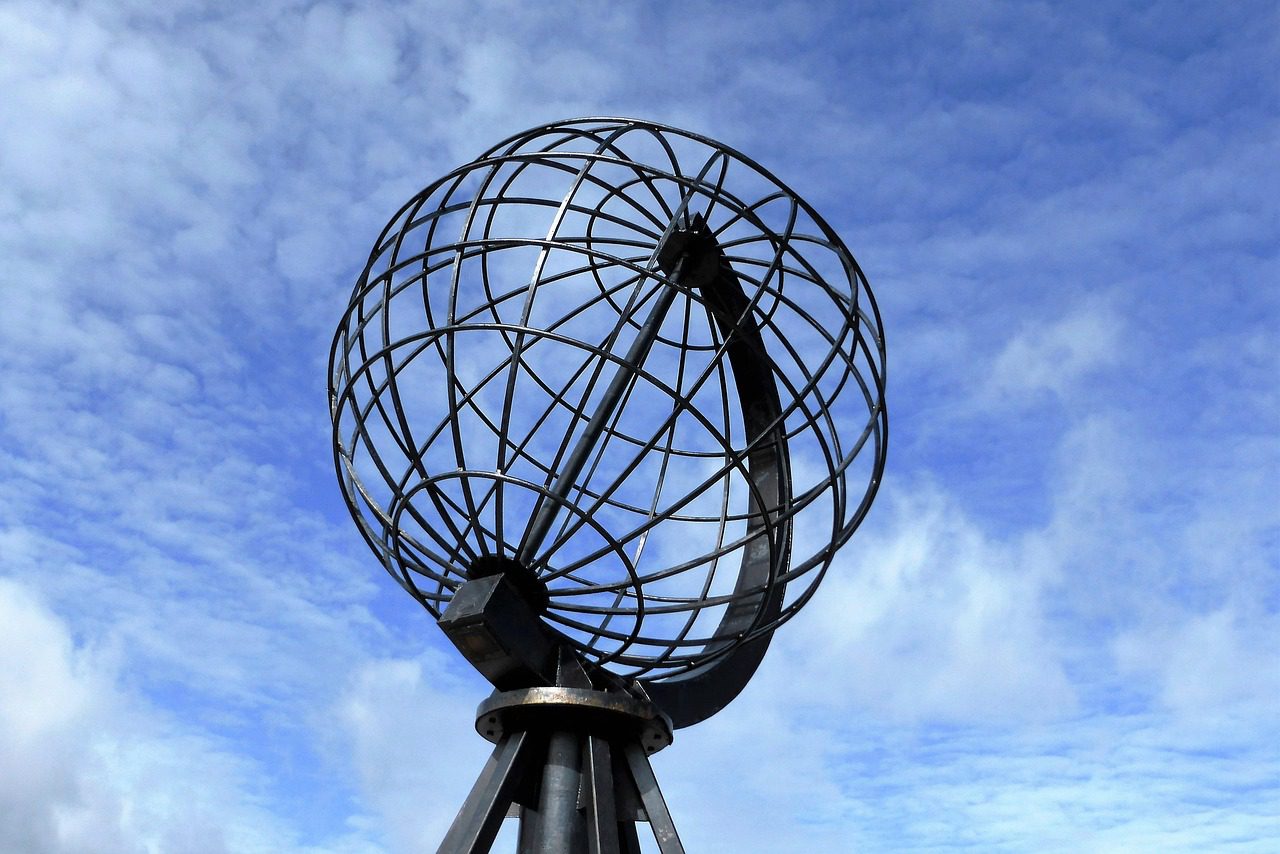
We drove to Nordkapp for the first time on a long summer road trip from Rovaniemi, heading north through Finland and crossing into Norway near Karasjok. The road kept getting more dramatic, the traffic kept thinning out, and when we finally pulled into the Nordkapp plateau at 11:45 pm with the sun still blazing above the horizon, we just sat there for a while not saying anything. That doesn’t happen to us often.
Since then we’ve recommended the drive to dozens of people. This guide is everything we wish someone had told us before our first attempt: the best route options, what the entry fee covers, where to sleep along the way, realistic daily budgets, and the one thing that surprises nearly everyone.
You can drive to Nordkapp from Rovaniemi in one very long day (roughly 9–10 hours each way, 560 km), but two or three days gives you a far better experience. The most scenic approach is the Norwegian coastal route via Alta and Honningsvåg. Budget roughly €30–50 for the plateau entry fee plus another €150–220 per day for fuel, food, and accommodation in the far north.
The two main routes to drive to Nordkapp
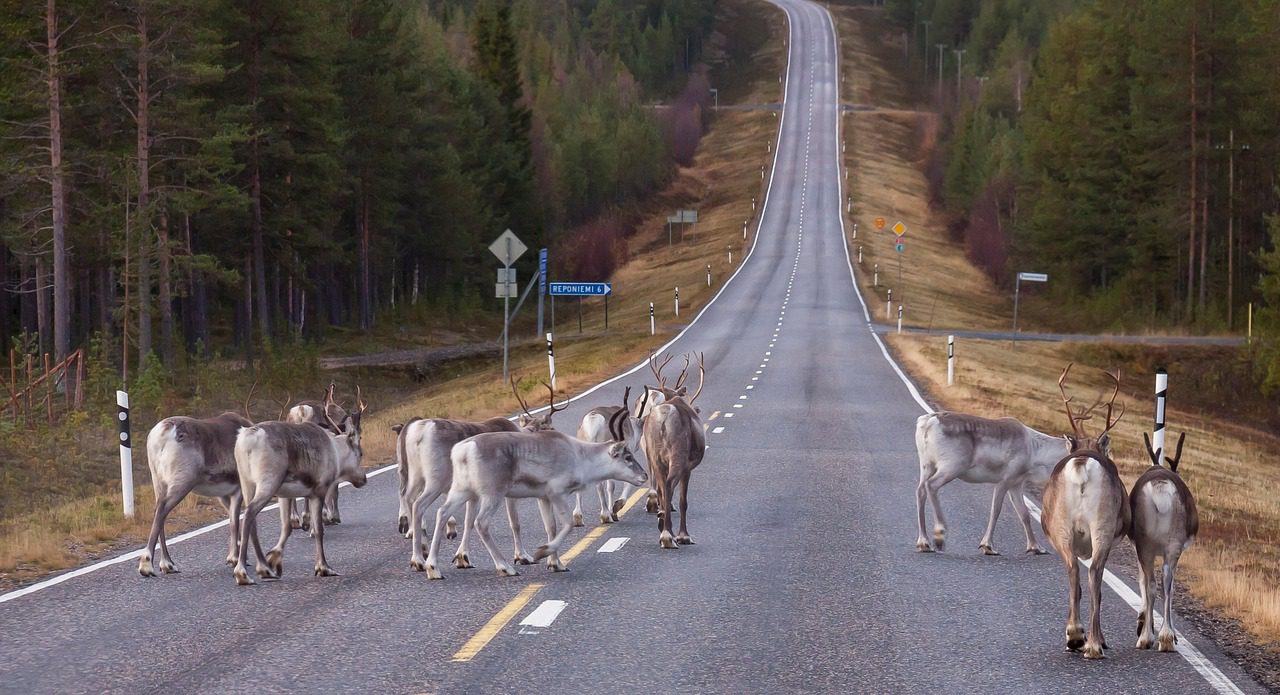
From Rovaniemi (or from most of Finland) there are two practical options. Both end at the same plateau. The route you choose should depend on how much time you have and what you want to see along the way.
Route A — The Finnish shortcut (E75 / E6)
Drive north from Rovaniemi on the E75 through Inari and Utsjoki, cross the border into Norway at Karigasniemi, then pick up the E6 at Karasjok. From Karasjok it is a straight run north to Olderfjord, then the E69 to Nordkapp. Total from Rovaniemi: roughly 550–560 km, 9–10 hours with stops. This is the fastest way. The road through Finnish Lapland and Finnmark is largely flat tundra, which is stark and beautiful in its own way, but you miss the Norwegian coast entirely.
Route B — The Norwegian coastal route (via Alta)
Cross into Norway earlier — either at Kilpisjärvi/Skibotn or from Tromsø if you have an extra day — and drive north along the coast via Alta, Hammerfest, and Honningsvåg. This adds a day but the scenery is in a completely different category: the Alta fjord, the lunar landscape of Finnmark, and the ferry from Honningsvåg to Nordkapp (or the E69 tunnel if you skip the ferry). We strongly recommend this route if it is your first time.
- Distance (Rovaniemi → Nordkapp via coast): approx. 900–950 km
- Driving time (no stops): 11–13 hours — split across 2 days minimum
- Key towns: Kilpisjärvi → Skibotn → Alta → Hammerfest → Honningsvåg → Nordkapp
Step-by-step: driving the Norwegian coastal route
This is the itinerary we recommend for most people — spread over three days from Rovaniemi, or two days if you are starting from Tromsø or Alta.
Day 1 — Rovaniemi to Alta (approx. 670 km, 8 hrs driving)
Leave Rovaniemi early. Drive northwest on the E8 through Muonio and Kilpisjärvi (the three-country cairn is worth a brief stop if you have never been), cross into Norway at Skibotn, and follow the E6 north through the Lyngen Alps. Stop in Tromsø for lunch if you like — it is a beautiful city and worth an hour even in transit. Then continue northeast along the coast to Alta. Sleep in Alta.
Day 2 — Alta to Nordkapp and back to Honningsvåg (approx. 310 km)
Alta to Nordkapp is about 220 km via the E69. The road to the plateau runs through the island of Mågerøya via the Nordkapp Tunnel (a 6.9 km undersea tunnel with a 47 kr toll — around €4). Arrive at Nordkapp before midnight if you want the full midnight sun experience. Sleep in Honningsvåg, the nearest town (34 km from the plateau).
Day 3 — Honningsvåg back to Rovaniemi (via E6 and E75)
Return south on the fastest route: E69 back to Olderfjord, E6 south to Karasjok, then cross into Finland at Karigasniemi and follow the E75 home through Inari. Expect around 8–9 hours of driving. This day is utilitarian — the scenery on the Finnish side is quieter. Break it up with a coffee stop in Inari and visit the SIIDA Sami museum if you have not been.
Read next: Planning the full Scandinavian road trip? Our Finland vs Sweden road trip comparison will help you decide which leg to add first.
Nordkapp quick-reference: costs, logistics, and need-to-knows
Here is everything in one place — the numbers, the logistics, and the stuff travel guides usually bury.
As of 2026, entry to the Nordkapp plateau costs approximately €30–35 per adult (check the official Nordkapp.no for current pricing). The fee covers the visitor centre, the “Cave of Light” film, the waffles at midnight (not a joke — they are part of the experience), and access to the cliffs. The ticket is valid for 24 hours, so you can return the next morning if the weather is bad.
The E69 runs through an undersea tunnel (Mågerøysundet Tunnel). The toll is approximately 47 kr (€4) each way and is paid via AutoPASS or by card at the toll station. Keep a card handy — cash is rarely accepted.
Fuel in northern Norway is noticeably more expensive than in Finland — expect to pay 22–24 kr per litre (roughly €1.90–2.10). Fill up in Finland before crossing. Karasjok and Alta have stations but they are pricier than anything south of the border.
Options are limited and expensive: €130–220 per night for a basic double in summer. Book 6–8 weeks ahead in June–July. The alternative is to camp on the plateau itself (if you have a campervan) or to sleep in your car — both are legal and not uncommon.
Rovaniemi → Nordkapp direct (Finnish route): ~560 km / 9–10 hrs. Rovaniemi → Nordkapp via Norwegian coast: ~920 km / split over 2 days. Honningsvåg to the plateau: 34 km / 30 min. Nearest airport: Alta (ALF), 220 km south — good option if you are flying in.
The Nordkapp visitor centre is open 24 hours in summer (roughly mid-May to mid-October). The most popular time to arrive is between 11 pm and 1 am for the midnight sun — expect company even at that hour. The site closes entirely in deep winter (the road becomes impassable without a convoy vehicle).
Even in July the plateau is cold and windy — temperatures of 5–12°C are normal, and the wind chill is significant. Bring a proper jacket, windproof layer, and something warm for your legs. The visitor centre sells overpriced ponchos but you do not want to rely on those.
Get our best travel tips in your inbox
Monthly stories from Rovaniemi — Arctic tips, road trip routes, and the places we keep coming back to.
💡 Our campervan tip: prices for the same van vary a lot between rental brands. We compare the Nordics campervans across 160+ rental companies on CampervanPlanet — and code HUNGRYTRAVELFAMILY5 takes 5% off.
When to go and what to actually expect at the top
The “best” time depends on what you are after. Here is what we have learned from our own visits and from talking to the many people we have sent up there since.
Midnight sun season (mid-May to late July) — the main event
- Peak midnight sun: June 11–July 30 for a full sun above the horizon at midnight from the plateau. June 21 (midsummer) is the most dramatic.
- Expect crowds between 11 pm and 1 am even at peak hours — the car park fills up. Go early or very late to avoid it.
- Weather in June–July is unpredictable: clear one hour, foggy the next. The plateau regularly disappears into a wall of cloud.
- If it is foggy on arrival, wait. The 24-hour ticket is specifically designed for this — the weather often clears within a few hours.
Autumn (August–September) — the underrated window
- Fewer visitors, cheaper accommodation, and the start of the “Polar night” season (aurora possible from late September onwards).
- The landscape turns amber and rust — genuinely beautiful. The light is softer and easier to photograph.
- The road closes in late October or November for the winter — check conditions before going.
The visitor centre: what is actually inside
- A large building with a cafe, gift shop, post office (you can get a Nordkapp postmark — worth doing), and the “Cave of Light” documentary film about the seasons at the cape.
- The famous globe sculpture is outside on the cliff edge — the backdrop for roughly half a million Instagram photos a year.
- There is a chapel inside, and a room memorialising King Oscar II who visited in 1873 and made the place famous.
Nordkapp vs Knivskjelodden: which is the true North Cape?
This is the debate every serious traveller eventually has. Here is the honest answer.
Nordkapp is on the island of Mågerøya at 71°10′21″ N. It is where the visitor centre, the globe, and the car park are. It is accessible by road and costs €30–35 to enter. It is spectacular. It is also, technically, not the northernmost point of mainland Europe.
Knivskjelodden is a peninsula about 1.5 km further north at 71°11′8″ N — making it the actual northernmost accessible point of the European continent. There is no road. You get there via an 18 km return hike from the E69 (roughly 5–6 hours, well-marked trail, challenging terrain). No entry fee.
- For the full experience — do both. Hike Knivskjelodden the morning of your plateau day and visit Nordkapp in the evening or at midnight. The hike is genuinely rewarding and far less crowded.
- For families with young children or limited time — Nordkapp is the right call. The plateau is accessible, the visitor centre adds context, and the cliffs are dramatic enough that you will not feel cheated.
- For the purists — Knivskjelodden is your answer. The certificate you get at the end of the hike has coordinates that beat every other “northernmost point” certificate in Europe.
Related: Driving through Norway’s far north on the way back? Our guide to the Atlantic Ocean Road is worth reading before you plan the return route.
Mistakes we made (and see other people make constantly)
- Not checking the weather before going up. The plateau fogs in completely and frequently. The Nordkapp website and YR.no (Norway’s weather service) both give localised plateau forecasts — use them. We drove up once and saw nothing but grey for 45 minutes before it cleared. The couple next to us drove back down immediately and missed a stunning clearance.
- Arriving in Honningsvåg without a booking. There are fewer than 10 accommodation options in or near Honningsvåg. In June and July, most fill 4–8 weeks out. We got stuck paying a fortune for the only room left. Book early or plan to camp.
- Underestimating fuel logistics. The last fuel station before the plateau is in Honningsvåg. Fill up there. The plateau has no fuel. Neither does the tunnel. Neither does the road from Olderfjord to Honningsvåg if you arrive outside normal hours.
- Going in summer without layers. The midnight sun makes people think “summer = warm.” At 71°N in June it is 8°C with a 40 km/h wind. We watched a couple in shorts last about 12 minutes on the cliff before retreating. Bring a proper windproof and something warm underneath.
- Skipping Honningsvåg itself. Most people treat it purely as a logistics stop for the plateau. It is actually a very pleasant small town with good food (try the reindeer or the Arctic cod), a small harbour, and a distinctly end-of-the-world atmosphere worth an hour of wandering.
- Rushing back the same way they came. If you drove up via Finland, consider returning via a different Norwegian route — even a partial loop through Alta or Hammerfest adds scenery without adding much distance. The Finnmark plateau has a strange, treeless beauty that deserves a slower pace on at least one leg.
Book your the Nordics campervan
Compare prices across 160+ campervan and motorhome rental brands, get a free 1GB eSIM with every booking — and 5% off with code HUNGRYTRAVELFAMILY5.
Check prices & availability →Frequently asked questions
How long does it take to drive to Nordkapp from Rovaniemi?
On the direct Finnish route (E75 through Inari and the E6 via Karasjok), it is roughly 560 km and 9–10 hours of driving including stops. It is technically doable in one day, but two days is much more enjoyable and gives you a night in Honningsvåg for the midnight sun.
Is there a toll to drive to Nordkapp?
Yes — the Mågerøysundet Tunnel on the E69 has a toll of approximately 47 kr (€4) each way, payable by card. There is also the Nordkapp plateau entry fee (€30–35 per adult). Norwegian AutoPASS works, but a bank card is the simplest option.
What is the best time of year to drive to Nordkapp?
June and July for the midnight sun; late August to September for the aurora season beginning, fewer crowds, and cheaper accommodation. The road closes in late October or November due to snow and ice and only reopens in spring (usually April or May depending on conditions).
Can you sleep at Nordkapp?
Campervans and motorhomes can park overnight in the plateau car park — many people specifically come this way to sleep under the midnight sun. There is no official camping structure and no facilities beyond the visitor centre, but it is tolerated and fairly common in summer. The nearest hotel accommodation is in Honningsvåg, 34 km away.
Is Nordkapp actually the northernmost point of Europe?
Not quite. Knivskjelodden, a peninsula accessible only by foot from the E69, is about 1.5 km further north at 71°11′8″ N. Nordkapp at 71°10′21″ N is the northernmost road-accessible point, and the one with the visitor centre and the famous globe sculpture. Knivskjelodden requires an 18 km round-trip hike.
How much does a Nordkapp road trip cost in total?
A realistic two-night trip from Rovaniemi will cost roughly €500–700 for two people: approximately €80–120 in fuel, €60–70 in entry fees and tolls, €260–440 in accommodation (one or two nights in Honningsvåg), and €80–120 in food. Budget higher if you are travelling in peak July when accommodation is both scarce and expensive.
A final word from Rovaniemi
We live roughly 550 km south of the most northerly point you can reach by car in Europe. That proximity has let us do the drive multiple times now — once in full midnight-sun season, once in early September with the first hints of autumn colour, once with a car that needed an emergency jump-start in the Honningsvåg car park at 1 am (story for another time).
Every version of the trip has been worth it. The drive itself does most of the work — northern Norway is not background scenery you pass through, it is the main event. The plateau is the punctuation mark at the end of a very long, very good sentence.
If you are already in Finland and wondering whether the detour is worth it: it is. The road north through Lapland already feels like the edge of the world. Nordkapp just proves you can go a little further.
Drive carefully, bring layers, and wait out the fog. The sun will come back — it always does up there.
— Joona & Alla, Rovaniemi