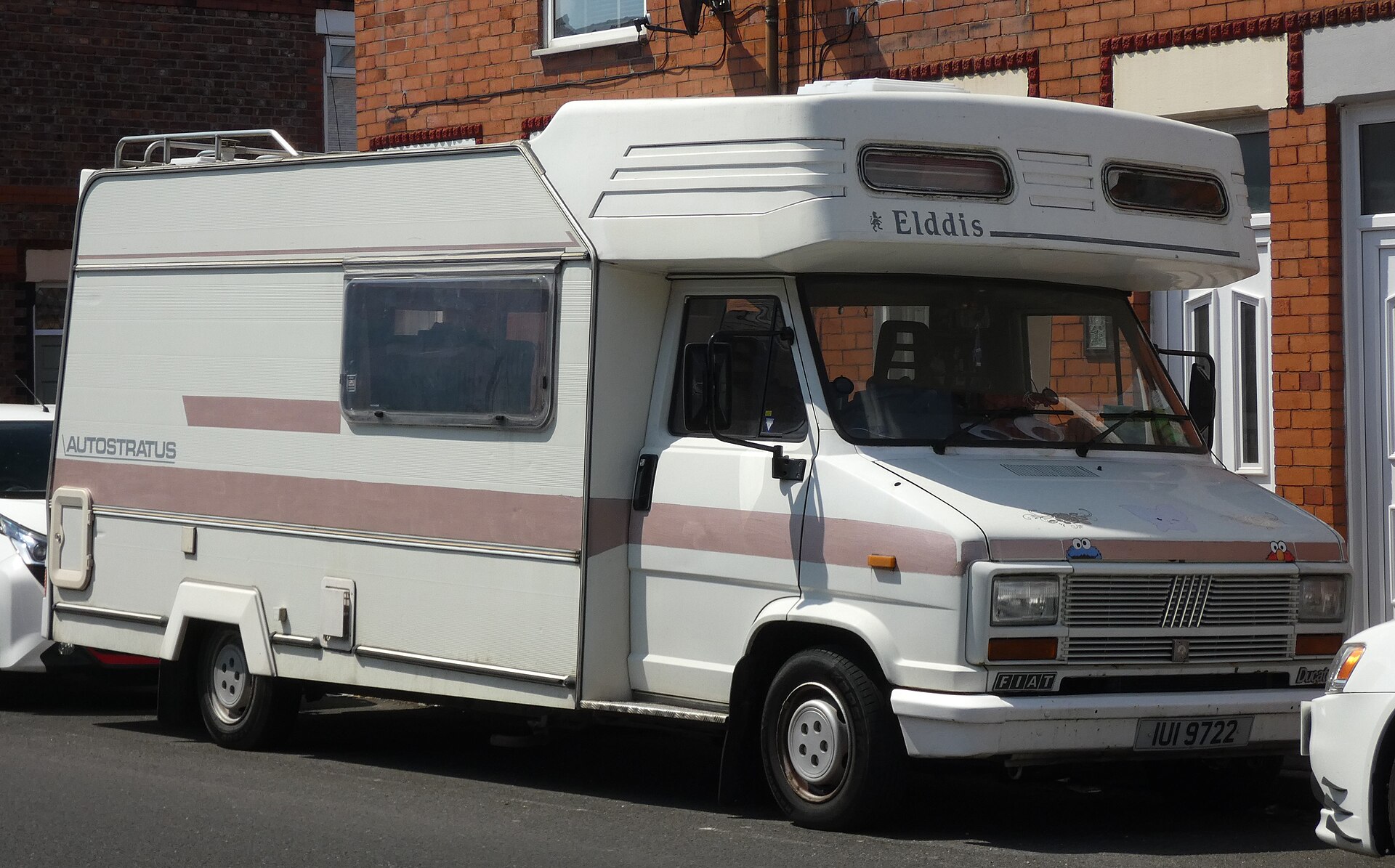
Searching for ways to save money on campervan hire usually starts with a shock: you look at two quotes for the same type of van, and one is three times the other. The good news is that the price differences follow clear patterns, and most of them can be used in your favour.
This guide is built on the CampervanPlanet Campervan Price Index, updated in October 2026 and based on 2,587 live offers in 22 countries, plus the country pages we have checked this autumn. It is a researched guide, not a diary of our own bookings, and the figures are starting or median prices that change with dates and vehicles.
We have put the biggest levers first, because season and country decide far more than any clever trick at checkout.
Season matters more than anything. In the CampervanPlanet index, the typical Iceland price is €115 a day in low season and €395 in high season, and in Iceland, New Zealand, Norway and Switzerland the peak price is more than double the low-season price. Choose the shoulder months, a smaller van, book early and compare the total. Our reader coupon takes €20 off.
Lever 1: the season matters more than the country
The index runs one 7-night search per season in each country. For the northern hemisphere it uses mid-November as low season, mid-May as shoulder season and mid-July as peak; for New Zealand and Australia, June is low, March is shoulder and January is peak. The results are blunt: in Iceland the typical price is €115 a day in low season, €260 in shoulder season and €395 in peak season. For Iceland, New Zealand, Norway and Switzerland the page says the typical high-season price is more than double the low-season price.
The individual country pages show the same pattern. Germany’s median 7-night price goes from €116 a day in November to €133 in May and €198 in July. Sweden’s index shows about €142 a day in winter against €232 in summer, and the USA about $104 against $168. Australia and New Zealand follow their own seasons, with New Zealand typically around NZ$161 a day in winter and NZ$400 in summer.
The practical lesson is to pick the shoulder months where you can. A two-week German trip at the May median rather than the July median saves roughly €900, and the weather is often just as good. See our overview of campervan rental prices by country for more comparisons.
Lever 2: choose a cheaper country, or a cheaper corner of it
In the October 2026 index, the cheapest starting prices were in New Zealand (from €16 a day, during the southern winter), Australia (from €40), Iceland (from €53), Portugal (from €67) and Spain (from €71). The most expensive were Croatia (from €157), Norway (from €136) and Finland (from €130).
These are cheapest-vehicle prices, so they are a floor rather than what most people pay, and they depend on the month. Even so, they show a useful rule: southern Europe in winter and the southern hemisphere in its off-season are the best-value combinations, while summer in northern Europe is expensive. If you want a European winter-sun trip, our guides to the Algarve and Spain are a good starting point.
Within a country, the pick-up city also matters, because depots differ in fleet size and competition. Comparing two or three pick-up points on CampervanPlanet often reveals a cheaper option within a short drive.
Lever 3: rent the smallest van that works
The index notes that a two-berth van costs less per day than a motorhome for four to six people. The vehicle cards on the country pages show the spread: in Germany a Budget Camper starts at €100 a day and a Family Motorhome at €246; in Stockholm the range is €79 to €219; in Lisbon €67 to €189.
A smaller van also uses less fuel, parks more easily and fits more campsites. Our comparison of campervans, motorhomes and RVs can help you decide how much space you really need. As a rule, couples should start with a compact van, and only families or groups need to step up to a motorhome.

Lever 4: book early and rent for longer
The index states that longer rentals and early bookings usually lower the daily price, and that the cheapest vans are the first to sell out. The country pages add specifics: Auckland airport pick-ups should be booked 3 to 6 months ahead for summer, Sydney Christmas vans about six months ahead, and Colorado summer RVs three months or more.
If your dates are fixed, that suggests booking as soon as you know them. If they are flexible, it is worth comparing a few start dates, since the price can change from one week to the next. Free or low-cost cancellation terms are worth a small premium, because they let you rebook if a better offer appears.
Use code HUNGRYTRAVELFAMILY20 at checkout on CampervanPlanet for €20 off, after you reach it through one of our links.
💡 Our campervan tip: prices for the same van vary a lot between rental brands. We compare Europe, the USA and Australia campervans across 160+ rental companies on CampervanPlanet — and code HUNGRYTRAVELFAMILY20 takes €20 off your booking.
Lever 5: compare the total, not the daily rate
The index puts it clearly: the excess, extra cover and mileage limits change the final price, and returning the vehicle in a different city usually adds a one-way fee. Each offer on CampervanPlanet lists what is included, such as insurance, mileage and equipment, and anything paid locally.
The booking model also affects your cash flow. You book on CampervanPlanet, but your contract is with the rental company named in each offer. Many offers take a deposit of often 10 to 20% online and the rest at pick-up, and the company holds a refundable security deposit on the main driver’s card. Our guide to insurance, deposit and excess explains how to read these terms, and the USA article on one-way RV rental costs shows how large the one-way charges can get.
When two offers look similar, the cheaper headline price is not always the cheaper trip. Write down the total for the same dates, including extras, before you decide.
Lever 6: the costs that are not in the rental price
Fuel, campsites and tolls can add up to a big share of a trip’s budget. For example, the Lisbon page suggests campsite or motorhome-stop fees of around €15 to €30 a night, and the Germany page gives about €15 to €35 per pitch, higher in Munich, Berlin and the Rhine Valley. Free or cheap dedicated motorhome parking areas, such as Germany’s Stellplätze and Portugal’s ASAs, can lower this.
Cooking your own food and choosing a van with a decent kitchen saves a lot, particularly in expensive countries. Our Nordic guide shows how this works on a larger scale: campervan rental costs in Sweden and in Iceland.
A worked example: the same two weeks in two seasons
To make this concrete, here are two calculations using the index and country-page figures. They are illustrations of the median or typical daily price, not quotes.
- Germany, 14 days: at the May median of €133 a day the rental is about €1,862; at the July median of €198 a day it is about €2,772. The difference is roughly €910.
- Iceland, 14 days: at the typical low-season price of €115 a day the rental is about €1,610; at the typical peak price of €395 a day it is about €5,530. The difference is roughly €3,900.
Of course, Icelandic winter comes with short days and difficult roads, so the saving is not free. But the first example shows how a month’s shift in a mild country can pay for the whole campsite budget.
Our verdict: a short checklist
If we were planning a trip tomorrow, we would work through this list: pick the shoulder months; compare two or three pick-up cities; choose the smallest van that fits; book as soon as the dates are fixed; compare the total including mileage, excess and one-way fees; and plan cheap campsites in advance.
Then we would check live prices on CampervanPlanet and enter code HUNGRYTRAVELFAMILY20 at checkout for €20 off. For country-specific guides and routes, start with our campervan rental guide.
The price index figures are credited to the CampervanPlanet Campervan Price Index, October 2026.
Book your Europe, the USA and Australia campervan
Compare prices across 160+ campervan and motorhome rental brands, get a free 1GB eSIM with every booking — and €20 off with code HUNGRYTRAVELFAMILY20.
Check prices & availability →Frequently asked questions
What is the cheapest month to hire a campervan?
It depends on the hemisphere. In the CampervanPlanet index, northern-hemisphere low season is mid-November and peak is mid-July; for New Zealand and Australia, low season is June and peak is January. The shoulder months are usually the best balance of price and weather.
Which country has the cheapest campervan hire?
In the October 2026 index the cheapest starting prices were in New Zealand (from €16 a day), Australia (from €40), Iceland (from €53), Portugal (from €67) and Spain (from €71). These are cheapest-vehicle prices for specific months.
Does booking early really make a campervan cheaper?
The index says early bookings and longer rentals usually lower the daily price, and the cheapest vans sell out first. Country pages recommend booking summer pick-ups 3 to 6 months ahead in busy destinations.
Is there a discount code for CampervanPlanet?
Yes. Use our reader code HUNGRYTRAVELFAMILY20 at checkout on CampervanPlanet to take €20 off your booking. It is a fixed amount, and you need to reach CampervanPlanet through our links.
What extra costs should I budget for?
Fuel, campsite or stopover fees, tolls, insurance excess reduction, one-way fees and mileage limits. Each offer lists what is included and what is paid locally, so compare the total, not the daily rate.