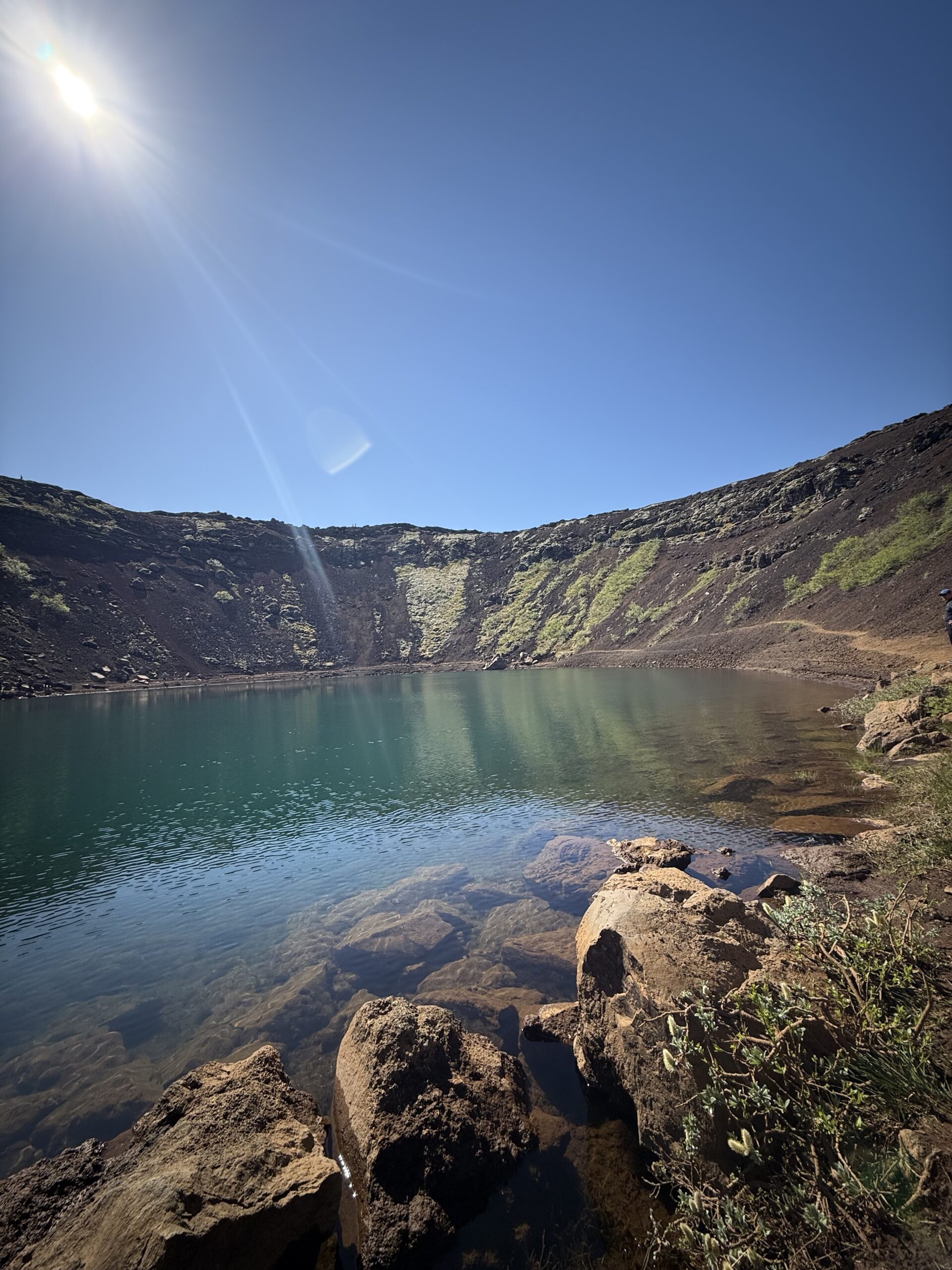
We’ve been driving Iceland’s Ring Road for years — Joona and Alla, based in Rovaniemi but back on that same stretch of black sand and green moss most summers and more than a few winters too — and the one question we get more than any other from friends planning their first trip is some version of “how do we not get ripped off on the camper.” It’s a fair worry. Iceland pricing swings hard between June and February, and the difference between a smart booking and a panicked one can be several hundred euros.
This isn’t a “book the absolute cheapest thing you can find” guide — a genuinely bad-value cheap van can wreck a trip faster than paying a bit more ever will. It’s the actual levers that bring the price down without leaving you stranded on the F-roads or freezing in a van with a heater that can’t keep up.
The single biggest lever is timing: shoulder season (May or September) and winter (November–March) rentals in Iceland run roughly €89–130/day compared with €150–250/day at peak in June–August — often for the exact same van. After that, picking the right vehicle class for what you actually need, and choosing your pickup point deliberately, are what separate a cheap rental from a regretted one. We compare Iceland rental prices across 160+ companies on CampervanPlanet, and code HUNGRYTRAVELFAMILY20 takes a further €20 off whatever you book.
Why Iceland campervan prices swing so hard
Iceland has one of the most seasonal rental markets in Europe. The country gets the vast majority of its visitors between June and August, when daylight is nearly endless and every campsite on the Ring Road is at or near capacity. Rental fleets get booked out months ahead for that window, and prices climb to match demand — €150–250 a day for a van that might rent for under €100 in April or October is completely normal, not a rip-off, just supply and demand doing its thing.
Outside that window, the same vehicles sit idle more often, and rental companies price accordingly. That’s the whole game: the van doesn’t change, the season does.
Lever one: shoulder season and winter
If your dates are flexible at all, this is worth more than every other trick in this guide combined. Shoulder months — May and September — typically bring daily rates down to roughly €89–130, and you still get long daylight hours and most of the Ring Road’s attractions open and accessible. Winter (November through March) can price similarly or even lower, though you’re trading warmth and some road access (parts of the Highlands and F-roads close entirely) for the savings, and you’ll want a vehicle with proper heating and, ideally, studded tyres or 4×4 if you’re leaving the Ring Road.
We’ve driven Iceland in both September and deep winter, and honestly, the autumn light on the south coast waterfalls rivals anything you get in peak summer — you’re not sacrificing the experience nearly as much as the price drop suggests you would be.
Lever two: don’t rent more van than you need
The 4×4 Highland camper and the family motorhome look tempting in the photos, but unless you’re specifically planning F-road routes into the interior or travelling as a group of four-plus, a smaller 2-berth budget or comfort camper is usually the right call and meaningfully cheaper — the gap between a budget 2-berth and a 4×4 Highland-ready camper is real money per day, multiplied across a week or two.
Be honest with yourself about the Ring Road versus the Highlands. The paved Ring Road (Route 1) doesn’t require a 4×4 at all — it’s the F-roads into the interior that do, and those are also closed for most of the year anyway. If your plan is Ring Road plus the popular waterfalls and black sand beaches, a 2-berth petrol camper with a small kitchen setup is genuinely enough van.
💡 Our campervan tip: prices for the same van vary a lot between rental brands. We compare Iceland campervans across 160+ rental companies on CampervanPlanet — and code HUNGRYTRAVELFAMILY20 takes €20 off.
Lever three: pickup city and one-way fees
Most travellers collect their camper at Keflavik International Airport, which is convenient but also where demand — and sometimes price — concentrates. If your itinerary allows it, picking up in Reykjavik city itself rather than at the airport can occasionally shave a little off, and it’s worth comparing both when you check live prices, since airport pickup fees vary between operators. If you’re doing a one-way route rather than a loop back to your start point, ask about one-way fees before you book — they can eat into savings made elsewhere on the itinerary fast.
Honest travel from the Arctic Circle
We send one letter a month — no roundups, no sponsored fluff. Just what we’re doing, where we’re going, and what we actually think.
Lever four: older fleets and what not to cheap out on
Some rental companies run a mixed fleet of newer and slightly older vans at different price points for essentially the same layout. An older camper with a few more kilometres on it, but a checked, working heater and kitchen, can be a genuine saving with very little real trade-off for a Ring Road trip.
Where we wouldn’t cut corners: insurance excess cover, and a working heater. Iceland’s weather turns fast even in summer, gravel chips and sudden wind gusts on exposed roads are a real and common cause of small damage claims, and a full excess waiver is cheap relative to the alternative. A heater that’s actually reliable matters more than almost any other spec once the sun goes down, even in July.
Camping costs and the Camping Card math
Iceland doesn’t allow wild camping outside designated sites the way Norway or Finland does, so budget for campsites as a fixed nightly cost: roughly €13–33 per person per night across the country’s 170-plus registered sites. If you’re travelling for two weeks or more, a Camping Card (around €160, covering 28 nights across 40-plus participating sites) can work out cheaper than paying per night at each stop — worth doing the maths against your actual planned route rather than assuming it’s automatically the better deal, since not every site on your route will necessarily be part of the scheme.
For more detail on where to actually stay, our practical guide to finding campsites in Iceland goes through the booking apps and which regions fill up fastest.
Tolls, fuel and the other costs that aren’t the van itself
The good news on the cost side: Iceland has effectively zero road tolls on the main Ring Road route, with one minor exception (a tunnel near Akureyri, a small fee). Fuel is the bigger recurring cost — expect noticeably higher prices than mainland Europe, and remember that on the east coast and around the Westfjords, petrol stations can be genuinely far apart, so top up whenever you pass one rather than waiting until the tank runs low. We go into the fuller cost picture, including how campervan hire compares with hotel-based road tripping, in our breakdown of what campervan rental in Iceland really costs.
Our final take
The real path to a cheap Iceland campervan rental isn’t finding some secret discount code buried on a forum — it’s booking in shoulder season or winter if your dates allow it, matching the van size to your actual route (Ring Road versus Highlands), and not cutting insurance or heating to save the last few euros. If you’d rather turn the whole trip into a wider Nordic loop first, our campervan rental guide is a good next stop for comparing campervan options beyond just Iceland. Compare current Iceland prices across operators on CampervanPlanet, and use code HUNGRYTRAVELFAMILY20 at checkout for €20 off whatever you land on.
Book your Iceland campervan
Compare prices across 160+ campervan and motorhome rental brands, get a free 1GB eSIM with every booking — and €20 off with code HUNGRYTRAVELFAMILY20.
Check prices & availability →Frequently asked questions
What’s the cheapest month to rent a campervan in Iceland?
Typically the shoulder months of May and September, or winter (November–March), when daily rates can run roughly €89–130 versus €150–250 at peak in June–August.
Do I need a 4×4 campervan for a Ring Road trip?
No — the paved Ring Road doesn’t require 4×4. A 4×4 is mainly needed for F-roads into the Highlands, which are also closed for most of the year.
Can I wild camp in Iceland to save money?
No — unlike Norway, Sweden or Finland, Iceland requires camping at official, registered campsites. Budget it as a fixed nightly cost rather than assuming free camping is an option.
Are there road tolls in Iceland?
Almost none on the main Ring Road, with one small exception (a tunnel near Akureyri). Iceland is notably toll-light compared with Norway.
Is it cheaper to pick up in Reykjavik instead of the airport?
Sometimes, depending on the operator — it’s worth comparing both pickup points when you check live prices, since airport fees vary.
Is a Camping Card worth it?
Usually only on longer trips (two weeks or more) with a route that passes several participating sites — do the maths against your specific itinerary rather than assuming it.
Keep your crypto offline, not in an exchange app
Any crypto we hold lives on a Trezor hardware wallet — a small offline device in a drawer in Rovaniemi, not on a phone that crosses borders every month. If you’ve been meaning to sort that out, this is the link we’d send a friend.